
If a rep is underperforming, diagnose whether it is a will problem (motivation or fit) or a skill problem (a genuine capability gap), then run a focused coaching cycle built around one measurable behaviour. We look for evidence in activity numbers, call reviews and the rep’s own account before we touch a script. The sections below walk through diagnosis, the coaching steps themselves, realistic timelines and the formal process if improvement does not come.
TL;DR:
- Coaching should focus on diagnosing whether a underperforming rep has a will or skill problem before running targeted interventions.
- Effective coaching relies on evidence-based snapshots and call reviews, with a clear focus on one measurable behavior per cycle.
- Manager coaching skill, not frequency, is the primary factor in achieving sales goals, making skill development essential for sustainable improvement.
- A structured 30-60-90 day plan, with specific micro-skills, regular rehearsals, and progress reviews, is crucial for meaningful behavior change.
- External support and tailored programs are recommended when internal coaching capacity is insufficient or when quick results are needed.
Table of Contents
- Diagnose whether it’s a will problem or a skill problem
- Which KPIs and leading indicators to check before you coach
- A step-by-step coaching framework that actually changes behaviour
- Why manager skill matters more than how often you coach
- Setting a 30-60-90 timeline and following a fair process
- What tends to work when we’ve seen this play out
- Our honest take on coaching underperformers
- How we can help when internal coaching capacity runs out
- FAQ
- Sources
Diagnose whether it’s a will problem or a skill problem
We have seen managers jump straight to a pep talk when the real issue sits in a completely different place. Will problems look like low call volume, missed follow-ups or a rep who seems checked out, often linked to motivation, personal circumstances or a poor fit for the role. Skill problems look different: the rep is active, shows up, makes the calls, but conversion stalls at a specific stage because a particular technique, like discovery questioning or objection handling, is missing.
Before we coach anyone, we run a short diagnostic:
- Pull an activity snapshot: calls, meetings booked, follow-up speed over the last four weeks.
- Map where deals leak in the funnel: qualification, proposal or close.
- Listen to two recent call recordings rather than relying on memory or hearsay.
- Ask the rep for their own view of what’s getting in the way.
- Note any recent change in their life or workload that might explain a dip.
The decision rule is straightforward. If the evidence points to a capability gap, like weak questioning or a shaky close, we focus on micro-skills. If the evidence points to a lack of will or a genuine mismatch with the role, we look at role realignment first, and only consider parting ways once we are confident coaching will not fix it.
Which KPIs and leading indicators to check before you coach
A coaching conversation only works when both sides are looking at the same facts, so we always prepare a one-page snapshot before we sit down with a rep. Practitioner playbooks consistently recommend pairing that snapshot with two recent call recordings so the conversation starts from evidence, not impressions.
The snapshot should cover:
- Leading indicators: calls made, meetings booked, contact rate, speed of follow-up.
- Funnel conversion at each stage: qualification, proposal, close.
- Pipeline coverage against quota and average deal size.
Each KPI failure tends to point to a specific gap. Low discovery-to-proposal conversion usually means weak questioning technique. A healthy pipeline that stalls at close often points to a thin objection-handling repertoire rather than a motivation problem. Low activity with strong conversion, on the other hand, usually signals a will issue rather than a skills one. Our guide to coaching sales reps walks through building this snapshot in more detail.
A step-by-step coaching framework that actually changes behaviour
Once we know whether we’re dealing with will or skill, the coaching conversation itself needs structure. A loose “how’s it going” chat rarely moves the needle. The framework we use runs in six steps:
- Prepare: review the one-page snapshot and two call recordings before the meeting, not during it.
- Open with a factual observation: state what you saw in the data or on the calls, without judgement.
- Ask for the rep’s view: let them explain what they think is happening, and genuinely listen.
- Diagnose together: map the behaviour to the funnel stage it affects and agree on one micro-skill to work on.
- Rehearse: practise the specific phrasing or question live, in the room, rather than describing it abstractly.
- Measure: agree the metric that will show progress and the date you’ll both check it.
Conversations dominated by the manager tend to produce short-term compliance rather than lasting change, because the rep never owns the fix.
The cadence matters as much as the content. We recommend a weekly 20 to 30 minute rehearsal session focused on one drill, plus a monthly 30-minute progress review and occasional live call shadowing to check the skill is transferring to real conversations.
Pro Tip: Pick one micro-skill per cycle, such as a single discovery question or a specific objection response, and resist the urge to fix everything at once.
Success is measured by a behavioural change first (the rep actually asks the new question), a conversion lift second, and a realistic timeline third. Our coaching techniques guide covers drill examples for the most common gaps.
Why manager skill matters more than how often you coach
It is tempting to assume that coaching more often is always better. The evidence says otherwise. An academic study of sales managers found that manager coaching skill, not frequency, predicts goal attainment, and that when manager skill is low, coaching more frequently can actually harm performance rather than help it.
A multilevel study found that manager coaching skill was directly linked to sales goal attainment, while frequent coaching from a low-skill manager had a negative effect. That single finding reframes most “coach more” advice: the fix is rarely frequency, it is capability.
Common mistakes we see repeatedly:
- Lecturing instead of asking, which shuts down the rep’s own problem-solving.
- Mixing several focus areas in one session, which dilutes progress.
- Following up inconsistently, so the rep never feels real accountability.
- Framing every conversation negatively, which erodes confidence rather than building it.
Fast ways for a manager to improve: rehearsing scripted role plays with a peer, working through short training modules, and protecting dedicated coaching time on the calendar rather than squeezing it between meetings.
Setting a 30-60-90 timeline and following a fair process
A fair improvement plan needs dates attached to it, not just good intentions. A typical structure:
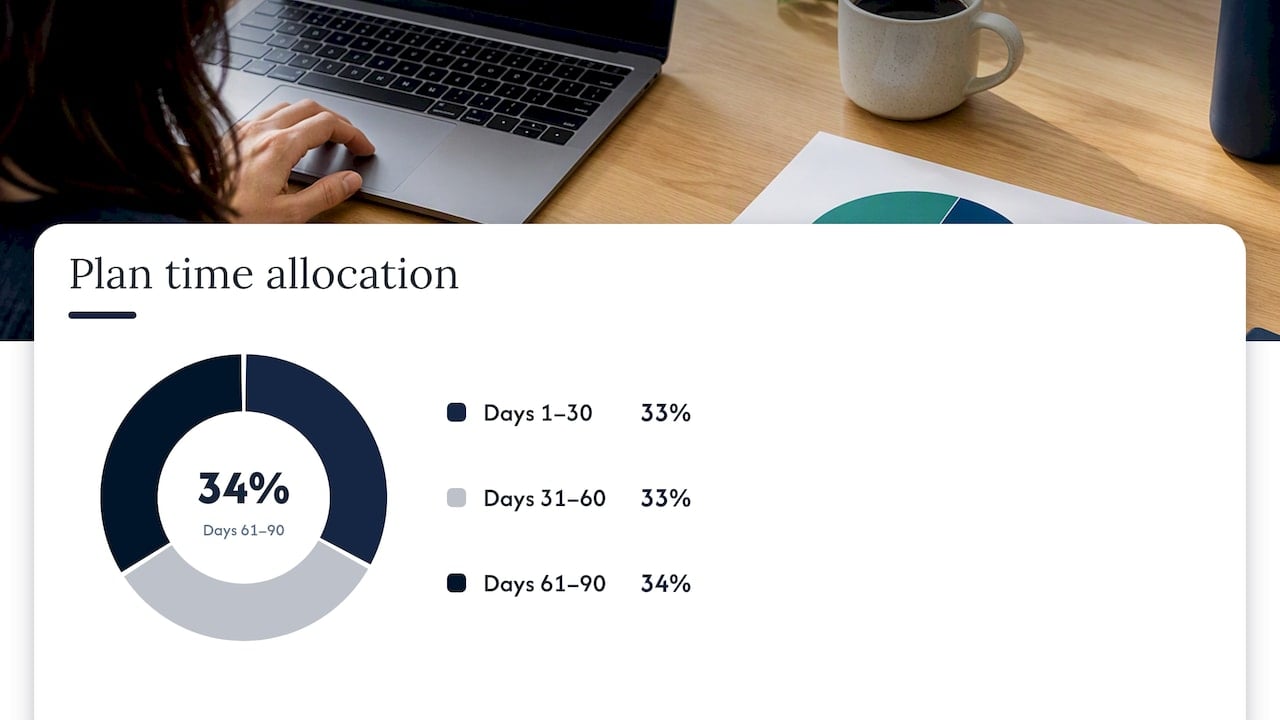
- Days 1 to 30: agree the one micro-skill, run weekly rehearsals, review the behavioural metric at day 30.
- Days 31 to 60: check for early conversion movement, adjust the drill if needed, shadow live calls.
- Days 61 to 90: assess whether the KPI has moved meaningfully; decide whether to close the plan, extend it or escalate.
After every coaching meeting, record the observations discussed, the behaviour agreed and the evidence used, call notes, KPI figures or the rep’s own comments.
If informal coaching does not produce improvement, UK employers should follow a fair capability procedure: hold a formal meeting, set out clear expectations and a timescale, issue a written warning if needed, allow a genuine review period, and only consider a final warning or dismissal after that opportunity has been given. We always recommend looping in HR or legal advice before any formal step. Our performance improvement guide sets out a fuller template.
What tends to work when we’ve seen this play out
We have watched a rep move from persistent quota misses to consistent attainment inside a 30-60-90 window, built entirely around weekly 20-minute rehearsals on a single objection-handling phrase. Nothing else in their routine changed.
Manager-led coaching tends to work best for the middle group of performers, those with decent fundamentals but a specific gap. Reps closer to the bottom, or situations where the manager lacks bandwidth or coaching skill, usually call for external coaching or fractional sales leadership to get moving quickly.
Our honest take on coaching underperformers
Most advice on this topic treats coaching as a motivational exercise: say the right encouraging words and performance will follow. That is backwards. The research is clear that manager skill, not enthusiasm or frequency, is what actually moves the numbers, and a poorly skilled manager coaching often does more harm than coaching rarely.
The conventional wisdom also underrates how much systemic process gets mistaken for individual underperformance. A rep missing targets because of a broken handoff between marketing and sales will not improve no matter how well you coach their objection handling. Before assigning blame to a person, it is worth checking whether the process itself is the real blocker, a point well made in broader operational excellence thinking.
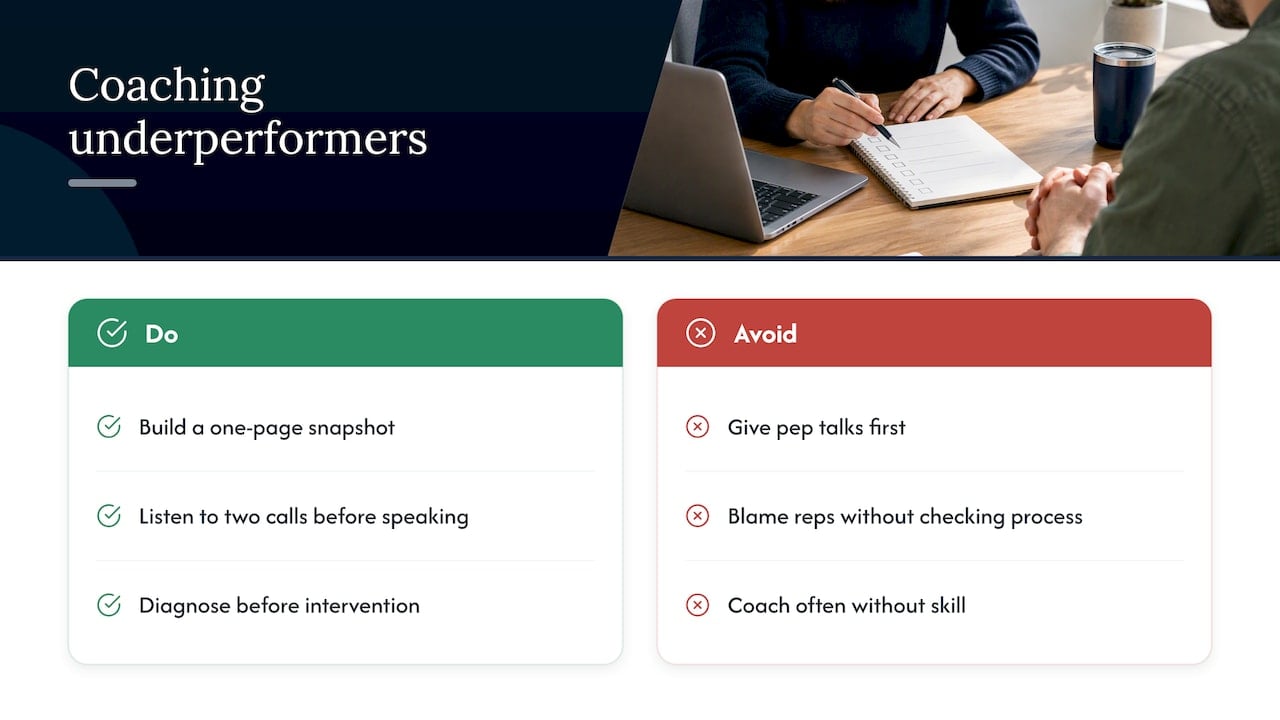
If we had to prioritise one thing for a time-poor manager, it would be this: build the one-page snapshot and listen to two calls before saying a single word to the rep. Diagnosis before intervention sounds obvious, yet it is the step almost everyone skips.
— Jerry
How we can help when internal coaching capacity runs out
Not every manager has the hours, or the coaching skill, to run this process consistently alongside their own quota. That’s exactly where we come in. We provide 1:1 coaching combined with consultancy, built around the same diagnose-then-drill approach covered above, tailored to address your team’s actual gaps rather than a generic curriculum.
Depending on where you are, we offer:
- Team-based bespoke coaching and consultancy engagements, priced from £4,500 to £8,500 one-off, for businesses wanting a structured, manager-supported improvement programme.
- Sales Training Cohorts for developing coaching capability across a management layer, not just individual reps.
- Fractional Sales Director support when you need experienced leadership steering the process without a full-time hire.
- A Sales coaching programme for solo service businesses and consultants, priced from £2,995 to £5,995 one-off, when the person underperforming is you.
If quota recovery feels urgent or your managers simply do not have the bandwidth to run weekly rehearsals on top of everything else, visit Ahead of Sales to see which package fits your team, or get in touch to talk through your situation.
FAQ
How to deal with low performing team members?
Start by diagnosing whether the issue is motivation and fit (will) or a genuine capability gap (skill), using activity data, call reviews and the rep’s own perspective. From there, run a focused coaching cycle on one behaviour at a time rather than addressing everything simultaneously.
What is the 30-60-90 rule in sales?
It’s a structured improvement timeline: days 1 to 30 focus on agreeing and rehearsing one micro-skill, days 31 to 60 check for early conversion movement, and days 61 to 90 assess whether the KPI has genuinely shifted. Each phase ends with a review point before deciding to close, extend or escalate the plan.
How much does sales coaching typically cost?
Pricing varies widely by provider and format. Our own bespoke coaching and consultancy engagements for teams run from £4,500 to £8,500 one-off, while our solo accelerator track for individual consultants and service business owners runs from £2,995 to £5,995 one-off.
What are the top five skills of a sales manager?
Strong sales managers combine coaching skill (asking rather than lecturing), the ability to diagnose root causes accurately, consistent follow-through, protected time for coaching, and comfort giving direct, evidence-based feedback. Evidence from the CIPD’s review of people manager capability points to coaching skill and protected time as the factors most linked to better team outcomes.
Sources
- Gov
- Effective people managers: evidence review (CIPD)
- Does coaching matter? A multilevel model linking managerial coaching skill and frequency to sales goal attainment
- Sales coaching: practitioner guidance (Salesforce)