
TL;DR:
- Boosting sales accountability requires setting clear, checkable behavioral targets and monitoring progress through shared scorecards. Implementing short daily and weekly rituals, along with peer accountability, fosters consistent performance improvements and self-correction. Leaders must establish continuous inspection systems to ensure evidence-based coaching and accountability, supported by structured routines and automation.
The six most effective ways to boost sales accountability are: set clear behavioural targets, make performance visible through shared scorecards, run structured coaching and role-play, hold short recurring accountability rituals, build peer accountability into the team’s DNA, and enforce process adherence with a fair escalation path. Start this week by doing three things: write one checkable behavioural KPI for each rep, schedule a 15-minute daily huddle, and book a 1:1 with your lowest performer using the agenda in Section 4. As research confirms, accountability only works when the expectation is checkable and inspected continuously. Aheadofsales works with UK sales teams to put exactly this system in place.
Quick-start checklist (do this week):
- Write one behavioural KPI per rep (e.g., discovery completion rate, follow-up within 24 hours)
- Launch a 10-minute daily huddle with a three-question checklist
- Run one 1:1 using the structured agenda below
- Set up a shared team scorecard visible to everyone
- Identify one process step to automate for inspection
Table of Contents
- How do you set clear targets that actually drive accountability?
- What should a team scorecard look like?
- How do structured coaching and role-play actually change behaviour?
- What do effective daily huddles and pipeline reviews look like?
- How do you build peer accountability into the team?
- How do you enforce process adherence without becoming a micromanager?
- What does a realistic implementation roadmap look like?
- How do you build a training plan that targets accountability gaps?
- How do you build a culture of accountability that outlasts any process?
- How do you handle underperformance before it reaches a formal PIP?
- Meeting agenda templates and scripts for accountability rituals
- Key takeaways
- Why the “inspect what you expect” principle is the one thing most leaders skip
- Aheadofsales: structured support to get this system working faster
- Useful sources and further reading
How do you set clear targets that actually drive accountability?
Quota alone is a lagging indicator. By the time a rep misses it, the quarter is gone. Behaviour-based measurement gives you leading signals you can act on now: prospecting activity, discovery completion rate, follow-up discipline, and pipeline hygiene.
The difference matters practically. An outcome KPI says “close £50,000 this quarter.” A behavioural KPI says “complete a structured discovery call on every new opportunity within 48 hours of first contact.” The second one is checkable today, not in 90 days.
Example behavioural KPIs to use immediately:
- Discovery completion rate (target: 90% of new opps have a logged discovery call)
- Follow-up speed (target: first follow-up within 24 hours of a meeting)
- Pipeline hygiene (target: zero deals with no activity logged in 14 days)
- Proposal-to-close ratio (target: set a baseline, then improve by 5% per quarter)
Link each behavioural KPI to a quarterly outcome so reps can see how their daily inputs connect to the number they are ultimately judged on. SMART targets work here: Specific, Measurable, Achievable, Relevant, and Time-bound. “Book 12 qualified discovery calls in the fintech vertical by end of Q3” beats “get more demos” every time.
What should a team scorecard look like?
Real-time dashboards turn data into decisions rather than just reports. The key is showing reps their own numbers so they can self-correct before you need to intervene.
Keep the scorecard simple. Here is a template you can copy into a spreadsheet or CRM dashboard today:
| Behavioural KPI | Rep A | Rep B | Rep C | Team target | Gap |
|---|---|---|---|---|---|
| Discovery completion rate | — | — | — | 90% | Rep C: -12% |
| Follow-up within 24 hrs | — | — | — | — | Rep C: -15% |
| Pipeline hygiene (no stale deals) | — | 90% | — | — | Rep B/C gap |
| Proposal-to-close ratio | — | — | — | 30% | Rep B/C gap |
Refresh this weekly, not monthly. Stale data breeds stale conversations. Assign one person (a team lead or ops contact) to own data quality, and use your CRM’s automation to flag missing fields rather than relying on manual checks. For a deeper guide to setting up these routines, the sales performance tracking guide from Aheadofsales walks through the full setup.
Visible goals and leaderboards increase social accountability and encourage reps to self-correct before managers need to step in.
How do structured coaching and role-play actually change behaviour?
Most 1:1s drift into deal updates. That is useful, but it is not coaching. A behaviour-led 1:1 focuses on the evidence of what the rep did, not just what happened to the deal.
Tight 1:1 agenda (30 minutes):
- 5 min: What did you commit to last week? What happened?
- 10 min: Review one call or meeting using a recording or rep’s notes. What did the rep do well? What one thing would change the outcome?
- 10 min: Skill focus. Run a 5-minute role-play on the specific behaviour identified.
- 5 min: What are you committing to before we next meet?
The role-play element is where most managers skip out, and it is the most valuable part. Pick a scenario the rep faces regularly: handling a “send me a proposal” deflection, or running the first two minutes of a discovery call. Five to ten minutes of deliberate practice beats 30 minutes of discussion every time. For practical coaching formats and examples, Aheadofsales has published a set of case-based illustrations worth reviewing.
Pro Tip: Use a call recording tool (Gong, Chorus, or even a simple CRM note) as your coaching evidence. “I felt the call went well” is an impression. A recording is a fact. Evidence-based coaching removes subjectivity and makes the conversation far easier for both parties.

What do effective daily huddles and pipeline reviews look like?
Short, frequent inspection beats long, infrequent reviews. A 10–15 minute daily huddle keeps the team aligned and surfaces blockers before they become missed targets.
Daily huddle checklist (three questions, 10 minutes max):
- What is your number-one priority today and what does success look like?
- Is there anything blocking you that you need help with?
- What commitment from yesterday did you complete?
The weekly pipeline review is a different rhythm. It should run 30–45 minutes and focus on deal-level commitments, not just totals.
Weekly pipeline review template:
- For each deal above a set threshold: What is the next step? Who owns it? By when?
- Which deals have moved forward since last week? Which have stalled?
- What is the rep committing to before next week’s review?
The “commitment loop” is the piece most teams miss. A rep states their next action publicly, it is recorded (in the CRM or a shared doc), and the following week opens with a check on whether it happened. Public commitments are harder to walk away from than private ones.
How do you build peer accountability into the team?
Managerial accountability has a ceiling. When accountability becomes social, the team polices its own standards without you needing to be the enforcer every time.
Practical mechanisms that work:
- Buddy pairs: pair a stronger and a developing rep. Each week, they share one win and one area they are working on. The stronger rep models the standard; the developing rep gets a safe space to practise.
- Rotating pipeline hygiene owner: each week, a different rep is responsible for flagging stale deals to the group. Rotating the role distributes ownership and stops it feeling like surveillance.
- Peer commitment boards: a shared Slack channel or whiteboard where reps post their weekly commitments. Visibility alone increases follow-through.
Pairing reps of varying experience levels increases team-wide accountability and creates a culture of peer-to-peer coaching. When reps hold one another accountable, the group grows together faster than any top-down system can achieve. For the broader organisational change that underpins this kind of culture shift, employee engagement frameworks offer a useful complementary lens.
How do you enforce process adherence without becoming a micromanager?
The first question to ask when a process is not being followed is: is this a will problem or a system problem? Most of the time, it is the system. The process is unclear, the CRM field is optional, or the step takes too long. Fix the system before you escalate to the individual.
Automated inspection scales better than manual audits. Manual checks are either abandoned or gamed. Automation makes inspection consistent and fair, like a speed camera rather than a quarterly patrol.
Simple escalation flow:
- Informal coaching: the manager flags the gap in the next 1:1 with specific evidence. No blame, just data.
- Documented action plan: if the gap persists after two or three coaching conversations, agree a written 30-day plan with specific targets and check-in dates.
- Formal improvement plan (PIP): if the action plan targets are missed, escalate to HR with full documentation.
Pro Tip: Frame the first two stages as “I want to help you succeed here” rather than “you are failing.” The distinction matters for trust and for legal defensibility. Document every conversation, even informal ones.
What does a realistic implementation roadmap look like?
Winning companies are shifting growth from headcount to productivity by embedding structured coaching, clearer manager roles, and smarter routines. That shift takes time to embed. Here is a realistic timeline and cost guide:
| Phase | Timeline | Key actions | Who leads | Typical cost (internal) | External support (Aheadofsales) |
|---|---|---|---|---|---|
| Foundation | Days 1–30 | Set behavioural KPIs, launch scorecard, start daily huddles | Sales manager | Staff time only | From £4,500 (team workshop + setup) |
| Embed | Days 30–90 | Structured 1:1s, role-play routines, peer accountability launch | Manager + team leads | Staff time + CRM config | £2,995 and up (coaching programme) |
| Scale | Days 90–180 | Automate inspection, refine escalation flow, manager upskilling | Senior leader | CRM/tool costs | Fractional sales director from £4,500/month |
External help speeds delivery when you need structured coaching design, manager upskilling, or an enablement platform integrated quickly. Aheadofsales sales training services cover all three. Solo service businesses can access sales acceleration packages starting from £2,995.
How do you build a training plan that targets accountability gaps?
A training plan only improves accountability if it is built around the specific gaps your scorecard reveals, not a generic curriculum. Start with a skills audit: where does each rep’s scorecard show a consistent gap? Discovery completion low? That is a skill and habit issue. Follow-up speed poor? That is a process and prioritisation issue.
Map each gap to a training intervention:
- Discovery skills: role-play and consultative selling techniques practised in weekly 1:1s
- Objection handling: micro-practice scenarios in huddles, recorded and reviewed
- Pipeline hygiene: CRM training plus automated reminders, not just a policy memo
Ongoing training works better than one-off workshops. Reps who receive regular coaching consistently outperform peers in both quota attainment and win rates. Build microlearning into the flow of work: a five-minute scenario in the huddle, a call review in the 1:1, a shared win in the peer channel.
How do you build a culture of accountability that outlasts any process?
Processes create the floor. Culture determines the ceiling. The two levers that move culture fastest are leadership modelling and incentive alignment.
If you want reps to be accountable, you need to be visibly accountable yourself. Share your own commitments in the huddle. Acknowledge publicly when you missed something. The team watches what you do far more than what you say.
On incentives: you get the behaviour you reward. If you only recognise closed revenue, reps will optimise for closing at the expense of pipeline quality and discovery rigour. Blend monetary rewards with behaviourally specific recognition: call out the rep who ran the best discovery this week, not just the one who closed the biggest deal. That signals to the whole team what the standard actually is.
How do you handle underperformance before it reaches a formal PIP?
A formal PIP is a last resort, not a first response. Most underperformance has an earlier intervention point that is faster, less stressful, and more likely to produce a genuine recovery.
The recovery conversation starts with curiosity, not judgement. Ask: what is getting in the way? Is it a skill gap, a motivation issue, a personal circumstance, or a process problem? The answer determines the intervention. A skill gap needs coaching and practice. A motivation issue needs a direct conversation about fit and expectations. A process problem needs a system fix, not a performance plan.
For reps who are genuinely trying but struggling, a short-term focus plan works well: agree two or three specific behaviours to improve over 30 days, check in weekly, and celebrate any progress. The sales performance improvement steps guide from Aheadofsales covers this recovery framework in detail.
Meeting agenda templates and scripts for accountability rituals
Having the right structure removes the awkwardness from accountability conversations. Here are three ready-to-use templates:
Daily huddle script (manager opens):
“Morning everyone. Three questions: what is your priority today, what did you complete from yesterday, and does anyone need help with anything? Let’s go round quickly.”
Weekly 1:1 opening script:
“Let’s start with what you committed to last week. Walk me through what happened. Then I want to look at one call together and pick one thing to practise before we finish.”
Pipeline review commitment close:
“Before we finish, I want each of you to state one specific action on your top deal and the date it will be done. I’ll log these and we’ll open next week’s review by checking them.”
These scripts work because they are specific, short, and repeatable. The consistency is the point. Reps know what to expect, which reduces anxiety and increases honest reporting.
Key takeaways
Consistent sales accountability requires a system of checkable expectations, visible metrics, and frequent inspection, not motivational speeches or annual reviews.
| Point | Details |
|---|---|
| Behavioural KPIs first | Set checkable input metrics (discovery rate, follow-up speed) alongside quota to catch gaps early. |
| Visible scorecards drive self-correction | Shared weekly scorecards let reps spot their own gaps before managers need to intervene. |
| Short rituals beat long reviews | A 10-minute daily huddle and a structured 1:1 with role-play create more accountability than a monthly pipeline meeting. |
| Automate inspection | Automated CRM checks are fairer and more consistent than manual audits, freeing managers to coach. |
| Aheadofsales as your partner | Aheadofsales offers structured coaching programmes and fractional sales director services from £4,500 to accelerate this system across your team. |
Why the “inspect what you expect” principle is the one thing most leaders skip
Most sales leaders I speak with have the right intentions. They set targets, they run 1:1s, they talk about accountability in team meetings. What they often lack is the inspection infrastructure that makes those conversations evidence-based rather than impressionistic.
The sequence that actually works is: set a checkable expectation, inspect it continuously (ideally automatically), then coach from the evidence. Skip the inspection step and you end up moralising, which creates resentment without changing behaviour. The research is clear on this: accountability without a visible instrument is just a speech.
What I find particularly interesting is that the teams who resist this system most at the start are usually the ones who benefit most from it. Visibility feels threatening until reps realise it protects them too. When performance data is shared openly, a rep who is struggling cannot be quietly managed out on vague impressions. The data either shows a genuine gap or it shows the target was unrealistic. Either way, the conversation becomes fairer.
The tactics in this article are not complicated. The challenge is consistency. Pick two or three to start with this week, build the habit, then layer in the rest over 90 days.
Aheadofsales: structured support to get this system working faster
If you want to implement this accountability system without spending months figuring it out yourself, Aheadofsales offers bespoke packages built around exactly these tactics.
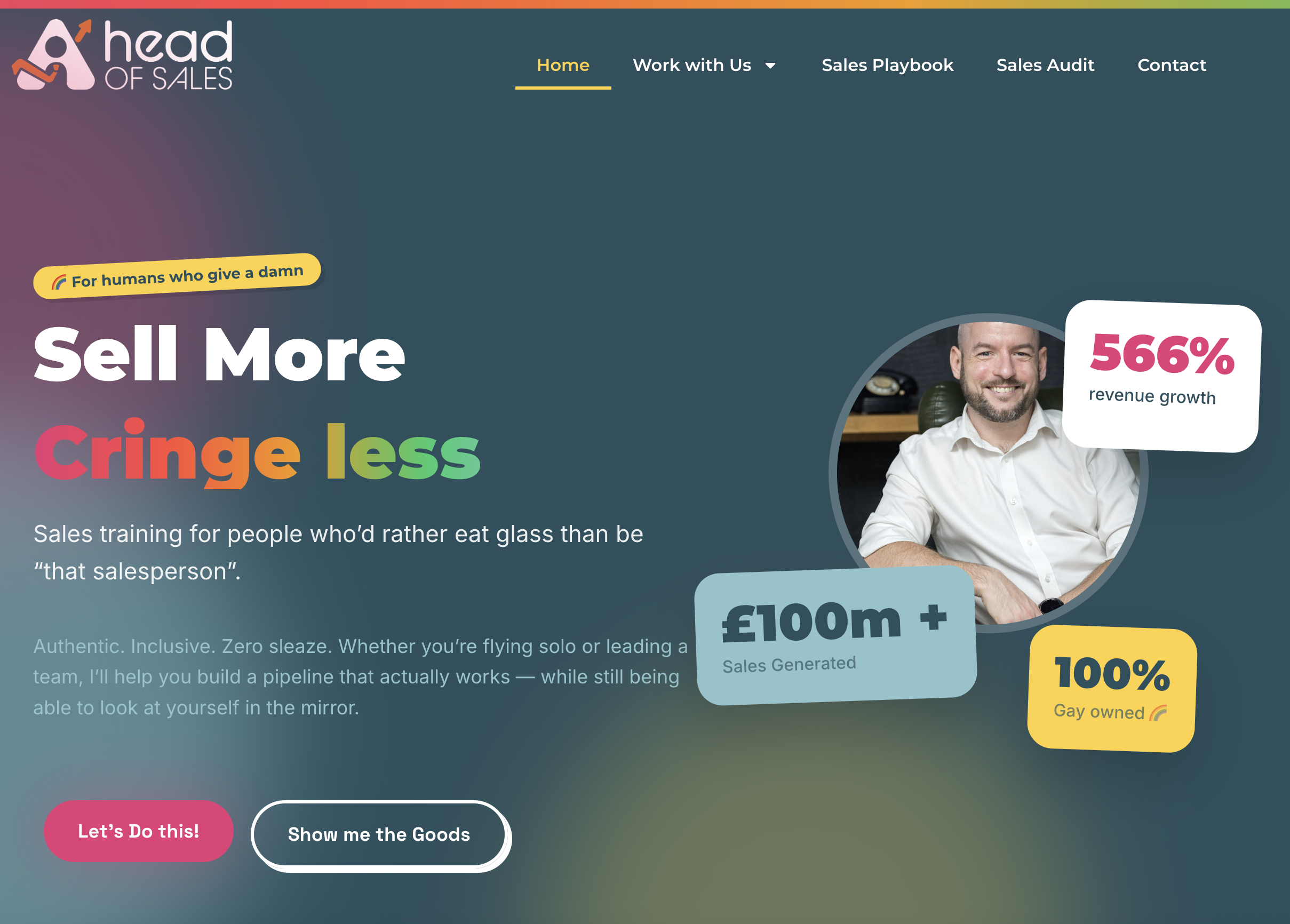
For teams of 50 to 1,000 staff, packages start from £4,500 and cover bespoke 1:1 coaching, team workshops, sales consultancy, and fractional sales director services. For solo service businesses, sales acceleration packages start from £2,995. Every engagement is built around your specific scorecard gaps, not a generic curriculum. The goal is straightforward: at least 50% sales growth per year and a team that hits target every quarter. To find out which package fits your team, visit the sales training services page and book an initial diagnostic call.
Useful sources and further reading
- Sales Accountability: Inspect, Don’t Lecture — the core inspection-first framework referenced throughout this article
- How to hold sales reps accountable — clarity, visibility, and recognition as the three conditions for accountability
- The new sales productivity equation (Bain) — why structured coaching and manager capability matter more than headcount
- 10 practical strategies to improve sales performance (Highspot) — dashboard design and real-time deal signals
- How to increase sales: data-driven strategies (Zendesk) — visible goals and social accountability
- How to improve sales performance (HubSpot) — peer coaching culture and team-level accountability
- Aheadofsales sales performance tracking guide — practical scorecard and inspection setup for UK sales managers
- Aheadofsales coaching examples — case-based coaching formats to support structured 1:1s
One Response