
The most reliable way to raise deal value is to prepare a strong BATNA, anchor early with objective criteria, and trade concessions rather than give them away. These three moves, used together, protect your margin and create genuine value for both sides.
Here are the five highest-impact tactics to apply in your next negotiation:
- Set your reservation price before you walk in. Know the exact point at which you will walk away, and commit to it in writing before the meeting starts.
- Anchor first when you have market data to justify it. An ambitious but defensible opening number pulls the final settlement in your favour.
- Offer MESOs (multiple equivalent simultaneous offers). Present two or three packages of equal value to you, so the buyer reveals what they actually care about.
- Trade, never cave. Every concession you make should come with a request for something measurable in return: faster sign-off, a longer contract, a referral.
- Know your walk-away signal. When the deal falls below your reservation price and your BATNA is stronger, leaving is the right commercial decision.
Pro Tip: Write your BATNA and reservation price on a card and keep it in front of you during the call. Salespeople who anchor to a written number concede less under pressure.
Key takeaways
Effective sales negotiation comes down to three disciplines applied consistently: prepare thoroughly (BATNA, reservation price, stakeholder map), anchor with objective criteria, and trade concessions rather than give them away.
| Point | Details |
|---|---|
| Prepare before every deal | Set your BATNA and reservation price before the meeting; preparation predicts success more than any in-room tactic. |
| Anchor with objective criteria | Make the first offer when you have market data to justify it; the opening number pulls the final settlement toward it. |
| Trade, never cave | Every concession should be conditional: “If you can do X, we can do Y.” Unconditional concessions invite further demands. |
| Use MESOs to reveal preferences | Offer two or three equally profitable packages; the buyer’s choice tells you what they value most. |
| Aheadofsales closes the skills gap | Bespoke coaching, team workshops, and fractional sales director services build the habits that protect margin and improve close rates. |
Table of Contents
- What is modern sales negotiation and why does it matter?
- How to prepare for a sales negotiation
- Opening offers and anchoring: how to set a favourable range
- Build value and trade: how to protect margin without discounting
- Communication skills that keep negotiations on track
- Tactical offers: MESOs, contingent contracts and concession sequencing
- Closing: how to secure commitment and prevent buyer remorse
- Common mistakes and phrases to avoid in negotiations
- When does your team need bespoke sales coaching?
- What the best negotiators actually do differently
- How Aheadofsales helps sales teams negotiate and close with confidence
- Sources
What is modern sales negotiation and why does it matter?
Sales negotiation is the structured process of reaching a commercial agreement that works for both buyer and seller, without sacrificing the margin or the relationship. The word “negotiation” sometimes gets conflated with haggling, but the discipline is far more considered than that. Modern consultative sales negotiation, as practised by high-performing teams, is about creating value and claiming it simultaneously.
Three frameworks underpin almost every effective approach:
- BATNA (Best Alternative to a Negotiated Agreement). Your BATNA is what you do if this deal falls through. The stronger your BATNA, the more leverage you hold. Sellers with a weak BATNA tend to discount defensively; those with a strong one negotiate from confidence.
- ZOPA (Zone of Possible Agreement). The ZOPA is the overlap between the lowest price you will accept and the highest price the buyer will pay. Understanding where that zone sits, even approximately, tells you how much room exists for creative trades.
- Principled negotiation. Drawn from Fisher and Ury’s Getting to Yes, principled negotiation separates people from the problem, focuses on interests rather than positions, invents options for mutual gain, and uses objective criteria to resolve disagreements. It remains the most durable framework for business bargaining.
Two research findings are worth keeping in mind throughout. First, loss aversion means buyers are more motivated to avoid a loss than to pursue an equivalent gain, so framing your offer around what they risk missing is often more persuasive than listing benefits. Second, anchoring, the cognitive pull of the first number stated, shapes the entire range of the negotiation. Skilled negotiators use both levers deliberately. For a broader grounding in consultative selling techniques, the principles translate directly into negotiation practice.
How to prepare for a sales negotiation
Preparation is the stage that most strongly predicts negotiation success, yet most sellers spend less than ten minutes on it. Here is a practical process you can follow before every significant deal.
Research the landscape
Start with three questions: What are comparable deals in this market worth? What constraints is the buyer operating under (budget cycle, internal approval thresholds, competing priorities)? Who else are they talking to? Answers to these questions tell you where the ZOPA likely sits and which concessions will feel meaningful to the buyer without costing you much.
Build and test your BATNA
List every realistic alternative if this deal does not close: another prospect in the pipeline, a smaller version of the engagement, a delayed start. Rank them by value. Your BATNA is the best one on that list. Then ask: is it strong enough that you could walk away from this deal without significant commercial pain? If not, strengthen it before the meeting by advancing other conversations.
Set a single reservation price
A reservation price is the exact number below which you will not go. Not a range. A single figure. Write it down. Sellers who enter with a vague “somewhere around X” tend to drift further than they intend under pressure.
Map your stakeholders
Identify every person who influences the buying decision: the economic buyer, the technical evaluator, the end user, and any hidden approvers (legal, procurement, a board member). Knowing who can say yes, and who can quietly say no, prevents late-stage surprises.
Preparation checklist:
- Research comparable market rates and recent deals in the sector.
- List your BATNA options and identify the strongest one.
- Write your reservation price on paper before the meeting.
- Map all stakeholders and confirm who has final sign-off.
- Agree the process up front: who attends, what the agenda covers, when a decision is expected.
- Prepare three objective criteria (industry benchmarks, case data, published rates) to justify your anchor.
Pro Tip: Strengthen your BATNA quickly by running two or three parallel conversations before a high-stakes negotiation. Even a less attractive alternative gives you genuine leverage. Use the sales skill checklist to audit your preparation habits before a major deal.
Opening offers and anchoring: how to set a favourable range
Anchoring is one of the most consistently validated effects in negotiation research. The first number stated in a negotiation pulls the final settlement toward it, regardless of whether that number is reasonable. That is not a trick; it is how human cognition processes numerical reference points.
The practical implication: make the first offer when you have objective data to support an ambitious number. Negotiation research recommends opening the numeric discussion when you can plausibly justify the anchor with market rates, case outcomes, or published benchmarks. If you cannot justify it, you risk damaging credibility.
When to anchor first: you have comparable data, you understand the buyer’s budget range, and the relationship is strong enough to absorb an ambitious opening.
When to let them go first: you have very little market data, or the buyer is likely to open far higher than you expected (a useful signal in itself).
Script: making the first offer
Script: re-anchoring after their number
After stating your anchor, stop talking. Strategic silence is a low-cost tool that prompts the other side to fill the gap, sometimes with movement toward agreement. Sellers who rush to justify or soften an anchor immediately after stating it signal that they do not believe it themselves.
Pro Tip: Never follow your anchor with “Is that acceptable?” It invites a no. State the number, give the rationale, and wait.
Build value and trade: how to protect margin without discounting
The single most expensive habit in sales is discounting before the buyer has even asked for it. Value must be built before price enters the conversation, and concessions must be traded, not given.

Build value before price comes up
Use case data, specific outcomes, and named client results to make the cost feel proportionate to the return. When a buyer can see that a comparable business achieved a measurable result, price becomes a secondary conversation. Customer feedback and outcome data are particularly persuasive here because they shift the frame from “what does this cost?” to “what does this deliver?”
High-value, low-cost concessions
Not all concessions cost the same. Some things that feel significant to a buyer cost you very little:
- Extended payment terms (cost: time value of money; perceived value: cash flow relief)
- Priority onboarding or implementation support (cost: scheduling; perceived value: risk reduction)
- A quarterly review call (cost: one hour; perceived value: ongoing accountability)
- A named senior contact (cost: minimal; perceived value: reassurance)
Identify three or four of these before every negotiation. They are your trading currency.
Trade, never cave
Every concession you make should come with a conditional: “If we can do X, would you be able to do Y?” That structure, drawn from principled negotiation, keeps the exchange reciprocal and signals that your concessions have limits.
Rather than discounting, the seller responds: “If we move to a twelve-month term, I can bring the monthly investment down to reflect the longer commitment. Does that work for your planning cycle?”
The buyer gets a lower number. The seller gets a longer contract and higher total revenue. Neither side caves.
Communication skills that keep negotiations on track
Most negotiations stall not because of price, but because of unspoken concerns. Active listening reveals the real objections behind stated price resistance: risk, implementation uncertainty, internal politics, or a lack of trust in the outcome. Address those, and the price objection often dissolves.
Diagnostic questions to uncover interests
Ask open questions that surface what the buyer actually needs, not just what they say they want:
- “What would a successful outcome look like for your team six months from now?”
- “What concerns do you have about making a change at this point?”
- “Who else needs to be comfortable with this decision before you can move forward?”
- “What has held you back from solving this before?”
These questions reveal the interests behind the position. A buyer who says “your price is too high” may actually mean “I am not confident this will work” or “I cannot get internal approval at this level.”
Active listening in practice
Paraphrase what you hear (“So what I am picking up is that the timeline is the bigger concern than the investment?”), label the emotion without judging it (“It sounds like there is some uncertainty about how the team will respond”), and then probe (“What would need to be true for you to feel confident about that?”). This sequence, paraphrase, label, probe, keeps the conversation moving and builds trust faster than any pitch.

Managing emotions and de-escalating
When tension rises, name it without blame: “I can see this is a complex decision, and I want to make sure we find something that genuinely works for you.” A brief pause or a suggested break resets the room without conceding ground. Avoid defensive language (“That is not what I said”) and replace it with curiosity (“Help me understand what is driving that concern”).
Tactical offers: MESOs, contingent contracts and concession sequencing
MESOs: multiple equivalent simultaneous offers
A MESO means presenting two or three packages of equal value to you, structured differently, so the buyer can choose the combination that suits them best. PON research recommends MESOs because they reveal buyer preferences and reduce the risk of a yes/no impasse.
MESO template A:
- Option 1: Six-month engagement, monthly payment, standard onboarding.
- Option 2: Twelve-month engagement, quarterly payment, priority onboarding and a senior named contact.
- Option 3: Twelve-month engagement, annual payment (small saving), full onboarding plus quarterly reviews.
All three options are equally profitable to you. The buyer’s choice tells you what they value most: flexibility, support, or cost certainty.
Contingent contracts
When there is genuine uncertainty about outcomes, a contingent contract can unlock a stalled deal. Structure it as: “If we deliver [specific measurable result] by [date], the fee increases by [amount]. If we fall short, you receive [credit or reduction].” This aligns incentives and removes the buyer’s risk objection without discounting upfront.
Concession sequencing
Research on concession patterns shows that small, deliberate concessions signal finality, while large or fast concessions invite further demands. Follow this sequence:
- Make your first concession small and conditional.
- Make each subsequent concession smaller than the last.
- Always extract something measurable in return before conceding.
- Signal that you are approaching your limit: “I am getting close to what I can do here.”
Mid-deal checklist before you concede:
- Have I asked for something in return?
- Is this concession conditional on a specific buyer action?
- Am I still above my reservation price?
- Have I given a rationale, not just a number?
Closing: how to secure commitment and prevent buyer remorse
Closing is not a single moment; it is the natural conclusion of a well-structured negotiation. If you have built value, traded fairly, and addressed the real concerns, the close should feel like a logical next step rather than a pressure tactic.
Closing checklist
- Confirm all open points are resolved before summarising the agreement.
- Restate the key terms clearly: scope, price, timeline, payment schedule.
- Confirm who signs and when.
- Agree the first implementation milestone before the call ends.
Script: confirming agreement
That question is closed and specific. It does not reopen terms; it confirms them.
Implementation milestones reduce churn
Buyers who experience early, visible progress are far less likely to experience remorse or seek to renegotiate. Build two or three early milestones into the contract or statement of work: a kickoff call within five days, a first deliverable within three weeks, a thirty-day review. These create momentum and give the buyer confidence that the commitment was the right one.
Where genuine uncertainty remains post-close, a contingent clause (“if X has not been achieved by [date], we will review the scope together”) protects both sides and keeps the relationship intact.
Common mistakes and phrases to avoid in negotiations
Most margin is lost not through bad strategy but through predictable verbal habits. Here are the errors that cost sellers most, and what to say instead.
Phrases to avoid:
- “Is that acceptable?” after stating a price. Replace with silence, then: “What are your thoughts?”
- “I can probably do a bit better on that.” Replace with: “What would need to change on your side for us to move forward?”
- “We are very flexible.” Replace with: “We have some room to work with depending on the structure.”
- “Let me check with my manager.” Unless true and necessary, this signals weakness. Replace with: “Let me come back to you with a revised proposal by [specific time].”
- Over-justifying a concession. One clear rationale is enough. Multiple justifications signal desperation.
Common mistakes:
- Discounting before the buyer asks. Wait for the explicit request.
- Treating every objection as a price objection. Most are not.
- Making large concessions quickly. It signals that your opening was inflated and invites further demands.
- Failing to confirm the agreement in writing before the call ends.
Deadlock troubleshooting:
- Introduce a new variable (payment terms, scope, timeline) rather than moving on price alone.
- Ask: “What would need to be true for this to work for you?”
- Suggest a short break and return with a MESO.
- If talks are genuinely stuck, name it: “It feels like we are at an impasse. Can we step back and look at the underlying interests?”
When does your team need bespoke sales coaching?
There are clear signals that a team’s negotiation habits are costing revenue: consistent discounting at the final stage, long sales cycles that stall after the proposal, and deals lost not to a competitor but to “no decision.” These patterns rarely fix themselves through self-study alone.
Practical skills training with role-play, observation, and structured feedback measurably improves negotiator performance compared with self-directed learning. The reason is straightforward: negotiation is a behavioural skill, and behaviour changes through practice with feedback, not through reading alone.
What bespoke coaching delivers that generic training does not:
- A diagnostic of where the team is actually losing margin (not where they think they are).
- Customised playbooks built around the team’s real deals and objections.
- Live role-play with recorded feedback so sellers can hear themselves.
- Measurement: close rates, average deal value, and discount frequency tracked before and after.
Signs your team is ready for external support:
- Discounting is the default response to any price pushback.
- Deals regularly stall at the proposal or final negotiation stage.
- The team lacks a consistent process for handling objections.
- Senior sellers are coaching junior ones inconsistently, passing on bad habits.
Pro Tip: Before investing in training, run a short audit: pull the last twenty closed deals and note where discounts were given and why. The pattern will tell you exactly which skill gap to address first. The effective sales consultancy process guide explains what a structured engagement looks like from first contact to measurable outcome.
What the best negotiators actually do differently
Most salespeople know the theory. They have heard of BATNA, they understand anchoring in principle, and they know they should not discount before being asked. The gap is almost never knowledge. It is practice under pressure.
What I observe consistently in high-performing negotiators is not a superior toolkit. It is disciplined preparation, the habit of writing down their reservation price and BATNA before every significant call, and the willingness to be comfortable with silence. Those two behaviours alone, preparation and silence, separate sellers who protect margin from those who give it away.
The other thing worth saying plainly: role-play is not optional. You cannot develop negotiation skill by reading about it, any more than you can improve at tennis by watching Wimbledon. The sellers who improve fastest are those who practise specific scenarios, receive honest feedback, and adjust. That is the case for structured coaching, and it is also a practical instruction: find a colleague, pick a real deal, and run the conversation before you have it for real.
How Aheadofsales helps sales teams negotiate and close with confidence
If your team is consistently leaving margin on the table or losing deals at the final stage, the issue is almost always a skills gap that training can close quickly. Aheadofsales works with businesses of 50 to 1,000 staff through bespoke 1:1 coaching, team workshops, and fractional sales director engagements, all built around your actual deals, objections, and sales cycle.
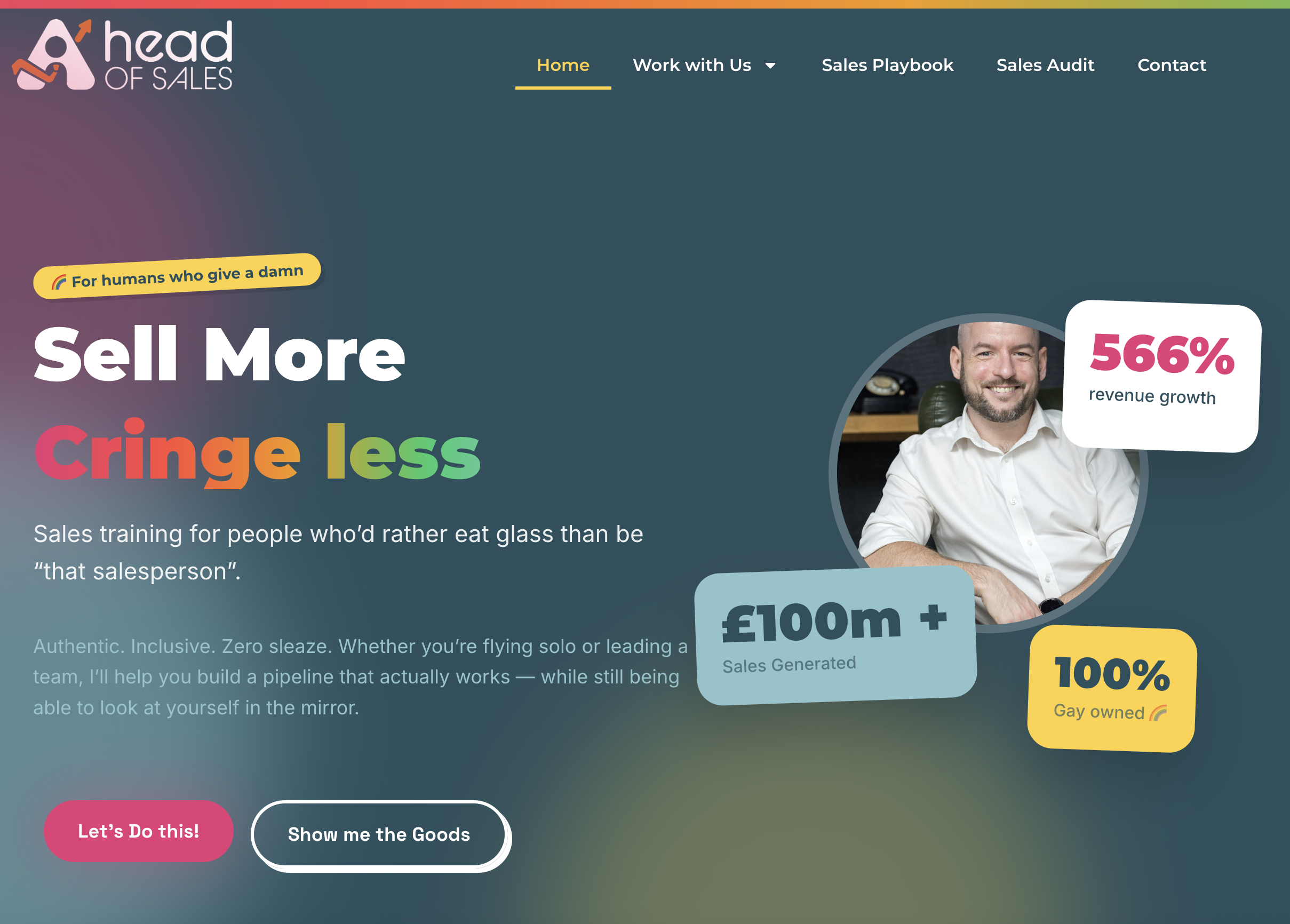
The process starts with a diagnostic: we look at where your team is losing margin and why, then build a programme around those specific gaps. Packages for teams start from £4,500, and solo service businesses can access sales acceleration packages from £2,995. Every engagement includes role-play, playbook development, and measurement so you can see the impact on close rates and average deal value.
To see the full range of formats and find the right fit for your team, visit the sales training services page or explore the sales acceleration packages for a higher-intensity engagement.
Sources
- Sales tactics that build trust and win customers
- Six Guidelines for ‘Getting to Yes’ – PON
- Negotiating in business – HBS Online blog
- 15 negotiation techniques backed by research
3 Responses