
Every Sales Director knows the challenge of transforming old habits into new results. As sales environments shift towards technology-driven, customer-centric strategies, traditional models now compete with digital integration and artificial intelligence reshaping every stage. Discover how adopting modern approaches can unlock greater consistency in quarterly targets and pave the way for substantial annual growth in your British business.
Table of Contents
- What Is the Modern Sales Process?
- Key Stages and Core Activities
- Variations Across Sectors and Sales Teams
- Common Pitfalls and How to Avoid Them
- Optimising Your Sales Process for Growth
Key Takeaways
| Point | Details |
|---|---|
| Digital Transformation | The modern sales process leverages technology and AI to enhance customer engagement and personalisation. |
| Structured Sales Process | A distinct multi-stage framework guides sales from prospecting to closing, focusing on strategic relationship-building. |
| Sector-Specific Adaptability | Sales strategies vary across industries, necessitating tailored approaches that reflect specific market dynamics. |
| Common Pitfalls | Awareness of typical challenges, such as poor lead qualification, allows professionals to develop strategies for overcoming obstacles effectively. |
What Is the Modern Sales Process?
The modern sales process represents a dramatic transformation from traditional selling approaches, now characterised by technology-driven, customer-centric strategies. Unlike previous linear models, today’s sales methodology integrates sophisticated digital tools and AI-powered analytics to create more personalised, efficient customer engagement experiences.
Key characteristics of the contemporary sales process include:
- Digital Integration: Seamless technological platforms enabling real-time communication
- Data-Driven Decision Making: Utilising predictive analytics and customer insights
- Personalised Engagement: Tailoring interactions based on individual customer profiles
- Continuous Learning: Adapting strategies through ongoing performance measurement
Understanding this evolved landscape requires recognising how artificial intelligence and advanced technologies are fundamentally redesigning sales interactions. Sales professionals now leverage sophisticated tools that enable:
- Intelligent lead prioritisation
- Automated customer interaction tracking
- Predictive sales forecasting
- Real-time performance analytics
The shift represents more than technological adoption—it’s a comprehensive reimagining of customer relationships. Modern sales teams view technology not as a replacement for human connection, but as a powerful enhancement that allows more meaningful, targeted interactions.

Pro tip: Invest in continuous technology training to ensure your sales team can effectively leverage AI-driven tools and maintain a competitive edge in the evolving sales landscape.
Key Stages and Core Activities
The sales process is a structured journey comprising distinct strategic relationship stages that guide potential customers from initial contact to final purchase. Each stage represents a critical phase where sales professionals deploy specific tactics to move prospects closer to conversion, requiring nuanced understanding and precise execution.
Typical stages of the sales process include:
- Prospecting: Identifying and researching potential customers
- Lead Qualification: Assessing prospect’s potential and alignment with product/service
- Needs Analysis: Understanding specific customer requirements and pain points
- Solution Presentation: Demonstrating how your offering addresses customer needs
- Objection Handling: Addressing customer concerns and reservations
- Negotiation: Discussing terms, pricing, and agreement details
- Closing: Finalising the sale and securing commitment
Core activities within these stages demand a sophisticated approach. Sales professionals must:
- Develop comprehensive customer profiles
- Create targeted communication strategies
- Build meaningful relationship connections
- Leverage data-driven insights
- Maintain consistent follow-up processes
Successful sales processes are not about aggressive selling, but about understanding and solving customer challenges.
Modern sales approaches emphasise adaptability, recognising that each customer interaction is unique. This means being prepared to modify strategies dynamically, using technology and interpersonal skills to create personalised experiences that genuinely address client needs.
Pro tip: Develop a standardised yet flexible sales process documentation that allows individual sales representatives to personalise their approach while maintaining consistent core methodologies.
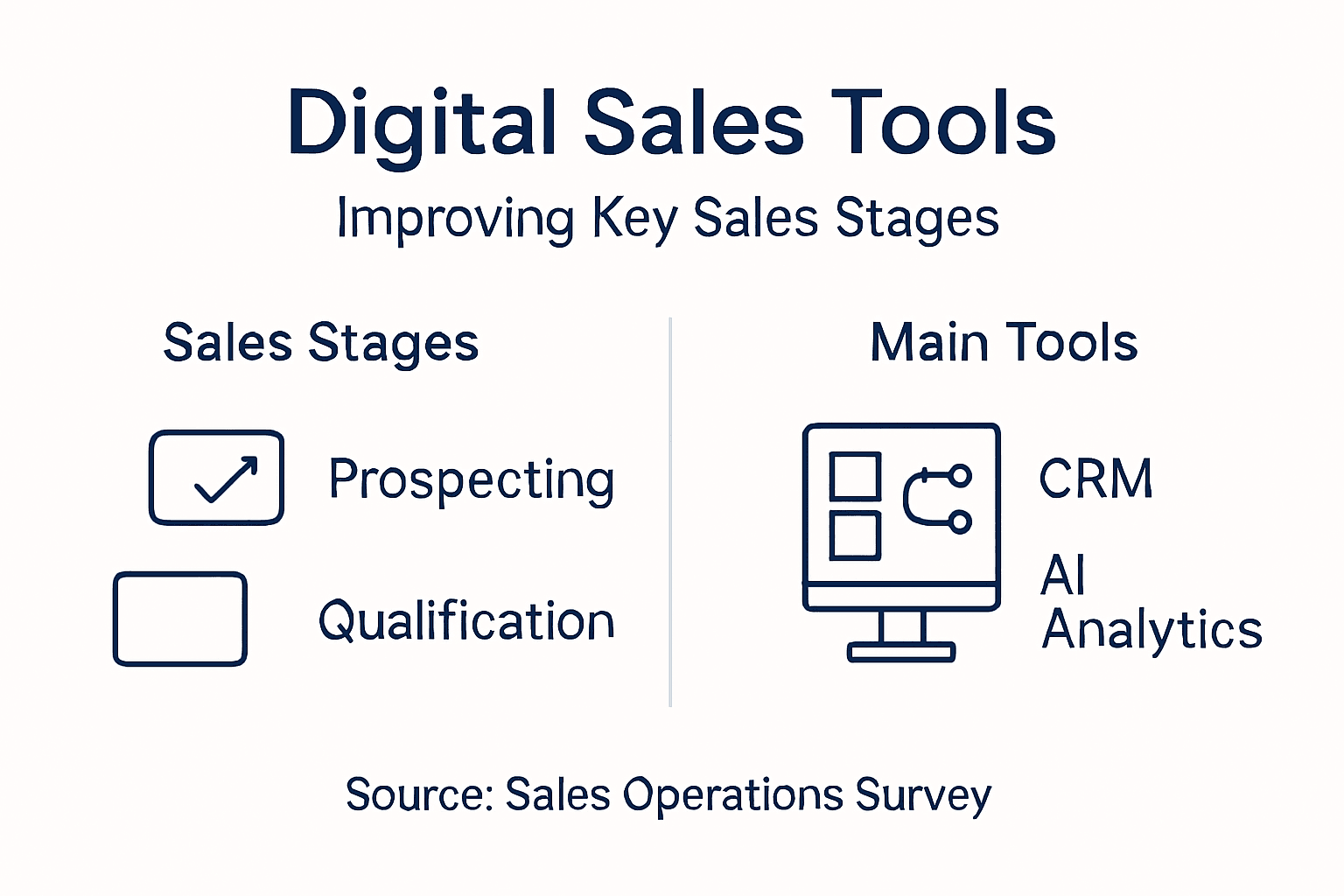
Here’s how modern digital tools enhance each sales process stage:
| Sales Stage | Key Digital Tool Used | Impact on Performance |
|---|---|---|
| Prospecting | AI-powered lead scoring | Focus on high-potential targets |
| Lead Qualification | CRM automation | Faster, more accurate screening |
| Needs Analysis | Analytics dashboards | Deeper insight into requirements |
| Solution Presentation | Virtual demo platforms | Effective, engaging presentations |
| Objection Handling | Knowledge base integration | Swift, data-supported responses |
| Negotiation | E-signature platforms | Accelerated agreement finalisation |
| Closing | Sales performance tracking | Real-time deal progression |
Variations Across Sectors and Sales Teams
Sales processes are far from uniform, with significant regional and sectoral variations influencing team structures and selling approaches. Different industries demand unique strategies, communication styles, and relationship-building techniques that reflect their specific market dynamics and customer expectations.
Key variations across sectors include:
- Technology Sector: Highly collaborative, solution-oriented sales teams
- Manufacturing: Technical expertise and detailed product knowledge critical
- Professional Services: Relationship-driven, consultative selling approach
- Retail: High-volume, quick-conversion transactional sales model
- B2B Complex Sales: Multi-stakeholder engagement and longer decision cycles
Sales team compositions also differ substantially, with organisations adopting various structures:
- Direct sales teams focused on immediate conversions
- Support-integrated selling centers
- Hybrid models combining inside and field sales representatives
- Specialised teams targeting specific market segments
- Cross-functional teams with technical and relationship management skills
Successful sales teams adapt their approach to match industry-specific nuances and customer expectations.
Technological complexity and market sophistication increasingly demand collaborative team selling approaches, where multiple professionals work together to address customer challenges. This shift requires robust communication systems, shared performance metrics, and flexible team configurations that can respond dynamically to changing market conditions.
Pro tip: Regularly audit and redesign your sales team structure to ensure alignment with evolving sector-specific selling requirements and technological capabilities.
Comparison of sector-specific sales strategies:
| Sector | Core Strategy Focus | Relationship Approach |
|---|---|---|
| Technology | Collaborative solution proposals | Team-based, consultative |
| Manufacturing | Technical expertise demonstration | Trust-building, detailed |
| Professional Services | Advisory and insight-led | Long-term relationships |
| Retail | Quick, high-volume conversions | Transactional, customer-first |
| B2B Complex Sales | Multi-level stakeholder alignment | Relationship mapping |
Common Pitfalls and How to Avoid Them
Sales professionals frequently encounter predictable challenges that can significantly undermine their performance and customer relationships. Identifying and mitigating common sales mistakes requires strategic awareness and proactive management of potential pitfalls across the sales process.
Most frequent sales process pitfalls include:
- Price-Centric Selling: Focusing exclusively on price rather than value proposition
- Poor Lead Qualification: Investing time in unqualified or unsuitable prospects
- Inadequate Customer Research: Failing to understand client’s specific needs and context
- Inconsistent Communication: Lacking structured, systematic follow-up processes
- Neglecting Relationship Building: Treating sales as transactional rather than relational
Strategies to overcome these challenges involve:
- Developing comprehensive customer understanding
- Creating value-driven sales narratives
- Implementing rigorous lead qualification frameworks
- Establishing consistent communication protocols
- Leveraging technology for enhanced customer insights
Successful sales professionals transform potential pitfalls into opportunities for deeper customer engagement.
Technological integration plays a crucial role in avoiding sales process mistakes. Customer relationship management (CRM) systems provide visibility, track interactions, and enable more intelligent, data-driven sales approaches. By systematically documenting and analysing customer interactions, sales teams can identify patterns, anticipate challenges, and develop more refined engagement strategies.
Pro tip: Regularly conduct internal sales process audits to identify systemic weaknesses and implement targeted improvement strategies.
Optimising Your Sales Process for Growth
Growth-oriented organisations understand that strategic sales process optimization demands a comprehensive, data-driven approach that transcends traditional selling methods. Successful optimization involves systematically reimagining how sales teams identify, engage, and convert potential customers while maintaining adaptability and precision.
Key optimization strategies include:
- Customer Discovery: Deep understanding of prospect’s unique challenges
- Lead Qualification: Implementing rigorous assessment frameworks
- Value Proposition Refinement: Differentiating offerings beyond pricing
- Performance Measurement: Establishing clear, actionable metrics
- Continuous Learning: Integrating feedback and technological insights
Critical components of an optimized sales process involve:
- Developing comprehensive customer personas
- Creating sophisticated lead scoring mechanisms
- Implementing advanced customer relationship management systems
- Establishing data-driven performance benchmarks
- Fostering a culture of continuous skill development
Optimization is not about working harder, but working smarter with precise, strategic interventions.
Technological integration plays a pivotal role in sales process optimization. Sales digitization enables dynamic operational efficiency, allowing teams to leverage data analytics, automate routine tasks, and create more personalised customer engagement strategies. By embracing digital transformation, sales teams can respond more rapidly to market changes and improve forecasting accuracy.
Pro tip: Conduct quarterly sales process audits, mapping technological capabilities against performance metrics to identify potential optimization opportunities.
Unlock Predictable Sales Growth with Proven Strategies
The journey through the modern sales process calls for more than theory; it requires action tailored to your unique business challenges. If you found this article insightful in understanding how structured stages and technology can transform your sales outcomes, imagine what targeted coaching and bespoke training could do for your team’s ability to consistently hit targets and exceed growth expectations. Many businesses struggle with unstable sales pipelines, inconsistent communication, or poor lead qualification but these issues become manageable with the right framework and skills.
Explore our expert-led solutions at Ahead of Sales where we combine personalised 1:1 coaching and strategic consultancy designed to deliver at least 50% sales growth annually. Dive deeper into optimising your sales approach by visiting our Sales Strategy Archives – Ahead of Sales and discover how a well-documented, adaptable sales playbook can empower your team Sales Playbook Archives – Ahead of Sales. Take charge of your sales transformation now with tailored packages suited for ambitious businesses ready to make every quarter count.
Frequently Asked Questions
What are the key stages of the modern sales process?
The key stages of the modern sales process typically include prospecting, lead qualification, needs analysis, solution presentation, objection handling, negotiation, and closing. Each stage involves specific tactics aimed at guiding prospects toward conversion.
How does technology enhance the sales process?
Technology enhances the sales process by providing tools for intelligent lead prioritisation, automated customer interaction tracking, predictive sales forecasting, and real-time performance analytics. These tools enable sales teams to engage customers more effectively and personalise their communication.
What are common pitfalls in the sales process and how can they be avoided?
Common pitfalls in the sales process include price-centric selling, poor lead qualification, inadequate customer research, inconsistent communication, and neglecting relationship building. These challenges can be avoided by developing comprehensive customer understanding, creating value-driven narratives, and establishing consistent communication protocols.
How can businesses optimise their sales process for growth?
Businesses can optimise their sales process for growth by conducting customer discovery for better understanding, refining value propositions, implementing rigorous lead qualification frameworks, establishing clear performance metrics, and fostering a culture of continuous learning. This systematic approach allows for more effective identification, engagement, and conversion of potential customers.