
Every Series B SaaS startup in the UK knows the pressure of quarterly targets and the frustration of seeing seasoned sellers struggle with subscription-based deals. Traditional sales training misses the mark when buyers expect ongoing value and complex product updates. Understanding why your team needs SaaS-specific sales training can be the difference between sustained growth and missed revenue, while equipping them to navigate complex buying committees and deliver measurable business outcomes.
Table of Contents
- Understanding SaaS Sales Training Needs
- Distinct Challenges in SaaS Startup Sales
- Key Skills and Methods for SaaS Teams
- Impact on Revenue, Retention, and Growth
- Common Pitfalls Without Targeted Training
Key Takeaways
| Point | Details |
|---|---|
| SaaS Sales Training Necessity | Sales teams require specialised training to effectively sell SaaS products, focusing on consultative skills and stakeholder management. |
| Customer Success Importance | Unlike traditional software, SaaS relies heavily on customer retention, making understanding customer outcomes crucial for sales success. |
| Training Customisation | Effective training must be tailored to address the specific gaps and challenges faced by team members in the SaaS environment. |
| Continuous Skill Reinforcement | Ongoing coaching and role-play are essential for embedding new skills and ensuring the sales team adapts in a fast-paced SaaS market. |
Understanding SaaS Sales Training Needs
Your sales team faces a unique challenge. Unlike traditional software sales, SaaS operates on subscription models where customers expect ongoing value, not just a one-time purchase. This fundamental difference shapes everything your salespeople need to know.
SaaS sales requires your team to master multiple competencies that generic sales training simply doesn’t cover. They need product expertise, but more importantly, they need to understand how your solution aligns with each prospect’s business objectives. This isn’t about features—it’s about demonstrating measurable return on investment over months and years.
The Core SaaS Sales Challenge
SaaS sales professionals conduct research, deliver product demonstrations, manage outbound prospecting, and navigate complex buying committees. Your team must simultaneously communicate technical capabilities whilst translating them into business value for decision-makers who’ve never used cloud-based solutions before.
Your sales representatives encounter distinct obstacles that make standard training ineffective:
- Complex buying committees require persuading multiple stakeholders with conflicting priorities
- Extended deal cycles test patience and require sophisticated follow-up strategies
- Pricing objections demand confidence in articulating value beyond cost comparisons
- Rapid product updates mean your team’s product knowledge becomes outdated quickly
- Market saturation forces differentiation through consultative selling, not product pushiness
- Technical complexity requires translating sophisticated features into business outcomes
These aren’t problems your older salespeople solved in their previous roles. They need training designed specifically for the SaaS environment.
Why Generic Sales Training Falls Short
Your sales team likely includes experienced professionals who succeeded in other industries. Yet deal velocity acceleration and revenue growth in SaaS demands a completely different approach. Generic training teaches qualification and closing techniques that worked for enterprise software or software licencing.
SaaS is different. Your prospects expect a consultative partnership, not a sales pitch. Training that worked for transactional sales doesn’t prepare your team to become trusted advisors. This gap between their previous experience and SaaS reality creates frustration and missed targets.
Here’s how SaaS-specific sales training differs from traditional software sales training:
| Aspect | Traditional Software Sales | SaaS Sales Training |
|---|---|---|
| Sales Approach | One-off transactional | Ongoing consultative |
| Buyer Expectations | Product features | Measurable business ROI |
| Deal Cycle | Short, direct | Extended, multi-staged |
| Success Metrics | Initial deal closure | Retention & expansion |
| Knowledge Required | Product basics | Use cases & integrations |
| Stakeholder Focus | Single buyer | Multiple stakeholders |
| Revenue Model | Licence/one-time | Subscription/recurring |
What Your Team Actually Needs
Effective SaaS sales training must address:
- Product knowledge that extends to use cases, integrations, and customisation possibilities
- Data-driven conversation starters based on prospect company size, industry, and pain points
- Subscription economics understanding—why monthly cost differs from total contract value
- Discovery techniques that uncover multi-year business transformation, not quick fixes
- Objection handling specific to cloud adoption fears, security concerns, and implementation timelines
Your business growth targets depend on salespeople who understand not just what they’re selling, but why prospects buy SaaS solutions differently than traditional software.
Your sales team needs training that reflects SaaS reality—consultative selling, multi-stakeholder persuasion, and value demonstration across subscription periods.
Pro tip: Audit your current team’s previous sales experience and identify the SaaS-specific gaps where they struggle most, then prioritise training that addresses those exact blind spots rather than generic sales skills.
Distinct Challenges in SaaS Startup Sales
Your Series B SaaS startup operates in a fundamentally different market than traditional software companies. The challenges your sales team faces aren’t just bigger versions of problems they’ve solved before—they’re entirely different problems requiring different solutions.
The SaaS sales environment demands your team navigate multiple decision-makers within buying committees who rarely agree on priorities. A CFO focuses on cost per user. A department head cares about adoption and feature fit. IT worries about security and integration. Your salespeople must persuade all three simultaneously, which requires orchestration skills most traditional software salespeople never developed.
The Core Obstacles Your Team Faces
Your startup confronts obstacles that make generic sales approaches fail repeatedly:
- Complex, extended sales cycles that test patience and require sophisticated multi-touch nurturing
- Pricing resistance stemming from subscription uncertainty and unfamiliar payment models
- Market saturation forcing differentiation through genuine value, not aggressive closing
- Post-sale onboarding complexity where customer usage patterns determine retention, not features alone
- Ongoing nurturing requirements demanding relationship management beyond the initial close
These challenges persist even with experienced salespeople. The issue isn’t your team’s capability—it’s the SaaS-specific environment they’re operating within.
Why Customer Success Merges With Sales
Unlike traditional software, SaaS growth depends on customer retention and expansion. Your salespeople close deals, but the real work begins after signature. Post-sale adoption and long-term customer experience directly impact whether customers renew or churn.

This creates pressure your sales team may not anticipate. They’re not just measured on quarterly bookings—they’re responsible for customer outcomes. If prospects adopt poorly, they won’t renew. Your sales team needs training that addresses this reality.
Differentiation in a Crowded Market
Your startup competes against dozens of competitors offering similar features. Prospects evaluate solutions on spreadsheets, not conversations. This forces your salespeople to become trusted advisors who demonstrate unique value through business insight, not product specification.
Traditional closing techniques fail here. High-pressure tactics trigger cancellation requests. Your team needs consultative skills that build confidence in choosing your solution over competitors offering nearly identical functionality.
SaaS sales challenges require salespeople trained specifically for subscription economics, complex stakeholder management, and customer success accountability—not traditional transactional selling.
Pro tip: Map your lost deals to specific objections and training gaps, then structure training to directly address why prospects chose competitors rather than generic sales skill improvement.
Key Skills and Methods for SaaS Teams
Your sales team needs training that goes beyond product knowledge. They need to master consultative selling, subscription economics, and stakeholder management—skills traditional sales training rarely covers.
The difference between SaaS salespeople who hit targets and those who struggle comes down to specific competencies. Your team must understand not just what they’re selling, but how customers buy differently in a subscription-based world.
Core Sales Skills Your Team Needs
Effective SaaS salespeople require a distinct skill set:
- Discovery mastery that uncovers multi-year business transformation, not surface-level pain points
- ROI articulation translating features into measurable business outcomes over subscription periods
- Stakeholder orchestration persuading CFOs, department heads, and IT simultaneously
- Objection handling addressing subscription-specific concerns like implementation timelines and adoption risk
- Relationship nurturing maintaining momentum across extended sales cycles without losing deals
- Contract negotiation understanding SaaS-specific terms, seat pricing, and expansion clauses
These aren’t optional enhancements. Without them, your team loses deals to competitors or spends months in unproductive cycles.
Sales Methods That Work in SaaS
Building effective sales teams requires collaborative approaches and customer-centric thinking that adapt to the fast-paced SaaS environment. Your sales methodology must shift from closing tactics to value demonstration.
Consider these proven approaches:
- Account-based selling targeting high-value prospects with personalised campaigns addressing their specific use cases
- Solution selling positioning your product as the answer to documented business problems, not features alone
- Consultative discovery asking questions that reveal opportunities customers haven’t considered
- Data-driven qualification using objective criteria to separate viable prospects from time-wasters
- Customer-success integration aligning sales efforts with post-sale adoption to ensure renewals
These methods require salespeople trained specifically in SaaS dynamics, not generic sales approaches.
Training Delivery That Actually Works
Training must blend one-to-one coaching with group workshops and role-play scenarios. Generic classroom training fails because SaaS sales demands real-world application. Your team needs to practise handling complex objections from actual prospects, not hypothetical cases.
Effective training addresses specific gaps your team demonstrates. If your reps struggle with pricing conversations, they need focused coaching on that skill. If they lose deals to competitors, training should address differentiation messaging.
SaaS sales training must develop consultative selling, subscription economics expertise, and complex stakeholder management—delivered through personalised coaching, not one-size-fits-all workshops.
Pro tip: Record your team’s actual sales calls and identify where conversations derail—then structure training interventions that directly address those specific objection patterns rather than teaching generic sales theory.
Impact on Revenue, Retention, and Growth
Sales training transforms your bottom line in ways that go far beyond immediate deal closure. Your Series B startup’s growth trajectory depends on understanding how trained salespeople drive retention, expansion revenue, and sustainable profit.
Here’s the reality: trained salespeople close better deals with longer contract values and higher renewal rates. Untrained teams chase transactional sales, leaving expansion revenue on the table and watching customers churn at renewal time.
Revenue Growth From Better Deals
Salespeople trained in SaaS fundamentals consistently secure higher average contract values. They negotiate better terms because they understand subscription economics. They position higher-tier products because they know how to articulate differentiated value.
Your team’s improved deal quality compounds over time. A 15% increase in average deal size across your pipeline generates millions in additional revenue annually at your current volume.
The Retention and Expansion Engine
Existing customers generate more revenue and reduce sales costs compared to new customer acquisition. This is where trained salespeople create lasting competitive advantage.
When your team understands customer outcomes during the sales process, they set realistic expectations. Customers adopt successfully, renew automatically, and expand purchases without churning. This transforms your unit economics:
- Lower churn rates from setting proper expectations and demonstrating genuine value fit
- Higher renewal rates from customers who achieved promised outcomes
- Expansion revenue from existing customers willing to buy more from salespeople they trust
- Reduced customer acquisition costs because existing customers become advocates
These benefits compound. A 5% improvement in retention rates creates exponential profit growth.
Net Revenue Retention: The Growth Multiplier
Net Revenue Retention (NRR) measures revenue growth from existing customers through upselling, cross-selling, and reduced churn. Your trained salespeople directly influence this metric.
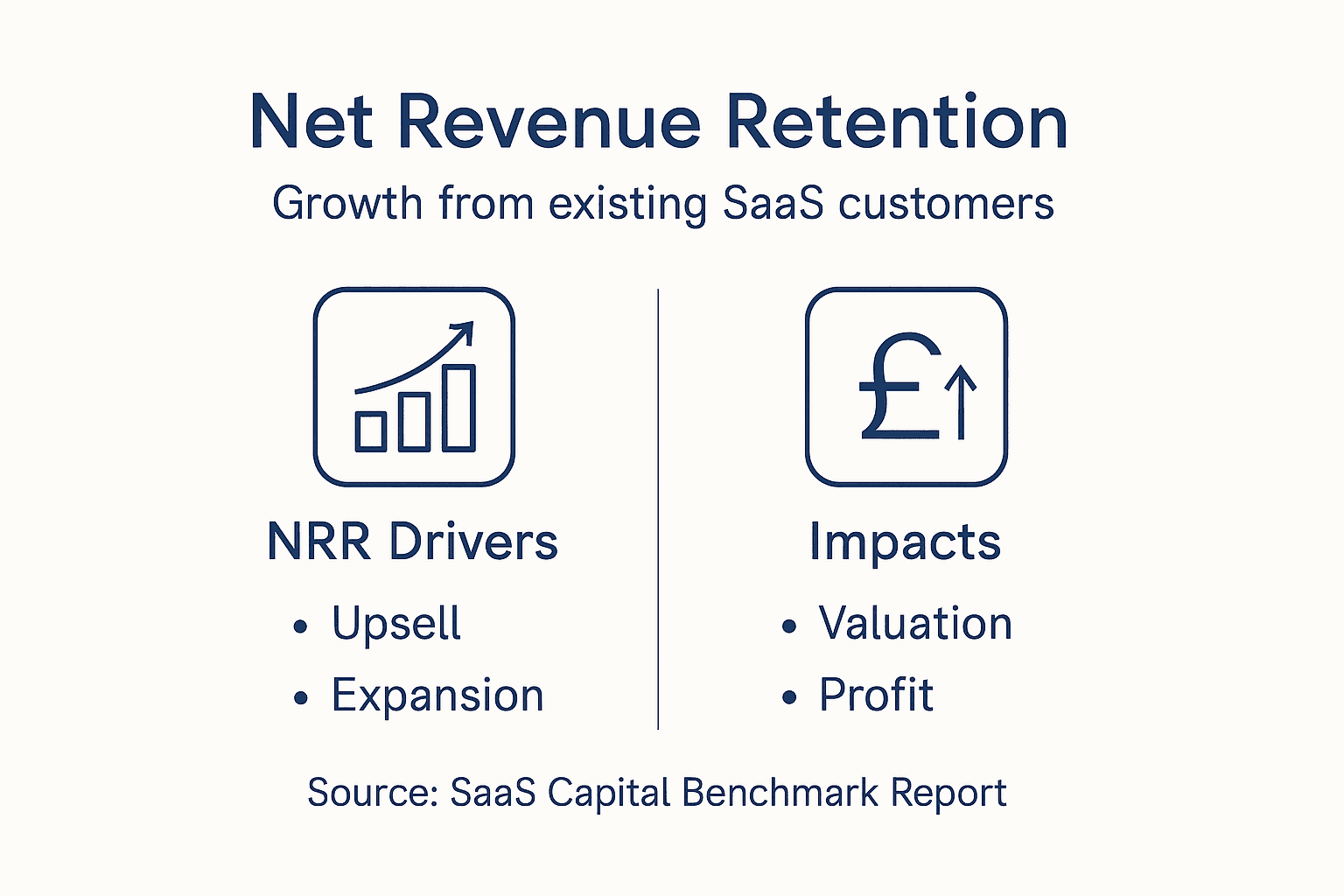
High-performing SaaS companies achieve NRR above 120%. This means they grow faster from existing customers than they could through new customer acquisition. Your sales team’s ability to expand accounts and prevent churn determines whether you reach this benchmark.
Improved NRR directly increases your company valuation. Investors pay premium multiples for SaaS businesses demonstrating sustainable growth from customer expansion rather than constant new customer replacement.
The Quarterly Target Impact
Trained salespeople hit targets consistently. They forecast accurately because they understand their pipeline. They close deals faster because they navigate complex buying processes efficiently. They reduce lost deals to competitors because they differentiate effectively.
Your Series B targets require hitting quarterly milestones reliably. Untrained teams create unpredictable revenue, forcing you to maintain bloated pipelines and sacrifice margins. Trained teams deliver predictable growth.
To understand the impact of targeted sales training on business metrics, see the summary below:
| Metric | Without Training | With Targeted Training |
|---|---|---|
| Average Deal Size | Flat or declining | Up to 15% increase |
| Churn Rate | High, unpredictable | Reduced by 5% or more |
| Net Revenue Retention (NRR) | Below 100% | Above 120% (industry-leading) |
| Quarterly Target Achievement | Inconsistent | Reliable and forecastable |
Sales training drives revenue growth through improved deal quality, customer retention, and account expansion—creating sustainable competitive advantage beyond any single quarter.
Pro tip: Calculate your current churn rate and average customer lifetime value, then project how a 10% improvement in retention through sales training would impact annual recurring revenue growth and company valuation.
Common Pitfalls Without Targeted Training
Many Series B SaaS startups invest in sales training and still see disappointing results. The problem isn’t the concept of training—it’s how they deliver it. Without targeted, structured approaches, training becomes an expensive exercise in frustration.
Your team attends workshops, sits through generic modules, and returns to their desks unchanged. Nothing shifts. Targets remain missed. Deal sizes stay flat. You’ve wasted budget and demoralised your salespeople.
The One-Size-Fits-All Trap
Training that lacks clear objectives and treats everyone identically leads to poor knowledge retention. Your account executives face different challenges than your sales development representatives. Your enterprise hunters operate differently than your mid-market closers.
Generic training ignores these differences. A workshop on discovery techniques doesn’t address the specific objections your team struggles with. It doesn’t teach your hunters how to navigate complex procurement at Fortune 500 companies. Your reps disengage immediately.
Vague Objectives and Measurable Outcomes
Training without clear goals produces vague results. You can’t measure success because you never defined what success looks like. Your team completes training, but nobody can articulate what changed or improved.
Effective training targets specific, measurable gaps:
- Average deal size improvements from better discovery
- Qualification accuracy measured by win rate per stage
- Time-to-close reductions from more efficient sales processes
- Churn prevention through better customer outcome alignment
- Lost deal recovery through differentiation messaging
Without these benchmarks, training becomes a box-ticking exercise rather than a business investment.
Information Overload With No Reinforcement
Many programmes dump everything into a single intensive session. Your team absorbs overwhelming amounts of content, forgets 70% by week two, and reverts to old habits by month three. This cycle repeats quarterly, wasting money and frustrating your leadership.
Effective training requires ongoing reinforcement. One-day workshops don’t stick. Your salespeople need continuous coaching, role-play practice, and feedback on actual deals to embed new skills permanently.
Missing the Persona-Based Approach
Training programmes that ignore diverse learner needs and role requirements fail to improve adoption. Your London-based enterprise account executive needs different development than your Manchester mid-market hunter.
Targeted training tailors content to specific roles, experience levels, and performance gaps. It addresses real obstacles your team faces, using their actual deals as case studies, not hypothetical scenarios.
The Silent Cost: Inconsistent Team Performance
Without structured training, your team fragments. Top performers operate by instinct. Mediocre performers struggle without clear frameworks. New hires flounder for months. Your sales methodology exists only in your head, not embedded in your team’s daily practice.
This inconsistency creates unpredictable revenue and exhausts your sales leadership managing individual coaching constantly.
Poorly designed training wastes budget, frustrates your team, and leaves performance gaps untouched—actual targeted training addresses specific gaps with measurable outcomes and ongoing reinforcement.
Pro tip: Before investing in any training programme, audit your team’s top three lost deal reasons and worst performance metrics, then evaluate whether proposed training directly addresses those specific gaps rather than offering generic sales skills.
Unlock Your SaaS Startup’s Growth with Expert Sales Training
The challenges of SaaS sales demand more than traditional methods. Your team needs bespoke coaching that tackles subscription economics, complex stakeholder management and extended deal cycles head-on. If you’re aiming to accelerate deal velocity, reduce churn and boost net revenue retention, then targeted training designed specifically for SaaS environments is essential.
Ready to close bigger deals and hit quarterly targets consistently? Discover how our revolutionary combination of 1:1 coaching, customised training and expert consultancy at Ahead of Sales can help your SaaS startup scale rapidly. Don’t let generic sales training hold back your team’s potential — take the next step now and secure sustainable growth for your business. Learn more about our tailored packages and transform your sales outcomes today by visiting Ahead of Sales.
Frequently Asked Questions
What is the purpose of SaaS sales training for startups?
SaaS sales training helps startups enhance their sales team’s abilities to navigate the unique challenges of subscription-based sales, ensuring they are equipped to articulate value, manage complex buying committees, and improve customer retention.
How does SaaS sales training differ from traditional sales training?
SaaS sales training focuses on consultative selling and understanding subscription economics, while traditional sales training often emphasises transactional techniques, making it less effective for the ongoing value expectations of SaaS customers.
Why is understanding subscription economics crucial for SaaS sales?
Understanding subscription economics enables sales representatives to effectively communicate the long-term value of their solutions, addressing customer concerns about pricing and demonstrating how the solution aligns with their business goals.
What key skills should SaaS sales teams develop?
SaaS sales teams should develop skills in discovery mastery, ROI articulation, stakeholder orchestration, objection handling, and relationship nurturing to enhance their effectiveness in a competitive market.
Recommended
- Role of Sales in SaaS Growth: Complete Guide – Ahead of Sales
- How to Scale SaaS Sales for Sustainable Growth
- SaaS Sales Strategy Guide for Rapid Business Growth
- Sales Training Matters: Complete Guide for Growth – Ahead of Sales
- Sonance AI Solutions | Industry-Smart AI Solutions
- Xolapp – Run your business without admin stress