
Setting up a reliable growth strategy often feels complex and uncertain. When ambitions are high but sales progress stalls, it is easy to lose direction or focus on the wrong targets. Having a clear plan that truly works can make the difference between shallow gains and sustainable progress.
This guide brings you strategic goal-setting and actionable methods to align your team’s efforts with your organisation’s real growth priorities. Each insight is designed to help you transform vague plans into practical steps, uncover your strongest selling points, and engage customers who are the right fit for your business.
Get ready to discover specific techniques that elevate every part of your sales process, from defining your objectives to optimising how your team works together. The upcoming strategies offer proven approaches you can apply straight away, so you can drive results and reshape how your team approaches sales growth.
Table of Contents
- 1. Define Clear Growth Objectives And Kpis
- 2. Build A Strong Value Proposition For Clients
- 3. Develop Targeted Prospecting Strategies
- 4. Leverage Data To Drive Sales Decisions
- 5. Implement Advanced Sales Training Programmes
- 6. Foster Cross-Functional Team Collaboration
- 7. Monitor, Adapt And Optimise Sales Processes
Quick Summary
| Key Message | Explanation |
|---|---|
| 1. Set Clear Growth Objectives and KPIs | Establish specific goals and measurable KPIs to provide a strategic direction for your organisation’s growth. |
| 2. Create a Compelling Value Proposition | Articulate the unique benefits of your offerings, addressing customer challenges to differentiate from competitors. |
| 3. Implement Targeted Prospecting Strategies | Focus on quality over quantity by systematically identifying and engaging potential clients tailored to your offerings. |
| 4. Leverage Data for Sales Decisions | Use data analytics to guide strategic choices, enhancing decision-making and optimising sales processes effectively. |
| 5. Foster Cross-Functional Collaboration | Encourage cooperation between departments to create innovative solutions and enhance overall organisational performance. |
1. Define Clear Growth Objectives and KPIs
Successful sales organisations recognise that strategic goal-setting is the fundamental cornerstone of sustainable business development. By establishing precise growth objectives and key performance indicators (KPIs), companies create a roadmap that transforms vague aspirations into measurable, actionable strategies.
Defining clear objectives requires understanding your organisation’s unique growth potential. Strategic objectives demand precise measurement across multiple dimensions, ensuring every team member understands the destination and path forward.
When developing growth objectives, focus on these critical elements:
- Specificity in target metrics
- Realistic yet challenging targets
- Direct alignment with overall business strategy
- Quantifiable and time-bound expectations
- Transparent communication across departments
The most effective KPIs transcend simple numerical targets. They provide a holistic view of performance, capturing nuanced indicators that reflect genuine organisational progress. Consider metrics such as:
- Revenue growth percentage
- Customer acquisition cost
- Conversion rate improvements
- Average sales cycle duration
- Customer lifetime value
Your KPIs are not just numbers. They are the strategic compass guiding your entire sales ecosystem.
Implementing SMART (Specific, Measurable, Achievable, Relevant, Time-bound) frameworks ensures your objectives remain practical and motivating. This approach transforms abstract goals into concrete milestones that drive meaningful performance.
Pro tip: Review and recalibrate your KPIs quarterly to maintain alignment with evolving business landscapes and market dynamics.
2. Build a Strong Value Proposition for Clients
In today’s competitive business landscape, a compelling value proposition is your critical differentiator. Defining a unique market position enables businesses to stand out and attract the right customers with precision and clarity.
A value proposition is more than a marketing slogan. It is a strategic declaration that communicates your distinctive benefits, solving specific customer challenges in ways your competitors cannot. Effective value propositions transform complex offerings into clear, attractive solutions.
When crafting your value proposition, focus on these fundamental components:
- Clearly articulate the unique problem you solve
- Demonstrate tangible benefits beyond generic features
- Highlight what makes your solution distinctive
- Address specific customer pain points
- Quantify potential customer gains
Successful value propositions typically answer three critical questions:
- What specific problem does your product/service solve?
- Why should customers choose you over alternatives?
- What concrete results can customers expect?
Your value proposition is the strategic bridge between your capabilities and your customers’ most pressing needs.
By understanding market needs and articulating your unique advantages, you create a powerful narrative that resonates with potential clients. This approach transforms your offering from a commodity to a must-have solution.
Pro tip: Regularly test and refine your value proposition through direct customer feedback and market research to ensure continued relevance and impact.
3. Develop Targeted Prospecting Strategies
Prospecting is the lifeblood of sustainable sales growth. Systematic client identification transforms random lead generation into a precision-driven approach that dramatically increases conversion potential.
Targeted prospecting goes beyond traditional contact lists. It involves deep market research, behavioural analysis, and strategic engagement designed to connect with potential customers who genuinely need your solutions. Effective prospecting is about quality not quantity.
Key elements of a robust prospecting strategy include:
- Developing a detailed ideal customer profile
- Leveraging digital research tools
- Understanding sector-specific buying behaviours
- Mapping decision-maker networks
- Creating personalised engagement approaches
Successful prospecting requires a multifaceted approach:
- Conduct comprehensive market segmentation
- Use data-driven insights for lead prioritisation
- Develop tailored communication strategies
- Implement systematic follow-up protocols
- Continuously refine targeting criteria
The most successful salespeople view prospecting as a strategic science not a random activity.
Behavioural insights and market analysis are crucial in developing nuanced prospecting strategies. By understanding potential customers’ pain points and motivations, you transform cold outreach into meaningful conversations.
Pro tip: Allocate dedicated time each week for strategic prospecting research and invest in continuous learning about your target market’s evolving needs.
4. Leverage Data to Drive Sales Decisions
Data has transformed from a supporting player to the primary conductor of strategic sales decisions. Sales analytics enable precise decision-making by converting raw information into actionable intelligence that drives remarkable business growth.
Modern sales leaders understand that intuition alone cannot compete with data-driven insights. By systematically collecting, analysing, and interpreting customer and sales performance data, organisations can uncover patterns, predict trends, and make informed strategic choices.
Key data-driven strategies include:
- Implementing robust customer relationship management systems
- Tracking granular performance metrics
- Developing predictive sales forecasting models
- Monitoring customer engagement signals
- Creating personalised sales approaches
Successful data leverage requires a structured approach:
- Invest in comprehensive data collection infrastructure
- Develop cross-functional data literacy
- Implement advanced analytics tools
- Create regular reporting and review mechanisms
- Foster a culture of data-informed decision-making
Data is not just numbers. It is the strategic language of modern sales excellence.
Predictive analytics and dynamic pricing can transform how businesses understand and engage with potential customers, creating unprecedented competitive advantages.
Pro tip: Allocate dedicated resources to data quality and continuous learning, ensuring your analytics capabilities evolve alongside market complexities.
5. Implement Advanced Sales Training Programmes
Sales training has evolved from generic workshops to sophisticated, targeted development programmes that transform individual performance. Advanced training strategies are no longer optional but essential for maintaining competitive edge in today’s dynamic business environment.
The most successful organisations invest strategically in continuous learning that goes beyond traditional skill acquisition. These programmes focus on holistic development, integrating technical knowledge, emotional intelligence, and adaptive communication techniques.
Key components of advanced sales training include:
- Personalised skill assessment and development
- Scenario-based learning experiences
- Data-driven performance insights
- Psychological understanding of customer behaviour
- Technological competence and digital sales techniques
Effective training programme implementation requires a structured approach:
- Conduct comprehensive skills gap analysis
- Design customised learning pathways
- Integrate technology-enabled learning platforms
- Establish continuous feedback mechanisms
- Measure training impact through performance metrics
True sales mastery is not about memorising techniques but understanding human dynamics.
Professional sales competencies extend far beyond traditional product knowledge, encompassing strategic thinking, emotional intelligence, and adaptive communication skills.
Pro tip: Create a mentorship programme where experienced sales professionals actively coach and develop junior team members, accelerating skill transfer and organisational knowledge.
6. Foster Cross-Functional Team Collaboration
Cross-functional collaboration represents the modern approach to breaking down organisational barriers and creating synergistic performance. Effective interdepartmental communication transforms siloed working environments into dynamic, interconnected ecosystems of shared knowledge and collective achievement.
Successful organisations understand that innovation emerges at the intersection of different perspectives. By encouraging teams from sales, marketing, product development, and customer service to work together seamlessly, businesses can unlock unprecedented levels of creativity and problem-solving potential.
Key strategies for fostering cross-functional collaboration include:
- Establishing shared performance metrics
- Creating open communication channels
- Implementing collaborative technology platforms
- Designing cross-departmental project teams
- Promoting a culture of mutual respect
Implementing effective cross-functional collaboration requires a structured approach:
- Define clear collaborative objectives
- Develop transparent communication protocols
- Encourage knowledge sharing sessions
- Recognise and reward collaborative achievements
- Build trust through consistent interaction
Collaboration is not about compliance. It is about creating a unified organisational intelligence.
By breaking down traditional departmental silos, organisations can create more agile, responsive, and innovative working environments that drive sustained business growth.
Pro tip: Schedule monthly cross-functional workshops where teams from different departments share insights, challenges, and collective opportunities to build deeper understanding and collaborative momentum.
7. Monitor, Adapt and Optimise Sales Processes
Sales process optimisation is the strategic heartbeat of sustainable business growth. Advanced performance monitoring techniques enable organisations to transform raw data into actionable insights that drive continuous improvement.
Successful sales leaders view processes as living ecosystems that require constant refinement. By implementing robust monitoring and adaptation strategies, businesses can identify performance gaps quickly and respond with precision and agility.
Critical elements of effective sales process optimisation include:
- Implementing real-time performance tracking
- Establishing clear key performance indicators
- Creating dynamic feedback loops
- Utilising advanced analytics tools
- Developing responsive coaching mechanisms
A comprehensive optimisation approach involves:
- Regularly audit existing sales workflows
- Identify performance bottlenecks
- Design targeted improvement interventions
- Measure intervention effectiveness
- Continuously iterate and refine processes
Process optimisation is not about perfection. It is about perpetual strategic evolution.
Strategic sales workflow refinement demands a holistic approach that integrates data analysis, team development, and technological innovation to create scalable, responsive sales ecosystems.
Pro tip: Schedule quarterly sales process review meetings where team members from different roles collaboratively analyse performance data and collectively propose process improvements.
Below is a comprehensive table summarising the strategies and actionable steps outlined in the article for enhancing sales organisation performance and growth.
| Topic | Key Recommendations | Benefits |
|---|---|---|
| Define Clear Growth Objectives and KPIs | Set SMART goals and KPIs; ensure specificity and alignment with business strategy; review quarterly for relevancy. | Establishes measurable success metrics and promotes focused organisational progress. |
| Build a Strong Value Proposition for Clients | Craft a clear and unique market position addressing customer pain points; quantify benefits and test through feedback. | Differentiates offerings and enhances client attraction and satisfaction. |
| Develop Targeted Prospecting Strategies | Use market research and behavioural analysis; define ideal customer profiles and segment accordingly. | Improves lead generation effectiveness and conversion rates. |
| Leverage Data to Drive Sales Decisions | Invest in data infrastructure, utilise predictive analytics, ensure data-informed decision-making. | Enhances strategic clarity and forecasting accuracy. |
| Implement Advanced Sales Training Programmes | Conduct skills gap analysis; include scenario-based learning and emotional intelligence training. | Boosts sales team performance and adaptability. |
| Foster Cross-Functional Team Collaboration | Create shared performance metrics, utilise communication tools, encourage knowledge sharing. | Enhances organisational innovation and unified goals achievement. |
| Monitor, Adapt and Optimise Sales Processes | Regularly audit workflows; refine processes based on data insights and team feedback. | Promotes continuous improvement and agile response to challenges. |
Accelerate Your Sales Growth with Proven Strategies and Expert Coaching
The challenge of rapid sales growth demands clear goals, targeted prospecting, and data-driven decisions just like the article “7 Proven Business Development Tactics for Fast Sales Growth” highlights. If you are striving to transform your sales process, overcome common obstacles such as unclear objectives or ineffective team collaboration, and ensure your sales team consistently hits their targets, our tailored approach is designed precisely for you. By combining bespoke 1:1 coaching with traditional training and consultancy, we deliver actionable strategies that generate at least 50% sales growth every year for businesses ready to evolve.
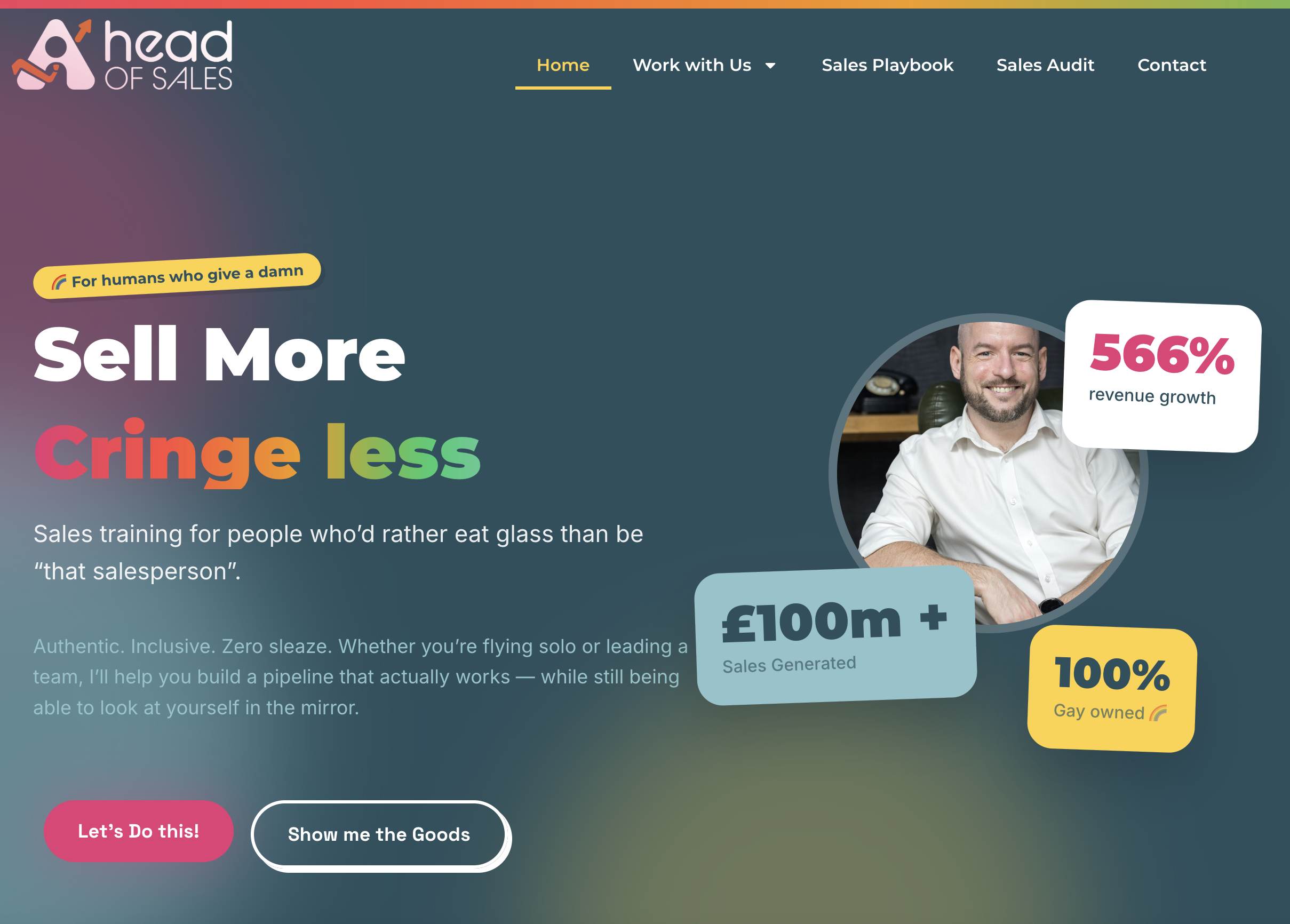
Explore our specialised packages designed for businesses with 50 to 1000 staff who want to embed lasting growth mindsets and optimise sales performance. To dive deeper into proven sales tactics and strategy, visit our Sales Strategy Archives – Ahead of Sales and discover how our expert-led programmes can unlock your team’s potential. Don’t wait for opportunity to knock—take control of your growth journey today at Ahead of Sales.
Empower your sales leadership with insights from our Sales Playbook Archives – Ahead of Sales and start creating a roadmap for sustainable success right now.
Frequently Asked Questions
What are the key components of clear growth objectives in business development?
Defining clear growth objectives involves specificity in target metrics, realistic yet challenging targets, alignment with business strategy, quantifiable expectations, and transparent communication. To establish your objectives, take time to review and define these elements within your team over the next few weeks.
How can I create a compelling value proposition for my product or service?
To craft an effective value proposition, clearly articulate the unique problem your offering solves, demonstrate tangible benefits, and highlight what differentiates your solution from competitors. Start by gathering customer feedback to refine your message within 30 days.
What are effective strategies for targeted prospecting?
Key strategies for targeted prospecting include developing an ideal customer profile, leveraging digital research tools, and creating personalised engagement approaches. Map out your customer profiles and begin refining your approach within the next week.
How can data be utilised to drive sales decisions?
Utilising data for sales decisions involves implementing customer relationship management systems and tracking key performance metrics. Start by establishing a data collection process now, and aim to analyse your findings weekly to adjust your strategies effectively.
What can be included in an advanced sales training programme?
An advanced sales training programme should encompass personalised skill assessments, scenario-based learning, performance insights, and understanding customer behaviour. Initiate a skills gap analysis within your team to design customised training paths over the next month.
How can I monitor and optimise my sales processes?
Monitoring and optimising sales processes can be achieved by implementing real-time performance tracking and establishing feedback loops. Begin auditing your current sales workflows and identifying bottlenecks to create targeted improvements within the next quarter.