
Tailored sales training helps female entrepreneurs sell more, and it does so quickly when the format fits: peer cohorts, 1:1 coaching and short masterclasses all build the same muscle, which is having more sales conversations and converting a higher share of them. Structured practice replaces guesswork and softens the fear of sounding “pushy” that holds many founders back. If you want the specifics, the checklist for vetting programmes and the quick exercises are all below, and some providers build their offer around exactly this mix.
TL;DR:
- Cohort-based training improves sales practice through accountability and peer feedback, especially for founders with weak networks and unconscious bias issues.
- Structured exercises like discovery calls and objection scripts can boost weekly conversations and conversion rates within weeks, but results depend on consistent practice.
- Choosing a training provider requires evidence of concrete outcomes, tailored content, small group sizes, structured follow-up, clear pricing, and an option to preview sessions.
- Implement a six to eight-week pilot, track key metrics such as conversations and conversion rate, and allow three to six months to see revenue impact from training.
- Opt for coaching formats based on specific needs: cohort programs for accountability or bespoke 1:1 coaching for targeted issues like pipeline stalls or pricing objections.
Table of Contents
- What effective, women-focused sales training covers
- Why cohort learning and 1:1 coaching matter for women founders
- Practical skills and exercises to practise now
- How to choose the right sales training
- How to implement training and measure impact
- Ahead of Sales: how our approach maps to the checklist
- Practical advice on investing in training
- Ahead of Sales options built for founders like you
- Sources
- FAQ
What effective, women-focused sales training covers
Good training does not start with tactics. It starts with a repeatable sequence: lead generation, qualifying the right buyers, having a genuine value conversation, following up without disappearing, then closing with a clear invitation rather than a vague hope. If a programme cannot explain how it teaches each stage of that sequence, it is probably teaching scripts instead of skills.
The best courses reframe the classic selling skills so they fit how founders actually sell, which is usually solo, on video calls, without a big brand behind them. That reframe tends to cover six areas:
- Value articulation: saying clearly what changes for the client, not just what you do.
- Buyer psychology: understanding why a prospect hesitates before you try to fix it.
- Storytelling-led selling: using client outcomes, not features, to make the offer memorable as explained in the power of storytelling.
- Objection handling: addressing concerns without becoming defensive or discounting on the spot.
- Confident follow-up: staying in touch without chasing or apologising for it.
- Structured closing: inviting a decision instead of waiting for the buyer to bring it up.
None of that sticks from a slide deck alone. The training methods that produce a real shift tend to combine live roleplay, assignments using the founder’s actual leads rather than hypothetical ones, recorded call feedback, and homework with a number attached to it, such as booking a fixed number of discovery calls that week.
Founders who practise this way typically report more weekly sales conversations and a noticeably higher conversion rate within a few weeks, though results vary by offer, price point and how consistently the practice happens. Treat that as a typical pattern rather than a promise: the training creates the conditions for improvement, but the reps still have to happen.
Why cohort learning and 1:1 coaching matter for women founders
Peer cohorts work because they give founders a safe space to unpack a stuck sale and get direct feedback that outlasts the session itself. Written evidence submitted to a UK parliamentary committee notes that this kind of peer-to-peer setting helps women entrepreneurs work through sales hurdles tied to weak networks and unconscious bias, because the accountability built into a group tends to increase how consistently people actually practise what they learn.
A cohort of similar-stage founders, meeting on a regular cadence, tends to outperform a one-off webinar because the group keeps returning to real deals in progress rather than theory. 1:1 coaching earns its place alongside that for the parts a group session cannot reach: a specific pricing objection, a stuck pipeline, or the exact words to use with a particular type of buyer.
- Cohorts suit founders who want structured accountability and the chance to see how peers handle similar objections.
- 1:1 coaching suits founders who need bespoke work on pricing conversations or a pipeline that has gone quiet.
- Short masterclasses suit a quick skill top-up, not the behaviour change that comes from repeated practice.
Pro tip: Choose cohort peers at a similar revenue stage or with a comparable offer type. A founder selling £500 workshops and one selling £50,000 consultancy retainers will pull the discussion in two different directions.
Practical skills and exercises to practise now
You do not need a course to start improving this week. A few structured exercises, used consistently, move the needle on their own.
- Run a 30-minute discovery call with four parts: open with a short rapport line and the call’s purpose, tell a 60-second value story, qualify with two or three direct questions about budget and timeline, then close by proposing a specific next step.
- Build a 60-second value story: one sentence on the client’s starting problem, one on what you did, one on the measurable outcome, closed with a line connecting it to the prospect’s own situation.
- Handle the price objection with a fixed micro-script: acknowledge the concern, ask what the price is being compared to, then restate the outcome in the client’s own words before repeating the offer.
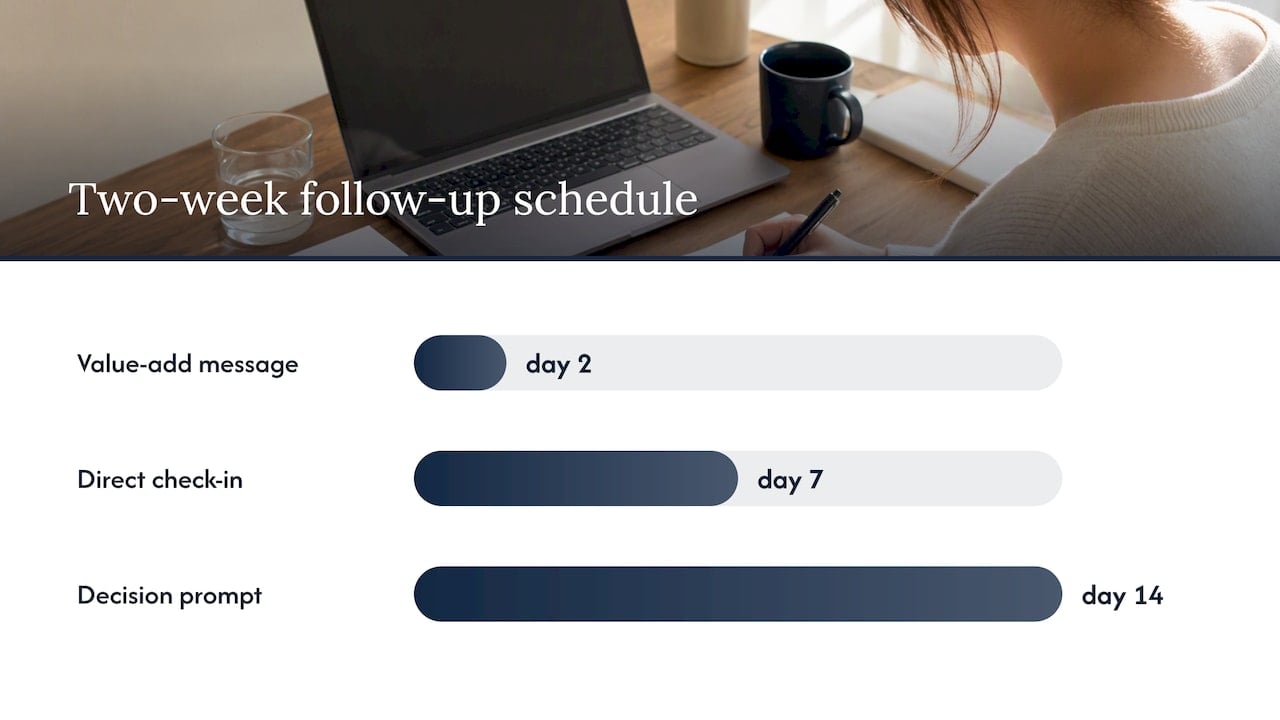
- Follow up in three steps over two weeks: a value-add message on day two, a direct check-in on day seven, and a clear “should we move forward or park this” message on day fourteen.
Track two numbers only: conversations per week and conversion rate from conversation to sale. Founders following advice to increase weekly sales conversations and track conversion rate consistently report it is the single clearest early signal that training is working, well ahead of revenue itself catching up.
Objection handling and closing deserve deeper practice than a single script. Our guide to objection handling and our list of closing techniques both work well as follow-up reading once you have the basic sequence down.
How to choose the right sales training
Choosing badly here is expensive, both in cash and in months lost to a course that never changes behaviour. Run any provider through this checklist before you pay:
- Proven outcomes: can they describe what changed for past participants, in concrete terms rather than vague enthusiasm?
- Customised content: does the material reflect your offer and price point, or is it generic B2B advice?
- Cohort size: is the group small enough that you get real airtime and feedback?
- Measurable follow-up: is there structured accountability after the sessions end, or does support stop the moment the course does?
- Price clarity: is the cost stated upfront, with no vague “packages from” language hiding the real number?
- Sample session availability: can you sit in on part of a session before committing?
On a discovery call, ask directly: “What specifically changes for someone who completes this?” and “What happens if I do not hit a certain conversation or conversion target?” A credible provider answers both without deflecting to testimonials alone.
Red flags are easy to spot once you know to look: no measurable outcomes mentioned unprompted, a stack of pre-recorded videos sold as a transformation, vague refund or guarantee terms, and no structure for accountability once the course finishes.
How to implement training and measure impact
Treat any new training as a pilot, not a leap of faith. Give it a defined window and clear numbers before you decide whether to continue.
- Run a 6 to 8 week pilot focused purely on behaviour change: more conversations, cleaner qualifying questions, a tighter follow-up rhythm.
- Allow 3 to 6 months before expecting a measurable lift in revenue, since sales cycles rarely compress overnight.
- Track four numbers weekly: conversations held, conversion rate, average deal value and monthly revenue.
- Add a short confidence self-assessment, rating comfort with pricing conversations and objection handling before and after the pilot.
- Start small: a short coaching block or a single cohort round, with a clear before-and-after measure, tells you more than a long commitment made on faith.
Ahead of Sales: how our approach maps to the checklist
Our own offer is built around the same checklist a careful founder should be running anyway. We combine bespoke 1:1 coaching with structured cohorts and consultancy, and our packages for solo service businesses and consultants run from £2,995 to £5,995 as a one-off, while team-based bespoke coaching and consultancy engagements run from £4,500 to £8,500 as a one-off, both detailed on our sales training cost page.
If you are vetting us, or any provider, alongside this checklist, it is fair to ask direct questions:
- Ask for concrete metrics from past coaching or cohort engagements, not general testimonials.
- Ask to sit in on part of a live cohort session before committing.
- Ask for references from founders at a similar stage to yours.
Practical advice on investing in training
Here is the rule of thumb I give founders: invest in bespoke 1:1 coaching when you need a fast conversion lift on a specific problem, such as pricing conversations or a stalled pipeline, and use a cohort when what you need is accountability and the reassurance that other founders face the same objections. Give either format a real window, six to eight weeks minimum, before judging it. Once you know which one you need, the next step is simply booking the right conversation.
— Jerry
Ahead of Sales options built for founders like you
If a cohort sounds right, our Sales Training Cohorts give you structured peer practice with real accountability between sessions. If you need bespoke work on pricing, objections or a stalled pipeline, our solo acceleration track, priced from £2,995 to £5,995 as a one-off, is built for exactly that. And if you want an ongoing coaching relationship rather than a single course, The Sage Collective runs at £990 per month.
- Founders wanting peer accountability: the Sales Training Cohorts programme.
- Solo consultants needing a fast, focused fix: the sales acceleration track.
- Founders wanting continuity: The Sage Collective at £990 per month.
You can see the full range of formats and book a discovery call from our sales training overview.
Sources
The parliamentary written evidence on barriers facing women entrepreneurs is worth reading in full for the network and bias issues behind many sales struggles. For a grassroots example of founders building sales confidence through community, see this Lancashire Post feature on a podcast helping female entrepreneurs sell more.
- Written evidence: barriers and support for women entrepreneurs — UK Parliament
FAQ
What are the seven golden rules of sales?
Definitions vary across trainers, but most versions centre on knowing your buyer, leading with value rather than features, listening more than you pitch, following up consistently, handling objections honestly, and closing with a clear next step rather than a vague hope. The exact wording differs by source, so treat it as a framework rather than a fixed list.
What are the six basic selling skills?
The core set usually covers value articulation, understanding buyer psychology, storytelling-led selling, objection handling, confident follow-up and structured closing. These map closely to what women-focused sales training tends to teach, adapted for founders selling directly rather than through a large sales team.
What do female entrepreneurs struggle with most in sales?
Common hurdles include under-charging, avoiding follow-up to stay “polite,” relying on hope-based marketing instead of a repeatable process, and worrying about being seen as pushy. Structured training tends to replace those habits with a consistent, repeatable framework for conversations and follow-up.
How long does it take to see results from sales training?
Behaviour changes, such as having more conversations and asking sharper qualifying questions, typically show up within a 6 to 8 week pilot. A measurable lift in revenue usually takes 3 to 6 months, since sales cycles rarely shorten overnight.
Is cohort training or 1:1 coaching better for a new founder?
Cohorts suit founders who want peer accountability and to see how others handle similar objections, while 1:1 coaching suits a specific, bespoke problem such as pricing conversations or a stalled pipeline. Many founders use a short masterclass first, then move into whichever format matches the problem they still have.