
Many UK sales leaders find themselves questioning why hard work yields inconsistent pipeline growth. The problem often lies in outdated prospecting beliefs that drain effort without generating results. Sales prospecting is a deliberate, research-driven process that puts intentionality over luck, yet common myths persist and hold teams back. Understanding what really separates strategic prospecting from ordinary sales activity gives you the clarity needed to sharpen your team’s focus and achieve predictable, repeatable success.
Table of Contents
- Defining Sales Prospecting And Common Myths
- Types Of Sales Prospecting Approaches
- Key Steps In Effective Prospecting
- Vital Tools And Techniques For UK Teams
- Common Pitfalls And How To Avoid Them
Key Takeaways
| Point | Details |
|---|---|
| Effective Prospecting is Intentional | Sales prospecting should be a structured, methodical effort aimed at identifying and engaging genuine potential customers rather than random outreach. |
| Research is Critical Before Outreach | Adequate research on prospects’ businesses is vital to craft personalised messages that resonate, significantly improving response rates. |
| Prospecting is a Continuous Process | Consistent prospecting, rather than sporadic bursts, is essential for maintaining a robust sales pipeline and meeting quarterly growth targets. |
| Leverage Multiple Methods | Combining outbound, inbound, social selling, and Account-Based Marketing strategies will provide a more comprehensive approach to building your prospecting pipeline. |
Defining Sales Prospecting and Common Myths
Sales prospecting is the deliberate, methodical process of identifying, researching, and engaging potential customers who genuinely need what you sell. It’s not guesswork. It’s not hoping someone answers your cold call. It’s a structured approach to building a qualified pipeline of prospects who fit your ideal customer profile and have actual buying capacity. The difference between prospecting and general sales activity lies in intentionality. You’re not contacting everyone. You’re targeting specific individuals at specific companies who match your buyer criteria, approaching them at the right time with a relevant message.
Here’s what makes prospecting distinct from other sales activities. When you’re prospecting, you’re doing the groundwork before any conversation happens. You’re researching company news, understanding their industry challenges, identifying decision-makers, and timing your outreach strategically. Understanding the difference between contacts, leads, and prospects helps you focus your effort on the right people. You’re not sending generic emails to 500 addresses hoping five respond. You’re crafting targeted conversations with carefully selected individuals who have a genuine reason to listen to you.
The prospecting myths that cost UK sales teams the most revenue fall into predictable patterns. First, there’s the belief that buyers don’t want to hear from you early in their buying process. This simply isn’t true. Research into buyer behaviour shows that buyers actually value conversations with sellers when they’re approached with genuine insight into their situation, not a canned pitch. Second is the myth that cold calling is dead. It isn’t. What’s dead is cold calling without research, without a clear value proposition, and without respect for the prospect’s time. Third, many sales leaders believe prospecting is a numbers game where volume alone matters. It doesn’t. Twenty well-targeted conversations with qualified prospects will outproduce two hundred spray-and-pray attempts every single time.
Another pervasive myth is that prospecting is something your junior salespeople do while your experienced reps focus on closing. Wrong. Your best salespeople should be your best prospectors. They understand buyer psychology, they can navigate objections more smoothly, and they know how to position your solution effectively. What actually happens in many UK service companies is that prospecting gets neglected because managers treat it as administrative rather than strategic work. Prospecting isn’t administrative. It’s business development. It’s the direct line to your quarterly growth targets.
The final myth worth destroying is that once you’ve built a pipeline, you can stop prospecting. Many teams generate strong activity in January, hit targets by March, then coast until July wondering why they’re staring at a shortfall. Consistent quarterly growth requires consistent prospecting. You don’t prospect in bursts. You prospect continuously, moving candidates through your pipeline whilst simultaneously filling the top with fresh opportunities.
Pro tip: Start your week by blocking two hours specifically for prospecting activity—research, outreach, and relationship building. Protect this time fiercely. When prospecting becomes a scheduled habit rather than something you do when you have time, your pipeline transforms.
Types of Sales Prospecting Approaches
Not every prospect responds to the same approach. Some prefer direct contact. Others want to come to you with information already in hand. This is why successful sales teams don’t rely on a single prospecting method. Instead, they layer multiple approaches based on their target market, the industry they serve, and the buying behaviours of their ideal customers. Understanding the main prospecting approaches available to you means you can build a strategy that actually fits your business rather than forcing your team into a one-size-fits-all mould.
Outbound prospecting remains the most direct path to fresh opportunities. This is where your team makes the first move, reaching out to prospects via cold calls, emails, LinkedIn messages, or direct mail. Outbound works because it gives you control. You choose the target, you choose the timing, and you control the message. In UK service companies especially, outbound prospecting creates predictable pipeline flow. When done properly, it’s not aggressive or pushy. It’s respectful research followed by a genuinely relevant conversation. The challenge with outbound is simple: it requires discipline, preparation, and resilience. Your team needs sales call preparation techniques that turn cold calls into warm conversations. Most outbound fails not because the method is dead, but because teams skip the research stage and dial without knowing anything about the prospect’s situation.
Inbound prospecting flips the dynamic. Here, you’re creating valuable content, optimising your digital presence, and positioning yourself as a resource worth finding. Prospects discover you through search, your blog, your webinars, or industry recommendations. They arrive at your door already interested. The advantage is significant: these prospects self-qualify themselves by seeking you out. However, inbound takes time to build momentum. You’re investing in content strategy, SEO, thought leadership, and industry visibility months before leads start arriving. For UK service companies with a solid customer base, inbound prospecting compounds over time. Your existing clients refer others, your content ranks for relevant searches, and your reputation grows. But inbound alone won’t hit quarterly targets quickly. This is why successful teams combine inbound with outbound.
Social selling bridges both approaches. Your team builds genuine relationships on LinkedIn, Twitter, or industry forums by engaging with prospects’ content, sharing relevant insights, and starting conversations without a hard sell. Social selling is particularly effective in B2B service environments where decision-makers actively share industry opinions and challenges online. Modern sales prospecting strategies increasingly emphasise social channels as primary prospecting channels, especially for reaching senior stakeholders who rarely answer cold calls. The mistake most teams make is treating LinkedIn like a mass email platform. Social selling requires authenticity. Your reps share valuable observations, respond to prospects’ posts genuinely, and build credibility before asking for a meeting.
Account-Based Marketing (ABM) targets specific high-value accounts rather than broad markets. Instead of prospecting 500 potential customers, you identify your top 20 target accounts and execute coordinated campaigns across multiple touchpoints. Your sales team, marketing team, and product team all focus on winning these specific accounts. ABM works exceptionally well for service companies selling complex solutions to larger organisations. The investment is concentrated, the message is personalised, and results are measurable. ABM requires more planning upfront, but your conversion rates typically exceed outbound or inbound alone.
The reality is that the most effective prospecting strategies combine these approaches. You might use outbound to establish initial contact with target accounts, inbound content to demonstrate credibility, social selling to build relationships with decision-makers, and ABM principles to coordinate your team’s efforts. Start by identifying which approach aligns best with your market, then layer the others in. Your pipeline will be stronger, your team will have variety in their daily work, and your quarterly targets become more achievable.
To clarify the main types of sales prospecting, the table below compares their approaches and optimal usage in the UK market:
| Prospecting Method | How It Works | Ideal Use Case | Key Advantage |
|---|---|---|---|
| Outbound | Reaching out directly to prospects | New pipeline building | Complete control over targets |
| Inbound | Attracting prospects to your business | Long-term lead generation | Prospects self-qualify |
| Social Selling | Building rapport via social platforms | B2B, relationship-driven sales | Warmer initial engagement |
| Account-Based Marketing | Coordinated contact with top accounts | Enterprise/high-value clients | Highly personalised approach |
Pro tip: Select one primary prospecting approach for your team this quarter, master it completely, then layer in a second method. Trying to execute four approaches simultaneously dilutes effort and produces weak results. Mastery matters more than variety.
Key Steps in Effective Prospecting
Effective prospecting isn’t random activity. It’s a structured process where each step builds on the previous one. Miss a step, and your pipeline suffers. Rush through the foundations, and you waste time on unqualified prospects who’ll never convert. The difference between teams that hit quarterly targets consistently and those that perpetually chase shortfalls comes down to process discipline. You need a repeatable system that your entire sales team can execute, measure, and refine.
Define Your Ideal Customer Profile
Start here. Before you make a single call or send a single email, you must know exactly who you’re looking for. Your ideal customer profile (ICP) describes the companies and individuals most likely to buy from you, benefit most from your solution, and become long-term clients. Not every business is your business. A 50-person firm will have a completely different ICP than a 500-person firm. Within UK service companies, your ICP might include businesses in specific industries, revenue ranges, growth stages, or geographic locations. The clearer your ICP, the higher your conversion rates. Teams that skip this step waste enormous energy chasing prospects who were never going to buy anyway. Document your ICP explicitly. Include company size, industry, revenue, growth rate, technology stack, common challenges, and decision-making structure. Share this document with your entire sales team so everyone prospecting uses the same criteria.

Research and Build Targeted Lists
Once you know who you’re looking for, find them. Research prospects deeply before outreach. This isn’t a ten-second LinkedIn scan. You’re understanding their business model, recent news, industry trends affecting them, and potential challenges they face. Use this intelligence to personalise your approach. Build targeted lists of 50 to 100 prospects at a time rather than massive databases of thousands. Smaller, highly qualified lists convert better than sprawling generic ones. Use platforms like LinkedIn, industry directories, trade association databases, and company websites to identify decision-makers and key stakeholders. Note their job titles, responsibilities, recent promotions, and any public statements they’ve made. This research becomes ammunition for your outreach.
Qualify and Prioritise
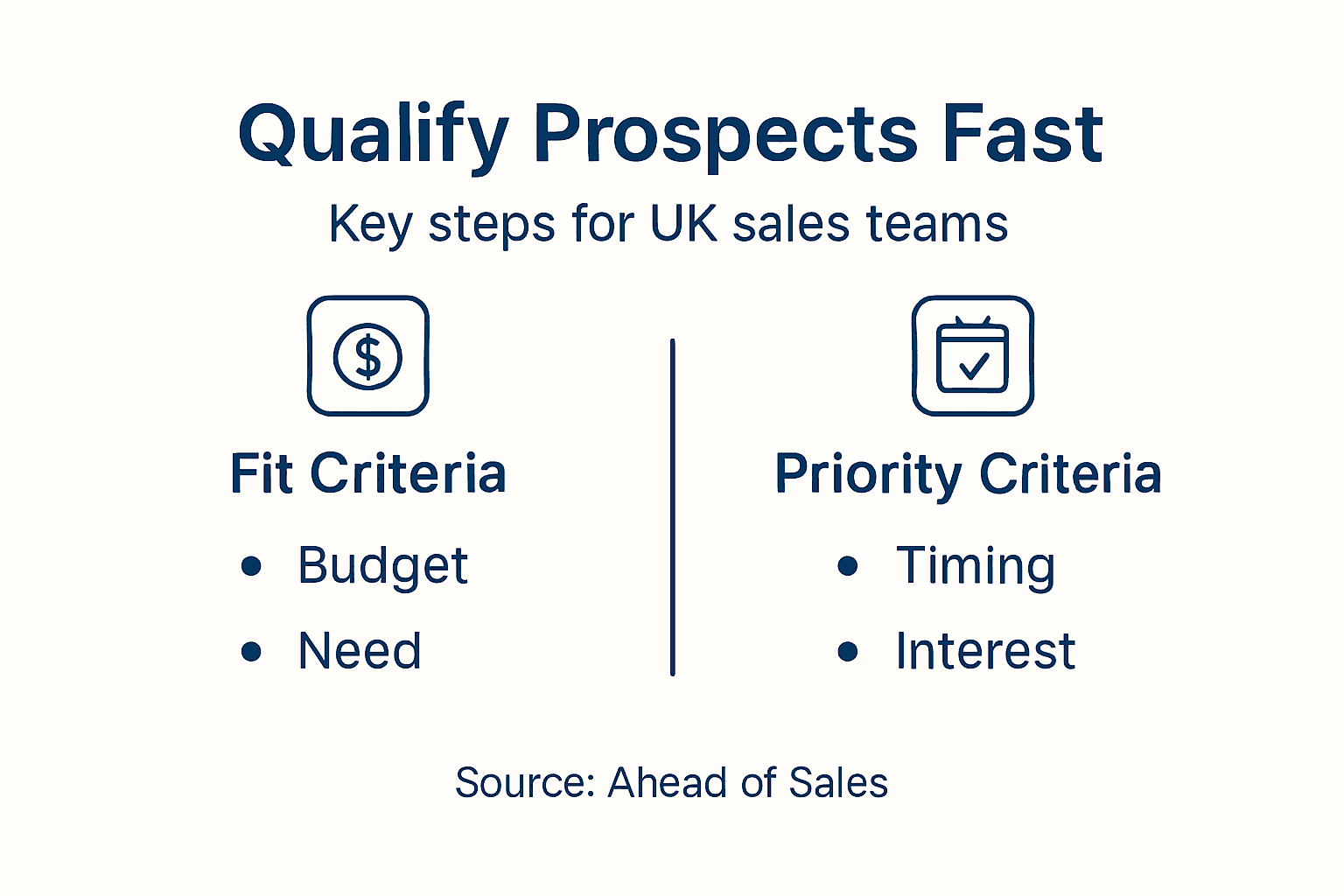
Not all prospects are created equal. Some fit your ICP perfectly and are actively looking for solutions. Others are loosely aligned and not ready to buy for months. Lead qualification separates prospects worth pursuing now from those worth staying in touch with for later. Score prospects based on fit (how well they match your ICP) and readiness (how likely they are to buy soon). Prospects with high fit and high readiness get your immediate attention. High fit but low readiness get nurture campaigns. Low fit gets removed. This prevents your team from wasting time on prospects who’ll never materialise.
Personalise Your Outreach
Generic messages get deleted. Personalised messages get responses. When you reach out, reference specific details about their business or recent activity. Mention a blog post they published, a company milestone, or an industry challenge relevant to them. Show them you’ve done homework. Explain why you’re reaching out and why it matters to them specifically. Generic cold emails fail because they’re written to everyone and therefore speak to no one. Personalised emails speak directly to the prospect’s situation. The investment in research pays dividends in response rates. Your reps should spend fifteen minutes researching each prospect before making contact.
Engage Across Multiple Channels
One touchpoint isn’t enough. Most prospects need multiple interactions before they’re ready to talk. Multi-channel engagement means contacting prospects via email, LinkedIn, phone calls, or even direct mail when appropriate. Vary your approach. Start with a LinkedIn connection request and personalised message. Follow up with an email three days later. If no response, try a phone call ten days later. Different channels work for different people. Some prospects respond immediately to calls. Others prefer written communication. By varying your approach, you increase the chance of reaching them on their preferred channel.
Follow Up Persistently
One of the biggest reasons prospecting fails is insufficient follow-up. Your first contact won’t convert most prospects. Understanding the role of follow-up in sales reveals that most sales happen after multiple touchpoints. Yet many teams contact a prospect once, get no response, and move on. Real prospecting requires persistence. Follow up after three days, seven days, two weeks, and monthly. Each follow-up should add value rather than simply repeat your initial message. Share relevant content, reference new information, or ask a different question. Persistence isn’t pestering. It’s demonstrating genuine interest whilst respecting the prospect’s time.
Monitor, Measure, and Optimise
Track your prospecting activity and results obsessively. How many prospects are you contacting weekly? What’s your response rate? Your meeting conversion rate? Your pipeline value? These metrics reveal what’s working and what needs adjustment. If your email response rate is below 5 percent, your messaging needs work. If your meeting conversion rate is below 30 percent, your qualification process is weak. Data tells you exactly where to improve. Most UK service companies don’t measure prospecting rigorously, which means they repeat failed approaches quarter after quarter. Start measuring now, then adjust your process based on what the data tells you.
Pro tip: Assign a single person as your prospecting accountability owner each week. This person reviews your team’s prospecting activity daily, identifies blocking issues, and ensures follow-ups happen on schedule. Prospecting without accountability becomes sporadic and weak. Accountability transforms it into consistent revenue generation.
Vital Tools and Techniques for UK Teams
Prospecting without the right tools is like building a house without a hammer. You can theoretically do it, but you’ll waste enormous time and produce inferior results. The good news is that modern technology has democratised access to prospecting resources. Small UK teams now have access to tools that were previously only available to enterprise sales organisations. The key is knowing which tools solve which problems, and then integrating them into a workflow that your team actually uses consistently.
Technology Stack for Modern Prospecting
Your prospecting technology needs to accomplish four things: find prospects, score their potential, communicate with them efficiently, and track progress towards your goals. Most UK sales teams use multiple tools rather than relying on a single platform. A typical stack includes a CRM as your central hub, an email automation tool for outreach, a contact database or data enrichment platform to find decision-makers, and analytics to measure what’s working.
Customer Relationship Management (CRM) is your foundation. Platforms like HubSpot, Salesforce, or Pipedrive store prospect information, track interactions, and show pipeline value at a glance. Your CRM becomes the single source of truth. Every team member sees the same prospect information, notes from previous interactions, and next steps. Without a CRM, you’re managing prospects in spreadsheets and email inboxes, which means prospects fall through the cracks and opportunities get lost. Choose a CRM that integrates with other tools so data flows seamlessly across your stack.
Contact and data enrichment platforms solve a fundamental problem: finding decision-makers and getting their contact details. Tools like ZoomInfo, Hunter, and Clearbit help you build targeted lists by searching company names and pulling back contact information, job titles, and sometimes even personalised email addresses. Best prospecting software for UK teams includes contact databases that combine company information with individual decision-maker data, allowing you to filter by industry, company size, revenue, or location. What used to take hours of manual research now takes minutes.
Email automation platforms handle outreach at scale without sacrificing personalisation. Tools like Outreach, Lemlist, or HubSpot Sales Hub let you create email sequences that trigger based on prospect behaviour. You send an initial email, and if the prospect opens it but doesn’t respond, a follow-up goes automatically three days later. Another follows seven days after that. This ensures consistent follow-up without requiring your team to manually track every single prospect. The automation frees your reps to focus on conversations rather than administrative work.
AI-powered lead scoring identifies which prospects are most likely to convert. Instead of your team deciding which prospects to prioritise, algorithms analyse prospect behaviour, engagement, and fit. Prospects who open emails frequently, click links, and match your ICP get higher scores. Your team focuses their time on highest-scoring prospects first. This dramatically improves conversion rates because reps spend time on prospects actually showing buying signals rather than guessing.
Techniques That Differentiate Your Team
Technology alone doesn’t generate results. You need techniques that make your team’s prospecting more effective than competitors. One powerful technique is account-based personalisation. Rather than sending generic emails to 500 prospects, you identify your 20 target accounts and create custom messaging for each one. You reference their specific challenges, mention their competitors’ recent moves, or congratulate them on company news. This level of personalisation gets responses because prospects immediately recognise that you’ve done homework specific to them.
Another differentiating technique is value-first outreach. Most prospecting emails are sales pitches. Your team leads with value instead. Your first email might share a relevant industry article, mention a recent company announcement that affects their business, or ask a thoughtful question about their industry. You’re not asking for a meeting. You’re offering value. This builds trust and makes prospects more receptive when you eventually ask to connect.
Warm introduction requests convert dramatically better than cold outreach. Before contacting a prospect directly, ask your existing customers or network connections if they know the prospect and would be willing to make an introduction. A warm introduction from someone the prospect already trusts opens doors that cold outreach can’t. Train your team to always ask customers who they know in similar companies. Build a culture where warm introductions are a standard part of prospecting.
Integrating Tools Into Your Workflow
The biggest mistake UK sales teams make is buying tools without integrating them into daily workflows. You purchase email automation software but your team doesn’t use it. You implement lead scoring but ignore the scores. Tools fail when they sit disconnected from how your team actually works.
Instead, design your prospecting workflow first, then select tools that fit that workflow. Here’s an example: your team prospects by identifying target companies, finding decision-makers using a contact database, scoring leads through your CRM, sending personalised first emails through email automation, and tracking engagement through integrated analytics. Each step flows naturally into the next. Your reps spend five minutes researching a prospect, fifteen minutes personalising an email template, and then the automation takes over. This workflow is sustainable because it doesn’t create extra work. It actually reduces work whilst improving results.
Train your team on the tools you’ve chosen. Many UK teams implement software that their reps don’t fully understand, so they default to old habits. Spend time teaching your team exactly how to use each tool effectively. Show them how lead scoring works, how email automation sequences function, and which data fields matter most. When your team understands the tools deeply, adoption rates soar and results follow.
Pro tip: Start with your three highest-impact tools: a CRM, a contact database, and email automation. Master these three completely before adding more. Too many integrations create complexity without proportional benefit. Once your team is proficient, then layer in additional tools like AI lead scoring or social selling platforms.
Common Pitfalls and How to Avoid Them
Even well-intentioned sales teams stumble on the same prospecting mistakes repeatedly. Year after year, UK service companies repeat the same errors, wonder why their pipeline stays weak, and fail to hit quarterly targets. The patterns are predictable. The solutions are clear. What’s missing is discipline. Teams know what they should do but don’t do it consistently. Understanding these pitfalls and actively preventing them transforms your prospecting results.
The Research Gap
The most common prospecting mistake is insufficient research before outreach. Your team sees a company name, identifies a job title that sounds like a decision-maker, and sends a generic email. No research. No personalisation. No reason for the prospect to respond. When you skip research, you waste time on prospects who don’t fit your ICP. You send emails that sound like they were sent to five hundred other people because they were. Prospects delete them instantly.
The fix is straightforward: mandate research before outreach. Before your team contacts anyone, they must spend ten minutes understanding that prospect’s business, recent news, and potential challenges. This isn’t excessive. Ten minutes of focused research transforms your email from generic to genuinely relevant. Your prospect reads your message and recognises immediately that you understand their situation. That’s when they respond.
Many teams resist this because research takes time. It does. But the time invested in research saves enormous time in follow-up conversations and failed attempts. One well-researched email that generates a meeting beats one hundred generic emails that generate nothing.
Generic Messaging
Related to the research gap is the plague of generic messaging. Your team has a template. They drop in a prospect’s name and company, and hit send. The message sounds like it could apply to literally anyone in their industry. It probably could, which is exactly why it fails. Prospects receive dozens of generic prospecting messages weekly. They instantly recognise and delete them.
Generic messaging is invisible. Personalised messaging gets seen. The personalisation doesn’t have to be elaborate. Reference a recent company news item they announced. Mention a blog post they published. Ask a question specific to their industry. Show them you’ve done homework. When you personalise genuinely, response rates jump dramatically. Your team’s effort returns proportional results.
Poor Definition of Ideal Customer Profile
Many teams skip the ICP definition entirely. They prospect broadly, reaching out to anyone who might possibly benefit from their solution. This creates massive waste. Your reps contact prospects who fit poorly, who have no budget, or who aren’t the decision-maker. Time gets spent on prospects who were never going to convert.
A crystal-clear ICP narrows your focus to prospects most likely to buy and most likely to become valuable long-term clients. Your ICP isn’t aspirational. It’s based on your best existing customers. Analyse which customers generate the most revenue, stay longest, and cause the least support overhead. Document their characteristics: company size, industry, revenue, growth rate, location, technology stack, and common challenges. Share this ICP with your entire team. When everyone prospecting uses identical criteria, wasteful activity drops and efficiency soars.
Insufficient Follow-Up
One of the most damaging prospecting mistakes is treating a non-response as a rejection. Your team sends one email. The prospect doesn’t reply immediately. Your team moves on. What actually happened is that the prospect never saw your email, or saw it at a moment when they weren’t focused, or saw it but intended to respond later and forgot. Common prospecting mistakes that damage sales results reveal that persistence dramatically increases conversion rates. Yet many teams give up after one or two attempts.
Real prospecting requires sustained follow-up. A prospect typically needs five to seven touches before they’re ready to engage. Your first email might not land. Your second might land in their inbox at three in the morning when they’re not paying attention. Your third reaches them when they’re actually thinking about solving the problem you address. That’s when they respond. Your team must understand that lack of response isn’t personal rejection. It’s simply not-yet-the-right-moment.
Rushing to Sell
Another common mistake is pushing for a sale too quickly. Your team connects with a prospect, has one conversation, and immediately tries to move them toward a demo or proposal. This kills deals. Prospects need time to build trust. They need multiple conversations to understand how your solution addresses their specific situation. They need to feel heard and understood before they’ll seriously consider buying.
The better approach is building before selling. Your first conversation should focus entirely on understanding the prospect’s situation. Ask questions. Listen carefully. Share relevant insights. Only after multiple conversations where you’ve demonstrated understanding and built credibility should you transition toward a sale. When prospects feel understood rather than sold to, they move forward. When they feel like just another lead in your CRM, they disappear.
Lack of Measurement and Accountability
Many UK sales teams execute prospecting activities but never measure whether those activities generate results. They make calls without tracking call counts or outcomes. They send emails without monitoring open rates or reply rates. They have conversations without measuring whether those conversations move toward deals. Without measurement, they can’t improve. Without accountability, team members treat prospecting as optional rather than essential.
Start measuring everything. How many prospects are you contacting weekly? What’s your email open rate? Your reply rate? Your meeting conversion rate? Your pipeline value? These metrics reveal exactly where your prospecting is weak and where it’s strong. Share these metrics with your team. Celebrate improvements. Address declines. When your team sees that their prospecting activity directly correlates with pipeline growth and sales success, they treat prospecting differently. It becomes central to their job rather than something they do when other work is slow.
Below is a summary of common prospecting pitfalls and how to avoid them for more consistent pipeline growth:
| Pitfall | Typical Impact | How to Avoid |
|---|---|---|
| Insufficient research | Low response and pipeline waste | Require research prior to outreach |
| Generic messaging | Emails ignored by prospects | Personalise outreach with specific, relevant info |
| Vague customer profile (ICP) | Unqualified leads dominate | Define and share clear ICP criteria with all reps |
| Sporadic follow-up | Missed opportunities | Schedule persistent, value-driven follow-ups |
| Overeager selling | Lost trust, stalled deals | Focus first on understanding prospect needs |
| Poor measurement/accountability | Slow improvement, low visibility | Track all activity and review results as a team |
Pro tip: Implement a weekly prospecting accountability meeting where your team shares three things: prospecting activity completed, results generated, and blocks encountered. This fifteen-minute meeting keeps prospecting central to your culture and surfaces obstacles quickly so you can remove them before they derail pipeline growth.
Master Sales Prospecting to Drive Consistent Growth in Your UK Business
Every UK service company aiming for steady sales growth must overcome the challenge of building a qualified and responsive sales pipeline through effective prospecting. This article highlights the importance of deliberate research, personalised outreach, and persistent follow-up to break through the common myths that often stall pipeline progress. If you find your sales team struggling with inconsistent prospecting activity or missing quarterly targets despite your best efforts, it means your current approach needs a strategic overhaul that blends discipline with proven methods.
Our expert team at Ahead of Sales specialises in transforming how businesses prospect and engage their ideal customers. By combining bespoke 1:1 coaching with traditional training and consultancy, we help companies with growth mindsets generate at least 50% sales growth yearly while ensuring their sales teams hit targets every quarter. Whether you are refining your sales strategy, building a comprehensive sales playbook, or seeking tailored acceleration plans, our solutions empower your team to master research-driven, personalised prospecting techniques and follow-up systems.
Take control of your sales pipeline today by partnering with Ahead of Sales. Visit https://aheadofsales.co.uk to discover how our proven packages and coaching can embed consistent, effective sales prospecting into your business rhythm and drive the growth you deserve. The perfect time to act is now because every day without the right system is revenue left on the table.
Frequently Asked Questions
What is sales prospecting?
Sales prospecting is the systematic process of identifying, researching, and engaging potential customers who genuinely need what you sell. It focuses on targeting specific individuals or companies that match your ideal customer profile rather than random outreach.
Why is research important before reaching out to prospects?
Research is crucial because it allows you to personalise your outreach, making your message relevant to the prospect’s specific situation. This increases the likelihood of a positive response, as generic messages are often ignored.
How should I define my ideal customer profile (ICP)?
Your ideal customer profile (ICP) should describe the characteristics of companies and individuals most likely to benefit from your solution. This includes factors like company size, industry, revenue, growth rate, and common challenges. A clear ICP helps target the right prospects effectively.
What are some common pitfalls in sales prospecting?
Common pitfalls include insufficient research on prospects, sending generic messages, vague definition of ICP, lacking persistent follow-up, rushing to sell too quickly, and failing to measure and track prospecting activities. Avoiding these pitfalls can lead to more consistent pipeline growth.