
Over 60 percent of british SaaS startups struggle to pinpoint who truly needs their solution. Without a clear customer profile, even the best product can go unnoticed or fail to gain traction. Knowing exactly who benefits most sets a strong foundation for targeted messaging, effective lead generation, and smarter sales. This guide breaks down proven strategies that help british SaaS founders define, reach, and convert their ideal customers with practical, repeatable steps.
Table of Contents
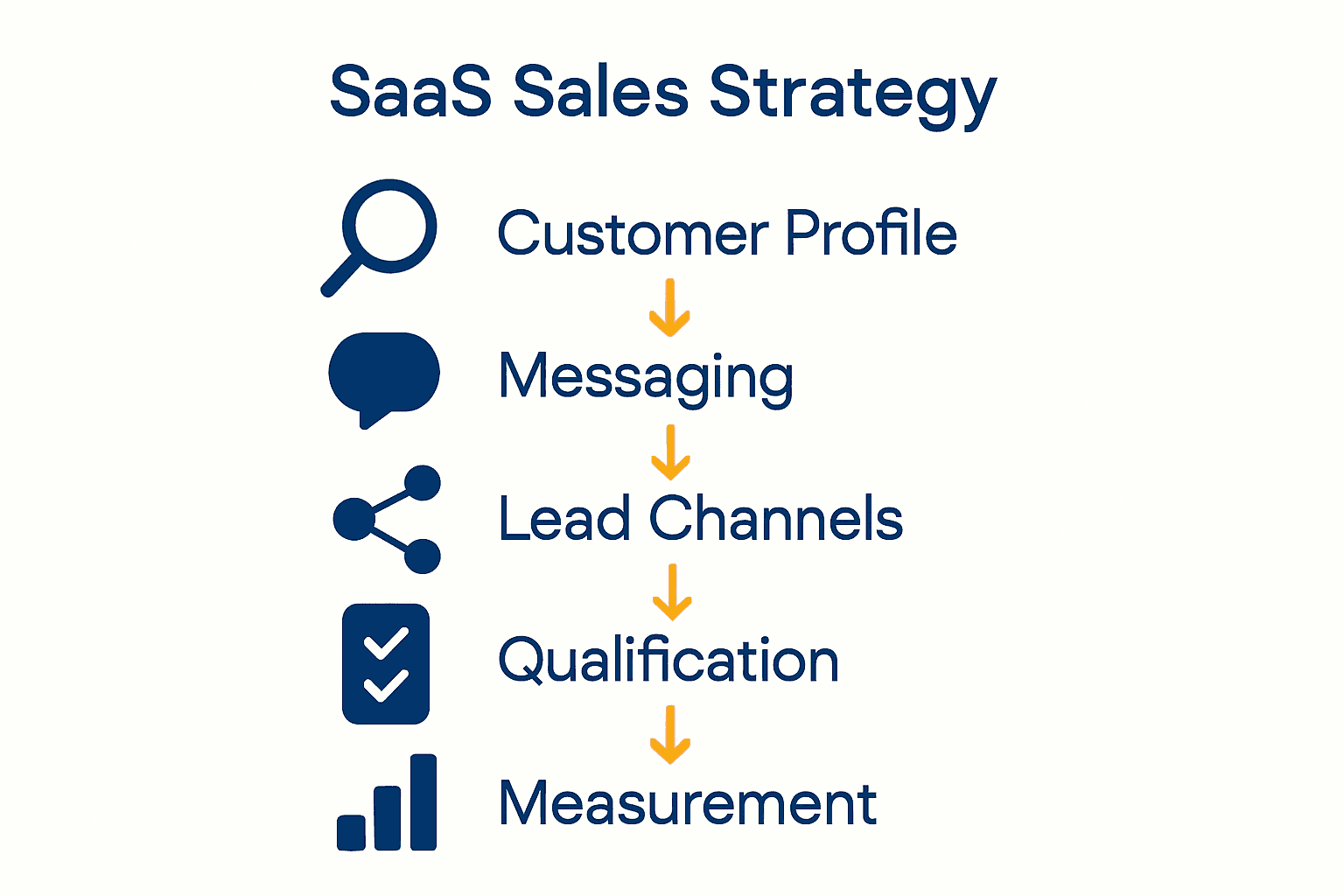
- Stage 1: Define Target SaaS Customer Profiles
- Stage 2: Develop High-Conversion Sales Messaging
- Stage 3: Build and Optimise Lead Generation Channels
- Stage 4: Implement a Rigorous Qualification Process
- Stage 5: Measure, Refine and Scale Your Strategy
Key Insights for SaaS Strategy
| Insight | Explanation |
|---|---|
| 1. Define your ideal customer clearly | Create a detailed Ideal Customer Profile to effectively target and convert potential clients based on specific traits and needs. |
| 2. Craft personalised sales messaging | Develop tailored messaging that addresses unique pain points and demonstrates how your SaaS solution addresses business challenges. |
| 3. Optimize lead generation channels | Use a data-driven approach to diversify lead generation efforts across multiple platforms while tracking their effectiveness for continuous improvement. |
| 4. Implement an efficient qualification process | Establish a straightforward qualification framework that evaluates leads against key criteria to streamline the sales funnel. |
| 5. Measure and adjust your strategy regularly | Regularly track performance metrics and adjust your approach based on data insights to ensure strategic growth and responsiveness. |
Stage 1: Define target SaaS customer profiles
Successfully identifying your target SaaS customer profile means pinpointing precisely who will derive maximum value from your product. According to CornellAzar, creating a robust Ideal Customer Profile (ICP) forms the critical foundation for an effective go-to-market strategy.
To construct your customer profile, begin by gathering comprehensive data about your potential clients. TechTarget recommends collecting insights across several key dimensions: company size, industry vertical, technological infrastructure, pain points, purchasing behaviours, and growth trajectories. Start by analysing your existing customer base and identifying common characteristics that signal high engagement and retention potential.
Your customer profile should transcend basic demographic information. Dig deeper to understand organisational challenges, strategic objectives, and the specific problems your SaaS solution can resolve. Look for patterns in decision-making processes, technology adoption rates, and budget allocation. A granular understanding allows you to craft messaging that resonates precisely with your ideal customers.
 Learn more about customer profiling in our comprehensive guide on identifying your ideal customer.
Warning: Avoid generic profiles. The more specific and data-driven your customer definition, the more effectively you can target and convert potential clients.
Stage 2: Develop high-conversion sales messaging
Crafting compelling sales messaging is the cornerstone of converting potential SaaS customers into committed users. Growett emphasises the critical importance of understanding your audience’s specific pain points to create messaging that resonates deeply and drives action.
To develop high-conversion sales messaging, start by mapping your product’s unique features directly to the tangible business challenges your potential customers face. According to research from Arxiv, strategic messaging that leverages reinforcement learning techniques can significantly improve conversion prediction and optimisation. Focus on articulating clear value propositions that demonstrate precisely how your SaaS solution will transform your customer’s operational efficiency, reduce costs, or generate measurable revenue improvements.
Your messaging should tell a compelling narrative that goes beyond feature descriptions. Translate technical capabilities into concrete business outcomes, using language that speaks directly to decision makers’ strategic objectives. Explore our comprehensive guide on sales acceleration strategies for deeper insights.
Warning: Avoid generic, templated messaging. Your sales narrative must feel personalised, addressing specific industry challenges and showing a nuanced understanding of your potential customer’s unique context.
Stage 3: Build and optimise lead generation channels
Successfully building lead generation channels requires a strategic approach that combines targeted research and systematic outreach. Prefinery recommends conducting comprehensive market research to understand precisely where your potential customers congregate and how to effectively engage them.
To optimise your lead generation strategy, leverage multiple channels with a data driven approach. According to research from Arxiv, implementing a sophisticated selection algorithm can dramatically improve matching potential service consumers with appropriate providers. Focus on diversifying your lead generation efforts across digital platforms such as LinkedIn, targeted industry webinars, content marketing, search engine advertising, and strategic partnerships. Each channel should be meticulously tracked and analysed for conversion rates, allowing you to continuously refine and redirect resources towards the most productive avenues.
Your lead generation ecosystem must remain dynamic and responsive to market shifts. Continuously experiment with messaging, targeting parameters, and engagement strategies to maintain a robust pipeline of potential customers. Learn more about qualifying leads effectively in our comprehensive guide.
Warning: Avoid spreading your resources too thinly. Select channels strategically and invest deeply in understanding their unique conversion mechanics rather than pursuing a scattered approach.
Stage 4: Implement a rigorous qualification process
Developing a robust lead qualification process is critical for transforming potential prospects into committed customers. Media provides comprehensive worksheets that help businesses systematically define their Ideal Customer Profile and create detailed buyer personas to streamline the qualification approach.
To implement an effective qualification process, construct a multi dimensional assessment framework that evaluates potential customers across several key criteria. Research from Arxiv highlights the importance of understanding complex tenant requirements through a customised evaluation model. Your qualification framework should incorporate elements such as budget alignment, technological compatibility, strategic objectives, decision making authority, and potential for long term partnership. Create a scoring system that assigns weighted values to each qualification criterion, enabling your sales team to quickly identify and prioritise the most promising leads.
Consistently refine your qualification process by gathering feedback from sales teams and tracking conversion metrics. Learn more about differentiating between contacts, leads, and prospects in our comprehensive guide.
Warning: Avoid making your qualification process overly complex. While detailed assessment is crucial, ensure the framework remains agile and does not create unnecessary barriers to potential business opportunities.
Stage 5: Measure, refine and scale your strategy
Measuring and scaling your SaaS sales strategy requires a systematic approach that balances data driven insights with strategic flexibility. D1 provides a comprehensive framework for developing robust user and buyer personas that enable precise performance tracking and strategic refinement.
To effectively measure and scale your strategy, establish a comprehensive performance dashboard that tracks key metrics across multiple dimensions. Focus on indicators such as customer acquisition cost, conversion rates, average contract value, customer lifetime value, and sales cycle duration.
 Implement a quarterly review process where your leadership team critically examines these metrics, identifying patterns of success and areas requiring strategic adjustment. Create a feedback loop that allows rapid iteration based on empirical performance data, ensuring your sales approach remains responsive to market dynamics and customer needs.
Continuous improvement is the cornerstone of sustainable growth. Explore our comprehensive guide on sales performance metrics for deeper strategic insights.
Warning: Avoid becoming paralysed by data. While metrics are crucial, maintain the agility to make bold strategic decisions that cannot be entirely captured by numerical analysis.
Accelerate Your SaaS Sales Growth with Proven Strategies
If you are striving to define precise customer profiles, craft high-conversion messaging, or build effective lead generation channels the challenges outlined in our Sales Strategy Archives – Ahead of Sales are all too familiar. Many SaaS businesses struggle to maintain consistent sales growth and meet ambitious targets each quarter, especially without tailored support that guides them through customer qualification and optimisation techniques.
At Ahead of Sales, we combine bespoke 1:1 coaching with proven consultancy services designed to help your sales team generate at least 50 percent growth annually while hitting targets every quarter. Our expert support ensures you move beyond generic approaches by focusing on data-driven, personalised sales plans that align perfectly with your product’s unique value.
Take the next step today and unlock your SaaS business’s true potential with our sales acceleration packages. Whether you lead a team of 50 or 1000+, our tailored programmes can sharpen your sales approach and drive rapid results. Discover how you can transform your sales strategy now by visiting Ahead of Sales and exploring practical insights within our Sales Playbook Archives – Ahead of Sales. The time to act is now and build a scalable, efficient sales pipeline that meets your ambitious growth goals.
Frequently Asked Questions
How do I define my target SaaS customer profile?
To define your target SaaS customer profile, analyse your existing customers’ characteristics such as company size, industry, and pain points. Collect data on their strategic objectives and challenges, which will help you create a more focused profile. Start this process by reviewing your current customer base within the next few weeks.
What should be included in high-conversion sales messaging?
High-conversion sales messaging should clearly articulate the unique value your SaaS solution offers in addressing specific business challenges. Make sure to incorporate a narrative that translates your product’s features into measurable outcomes, focusing on how you can improve operational efficiency or increase revenue.
How can I optimise my lead generation channels for better results?
To optimise your lead generation channels, take a data-driven approach by exploring multiple platforms like LinkedIn and content marketing. Track your conversion rates closely and focus your efforts on the channels that yield the highest results, adjusting your strategy at least quarterly based on this data.
What is an effective lead qualification process?
An effective lead qualification process involves evaluating potential customers based on criteria such as budget alignment and decision-making authority. Create a scoring system to prioritise leads and continuously refine your process based on feedback and conversion metrics.
How should I measure and scale my SaaS sales strategy?
To measure and scale your SaaS sales strategy, establish a performance dashboard that tracks key metrics like customer acquisition cost and sales cycle duration. Conduct regular reviews to identify trends and make adjustments, aiming for continuous improvement that leads to sustainable growth in the next six months.
What common mistakes should I avoid when developing my SaaS sales strategy?
When developing your SaaS sales strategy, avoid creating generic customer profiles or using templated messaging. Instead, focus on specific, data-driven insights to guide your approach and ensure your messaging resonates with your target audience’s unique challenges.