
Every UK sales leader knows the old intuition-based methods just cannot keep up with the pace of market change. The pressure to consistently hit targets demands a smarter, more measurable approach. By embracing data-driven methodologies and the power of artificial intelligence, companies can transform sales training into tailored, productive experiences that continually adapt. This article explores how harnessing advanced analytics gives British sales teams the predictive edge they need for reliable results and long-term growth.
Table of Contents
- Role of Data in Modern Sales Training
- Types of Data Used for Sales Enablement
- Personalising Training Through Data Insights
- Measuring Training Impact and ROI
- Avoiding Pitfalls: Data Misuse and Compliance
Key Takeaways
| Point | Details |
|---|---|
| Data-Driven Training Advantages | Utilising data enhances sales training with predictive insights, personalised pathways, and real-time tracking for improved performance. |
| Types of Sales Data | Diverse data types such as predictive performance, customer interaction, and sales metrics contribute to informed and strategic sales decisions. |
| Personalisation in Training | Leveraging analytics allows for highly tailored training experiences that adapt to individual needs and performance metrics. |
| Measuring ROI and Compliance | Effective assessment of training impact relies on clear metrics, while maintaining robust data governance ensures compliance and builds trust. |
Role of Data in Modern Sales Training
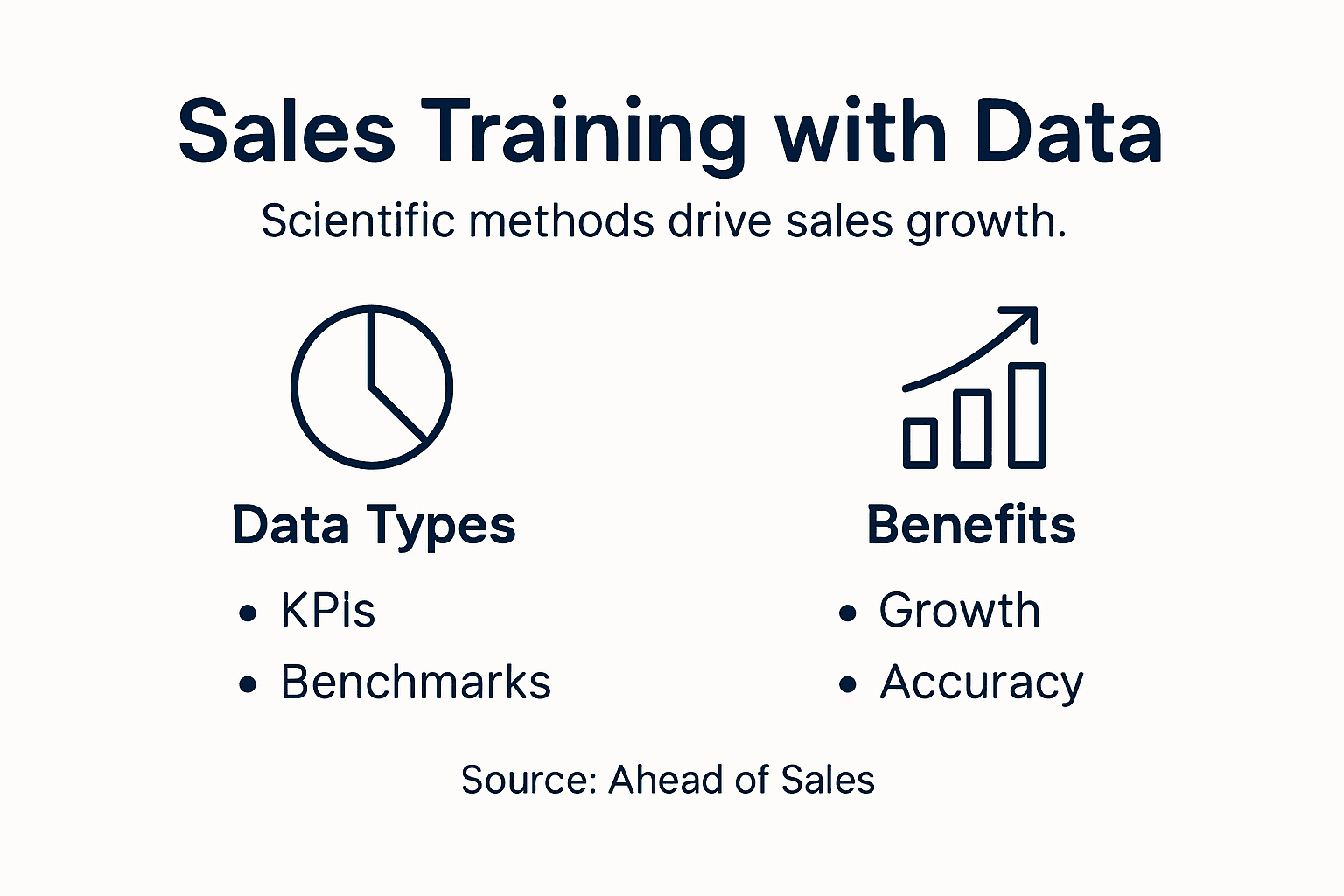
Data is revolutionising sales training, transforming traditional approaches into sophisticated, scientifically-optimised strategies. Modern organisations are rapidly adopting data-driven methodologies to enhance sales performance and drive consistent growth.
Companies now leverage advanced analytics to understand and predict sales behaviours with unprecedented precision. Big data and analytics play a pivotal role in providing critical insights into customer engagement, sales processes, and strategic opportunities.
Key advantages of data-driven sales training include:
- Predictive Performance Insights: Utilising historical data to forecast individual and team sales potential
- Personalised Learning Pathways: Tailoring training programmes to specific skill gaps and strengths
- Real-time Performance Tracking: Monitoring sales metrics continuously for immediate feedback
- Automated Coaching Recommendations: Using AI to suggest targeted improvement strategies
By integrating sophisticated data analysis techniques, sales teams can move beyond traditional intuition-based approaches. Artificial intelligence and machine learning algorithms now enable hyper-personalised training experiences that adapt in real-time to individual performance metrics.
Pro tip: Start tracking at least three key performance indicators to begin your data-driven sales training transformation.
Implementing data-driven strategies requires investment in robust analytics tools and a cultural shift towards continuous, metric-based learning and development.
Here is a comparison of traditional versus data-driven sales training approaches:
| Approach | Key Features | Typical Outcomes |
|---|---|---|
| Traditional Training | Generic content, intuition | Inconsistent skill improvement |
| Data-Driven Training | Personalised, analytics-led | Targeted, measurable growth |
Types of Data Used for Sales Enablement
Sales enablement relies on a sophisticated array of data types that provide critical insights into performance, customer behaviour, and strategic opportunities. Modern organisations are increasingly leveraging comprehensive data sources to drive more intelligent and targeted sales approaches.
Sales enablement utilises multiple data categories to optimise sales strategies and improve conversion rates. These data types can be broadly categorised into several key segments:
-
Predictive Performance Data
- Lead scoring metrics
- Potential conversion probability
- Individual sales representative performance forecasts
-
Customer Interaction Data
- Demographic segmentation
- Behavioural tracking
- Historical engagement patterns
- Communication preferences
-
Sales Process Metrics
- Sales cycle duration
- Conversion rate analysis
- Deal progression tracking
- Pipeline velocity indicators
By integrating these diverse data sources, organisations can create comprehensive sales enablement ecosystems that provide real-time insights and adaptive learning opportunities. Advanced analytics platforms and CRM systems now allow businesses to transform raw data into actionable intelligence, enabling more strategic decision-making.
The most successful sales teams understand that data is not just about collection, but intelligent interpretation. Modern sales enablement goes beyond traditional reporting, using sophisticated algorithms to predict trends, personalise interactions, and continuously improve performance.
Pro tip: Invest in integrated analytics tools that can consolidate multiple data sources and provide holistic performance insights.
Effective data utilisation requires a cultural commitment to continuous learning, technological investment, and a strategic approach to performance measurement.
The following table summarises how different types of sales data contribute to strategic decisions:
| Data Category | Example Insights | Strategic Value |
|---|---|---|
| Predictive Performance | Lead quality predictions | Prioritises sales efforts |
| Customer Interaction | Engagement channel preference | Refines communication strategies |
| Sales Process Metrics | Pipeline velocity trends | Identifies process bottlenecks |
Personalising Training Through Data Insights
Data-driven personalisation represents a transformative approach to sales training, moving beyond traditional one-size-fits-all methodologies. By leveraging sophisticated analytics and machine learning technologies, organisations can create highly tailored learning experiences that adapt to individual sales representative needs and potential.

AI-powered personalized learning enables customized course content at an unprecedented scale, addressing each learner’s unique skill gaps, preferences, and career development objectives. This approach fundamentally reshapes how sales training is conceptualised and delivered.
Key components of personalised training through data insights include:
-
Individual Performance Mapping
- Detailed skill gap analysis
- Targeted learning pathway recommendations
- Continuous performance tracking
-
Adaptive Learning Technologies
- Real-time content adjustment
- Personalised learning pace
- Dynamic skill development modules
-
Predictive Learning Algorithms
- Behaviour pattern recognition
- Potential performance forecasting
- Customised coaching interventions
By implementing data-driven personalisation, organisations can create intelligent training ecosystems that respond dynamically to individual sales representative development needs. These systems go beyond traditional training approaches, offering granular insights and precision-targeted learning experiences.
The most effective personalised training programmes leverage multiple data sources, combining performance metrics, behavioural analytics, and individual learning preferences to create truly transformative learning experiences.
Pro tip: Implement a comprehensive skills assessment baseline before designing personalised training programmes to ensure maximum relevance and impact.
Successful personalisation requires a strategic approach that balances technological capabilities with human-centric learning design, creating training experiences that are both scientifically informed and emotionally engaging.
Measuring Training Impact and ROI
Measuring the return on investment (ROI) for sales training is a critical yet complex process that goes far beyond simple financial calculations. Modern organisations require sophisticated, multi-dimensional approaches to truly understand the value and effectiveness of their training investments.
Sales training effectiveness involves comprehensive evaluation models that capture both immediate knowledge gains and long-term performance improvements. These models help businesses transform training from a cost centre into a strategic investment driver.
Key metrics for measuring training impact include:
-
Performance Indicators
- Revenue growth
- Sales quota attainment
- Conversion rate improvements
- Win rate increases
-
Behavioural Change Metrics
- Skill application frequency
- Customer interaction quality
- Communication effectiveness
- Problem-solving capabilities
-
Financial ROI Components
- Direct revenue attributable to training
- Cost savings from improved efficiency
- Reduction in sales cycle duration
- Customer retention rates
Successful ROI measurement requires a strategic approach that aligns training outcomes with broader business objectives. This means moving beyond simple completion rates and diving deep into quantifiable performance transformations.
The most advanced organisations create holistic evaluation frameworks that track not just immediate training results, but long-term behavioural and performance shifts. These comprehensive assessment models provide nuanced insights into training effectiveness.
Pro tip: Establish clear, measurable baseline metrics before training and conduct periodic reassessments to track genuine performance improvements.
Ultimately, meaningful training ROI measurement is about understanding how learning translates into tangible business value, creating a direct line of sight between investment and organisational growth.
Avoiding Pitfalls: Data Misuse and Compliance
In the era of data-driven sales training, navigating the complex landscape of data governance requires meticulous attention and strategic planning. The potential risks associated with improper data handling can have far-reaching consequences for organisations, extending well beyond immediate financial penalties.
Inadequate data governance exposes organisations to significant risks, including data breaches, loss of stakeholder trust, and substantial regulatory consequences. Understanding these risks is crucial for developing robust data protection strategies.
Key compliance considerations include:
-
Legal and Regulatory Framework
- GDPR compliance requirements
- Data protection regulations
- Consent management protocols
- International data transfer rules
-
Data Security Measures
- Encryption standards
- Access control mechanisms
- Regular security audits
- Incident response planning
-
Ethical Data Management Principles
- Transparency in data collection
- Individual privacy protection
- Consent-based data usage
- Minimal data collection practices
Companies must establish comprehensive data governance frameworks that balance analytical capabilities with rigorous privacy protections. This involves creating clear policies, implementing robust technological safeguards, and fostering a culture of responsible data management.
Effective compliance is not just about avoiding penalties, but building trust with sales professionals and customers by demonstrating a commitment to ethical data practices.
Pro tip: Conduct regular data protection impact assessments and maintain transparent documentation of all data processing activities.
Navigating data compliance requires continuous learning, proactive risk management, and a holistic approach that prioritises both organisational insights and individual privacy rights.
Unlock Sales Growth with Data-Driven Training Solutions
Struggling to translate complex sales data into tangible growth? This article highlights the challenge of leveraging predictive performance insights and personalised learning pathways to boost your sales team’s effectiveness. If your goal is to move beyond generic training and embrace data-driven strategies that ensure consistent quota attainment and sales acceleration, you need tailored coaching combined with scientific analysis.
At Ahead of Sales, we specialise in combining bespoke 1:1 coaching with data-informed training and consultancy. Our sales acceleration packages, crafted for businesses ready to grow by at least 50% annually, directly tackle the personalisation and real-time tracking challenges discussed here. Discover how to create targeted, measurable sales growth today by exploring our Sales Strategy Archives – Ahead of Sales for insights and practical approaches.
Don’t let unstructured data hold back your sales potential. Visit Ahead of Sales now and elevate your team’s performance with personalised coaching and proven sales playbooks. Learn more about our approach in the Sales Playbook Archives – Ahead of Sales and take the first step toward measurable sales success.
Frequently Asked Questions
What is data-driven sales training?
Data-driven sales training involves using advanced analytics and data insights to personalise training programmes, tailor learning pathways, and enhance sales performance. It moves beyond traditional methods by harnessing predictive insights and real-time metrics.
How does predictive performance data improve sales training?
Predictive performance data enhances sales training by forecasting individual and team sales potential based on historical data. This allows organisations to tailor training efforts to specific skill gaps and strengths, leading to more targeted learning.
What are the advantages of personalising training through data insights?
Personalising training through data insights ensures that learning experiences are customised to the individual’s needs, preferences, and career objectives. This method allows for adaptive learning, real-time adjustments, and a more effective training experience.
How can companies measure the ROI of their sales training efforts?
Companies can measure the ROI of sales training by evaluating performance indicators such as revenue growth, sales quota attainment, and improvements in conversion rates. It also involves assessing behavioural changes and the financial return attributable to the training initiatives.