
Sales teams now face fast-changing markets and rising customer expectations. For British sales leaders in growing companies, outdated training methods can hinder progress toward ambitious quarterly goals. Embracing digital sales training means harnessing flexible online learning, immediate skill application, and personalised coaching powered by the latest technology. This guide explains how modern solutions like gamification, blended models, and AI-driven insights are shaping a smarter approach to developing high-performing sales teams.
Table of Contents
- Defining Digital Sales Training In 2026
- Key Models: Blended, Virtual, And On-Demand Learning
- AI, Data, And Modern Coaching Techniques
- ROI And Measurable Business Impact
- Common Challenges And How To Overcome Them
Key Takeaways
| Point | Details |
|---|---|
| Digital Sales Training Evolution | Digital sales training has shifted to a strategy-focused approach, integrating technology to provide immersive and personalised learning experiences. |
| Learning Models | Blended, virtual, and on-demand learning models offer flexibility and adaptability, catering to diverse learning preferences and organisational needs. |
| AI and Data Integration | AI-driven coaching tools enhance skill development by providing real-time feedback and personalised learning pathways, transforming traditional sales training methods. |
| ROI Measurement | Effective measurement of digital sales training ROI requires a blend of quantitative metrics and qualitative insights to demonstrate true business impact. |
Defining Digital Sales Training in 2026
Digital sales training has transformed dramatically, emerging as a strategic cornerstone for modern organisations seeking sustainable growth and competitive advantage. Digital learning techniques now represent more than a technological trend—they’re a fundamental reimagining of professional skill development.
At its core, digital sales training in 2026 encompasses comprehensive online learning experiences designed to equip sales professionals with cutting-edge skills, leveraging technology to deliver personalised, immersive training environments. These programmes go far beyond traditional classroom models, integrating sophisticated learning technologies that adapt in real-time to individual performance and learning styles.
Key characteristics of contemporary digital sales training include:
- Flexible Learning Pathways: Customised training modules accessible anytime, anywhere
- Interactive Simulation Environments: Realistic scenario-based learning experiences
- Performance Analytics: Granular tracking of skill acquisition and application
- Microlearning Techniques: Bite-sized, targeted learning interventions
- Gamification Elements: Engagement-driven training methodologies
The evolution reflects a profound understanding that modern sales professionals require dynamic, responsive training ecosystems that mirror the complexity of contemporary sales landscapes. By embracing digital transformation, organisations can create learning experiences that are not just educational, but truly transformative.
Pro tip: Invest in digital sales training platforms that offer robust analytics and adaptive learning pathways to maximise your team’s potential and accelerate skill development.
Key Models: Blended, Virtual, and On-Demand Learning
The landscape of sales training has dramatically evolved, with three primary learning models emerging as pivotal strategies for organisational skill development. Blended learning approaches represent a sophisticated integration of traditional and digital training methodologies, designed to maximise engagement and learning outcomes.
Each model offers unique advantages for sales professionals, addressing different learning preferences and organisational requirements. Blended learning combines in-person instruction with digital components, creating a comprehensive training experience that balances personal interaction with technological flexibility. Virtual learning leverages online platforms to deliver interactive, immersive training experiences, enabling global teams to access high-quality educational resources regardless of geographical constraints.
Key characteristics of these learning models include:
-
Blended Learning:
- Combines face-to-face and digital training
- Supports varied learning styles
- Enables personalised learning journeys
-
Virtual Learning:
- Utilises interactive online tools
- Supports global team training
- Incorporates real-time coaching techniques
-
On-Demand Learning:
- Provides continuous, flexible access to training content
- Allows self-paced skill development
- Supports just-in-time learning interventions
The future of sales training lies in adaptable, technology-enabled learning models that respond dynamically to individual and organisational learning needs.
These models represent a strategic approach to professional development, recognising that modern sales professionals require flexible, accessible, and personalised learning experiences. By integrating these approaches, organisations can create robust training ecosystems that support continuous skill enhancement and drive competitive performance.
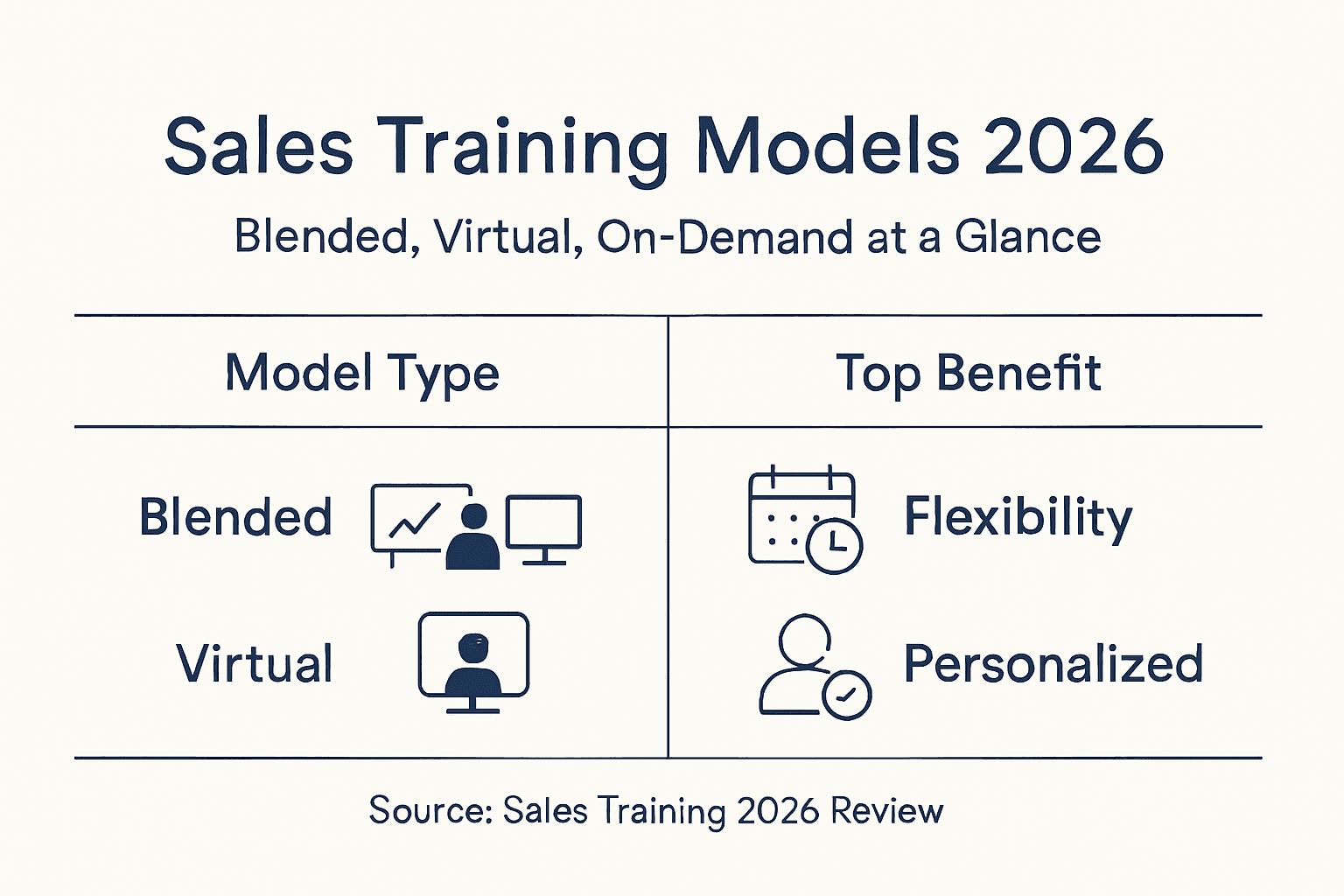
Here is a comparison of the three primary digital sales training models highlighting their distinct strengths and preferred use cases:
| Training Model | Primary Strength | Best Use Case | Key Benefit |
|---|---|---|---|
| Blended Learning | Personalised engagement | Complex skill-building programmes | Maximises knowledge retention |
| Virtual Learning | Global accessibility | Remote or geographically spread teams | Reduces logistical barriers |
| On-Demand Learning | Flexible scheduling | Continuous professional development | Supports self-directed growth |
Pro tip: Implement a multi-modal learning strategy that combines blended, virtual, and on-demand approaches to maximise training effectiveness and learner engagement.
AI, Data, and Modern Coaching Techniques
The intersection of artificial intelligence and sales training has ushered in a transformative era of personalised skill development. AI-powered coaching systems are revolutionising how sales professionals learn, adapt, and improve their performance through sophisticated data analytics and intelligent feedback mechanisms.

Modern coaching techniques leverage advanced technologies to create dynamic, responsive learning experiences. Artificial intelligence now enables unprecedented insights by analysing sales interactions, identifying precise skill gaps, and generating targeted recommendations for individual improvement. These intelligent systems can decode nuanced performance metrics, offering granular feedback that goes beyond traditional training approaches.
Key innovations in AI-driven sales coaching include:
-
Performance Analytics:
- Real-time skill gap identification
- Predictive learning path generation
- Continuous performance monitoring
-
Personalised Learning:
- Adaptive content delivery
- Custom training recommendations
- Individual skill reinforcement
-
Automated Coaching Tools:
- Virtual coaching assistants
- Interaction skill evaluation
- Empathy and negotiation analysis
Ethical AI implementation remains crucial, ensuring automated systems enhance rather than replace human coaching expertise.
By integrating advanced data utilisation with human expertise, organisations can create sophisticated learning ecosystems that continuously evolve and support sales professionals’ growth. The future of sales training lies in seamlessly blending technological insights with human judgment, creating more responsive and effective development strategies.
Pro tip: Implement AI-driven coaching tools that provide real-time, personalised feedback while maintaining a human-centric approach to skill development.
ROI and Measurable Business Impact
Measuring the effectiveness of digital sales training requires sophisticated approaches that go beyond traditional evaluation methods. Global sales training markets are increasingly focused on developing precise metrics that demonstrate tangible business value and direct revenue impact.
Understanding ROI in digital sales training involves examining multiple interconnected performance indicators. Business impact measurement now encompasses more than simple revenue increases, diving deep into qualitative and quantitative metrics that reveal the comprehensive value of training investments. Modern organisations recognise that effective training programmes deliver far-reaching benefits beyond immediate financial returns.
Key ROI measurement strategies include:
-
Quantitative Performance Metrics:
- Conversion rate improvements
- Sales volume increases
- Revenue per sales representative
- Customer acquisition costs
-
Qualitative Impact Indicators:
- Team confidence levels
- Skills progression tracking
- Employee retention rates
- Cultural transformation signals
-
Advanced Evaluation Techniques:
- AI-powered performance analytics
- Longitudinal skill development tracking
- Comparative performance benchmarking
- Predictive capability assessments
Successful ROI measurement integrates both numerical data and nuanced performance insights to provide a holistic view of training effectiveness.
By adopting comprehensive, multi-dimensional evaluation frameworks, organisations can transform sales training from a cost centre into a strategic investment driver. The most successful approaches blend technological insights with human performance understanding, creating a dynamic learning ecosystem that continuously adapts and improves.
Pro tip: Develop a robust, multi-dimensional ROI tracking system that captures both quantitative performance metrics and qualitative skill development indicators.
Common Challenges and How to Overcome Them
Digital sales training presents numerous challenges that organisations must strategically navigate to ensure successful implementation and sustained engagement. Learner motivation strategies have become increasingly sophisticated, recognising that traditional training approaches often fall short in maintaining participant interest and commitment.
The landscape of digital learning is complex, with engagement barriers emerging as a critical concern for sales training programmes. These challenges are multifaceted, ranging from technological limitations to individual learning preferences and organisational cultural resistance. Understanding and proactively addressing these obstacles is crucial for creating effective, transformative learning experiences that genuinely enhance sales performance.
Key challenges and strategic solutions include:
-
Motivation and Engagement Challenges:
- Low participation rates
- High dropout percentages
- Limited learner interaction
- Inconsistent skill retention
-
Technological Adaptation Barriers:
- Resistance to digital platforms
- Limited technical literacy
- Complexity of learning systems
- Insufficient personalisation
-
Organisational Implementation Obstacles:
- Leadership buy-in difficulties
- Budget constraints
- Measuring training effectiveness
- Integrating learning with performance management
Successful digital sales training requires a holistic approach that addresses technological, psychological, and organisational dimensions simultaneously.
Overcoming these challenges demands a multifaceted strategy that combines technological innovation, pedagogical insight, and organisational commitment. By developing adaptive, learner-centric programmes that leverage advanced technologies and personalised learning pathways, organisations can transform potential barriers into opportunities for significant performance improvement.
The table below summarises common digital sales training challenges and practical solutions organisations can apply:
| Challenge Type | Typical Issue | Practical Solution | Likely Outcome |
|---|---|---|---|
| Motivation & Engagement | Low trainee participation | Introduce interactive content | Increased learner commitment |
| Technological Adaptation | User resistance to new tools | Provide onboarding and support | Improved platform utilisation |
| Organisational Implementation | Leadership skepticism | Align training with business goals | Stronger executive buy-in |
Pro tip: Design training programmes with built-in flexibility, interactive elements, and continuous feedback mechanisms to proactively address potential engagement and motivation challenges.
Unlock Sales Growth with Bespoke Digital Training Solutions
The article highlights the critical challenge organisations face in creating flexible, engaging, and personalised digital sales training that drives measurable business impact. If you recognise the pain points of low engagement, motivation barriers, and the need for adaptive coaching powered by real-time analytics this is your moment to transform how your sales team learns and performs. Embracing blended, virtual, and on-demand learning models can accelerate skill development and deliver consistent sales growth on every quarter.
Our proven approach combines bespoke 1:1 coaching with traditional training and consultancy, designed specifically for businesses with growth mindsets that seek at least 50% sales growth annually. With packages tailored for teams from 50 to 1000 staff and solo service businesses alike, we help you overcome organisational challenges and unlock your team’s full potential.
Explore how a targeted Sales Strategy Archives – Ahead of Sales approach integrates seamlessly with transformative training models.

Ready to revolutionise your sales training and guarantee your team hits their targets every quarter? Visit Ahead of Sales now to discover how our tailored programmes can empower your salesforce to embrace digital learning techniques, leverage AI-powered coaching, and deliver real ROI. Don’t wait to make digital sales training your competitive advantage.
Frequently Asked Questions
What is digital sales training in 2026?
Digital sales training in 2026 refers to comprehensive online learning experiences designed to equip sales professionals with advanced skills using technology, creating personalised and immersive learning environments.
How do blended, virtual, and on-demand learning models differ in sales training?
Blended learning combines in-person and digital components, virtual learning utilises interactive online platforms, and on-demand learning allows continuous, self-paced access to training content, each suited for different organisational needs and learning preferences.
What role does AI play in modern sales training?
AI facilitates personalised skill development by analysing sales interactions, identifying skill gaps, and providing tailored recommendations, enabling a more dynamic and responsive learning experience.
How can companies measure the ROI of digital sales training?
Companies can measure ROI by analysing quantitative metrics like conversion rates and sales volume, alongside qualitative indicators such as employee confidence levels and retention rates, to assess the comprehensive impact of training investments.