
More than 60 percent of british sales leaders say inconsistent team performance stands in the way of hitting ambitious revenue goals. For mid-sized firms across the United Kingdom, scaling sales teams goes beyond hiring new talent. It means understanding exactly where your current strengths, gaps, and opportunities lie. This guide lays out practical, step-by-step methods to help you assess capacity, set measurable targets, build a modern structure, train for results, and harness technology so your british sales operation can meet every quarter’s challenge with confidence.
Table of Contents
- Step 1: Assess Your Current Sales Team Capacity
- Step 2: Define Measurable Growth Targets And KPIs
- Step 3: Structure Your Sales Team For Scalable Expansion
- Step 4: Implement Robust Sales Training And Coaching
- Step 5: Leverage Technology To Boost Productivity
- Step 6: Monitor Progress And Optimise Performance
Quick Summary
| Key Insight | Explanation |
|---|---|
| 1. Assess sales performance systematically | Analyse individual metrics to understand team capacity, helping identify strengths and learning needs. |
| 2. Set clear, measurable growth targets | Establish specific KPIs aligned with overall revenue goals to motivate and direct the sales team. |
| 3. Structure your sales team effectively | Create specialized roles and flexible structures to enhance efficiency and scalability in operations. |
| 4. Implement dynamic sales training | Design tailored training programmes that adapt based on team challenges and individual performance. |
| 5. Use technology to enhance productivity | Integrate purpose-driven tools and analytics to streamline tasks, enabling more time for selling activities. |
Step 1: Assess your current sales team capacity
Understanding your sales team’s true capacity is fundamental to sustainable business growth. This involves conducting a comprehensive analysis of your team’s current performance, skills, and potential, enabling you to make strategic decisions about resourcing and development.
Begin by analysing individual sales performance metrics across key indicators like conversion rates, average deal size, sales cycle length, and individual quota attainment. This data provides a granular view of each team member’s strengths and limitations. Look beyond raw numbers to understand the nuanced capabilities of your sales representatives. Examine their skills, territory coverage, product knowledge, and relationship management abilities to build a holistic view of capacity.
Create a detailed spreadsheet mapping each sales representative’s performance, noting their current workload, potential for growth, and specific skill gaps. This will help you identify whether you need to recruit new talent, provide targeted training, or redistribute responsibilities. By understanding your current sales capacity through systematic assessment, you can develop a strategic roadmap for consistent business expansion.
Here is a summary of key sales performance metrics and what they reveal:
| Metric | Indicates | Business Insight |
|---|---|---|
| Conversion Rate | Effectiveness of pipeline | How well leads are being converted |
| Average Deal Size | Revenue potential per sale | Identifies high-value opportunities |
| Sales Cycle Length | Efficiency of process | Highlights bottlenecks to address |
| Quota Attainment | Individual achievement | Assesses alignment with goals |
Expert Tip: Conduct quarterly performance reviews to maintain an up-to-date understanding of your sales team’s evolving capabilities and potential growth areas.
Step 2: Define measurable growth targets and KPIs
Defining clear and actionable growth targets transforms your sales strategy from vague aspiration to precise execution. This critical step involves creating a strategic framework that translates your business objectives into specific quantifiable metrics your sales team can understand and pursue.
Start by establishing sales performance metrics that align directly with your organisation’s broader revenue goals. These metrics should be specific realistic and time-bound. Consider breaking down your annual revenue target into quarterly and monthly objectives, ensuring each sales representative understands their individual contribution. Key performance indicators might include total revenue generated average deal value conversion rates new customer acquisition and existing account expansion.
Ensure your growth targets are not just numbers but meaningful benchmarks that motivate your team. Create a balanced scorecard that combines financial metrics with qualitative indicators like customer satisfaction relationship depth and strategic account penetration. This approach provides a holistic view of sales performance beyond pure monetary measurements. Document these targets transparently communicate them clearly and review them regularly to maintain alignment and momentum.
Expert Tip: Use cascading goal-setting techniques to translate organisational objectives into individual sales representative targets ensuring everyone understands their specific role in achieving collective growth.
Step 3: Structure your sales team for scalable expansion
Structuring your sales team effectively is the architectural foundation that determines your organisation’s capacity for sustainable growth. A well-designed team structure enables seamless scaling while maintaining individual and collective performance across different market conditions.

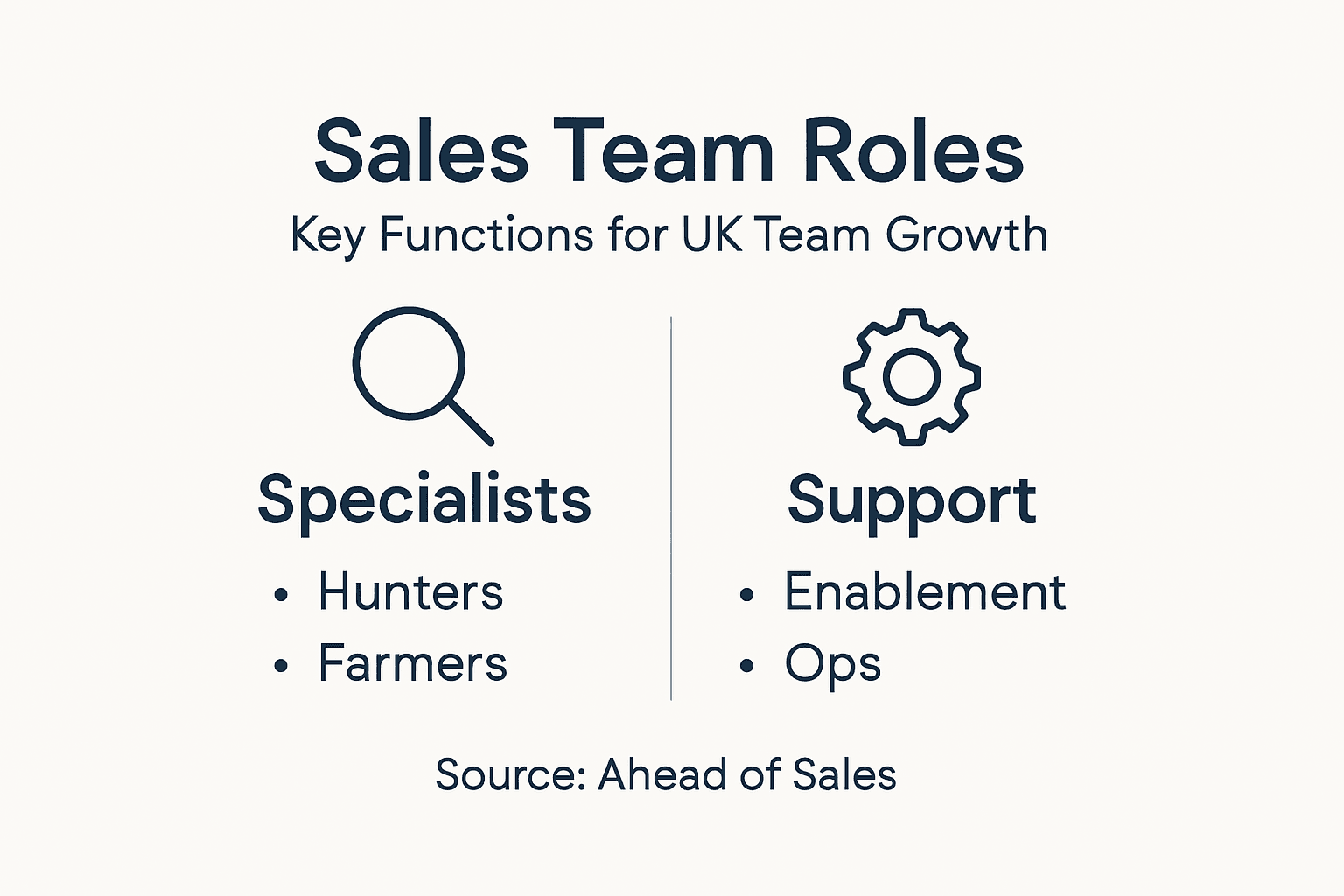
Begin by implementing a flexible sales team structure that allows for strategic role specialisation. Consider creating distinct segments such as hunters for new business development account managers for relationship maintenance and strategic account executives for complex enterprise deals. This approach ensures each team member operates within their core competencies while providing clear progression pathways. Design your organisational chart with adaptability in mind allowing for rapid reallocation of resources and skills as market demands evolve.
Ensure your team structure supports collaborative performance by establishing clear communication channels and interdepartmental workflows. Create cross functional teams that can quickly respond to changing customer needs and market opportunities. Implement a matrix management approach where sales representatives have dual reporting lines enabling faster decision making and more responsive customer engagement. Regular performance reviews and skill assessments will help you continuously refine your team structure ensuring it remains aligned with your growth objectives.
The following table outlines common sales team roles and their strategic business impacts:
| Role | Primary Focus | Strategic Value |
|---|---|---|
| Hunter | New business acquisition | Expands customer base quickly |
| Account Manager | Relationship maintenance | Increases retention and up-selling |
| Strategic Account Exec | Complex enterprise deals | Drives growth through major partnerships |
| Sales Support | Administrative assistance | Enhances productivity and deal closure rates |
Expert Tip: Develop a talent mobility programme that allows high performing sales representatives to rotate through different roles and departments creating a more versatile and adaptable workforce.
Step 4: Implement robust sales training and coaching
Developing a comprehensive sales training programme is crucial for transforming individual talent into a high-performing collective engine that consistently drives business growth. Your approach must go beyond traditional classroom learning to create an adaptive developmental ecosystem that continuously evolves with your team’s needs.
Begin by designing measurable sales training strategies that align precisely with your organisation’s specific sales roles and market challenges. This means creating tailored learning experiences that combine structured workshops theoretical knowledge and practical skills application. Implement a blended learning approach that includes online modules interactive role playing sessions peer learning opportunities and one to one coaching. Focus on developing core competencies such as consultative selling techniques customer relationship management advanced negotiation skills and strategic account planning.
Ensure your training programme includes robust feedback mechanisms and continuous performance tracking. Establish regular coaching sessions where senior sales leaders provide personalised guidance help identify individual development areas and create targeted improvement plans. Integrate real world scenarios practical case studies and data driven insights to make learning immediately applicable. Your goal is to create a learning culture that views professional development as an ongoing journey rather than a one time event.
Expert Tip: Create a mentorship programme where top performing sales representatives share their knowledge and strategies with junior team members fostering a culture of continuous learning and skill transfer.
Step 5: Leverage technology to boost productivity
Technology has become the cornerstone of modern sales effectiveness transforming how teams communicate track performance and engage with potential customers. Your strategic approach to technological integration can dramatically accelerate your sales team’s productivity and competitive positioning.
Start by consolidating your sales technology stack with purpose driven tools that streamline administrative tasks and amplify selling time. Invest in integrated customer relationship management systems that provide real time insights predictive analytics and seamless communication channels. Prioritise solutions that offer mobile accessibility allowing your sales representatives to access critical information customer data and communication tools from anywhere. Look for platforms that provide intelligent automation for routine tasks such as data entry follow up scheduling and performance reporting which can free up significant time for actual sales conversations.
Implement AI powered analytics and machine learning tools that can provide deeper customer insights predictive lead scoring and personalised engagement strategies. These technologies enable your team to make data informed decisions prioritise high potential opportunities and develop more targeted sales approaches. Ensure any technological implementation includes comprehensive training programmes that help your team understand and effectively leverage these new tools. The goal is not just technological adoption but creating a tech enabled sales culture that continuously adapts and improves.
Expert Tip: Conduct quarterly technology audits to assess the effectiveness of your current sales tech stack and identify emerging tools that could further enhance your team’s productivity.
Step 6: Monitor progress and optimise performance
Successfully scaling your sales team requires consistent measurement and strategic refinement. This stage transforms raw performance data into actionable insights that drive continuous improvement and sustainable growth.
Begin by implementing comprehensive sales performance analytics that provide a holistic view of individual and team performance. Develop a robust dashboard that tracks key performance indicators including conversion rates revenue generated sales cycle length customer acquisition costs and individual quota attainment. These metrics should offer granular insights enabling you to identify strengths skill gaps and potential areas for targeted intervention. Regular performance reviews should not be punitive but constructive opportunities for professional development and strategic realignment.
Create a dynamic feedback loop that connects performance data with targeted training and development programmes. Use predictive analytics to forecast potential performance challenges and proactively design interventions. This might involve personalised coaching for representatives struggling in specific areas redistributing territories to optimise sales potential or developing specialised training modules addressing identified skill gaps. The goal is to build a responsive adaptive sales ecosystem that continuously learns improves and evolves in alignment with your organisations strategic objectives.
Expert Tip: Implement a quarterly performance calibration process that combines quantitative metrics with qualitative assessments to ensure a comprehensive understanding of your sales team’s capabilities and potential.
Unlock Your UK Sales Team’s True Potential for Lasting Growth
Scaling a sales team demands more than just hiring more people. It requires expert guidance on structuring your team, setting measurable KPIs, and implementing ongoing coaching tailored to your organisation’s unique challenges. If you are striving to consistently grow your business in the UK with a team that hits targets quarter after quarter, then you face the exact challenges addressed in this article. Pain points like defining clear growth metrics, building scalable team roles, and embedding robust training can stall progress without the right support.
At Ahead of Sales, we specialise in delivering bespoke 1:1 coaching combined with proven training and consultancy packages designed to generate at least 50% sales growth annually. Whether you lead a business with 50 to 1000 staff or a solo service provider seeking rapid growth, our tailored programmes nurture your sales team’s skills, sharpen your sales strategy, and embed sustainable performance improvement.

Ready to transform your sales team into a high-performance growth engine that consistently exceeds targets? Explore our holistic solutions at Ahead of Sales and tap into expert insights from our Sales Playbook Archives – Ahead of Sales. Don’t let capacity limitations or unclear goals hold your team back any longer. Act now to build a sales machine that delivers consistent, scalable success in the UK market.
Frequently Asked Questions
How can I assess my sales team’s current capacity for growth?
To assess your sales team’s capacity, analyse individual performance metrics such as conversion rates and average deal sizes. Create a detailed report mapping each team member’s strengths and workload, which will help identify areas for improvement or the need for recruitment within 30 days.
What growth targets should I set for my sales team?
Set specific, measurable growth targets that align with your overall revenue goals, such as quarterly revenue objectives or average deal values. Break down your annual targets into monthly goals to ensure clarity for each sales representative within 60 days.
How should I structure my sales team for better scalability?
Design a flexible sales team structure that includes specialisation roles, such as hunters for new business development and account managers for relationship maintenance. Regularly review and adapt this structure to respond to changing market demands, revisiting it at least quarterly.
What kind of training should I implement for my sales team?
Implement a comprehensive training programme that includes structured workshops, role-playing, and one-on-one coaching. Focus on core competencies relevant to your team’s specific roles, aiming to improved performance metrics within 3 months.
How can technology enhance my sales team’s productivity?
Leverage technology by integrating customer relationship management systems and automating routine tasks. Select tools that are accessible on mobile devices to improve responsiveness, aiming to increase selling time by 25% over the next quarter.
How do I monitor and optimise my sales team’s performance?
To monitor performance, establish a detailed analytics dashboard that tracks key metrics such as conversion rates and revenue generated. Regularly analyse this data and create feedback loops for continuous improvement, with performance reviews occurring at least once per quarter.
Recommended
- How to Scale SaaS Sales for Sustainable Growth
- Sales Team Management Workflow for Sustainable Growth – Ahead of Sales
- Defining Sales Growth Strategies: Accelerating Revenue
- 7 Key Benefits of Sales Coaching for Growing Businesses
- Construction Estimating Guide 2025: Accurate UK Cost Plans – My Project Estimating