
A recent survey found that over 60 percent of British SaaS scaleups struggle to maintain consistent sales growth as they expand. For Sales VPs tasked with aggressive targets, the challenge is not just about closing the next deal. It is about building a resilient sales engine that delivers reliable results quarter after quarter. This guide reveals actionable steps to help British sales leaders like you create a scalable process, structure winning teams, and empower high performance with cutting-edge technology and bespoke coaching.
Table of Contents
- Step 1: Define Your Scalable Sales Process
- Step 2: Optimise Your Sales Team Structure
- Step 3: Implement Advanced Sales Technologies
- Step 4: Enhance Sales Skills With Bespoke Coaching
- Step 5: Monitor, Measure And Refine Sales Performance
Quick Summary
| Key Point | Explanation |
|---|---|
| 1. Define a Scalable Sales Process | Create a repeatable sales system that adapts to changing markets and ensures consistent results. |
| 2. Optimise Sales Team Structure | Segment the team into clear roles with specific responsibilities to enhance collaboration and effectiveness. |
| 3. Implement Advanced Sales Technologies | Use AI and analytics tools to predict customer behaviour and streamline sales operations for better decision-making. |
| 4. Enhance Skills with Personalised Coaching | Design targeted coaching programmes to address individual development needs, fostering continuous improvement. |
| 5. Monitor and Refine Sales Performance | Establish key performance indicators and utilise data visualisation for actionable insights and ongoing refinement. |
Step 1: Define your scalable sales process
Defining a scalable sales process is fundamental to transforming your SaaS revenue generation from reactive transactions to strategic growth. Your goal is to create a repeatable system that consistently produces predictable results while remaining flexible enough to adapt to changing market conditions.
To build this process, start by mapping your entire customer journey from initial contact through conversion and ongoing retention. Break down each stage into clear, measurable actions and milestones. Documenting your B2B SaaS sales methodology allows you to transform institutional knowledge into a structured framework that multiple sales representatives can replicate. Focus on creating standardised workflows that capture essential interactions data, enabling you to track performance metrics and identify improvement opportunities.
Key elements of a scalable sales process include detailed customer personas, qualifying criteria, sales stage definitions, and clear handover points between marketing and sales teams. Implement robust customer relationship management (CRM) systems that support these workflows, providing real-time visibility into pipeline performance. This systematic approach helps predict revenue, optimise resource allocation, and create a sustainable growth model.
Pro tip: Regularly review and refine your sales process every quarter. Markets evolve quickly, so your sales methodology must remain agile and responsive to emerging customer needs and technological shifts.
Here is a summary of best practices for implementing a scalable SaaS sales process:
| Key Element | Description | Business Impact |
|---|---|---|
| Standardised Workflows | Step-by-step sales procedures for the team | Ensures consistency and predictability |
| CRM System Integration | Central platform to track all interactions | Enhances visibility and data-driven decisions |
| Defined Buyer Personas | Profiles of ideal customer types | Improves lead targeting and qualification |
| Performance Metrics | Quantitative measures for each sales stage | Enables progress tracking and optimisation |
| Regular Process Reviews | Quarterly re-evaluation of sales methods | Maintains agility and competitiveness |
Step 2: Optimise your sales team structure
Building a high-performing sales team requires strategic design that maximises individual strengths and creates seamless collaboration. Your objective is to develop a flexible structure that supports scalable revenue generation and adapts to changing business needs.

The evolution of sales team management demonstrates the importance of role specialisation and clear performance expectations. Begin by segmenting your sales team into distinct roles with specific responsibilities. Typical structures include prospecting specialists, account executives, customer success managers, and sales engineers. Each role should have clear performance metrics, enabling targeted coaching and professional development.
Consider implementing a tiered structure that allows career progression and maintains team motivation. Junior sales representatives can learn from senior team members, creating a natural mentorship pathway. Strategic team structuring involves creating cross functional communication channels, ensuring marketing and sales teams work cohesively. Invest in comprehensive training programmes, technology platforms, and regular performance review mechanisms to maintain team alignment and continuous improvement.
Pro tip: Design compensation structures that reward both individual performance and team collaboration, encouraging knowledge sharing and collective success.
Step 3: Implement advanced sales technologies
Transitioning to advanced sales technologies transforms your SaaS revenue generation from traditional approaches to intelligent, data driven strategies. Your primary objective is to leverage cutting-edge tools that enhance team performance, streamline customer interactions, and provide unprecedented insights into sales processes.
Situation Awareness and Information Fusion technologies represent the next frontier of sales intelligence, moving beyond conventional customer relationship management systems. Invest in artificial intelligence powered analytics platforms that can predict customer behaviour, automate lead scoring, and provide real-time performance recommendations. These sophisticated tools enable your sales team to make more informed decisions, personalise customer interactions, and dramatically reduce response times.
Comprehensive sales process optimization frameworks emphasise integrating multiple technologies across your sales ecosystem. Focus on selecting interconnected platforms that communicate seamlessly data between customer relationship management, marketing automation, communication tools, and business intelligence systems. Prioritise solutions with robust API capabilities, machine learning algorithms, and intuitive dashboards that transform complex data into actionable insights.
Pro tip: Always conduct thorough pilot testing before full technology implementation, ensuring the tools genuinely enhance rather than complicate your existing sales workflows.
The following table contrasts traditional and advanced approaches to SaaS sales technology:
| Approach | Tools Used | Level of Insight | Team Efficiency |
|---|---|---|---|
| Traditional CRM Systems | Basic CRM, email trackers | Limited, historical | Manual data entry required |
| Advanced Sales Technologies | AI, analytics platforms | Predictive, real-time | Automated, highly efficient |
Step 4: Enhance sales skills with bespoke coaching
Developing a high-performance sales team requires more than traditional training approaches. Your goal is to create a personalised learning environment that continuously adapts to individual strengths and organisational objectives, transforming raw talent into exceptional sales professionals.
Continuous learning strategies for SaaS sales teams demonstrate that effective skill enhancement goes beyond generic workshops. Implement a multifaceted coaching programme that combines individual mentorship, targeted skill assessments, and customised development plans. Focus on understanding each team member’s unique capabilities, identifying specific performance gaps, and designing tailored interventions that address both technical sales skills and interpersonal competencies.
Systematic training approaches for sales performance optimization emphasise the importance of structured yet flexible learning pathways. Utilise a combination of techniques including role playing scenarios, peer learning sessions, recorded call analysis, and personalised feedback mechanisms. Create a supportive environment where continuous improvement is celebrated, and sales representatives feel empowered to experiment, learn from failures, and consistently refine their approach.
Pro tip: Schedule monthly individual coaching sessions that are data driven, using performance metrics and actual sales interactions as the foundation for targeted skill development.
Step 5: Monitor, measure and refine sales performance
Transforming your sales performance requires a strategic approach to measurement and continuous improvement. Your objective is to develop a robust system that provides real-time insights, identifies performance trends, and enables data driven decision making across your sales organisation.
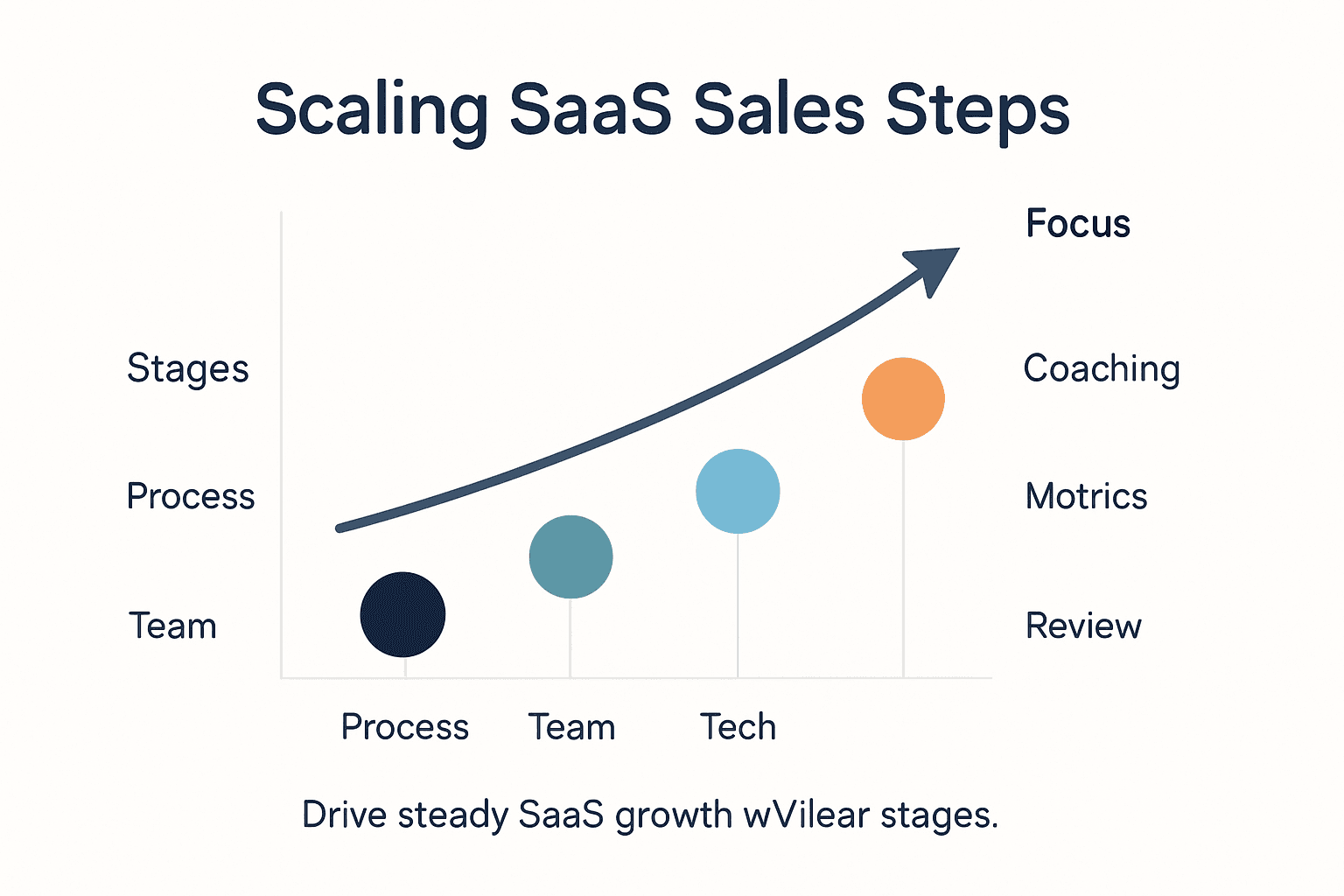
Systematic performance monitoring techniques reveal the critical importance of establishing comprehensive key performance indicators. Design a holistic measurement framework that tracks not just revenue metrics, but also leading indicators such as customer engagement, conversion rates, sales cycle length, and individual representative performance. Implement advanced analytics dashboards that provide granular visibility into every aspect of your sales ecosystem, allowing you to spot potential bottlenecks and opportunities for strategic intervention.
Sales process optimization frameworks emphasise creating a culture of continuous improvement. Conduct regular performance reviews that go beyond quarterly assessments, incorporating weekly team discussions and individual coaching sessions. Use data visualisation tools to transform complex performance metrics into actionable insights, enabling your team to understand their progress and identify specific areas for skill development and strategic refinement.
Pro tip: Implement a quarterly performance review system that combines quantitative metrics with qualitative feedback, ensuring a comprehensive understanding of individual and team performance dynamics.
Accelerate Your SaaS Sales with Bespoke Coaching and Proven Strategies
Scaling your SaaS sales for sustainable growth requires more than just understanding processes and technology. If you are striving to build a scalable sales process, optimise your sales team structure, and enhance skills through personalised coaching this is your opportunity to transform ambition into achievement. At Ahead of Sales we specialise in combining traditional sales training with bespoke 1:1 coaching tailored to your team’s unique strengths and challenges.
Explore how our Sales Strategy Archives – Ahead of Sales can support your journey from process design to performance monitoring. Act now to ensure your sales team not only hits but exceeds targets every quarter. Visit Ahead of Sales today to discover packages starting from £4,500 designed for businesses with growth mindsets seeking at least 50% sales growth annually. Don’t wait to turn strategy into results – your scalable success story begins here.
Frequently Asked Questions
What is a scalable sales process in SaaS?
A scalable sales process in SaaS is a repeatable and adaptable system that produces consistent results while allowing for growth. Start by mapping your customer journey and defining measurable actions at each stage, ensuring that multiple sales representatives can replicate the methodology.
How can I optimise my sales team structure for better performance?
To optimise your sales team structure, segment your team into distinct roles such as prospecting specialists and account executives. Implement clear performance metrics for each role, and consider creating a tiered structure for career progression, which can motivate team members and improve collaboration.
What technologies should I implement to enhance my SaaS sales process?
Implement advanced sales technologies such as artificial intelligence powered analytics platforms that can automate lead scoring and provide real-time performance insights. Focus on integrating interconnected tools that streamline your sales process and improve data visibility.
How can I improve my sales team’s skills through coaching?
To improve your sales team’s skills, create a personalised coaching programme that incorporates individual mentorship and targeted skill assessments. Host monthly coaching sessions that focus on specific performance gaps and utilise metrics from actual sales interactions to guide your coaching efforts.
What performance metrics should I monitor to ensure sustainable growth?
Monitor key performance indicators such as customer engagement, conversion rates, and individual representative performance, in addition to revenue metrics. Establish a robust measurement framework and conduct regular reviews to identify trends and areas for improvement.
How often should I review and refine my sales process?
You should review and refine your sales process every quarter to maintain agility in a rapidly changing market. Conduct regular assessments to adapt your sales methodology based on emerging customer needs and technological advancements.
2 Responses