
More than 80 percent of british companies say their sales teams lack specific skills that hold back growth and profitability. This matters because an unfocused training programme wastes time, energy, and budget without driving results your business needs. By following a clear, evidence-based process, you can avoid common mistakes and create sales training that not only improves skills but also leads to measurable improvement and long-term business success.
Table of Contents
- Step 1: Define Your Sales Training Objectives
- Step 2: Assess Your Team’s Current Skills and Gaps
- Step 3: Design Tailored Training Programmes
- Step 4: Deliver Interactive and Practical Sessions
- Step 5: Monitor Engagement and Adapt in Real Time
- Step 6: Evaluate Results to Ensure Sustainable Growth
Quick Summary
| Key Insight | Explanation |
|---|---|
| 1. Define Specific Objectives | Establish clear, measurable sales training objectives that outline specific goals to drive skill development and accountability. |
| 2. Assess Skills and Gaps | Conduct a thorough skills assessment to identify strengths and areas for improvement, using quantifiable metrics for evaluation. |
| 3. Create Tailored Training Programs | Design customised training programmes that align with identified skill gaps and learning styles for maximum effectiveness. |
| 4. Foster Interactive Learning | Engage sales teams with practical, immersive training sessions that encourage skill application and participation through innovative methods. |
| 5. Implement Continuous Evaluation | Monitor learning engagement and adaptability in real-time, adjusting training approaches based on participant feedback and performance. |
Step 1: Define your sales training objectives
Creating well-defined sales training objectives is crucial for driving consistent growth and ensuring your team develops precisely the skills they need. According to Casact, an effective training objective clearly states what learners will accomplish by participating in the programme, using measurable and observable language.
To craft powerful sales training objectives, focus on specific, actionable outcomes. As research from Iiste indicates, key objectives should include increasing sales performance, enhancing product knowledge, improving presentation skills, and understanding pricing strategies. Start by listing specific skills your sales team needs to develop using action verbs: “increase conversion rates by 20%”, “master product feature explanations”, or “reduce sales cycle time by two days”.
When defining objectives, avoid vague terminology like “understand” or “know”. Instead, create precise, measurable goals that enable tracking and accountability. Your objectives should be specific enough that you can definitively assess whether your team has achieved them. This approach transforms sales training from a generic exercise into a strategic tool for measurable professional development.
In our comprehensive guide on sales training, we explore more detailed strategies for creating impactful training programmes that drive real results.
Step 2: Assess your team’s current skills and gaps
Identifying your sales team’s existing capabilities and potential areas for improvement is a critical foundation for effective training. According to research from L Ten, assessments are crucial for diagnosing skill levels across a sales organisation, helping to pinpoint individual and team strengths and weaknesses.
To conduct a comprehensive skills assessment, start by designing a multi-method evaluation approach. This might include performance data reviews, skills tests, customer feedback surveys, and one-on-one interviews. As insights from Arxiv suggest, effective competence mapping involves defining and identifying gaps that represent differences between current and required competences. Focus on quantifiable metrics like conversion rates, average deal size, sales cycle length, and customer retention to create an objective baseline.
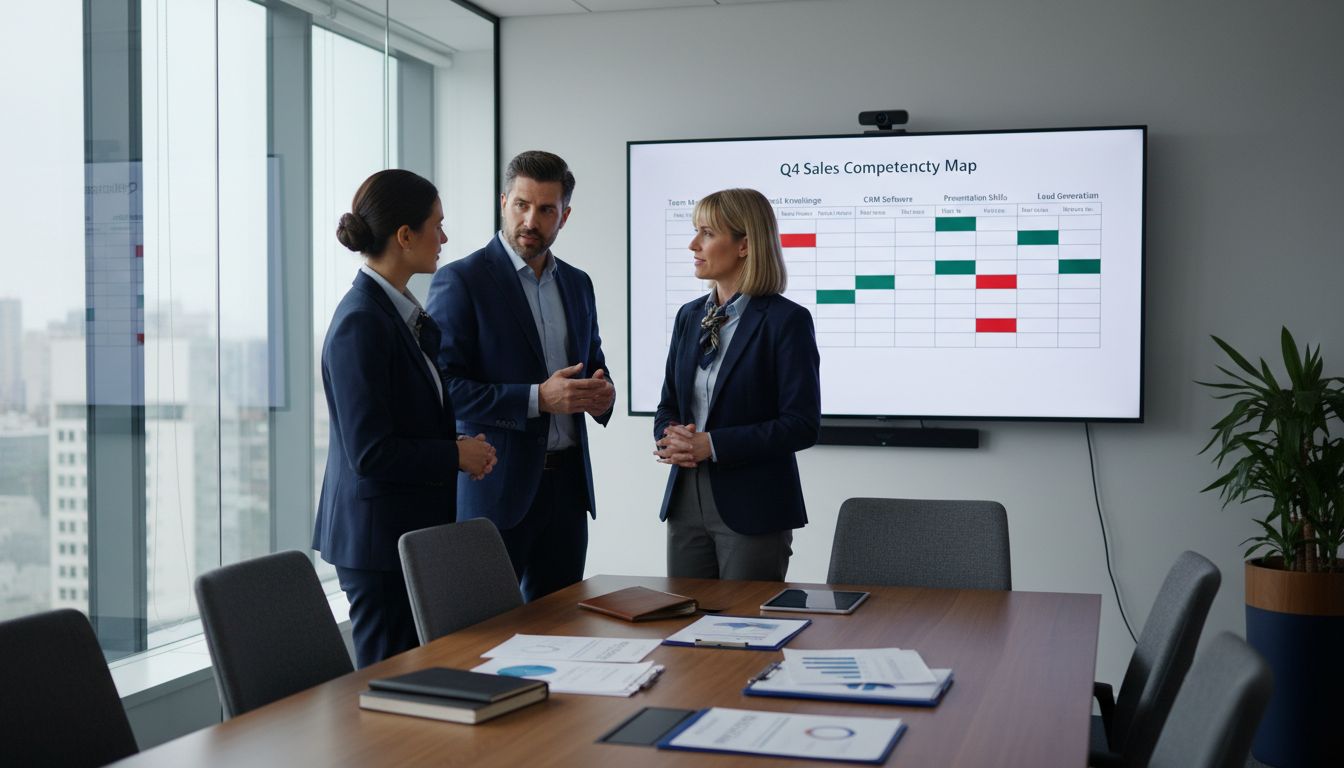
Your assessment should cover both hard skills technical product knowledge, CRM proficiency and soft skills such as communication, negotiation, and emotional intelligence. Create a structured skills matrix that ranks each team member across key competencies, allowing you to visualise overall team performance and individual development needs. By understanding these precise skill gaps, you can design targeted training interventions that address specific weaknesses.
For a deeper exploration of building high-performance sales teams, check out our guide on sales team effectiveness.
Step 3: Design tailored training programmes
Creating a comprehensive sales training programme requires strategic planning and precision. According to research from PSOU, designing an effective sales force training involves defining clear sales objectives aligned with the company’s overall goals and equipping the team with critical skills like product knowledge, selling techniques, and negotiation strategies.
To develop a tailored programme, start by mapping individual skill gaps to specific learning interventions. As insights from MPBOU suggest, a well-designed training approach should analyse the precise needs of your sales representatives. This means creating modular learning paths that address different proficiency levels and learning styles. Consider incorporating a mix of training methods such as interactive workshops, online modules, role playing scenarios, and one-on-one coaching to ensure comprehensive skill development.
Your training programme should balance theoretical knowledge with practical application. Prioritise realistic simulations that mirror actual sales challenges your team encounters, enabling them to practice and refine skills in a supportive environment. Include mechanisms for continuous feedback and performance tracking to ensure the training remains dynamic and responsive to evolving team needs.
For a comprehensive exploration of building robust sales training strategies, refer to our guide on sales training services.
Step 4: Deliver interactive and practical sessions
Transforming sales training from passive learning to an engaging, immersive experience requires innovative approaches that challenge and develop your team. According to research from Studocu, effective training programs must define specific needs by identifying the sales division, skills to be developed, and precise roles requiring improvement.
Consider integrating cutting-edge learning technologies to enhance interactivity. Emerging research from Arxiv highlights the potential of Virtual Reality (VR) technology in creating immersive training environments. These advanced simulations allow sales representatives to practice interpersonal and negotiation skills in controlled scenarios that mimic real world interactions. By designing role playing exercises that replicate actual sales conversations, you can provide a safe space for team members to experiment, make mistakes, and rapidly improve their techniques.
Practical sessions should balance structured learning with opportunities for spontaneous skill application. Incorporate live demonstrations, peer feedback mechanisms, and scenario based challenges that require active participation.
This approach ensures that theoretical knowledge transforms into practical capability, enabling your sales team to develop genuine confidence and adaptability in dynamic client interactions.
For more insights into developing impactful sales training strategies, explore our guide on effective sales training methods.
Step 5: Monitor engagement and adapt in real time
Effective sales training requires continuous assessment and responsive adjustment to maintain participant interest and learning momentum. According to research from Whatfix, implementing a consistent feedback mechanism is crucial for determining participant engagement and identifying potential areas of improvement in real time.
Drawing insights from Arxiv, a sophisticated approach to monitoring involves developing a dynamic model that tracks individual team member skills and performance. This means creating flexible assessment strategies that go beyond traditional metrics. Implement multiple feedback channels such as interactive surveys, quick digital polls, live chat interfaces, and brief one on one check ins. These tools will help you capture nuanced insights about participant understanding, motivation, and potential knowledge gaps.
To maintain training effectiveness, design a responsive framework that allows immediate interventions. Watch for signals of disengagement such as reduced participation, slower response times, or minimal interaction during sessions. When you detect these indicators, be prepared to quickly modify your training approach. This might involve restructuring content, introducing more interactive elements, or providing additional support for specific team members struggling with particular concepts.
For more comprehensive strategies on optimising sales team performance, explore our guide on impactful examples of sales coaching.
Step 6: Evaluate results to ensure sustainable growth
Measuring the tangible impact of your sales training programme is crucial for demonstrating value and driving continuous improvement. According to research from UOU, effective evaluation involves setting clear objectives such as learner engagement ratings, knowledge increase, skill application, and direct contribution to sales revenue.
Advanced evaluation techniques go beyond traditional metrics. Emerging research from Arxiv suggests implementing sophisticated sales pipeline analysis using predictive modeling. This approach involves quantitatively estimating win probabilities for sales opportunities, helping you understand the precise impact of your training initiatives. Develop a comprehensive evaluation framework that combines qualitative feedback with quantitative performance indicators such as conversion rates, average deal size, sales cycle length, and revenue growth.
Your evaluation process should be dynamic and forward looking.
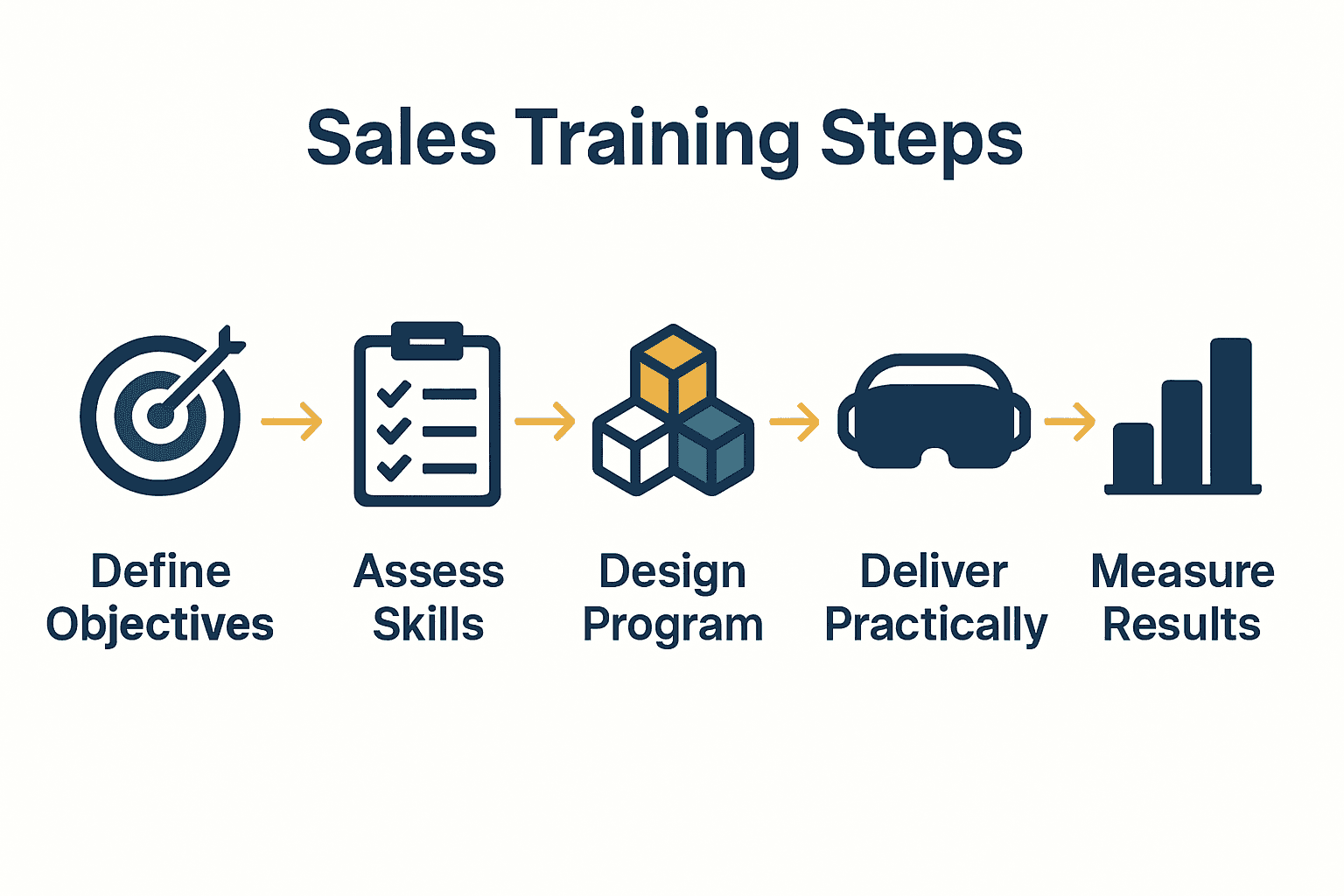 Track individual and team performance metrics before and after training, identifying specific skill improvements and their direct correlation to business outcomes. Create a feedback loop that allows continuous refinement of your training approach, ensuring that each iteration becomes more targeted and effective. Remember that sustainable growth requires ongoing assessment and adaptation.
For a deeper understanding of performance measurement, explore our guide on sales performance metrics.
Unlock Consistent Sales Growth with Tailored Training Solutions
If you are struggling to create precise sales training objectives or to identify and close skill gaps in your team, you are not alone. Many businesses find it challenging to deliver interactive sessions that truly engage their sales force and drive measurable results. The path from defining goals to evaluating outcomes can be complex without expert guidance. This is where focused strategies for sales team effectiveness and a strong sales playbook become essential.
At Ahead of Sales, we specialise in combining bespoke 1:1 coaching with proven sales training and consultancy. Our approach is designed to help your business generate at least 50% sales growth annually and ensure your sales team consistently hits targets every quarter. Whether you lead a medium or large business or a solo service venture, our packages adapt to your specific needs. Visit our Sales Strategy Archives – Ahead of Sales for insight into building winning sales frameworks and explore our tailored solutions at https://aheadofsales.co.uk. Dive deeper into practical techniques via our Sales Playbook Archives – Ahead of Sales to empower your team with the right tools.
Take the next step towards transforming your sales training from a generic program into a powerful engine for growth. Connect with us today to design training that delivers measurable success and sustainable performance improvements.
Frequently Asked Questions
How can I define clear sales training objectives?
To define clear sales training objectives, focus on specific, measurable outcomes your team should achieve. For example, aim to “increase conversion rates by 20%” or “reduce sales cycle time by two days”. List these objectives to provide a framework for training accountability.
What steps should I follow to assess my sales team’s current skills?
Begin your assessment by utilising a combination of performance data reviews, skills tests, and individual interviews. Create a structured skills matrix to identify specific gaps and strengths in key competencies, allowing you to visualise areas for improvement.
How do I design tailored training programmes for my sales team?
Design your training programme by mapping individual skill gaps to specific learning interventions. Incorporate various training methods such as interactive workshops and simulations to cater to different learning styles and ensure comprehensive skill development.
What techniques can I use to deliver interactive sales training sessions?
To create engaging training sessions, integrate interactive elements like role-playing exercises and group activities. Use technologies such as virtual reality or simulations to provide a realistic training environment that encourages active participation and skill practice.
How should I monitor engagement during sales training?
Implement a consistent feedback mechanism that includes quick surveys and one-on-one check-ins to gauge participant engagement. Watch for signs of disengagement and be prepared to adapt your training approach in real-time to maintain interest and effectiveness.
What metrics should I evaluate to measure sales training success?
Evaluate your training success by tracking learner engagement ratings, knowledge application, and direct contributions to sales revenue. Use metrics such as conversion rates and average deal size before and after training to measure the tangible impact of your programme.
One Response