
Driving consistent quarterly sales growth can feel like a constant challenge for ambitious British sales leaders. Striking the right balance between setting clear objectives and supporting your team’s development is crucial. By focusing on accurate measurement using KPIs and tailored coaching strategies, this guide unpacks practical steps to redefine your sales approach and create a culture of measurable progress and high performance.
Table of Contents
- Step 1: Assess Current Sales Performance And Define Objectives
- Step 2: Tailor A Bespoke Coaching Plan For Your Sales Leaders
- Step 3: Implement Structured One To One Coaching Sessions
- Step 4: Integrate Regular Feedback And Measure Team Progress
- Step 5: Optimise Strategies To Sustain Quarterly Sales Targets
Quick Summary
| Key Point | Explanation |
|---|---|
| 1. Assess Performance Metrics | Collect and analyse quantitative and qualitative sales performance metrics to understand team capabilities and areas for improvement. |
| 2. Create Bespoke Coaching Plans | Tailor coaching plans to each sales leader’s strengths and development needs based on diagnostic assessments and feedback. |
| 3. Implement Structured Coaching Sessions | Establish comprehensive one-to-one coaching sessions with clear objectives and active listening to foster continuous improvement. |
| 4. Integrate Regular Feedback | Develop a dynamic feedback system that combines quantitative data with qualitative insights to monitor team progress and motivate improvement. |
| 5. Optimise Sales Strategies | Use a flexible, data-driven approach to adjust sales strategies, ensuring alignment with both short-term targets and long-term growth. |
Step 1: Assess current sales performance and define objectives
Successfully mastering your executive sales coaching process begins with a comprehensive performance assessment. This critical initial step will help you understand your current sales landscape and establish strategic objectives that drive meaningful growth.
To effectively assess sales performance, start by collecting and analysing key performance metrics. Sales performance metrics provide essential insights into your team’s current capabilities and potential areas for improvement. Focus on quantitative and qualitative data points such as:
- Total revenue generated
- Conversion rates
- Average deal size
- Sales cycle length
- Customer acquisition cost
- Client retention rates
- Individual sales representative performance
When examining these metrics, go beyond simple numerical analysis. Consider the broader context of individual salesperson capabilities and their alignment with organisational goals. A holistic approach means looking at both hard numbers and soft skills.
Here is a comparison of quantitative and qualitative sales assessment approaches:
| Approach Type | Key Focus Areas | Benefits |
|---|---|---|
| Quantitative | Measurable metrics, data analysis | Objective benchmarking, trend identification |
| Qualitative | Behaviours, motivations, soft skills | Deeper insights, tailored development actions |
Effective performance assessment requires balancing quantitative metrics with qualitative insights about your sales team’s strengths and potential.
Next, conduct structured interviews and performance reviews with each sales team member. This allows you to understand their personal challenges, motivations, and perceived barriers to success. By combining data-driven insights with individual perspectives, you’ll develop a nuanced understanding of your team’s current performance landscape.

Top tip: Create a standardised assessment template that allows consistent evaluation across all team members while providing flexibility for individual contextual insights.
Step 2: Tailor a bespoke coaching plan for your sales leaders
Designing an effective coaching strategy requires a personalised approach that addresses each sales leader’s unique strengths and developmental needs. Leadership coaching techniques emphasise the importance of creating targeted interventions that drive meaningful professional growth.
To develop a bespoke coaching plan, begin by conducting comprehensive diagnostic assessments that provide deep insights into individual capabilities and potential. These assessments should include:
- Psychometric profiling
- 360-degree feedback reviews
- Performance history analysis
- Personal development interviews
- Skills gap identification
Each assessment component helps construct a nuanced understanding of your sales leaders’ current leadership capabilities and potential growth trajectories. The goal is to create a personalised development roadmap that aligns individual aspirations with organisational objectives.
Effective coaching plans are collaborative, data-driven interventions that balance individual potential with strategic business requirements.
Structure your coaching plan around specific, measurable objectives that target both professional skills and personal leadership development. Focus on creating actionable milestones that challenge your sales leaders while providing robust support and resources.
Top tip: Ensure your coaching plan remains flexible, allowing periodic reassessment and adjustment to accommodate evolving business needs and individual growth patterns.
Step 3: Implement structured one to one coaching sessions
Successful one-to-one coaching requires a deliberate and systematic approach that transforms potential into tangible performance improvements. Effective coaching conversations demand meticulous preparation and a nuanced understanding of individual development needs.
To establish a robust coaching framework, design a comprehensive session structure that encompasses multiple critical components:
- Clear session objectives
- Pre-session preparation materials
- Structured discussion agenda
- Active listening techniques
- Reflective questioning strategies
- Performance tracking mechanisms
- Actionable follow-up plans
Each coaching interaction should prioritise constructive dialogue and personal accountability. Begin by establishing explicit expectations, creating a safe environment for open communication, and setting measurable developmental goals that align with both individual aspirations and organisational requirements.
One-to-one coaching is a collaborative journey of continuous improvement, not a prescriptive performance management exercise.
Implement a consistent documentation process to track progress, record insights, and ensure ongoing developmental momentum. Regular review and adaptation of your coaching approach will help maintain its relevance and effectiveness.
Top tip: Create a standardised coaching template with flexible sections that allow personalisation while maintaining a structured approach to skill development and performance enhancement.
Step 4: Integrate regular feedback and measure team progress
Establishing a dynamic feedback mechanism is critical for driving continuous sales team improvement. Sales coaching feedback loops transform raw performance data into actionable developmental insights that propel team growth.
Implement a comprehensive feedback strategy that encompasses multiple assessment dimensions:
- Quantitative performance metrics
- Qualitative behavioural observations
- Individual sales representative progress
- Comparative team performance analysis
- Client satisfaction indicators
- Revenue generation trends
- Skill development trajectory
Your feedback approach should prioritise balanced and constructive communication. This means combining objective performance data with supportive developmental guidance that motivates and inspires your sales professionals to achieve higher standards.
The table below summarises essential elements in effective feedback strategies for sales teams:
| Feedback Element | Description | Impact on Performance |
|---|---|---|
| Balanced communication | Mix of data and supportive guidance | Boosts morale and learning |
| Personalised insights | Individualised review for each member | Drives targeted improvement |
| Regular review | Scheduled feedback sessions | Ensures ongoing progress monitoring |
Effective feedback is not about criticism, but about creating a collaborative environment of continuous learning and improvement.
Establish regular review intervals where team members receive detailed, personalised feedback. These sessions should be structured to provide clear insights, recognise achievements, and outline specific strategies for addressing performance gaps.
Top tip: Develop a standardised feedback template that allows for consistency in evaluation while providing sufficient flexibility to capture individual nuances and contextual performance factors.
Step 5: Optimise strategies to sustain quarterly sales targets
Sustaining consistent sales performance requires a strategic and adaptive approach that anticipates market dynamics and organisational capabilities. Sustainable sales strategies demand a holistic framework that balances short-term targets with long-term growth objectives.
Develop a comprehensive strategy that encompasses multiple critical elements:
- Clear quarterly performance benchmarks
- Flexible goal-setting mechanisms
- Regular market trend analysis
- Comprehensive competitive intelligence
- Predictive performance modelling
- Adaptive resource allocation
- Continuous skills development
Your strategic approach should prioritise data-driven decision making and proactive performance management. This involves creating robust monitoring systems that provide real-time insights into sales team performance and market conditions.
Sustainable sales growth is not about rigid adherence to targets, but about creating an agile framework that responds dynamically to changing business environments.
Implement a quarterly review process that allows for strategic recalibration. This means not just measuring performance, but understanding the underlying factors driving success or challenging progress.
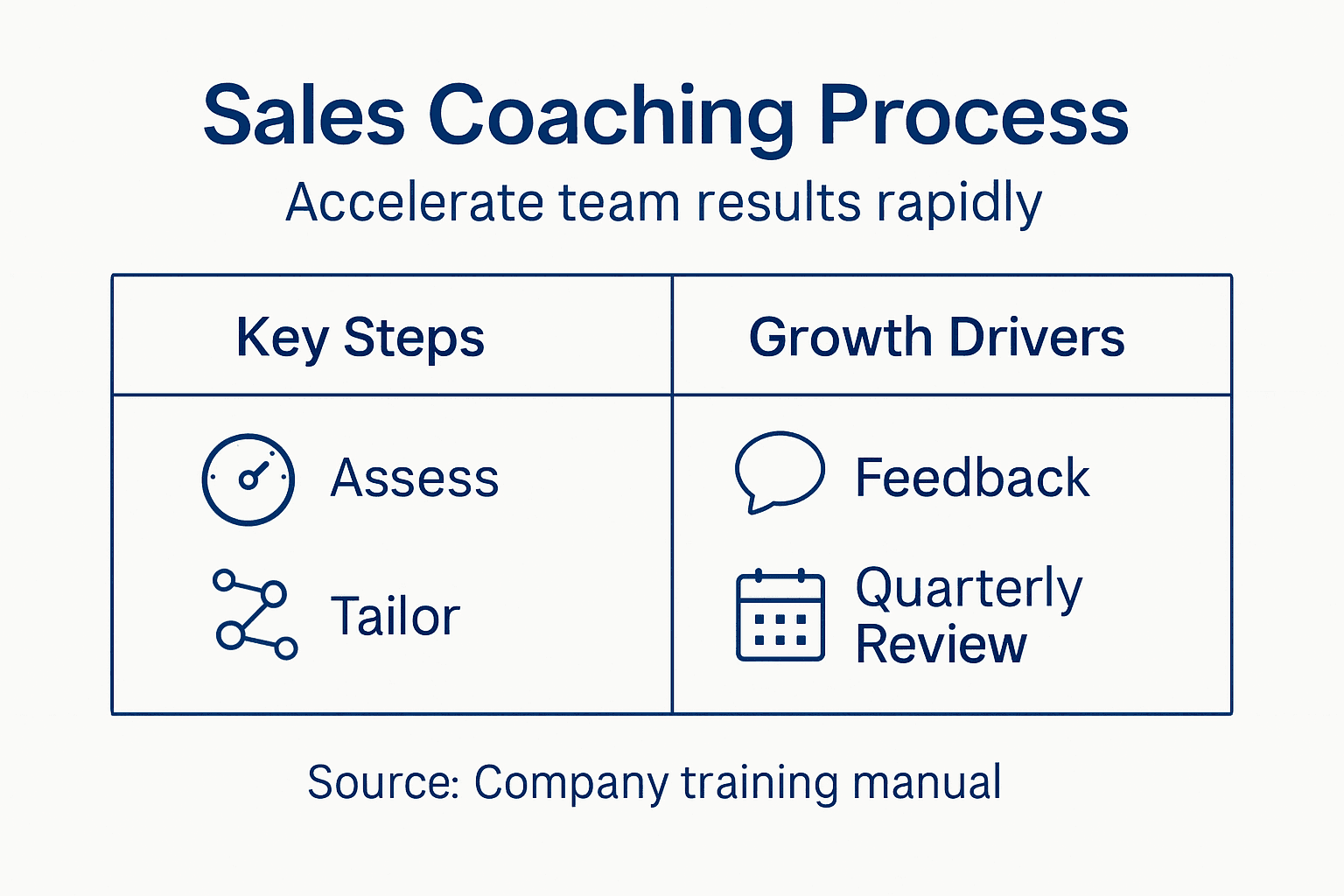
Top tip: Develop a dynamic performance dashboard that provides instant visibility into key metrics, enabling rapid strategic adjustments and informed decision-making.
Accelerate Your Growth with Tailored Executive Sales Coaching
If you are seeking to master the executive sales coaching process and overcome challenges such as aligning individual potential with organisational goals or sustaining quarterly sales targets, then our bespoke coaching programmes are designed for you. We understand the importance of combining data-driven insights with personalised development plans to transform your sales leaders and teams into high performers.
Explore our proven approaches to crafting agile sales strategies that produce at least 50% sales growth every year and consistently hit quarter-on-quarter targets. Discover more about how to implement these rapid growth principles by visiting our Sales Strategy Archives – Ahead of Sales or reviewing powerful techniques in our Sales Playbook Archives – Ahead of Sales. Take the first step today and partner with us at Ahead of Sales to unlock your sales team’s true potential.
Frequently Asked Questions
How can I assess my current sales performance for executive coaching?
To assess your current sales performance, gather key performance metrics such as total revenue, conversion rates, and client retention rates. Analyse this data alongside structured interviews with your team to identify strengths and areas for improvement.
What should I include in a bespoke coaching plan for my sales leaders?
A bespoke coaching plan should encompass comprehensive diagnostic assessments, such as psychometric profiling and 360-degree feedback. Create a personalised development roadmap that aligns individual aspirations with organisational objectives, ensuring it includes specific, measurable goals.
How do I structure effective one-to-one coaching sessions?
To structure effective one-to-one coaching sessions, develop a clear session agenda that includes defined objectives and active listening techniques. Prepare reflective questioning strategies to promote constructive dialogue and establish an accountability framework for follow-up actions.
What feedback mechanisms should I establish to improve team performance?
Establish a feedback strategy that combines quantitative performance metrics and qualitative observations. Schedule regular review sessions where team members receive personalised feedback, recognising achievements and outlining improvement strategies to maintain motivation.
How can I optimise strategies to sustain quarterly sales targets?
To optimise strategies for sustaining quarterly sales targets, implement flexible goal-setting mechanisms and conduct regular market trend analyses. Create a dynamic performance dashboard to track key metrics, allowing you to adjust strategies swiftly and effectively based on real-time insights.
One Response