
When a prospect says “I’m not interested,” try this: “Totally fair, most people say that before they’ve heard the specific problem we solve. Can I ask what you’re using for [X] right now?” It works because it thanks them, then asks one open question tied to timing, budget, authority or need. For voicemail, try: “I’ll keep this to fifteen seconds. If [outcome] isn’t a priority right now, no bother. Reply with a yes or no.” Aheadofsales built its cold-call training around exactly this kind of curiosity-first approach, borrowing from frameworks like LAER, because a flat rebuttal rarely reopens a closed door.
- Cold call: “Fair enough. Quick one: is it the timing, or is this just not on your radar at all?”
- Cold call: “Understood. Before I let you go, can I ask what you’re doing instead for [problem]?”
- LinkedIn message: “No worries at all. Mind if I send one insight relevant to [role] and you tell me if it’s useless?”
- SMS follow-up: “Totally get it. Worth a two-minute call next month, or should I close the file?”
Key Takeaways
Question-led responses that uncover the real reason behind “not interested” consistently reopen more conversations than any scripted rebuttal.
| Point | Details |
|---|---|
| Lead with gratitude | Thank the prospect first, it disarms defensiveness before you ask anything. |
| Diagnose before pitching | Use one open question to find whether it’s budget, timing, authority or need. |
| Follow the 7-step sequence | Thank, empathise, clarify, probe, reframe, prove, propose, in that order, every call. |
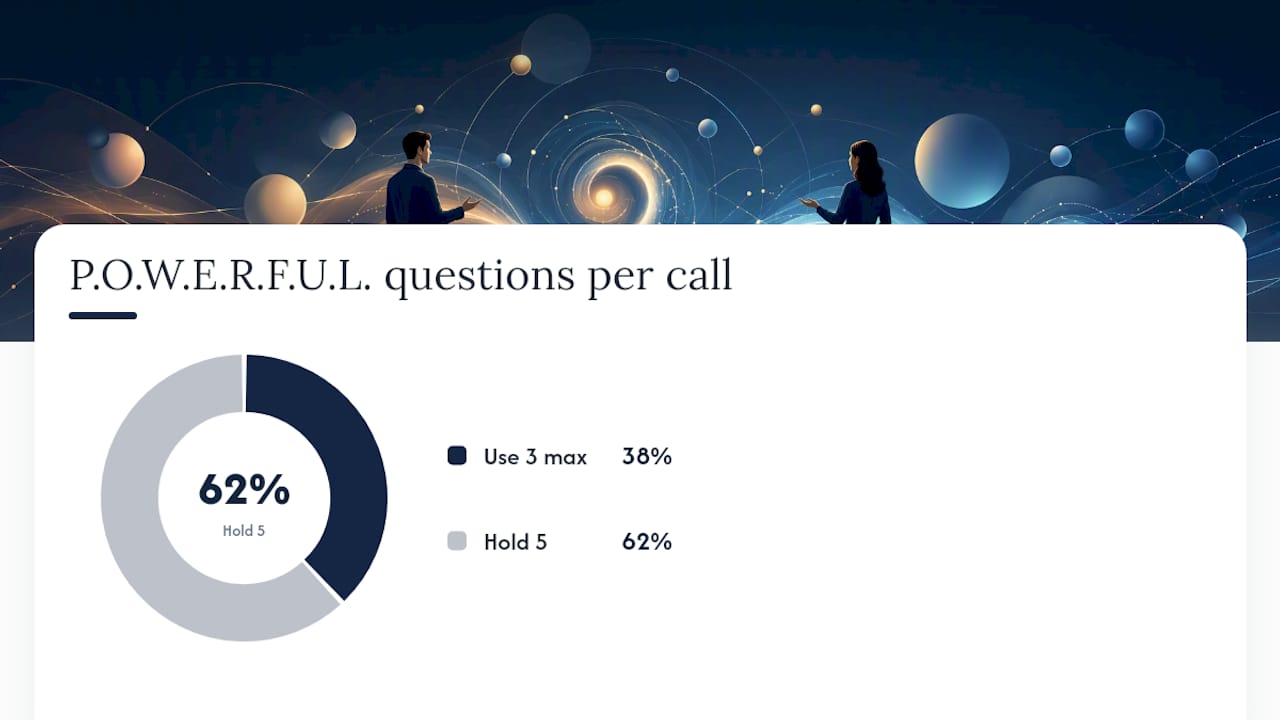
| Use P.O.W.E.R.F.U.L. sparingly | Ask no more than three discovery questions per call to avoid sounding like an interrogation. |
| Track repeats as data | Recurring “not interested” replies usually flag a targeting or messaging problem, not rep performance. |
Ready to build these scripts into muscle memory across your whole team? Aheadofsales runs bespoke sales training that turns this exact framework into daily habit, with role-play, coaching, and real call reviews built in.
Table of Contents
- What’s really behind a “not interested” objection
- A 7-step framework for handling “I’m not interested”
- The P.O.W.E.R.F.U.L. discovery framework explained
- Scripts and templates for phone, email and LinkedIn
- When to stop pushing and how to follow up
- Common mistakes when replying to “not interested”
- Why questions beat rebuttals every time
- Frequently asked questions
- Sources
What’s really behind a “not interested” objection
Nobody says “not interested” because they’ve done a cost-benefit analysis in three seconds flat. They say it because it’s the fastest way to end an unexpected call, and the real objection is hiding underneath. Highspot’s research groups most sales objections into four buckets: budget, timing, authority, and need. A fifth and sixth show up constantly in practice too: competing priorities and outreach that simply landed on the wrong desk.
Think of it as an onion rather than a wall. Peel back one layer of “not interested” and you often find “not right now.” Peel that back and you find “not sure this is worth the disruption.” The words on the surface rarely match the reason underneath, so listening for tone matters as much as listening for content.
- Fast, clipped tone, no follow-up question from them: usually timing or low priority, not genuine rejection.
- “We already have someone for that”: often authority or budget, since the real decision-maker may be elsewhere.
- Silence after your question: frequently need, they haven’t connected your offer to a live problem yet.
A 7-step framework for handling “I’m not interested”
Consistency beats improvisation on this objection, and a team that follows the same sequence closes the gap between a junior rep’s results and a senior rep’s results. Salesforce’s own objection-handling guidance backs this exact thank, empathise, probe, prove pattern, and it maps neatly onto seven steps you can run inside thirty seconds.
- Thank them. “Appreciate you being straight with me.” Disarms the instinct to hang up.
- Empathise. “You probably get five calls like this a week.” Shows you’re not offended.
- Clarify. “When you say not interested, is that the timing, or the whole idea?” Narrows the objection.
- Probe. “What’s currently handling that problem for you?” Surfaces the real gap.
- Reframe. “A lot of people I speak to felt the same until they saw [specific result].” Shifts the frame without arguing.
- Prove. Offer one concrete, relevant proof point, never a generic pitch.
- Propose a next step. A specific fifteen-minute call, not “can we chat sometime.”
Pro Tip: Slow your pace right after they object. Rushing in with a rebuttal sounds defensive; a two-second pause before you speak signals confidence, not desperation.
Know when to stop talking and start listening: once they answer step 3 or 4 honestly, go quiet and let them fill the space. If the answer reveals a bigger decision (multiple stakeholders, a board sign-off, a budget cycle), that’s your cue to escalate, not push harder solo, by proposing a call that includes the other decision-maker.
The P.O.W.E.R.F.U.L. discovery framework explained
Peeling the objection onion needs structure, which is why Aheadofsales built the P.O.W.E.R.F.U.L. discovery framework for reps who want to get past the first “no” without sounding like an interrogation.
- Problem: “What’s the biggest headache in [area] right now?”
- Ownership: “Whose job is it to fix that if it stays broken?”
- Willingness: “How open are you to changing how that’s handled?”
- Evidence: “What would proof this works actually look like to you?”
- Resources: “Is there budget set aside for this, or would it need a case built?”
- Future: “If nothing changes in six months, what does that cost you?”
- Urgency: “Is there a deadline pushing this, or is it open-ended?”
- Leverage: “Who else needs to be in this conversation before anything moves?”
Each answer tells you which objection layer you’re actually dealing with, and strong discovery here means fewer objections later in the pipeline because you’re no longer pitching blind.
Pro Tip: Use no more than three P.O.W.E.R.F.U.L. questions per call. Firing all eight turns discovery into an interview, and interviews make prospects defensive.
Aheadofsales weaves this discovery method into its consultative selling training, because the same questions that reopen a cold call also shorten the sales cycle downstream.
Scripts and templates for phone, email and LinkedIn
Word-for-word scripts remove hesitation in the moment, and HubSpot’s guidance is blunt about it: this early in a call, it’s often too soon for a prospect to make a genuine, informed decision, so your job is to invite more information rather than accept the door slam.
Phone rebuttals:
- “Fair enough, most people say that on a first call. What would need to be true for this to be worth a look?”
- “Got it. Out of curiosity, is it a bad time, or genuinely not relevant to what you’re doing?”
Deeper probes:
- Timing: “If we picked this up again in a quarter, what would need to have changed?”
- Budget: “If cost weren’t the blocker, would the rest of this make sense for you?”
Voicemail: “Hi [name], it’s [rep] from [company]. I’ll be quick. I work with [role] on [specific problem], and I think there’s something worth fifteen minutes. If not, no offence taken, just reply and let me know.”
Email follow-up (subject: “Quick one before I close the file”): “You mentioned this wasn’t a priority. Totally understood. I’ll check back in [timeframe], but if anything changes sooner, just reply.”
LinkedIn re-open (subject line not applicable, opening line instead): “Following up on my note, no pressure at all. If [specific trigger event] changes your priorities, I’m happy to pick this back up.”
Role-play prompt for team practice: one rep plays a prospect who gives “not interested” for a hidden reason (budget, authority, timing), the other has ninety seconds to identify which one it is using only open questions.
When to stop pushing and how to follow up
Persistence has a shelf life. Use a short checklist before every second attempt: does this prospect fit your ideal customer profile, have they shown any willingness at all, is there a realistic timeframe, and do you know who else needs to be involved? If the answer to two or more is no, step back.
- Follow-up cadence: one call, one email, one LinkedIn touch, spaced roughly a week apart, then pause unless a trigger event happens (funding news, a new hire, a product launch).
- Graceful exit: “No problem at all, I’ll leave this with you. If [trigger] ever comes up, my door’s open.”
- Later check-in: “It’s been a few months. Has anything shifted on [problem] since we last spoke?”
Common mistakes when replying to “not interested”
Most damage happens in the first five seconds after the objection lands.
- Interrupting them mid-sentence. Instead: let them finish, then pause before replying.
- Arguing on price immediately. Instead: ask what “expensive” is being compared to.
- Skipping discovery to defend the product. Instead: ask one clarifying question before saying anything about your offer.
- Rushing to book a meeting. Instead: earn the right to ask for time by uncovering a real problem first.
- Sounding wounded or sarcastic. Instead: keep tone light, “Fair enough” beats a huffy “Okay then.”
- Treating every “no” the same way. A poor reply, “Well, our clients love us,” reframed as curiosity becomes “What would ‘love it’ look like for your team?”
Why questions beat rebuttals every time
I favour question-led handling over scripted pushback because rebuttals put the rep on the defensive and questions put the prospect in charge of their own conclusion, which is a psychologically easier place to say yes from. Aheadofsales built its objection-handling training around this exact principle, and it consistently produces fewer recurring “not interested” objections because reps fix the targeting problem the objection was pointing at all along.

Frequently asked questions
What’s the best one-line response to “I’m not interested”?
“Fair enough, most people say that before hearing the specific problem we solve, can I ask what you’re using for this now?” It thanks them and asks a single open question rather than arguing.
Is “not interested” always a real objection?
Rarely at face value. It’s usually a stand-in for timing, budget, authority or unproven need, so treat it as a signal to ask, not a final answer.
How many times should I follow up after a “not interested”?
Two to three attempts across different channels, spaced roughly a week apart, then pause unless a trigger event (news, a new hire, a product change) gives you a fresh reason to reach out.
What is the P.O.W.E.R.F.U.L. framework used for?
It’s a discovery method for uncovering the real barrier behind an objection, covering problem, ownership, willingness, evidence, resources, future impact, urgency and leverage.
Should I ever just accept “not interested” and move on?
Yes, once you’ve checked fit, willingness and timeframe honestly. Pushing a prospect who’s genuinely wrong for your offer wastes time on both sides and damages your reputation for later.
Sources
- 6 techniques for effective objection handling in sales — Salesforce
- Objection handling: How to respond to buyer pushback — Highspot
- Handling common sales objections — HubSpot Sales Blog