
Finding a sales training and consultancy partner that combines tailored coaching with actionable strategies can stall progress for businesses aiming to increase revenue and upgrade team skills. Off-the-shelf courses often lack adaptability, while many consultancies require long-term contracts or publish little about their approach before a costly discovery call. This comparison details coaching style, integration options, delivery flexibility and pricing terms so businesses can confidently shortlist a provider that matches their growth goals and operational needs.
Table of Contents
Ahead of Sales
At a Glance
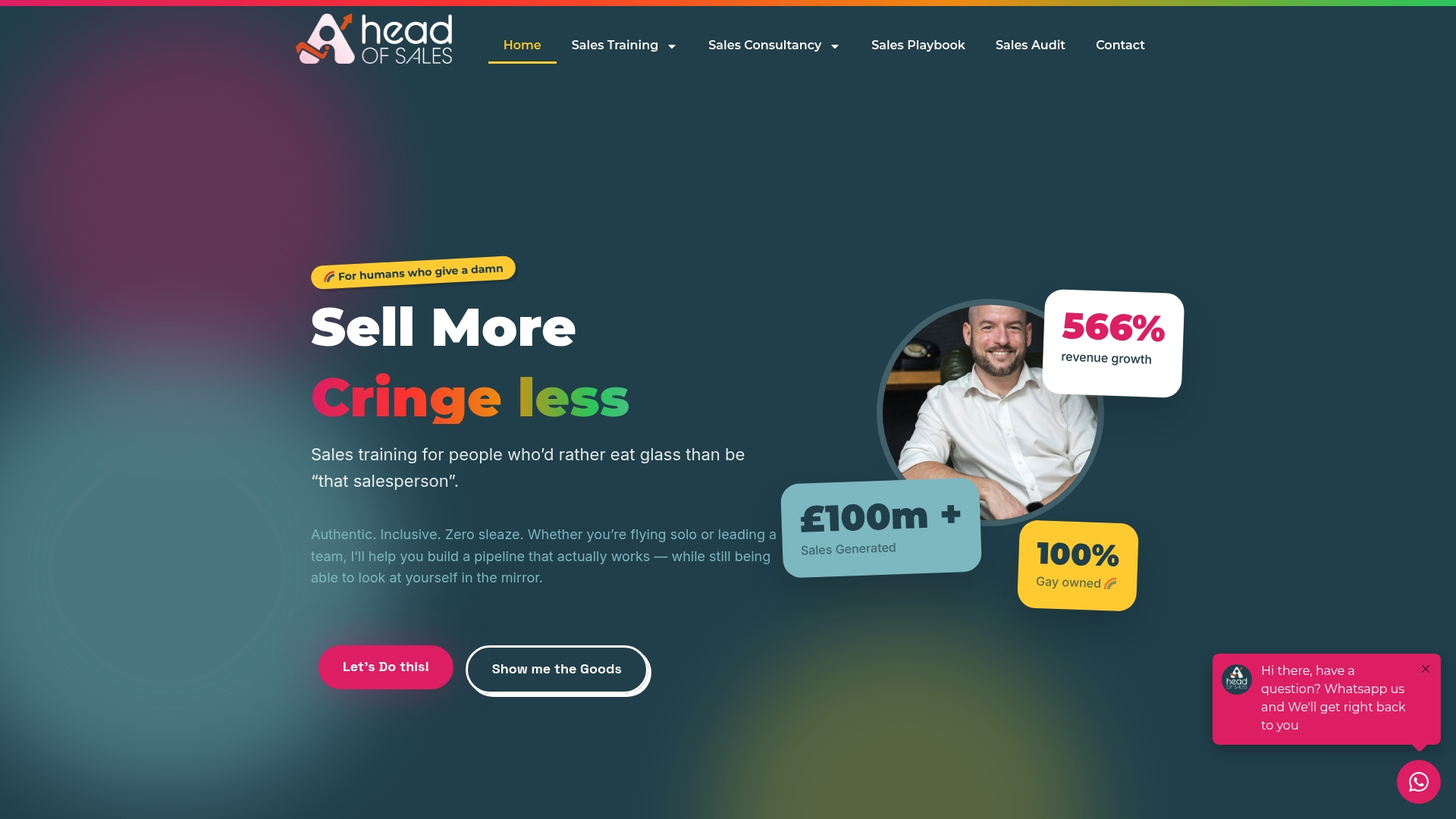
The vendor states the founder Jerry has generated more than £150 million in sales, a striking credential that informs the firm’s coaching. Ahead of Sales combines personalised coaching, playbooks and fractional leadership for UK and international clients with an emphasis on authentic selling.
Core Features
- Tailored programmes for solo operators, teams and SaaS businesses that map to existing processes and buyer journeys.
- Sales playbooks and sales health checks to standardise repeatable behaviours and priorities across teams.
- Sales consultancy and fractional leadership for organisations that need strategic sales direction without hiring full time.
- Educational resources and regular blog articles that reinforce training between sessions.
Key Differentiator
Ahead of Sales centres its method on radical authenticity and inclusion while drawing on psychology and accountability. That focus shifts conversations away from scripts and towards relationship signals and behavioural commitments, which changes how reps prioritise outreach and follow up.
Pros
- Specialisation in inclusive selling. The programmes reframe objection handling so conversations remain genuine and less transactional.
- Experienced leadership. Jerry’s track record informs practical coaching scenarios and fast habit change rather than abstract frameworks.
- A mix of delivery modes. Training, consultancy and fractional leadership means you can pick a short health check or an extended engagement depending on urgency.
- Playbooks that are immediately usable. Teams receive repeatable sequences for qualification, demos and follow up so new hires ramp faster.
- Psychology-informed techniques. The approach helps improve confidence and reduce pushy tactics while keeping clear pipeline metrics.
Cons
- Pricing and long term terms are not published and engagements are tailored; that uncertainty may deter very small businesses or those seeking off-the-shelf, lower cost e-learning.
Who It’s For
Sales leaders, founders and growth teams in UK businesses who want hands-on, people-centred training. It suits SaaS companies looking for B2B uplift and businesses that prefer bespoke coaching over large, templated courses.
Unique Value Proposition
You can buy strategic sales leadership without recruiting a head of sales. By combining fractional leadership with tailored training and playbooks, Ahead of Sales lets management delegate improvement work to an external specialist while retaining control of outcomes and KPIs.
Real World Use Case
According to the company, a SaaS startup that engaged Ahead of Sales saw a 566% revenue increase and generated over £100 million in sales after customised training and consultancy. The engagement focused on sales process redesign, role play coaching and a documented playbook used by the revenue team.
Pricing
Pricing is bespoke and not published online. Programmes are quoted per engagement so expect proposals after an initial discovery call; small business packages and longer retained options are available on request.
Website: https://aheadofsales.co.uk
ITM Platform
At a Glance
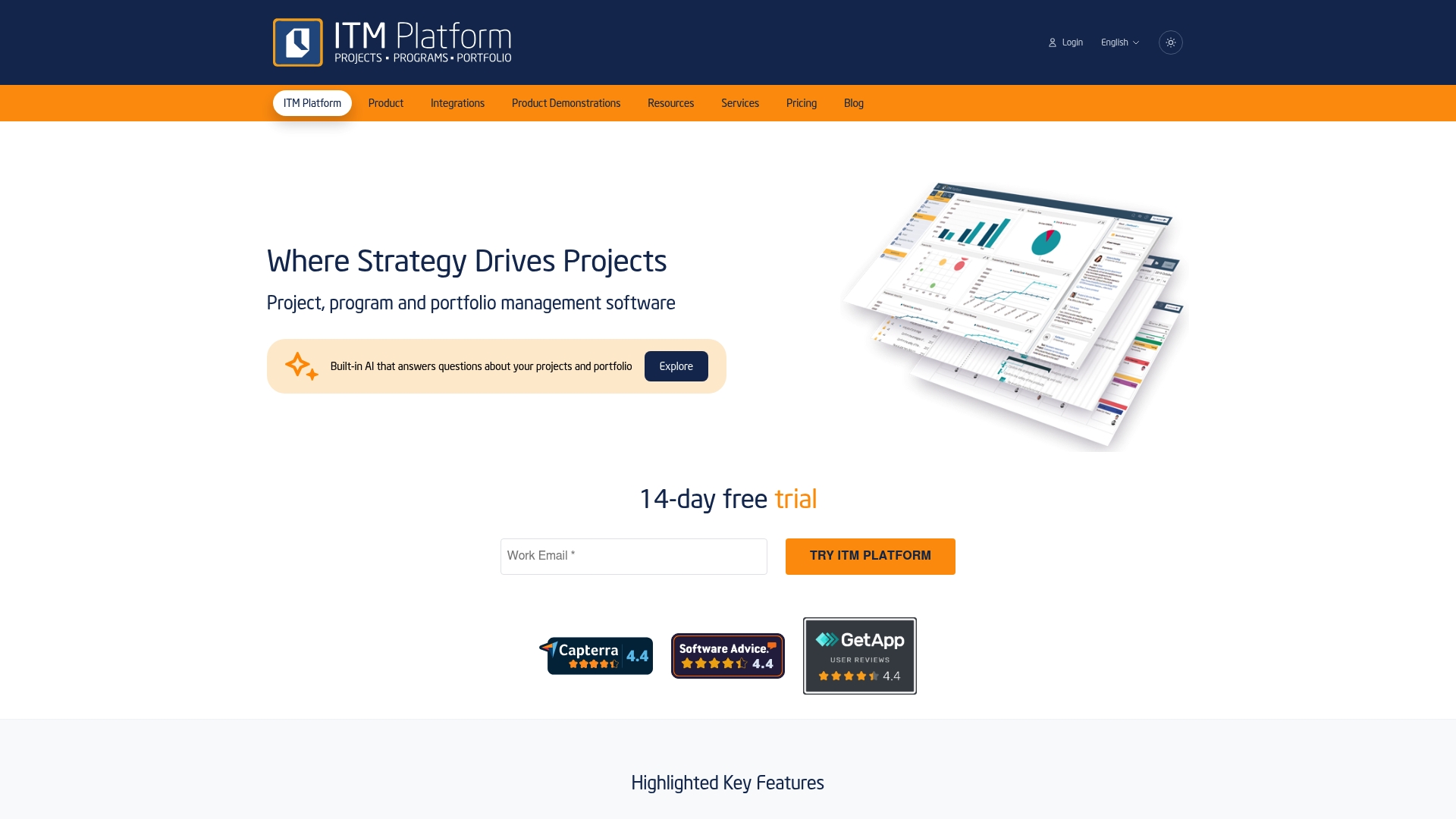
Free for unlimited team members while manager licences start at £39 per user per month when billed annually with a five-manager minimum. The vendor advertises built-in AI that delivers real-time project and portfolio answers, a capability that shapes reporting and prioritisation.
Core Features
ITM Platform combines portfolio oversight with day to day project control and resource visibility from a single browser interface.
- Portfolio and programme management for prioritisation and strategic alignment across projects.
- Waterfall and Agile project modes allowing teams to run mixed-methodology portfolios.
- Resource management from a unified view so planners see capacity and allocation.
- AI-powered project insights that surface risks, forecasts, and quick answers to portfolio questions.
Key Differentiator
The vendor advertises the built-in AI as the distinctive element here. That AI capability is designed to pull together data across projects and produce real-time, human readable insights for decision-makers rather than raw dashboards alone. It shortens the time to an executive answer.
Pros
- Rapid setup and go-live. The product is browser based and comes with ready dashboards so teams can reach value quickly without lengthy on-premise installs.
- The free team member model reduces licence friction for large stakeholder groups, letting observers and collaborators join without per-seat cost.
- Strong connectivity with MS Project, Jira, Slack and API access enables reuse of existing artefacts and integrations with corporate systems.
- Clear support for programme level planning and linking work to strategy helps translate backlog choices into portfolio prioritisation.
- A free 14-day trial allows you to test workflows and integrations before committing to manager licences.
Cons
- Reporting choices feel limited compared with dedicated BI tools; more export formats and richer standard templates would help financial and PMO teams.
- Advanced workflows involve a steeper learning curve; administrators need time and training to set up complex portfolio rules.
- Some users report initial usability friction when first adopting the interface, particularly on custom configurations.
When It May Not Fit
If your team relies heavily on bespoke Excel reports or a large existing BI stack for exports, ITM Platform’s current reporting scope may frustrate you. Equally, organisations that need immediate low training overhead for thousands of occasional users should factor in the admin required for advanced features.
Notable Integrations
- MS Project
- Jira
- Slack
- Zapier
- API access for custom connectors
Who It’s For
Mid-sized to large organisations that must manage multiple projects and programmes with visible resource allocation and a need to connect to enterprise tools. Particularly relevant where strategic prioritisation must map directly to execution.
Real World Use Case
A multinational used ITM Platform to unify departmental project lists into a single portfolio. Planners used the resource view to reassign capacity, while executives queried the AI to compare risk across programmes and reweight investment for the quarter.
Pricing
Free for unlimited team members. Manager licences are priced at £39 per user per month billed annually with a minimum purchase of five managers. Volume and enterprise packages are available via custom quotes.
Website: https://itmplatform.com
WorkOtter (Prism PPM)
At a Glance
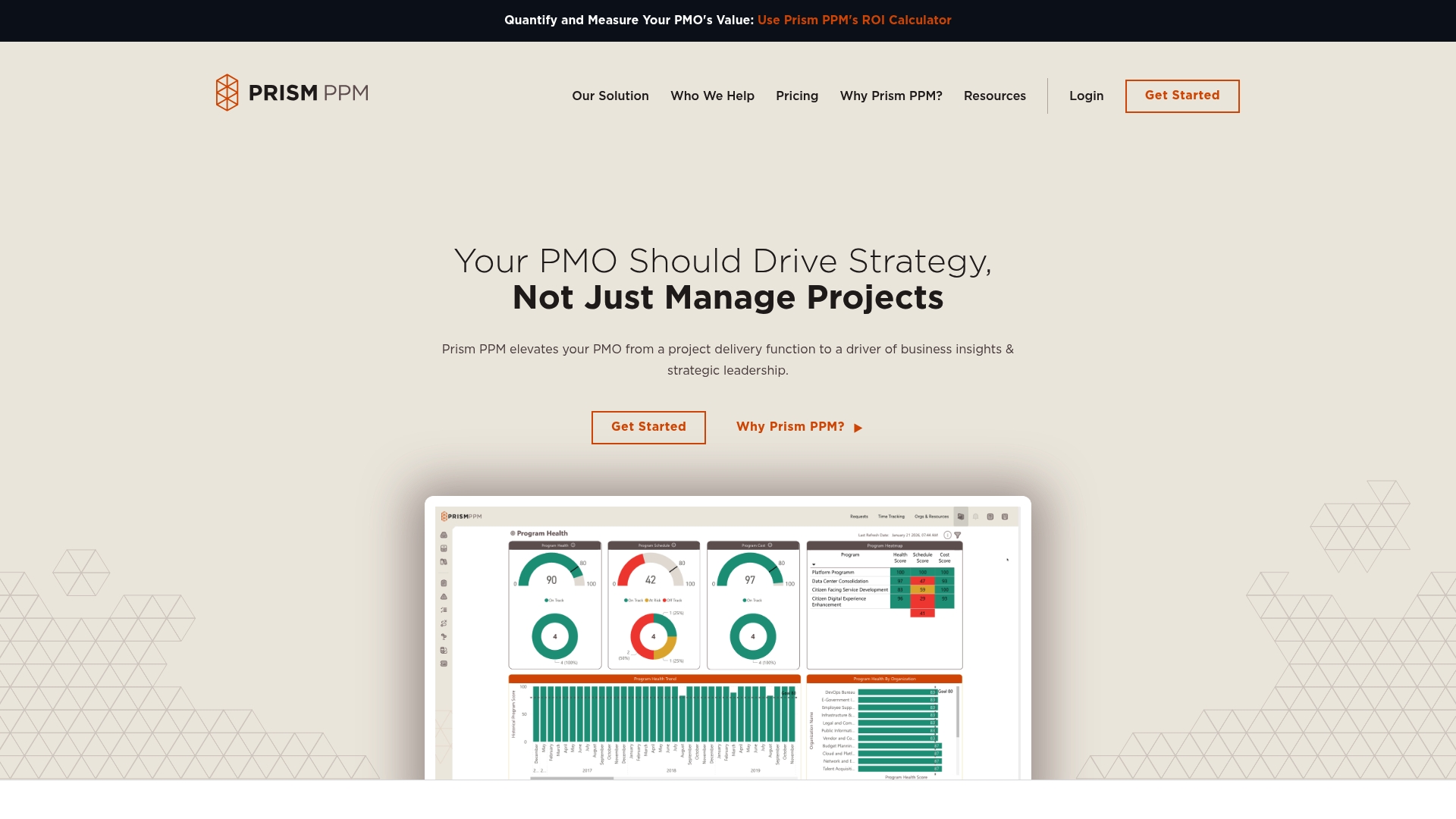
Starts at $20 per user/month for the Standard plan, with enterprise quotes available for larger deployments. Prism PPM is notable for highly customisable dashboards and tight pairing with Microsoft Excel and Power BI. The vendor reports strong customer satisfaction and positive user reviews.
Core Features
- Idea & Demand Management for intake and prioritisation of requests.
- Project Planning with task breakdown and milestone controls.
- Portfolio and Program Management for roll-up visibility across investments.
- Resource Management to map capacity against demand.
- Agile Project Management (Scrum/Kanban) for teams running iterative delivery.
Key Differentiator
Prism PPM’s real point of difference is the combination of deeply customisable dashboards and native exports to Microsoft Excel with optional Power BI connectors. That pairing lets reporting teams shape finance and governance views without rebuilding data flows.
Pros
-
The product is consistently described as user-friendly, which reduces training time for project managers and PMOs.
-
Dashboards and reports can be tailored at a detailed level, so governance teams get exactly the columns and filters they use in board packs.
-
Implementation tends to be rapid with vendor support and onboarding, which helps programmes hit live status sooner rather than later.
-
Integration with Microsoft Excel and document workflows keeps analysts working in familiar tools while centralising data.
-
Automation features lower manual reporting effort by refreshing dashboards and scheduled exports.
Cons
-
Single currency only is a real constraint. Multi-national programmes will face manual currency conversions and reconciliation work.
-
Public reviews show few other consistent drawbacks, which can mean some edge cases are underreported in vendor materials.
-
Advanced analytics beyond Power BI require add-ons or bespoke work which pushes costs for heavier BI use.
When It May Not Fit
If your organisation runs projects across multiple currencies and needs consolidated financial reporting in local currencies, this product will create extra manual work. Global PMOs with multi-currency ledgers should consider alternatives or budget for custom currency handling.
Notable Integrations
- Microsoft Excel for bidirectional exports and reporting templates.
- Jira to synchronize delivery team tickets with portfolio planning.
- Power BI for advanced visualisation and corporate dashboards.
- Databricks Connect available as an optional connector for large data pipelines.
Who It’s For
Mid-sized to large organisations that want a configurable project portfolio management system and have central reporting teams. Good for sectors such as public services, manufacturing, insurance, and life sciences.
Real World Use Case
York University uses Prism PPM to streamline project intake, improve reporting accuracy, and plan resources across faculties. The implementation demonstrates the platform’s fit in a large academic institution with complex portfolios.
Pricing
Pricing starts at $20 per user/month for the Standard plan. Custom enterprise pricing is available for scaled deployments and advanced analytics add-ons.
Website: https://workotter.com
OpenProject
At a Glance
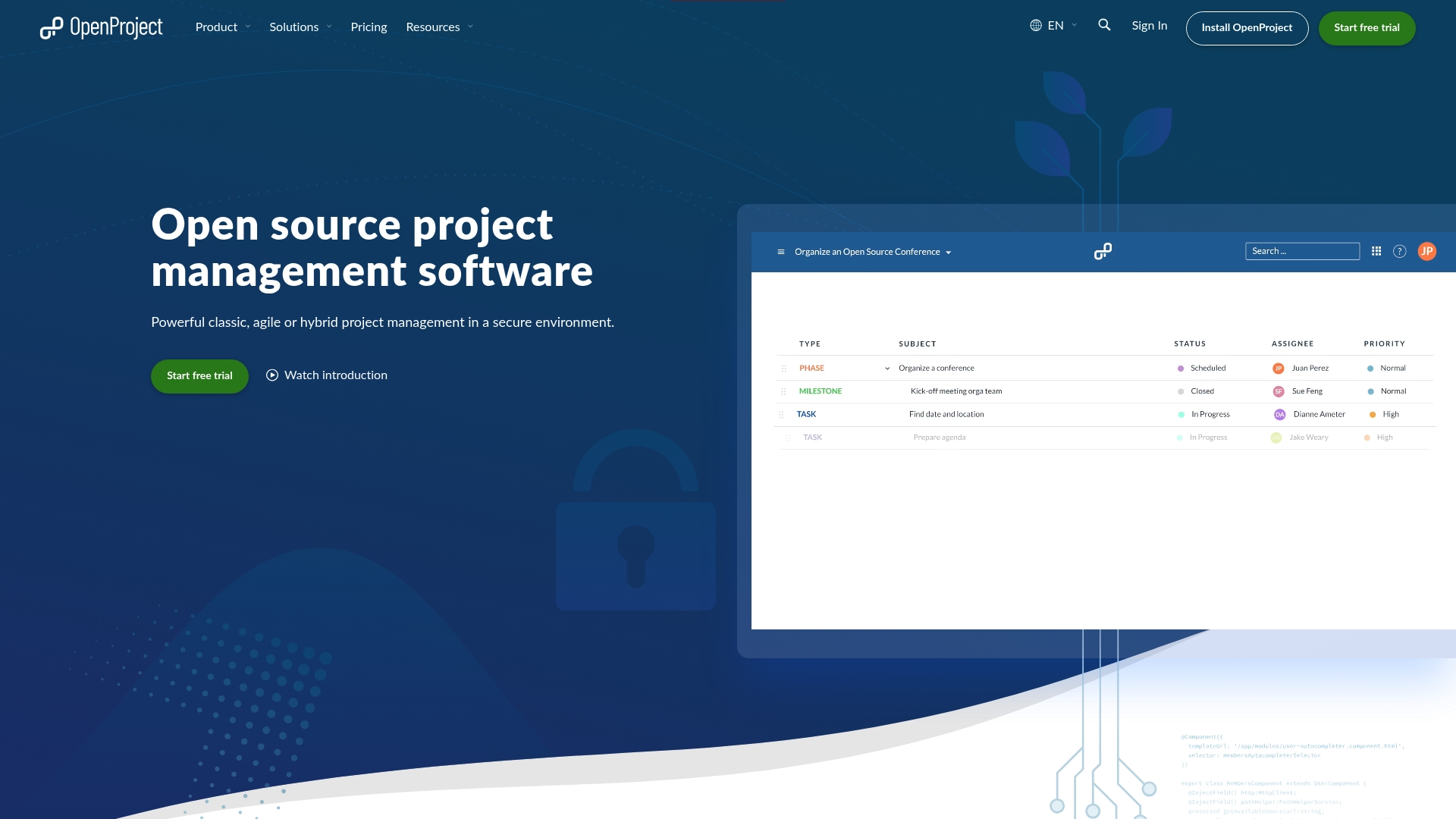
You can self-host the full project management suite to keep all project data inside your firewall. That capability, paired with a cloud option, makes OpenProject a clear choice when data sovereignty and auditability matter.
OpenProject ships as a Community edition and paid Enterprise editions, giving teams a path from free to supported deployments without changing tooling.
Core Features
- Gantt charts for planning and scheduling with dependency lines and baseline comparisons.
- Agile boards that support Scrum and Kanban workflows alongside traditional task lists.
- Document sharing, meeting minutes, and forums to centralise collaboration and project artefacts.
- Custom workflows, fields, and automations available in Enterprise editions for process control.
Key Differentiator
OpenProject’s central claim is its fully open source codebase combined with flexible hosting. You can run it on premises behind corporate controls or opt for vendor-hosted instances, which keeps procurement and security teams happy.
That transparency also makes customisation straightforward for organisations that need to adapt workflows or integrate with internal systems.
Pros
- Low entry cost and usable UI. Teams report day-to-day usability that lets project managers focus on delivery rather than admin.
- Supports classic, agile, and hybrid approaches, so you do not need separate tools for Scrum teams and programme managers.
- Strong emphasis on on-prem hosting and data protection appeals to regulated organisations and public sector buyers.
- Multiple views — list, board and resource/time tracking — let PMs check progress from different angles without exporting data.
- Open source ecosystem enables extensions and bespoke integrations when off-the-shelf connectors do not meet requirements.
Cons
- Resource management and scheduling workflows feel clunky compared with specialist resource tools; heavy portfolios expose those limits.
- The system lacks clear resource status notifications, so distinguishing reserved from available people requires manual checks.
- Backend integrations are weaker than some cloud-native rivals, which raises friction when synchronising with HR or ERP systems.
- Navigation and search can be slow to find content in large installations, increasing onboarding effort for new users.
When It May Not Fit
If your organisation needs advanced resource levelling, automatic capacity alerts, or deep ERP synchronisation out of the box, OpenProject will likely feel like a compromise.
Also avoid it if you want a zero-configuration cloud app with polished native integrations; the platform favours control over convenience.
Notable Integrations
- Nextcloud for file synchronisation and secure document storage.
- OneDrive/SharePoint connectors for Microsoft-centric environments.
- GitHub and GitLab for linking code repositories to issues and backlogs.
- OpenDesk for extended document management and sharing.
Who It’s For
Mid-sized and large organisations, public institutions and research bodies that require open source software, strict data control, and the option to host internally. IT and compliance teams will appreciate the deployment flexibility.
Real World Use Case
A university research group runs collaborative projects across labs and needs full audit trails and local data control. They deploy OpenProject on campus servers, manage experiments with Gantt and boards, and keep documents inside institutional storage.
Pricing
The Community edition is free. Enterprise editions are paid with features and support levels listed on the vendor website; pricing depends on hosting choice and support tier.
Website: https://openproject.org
Wrike
At a Glance
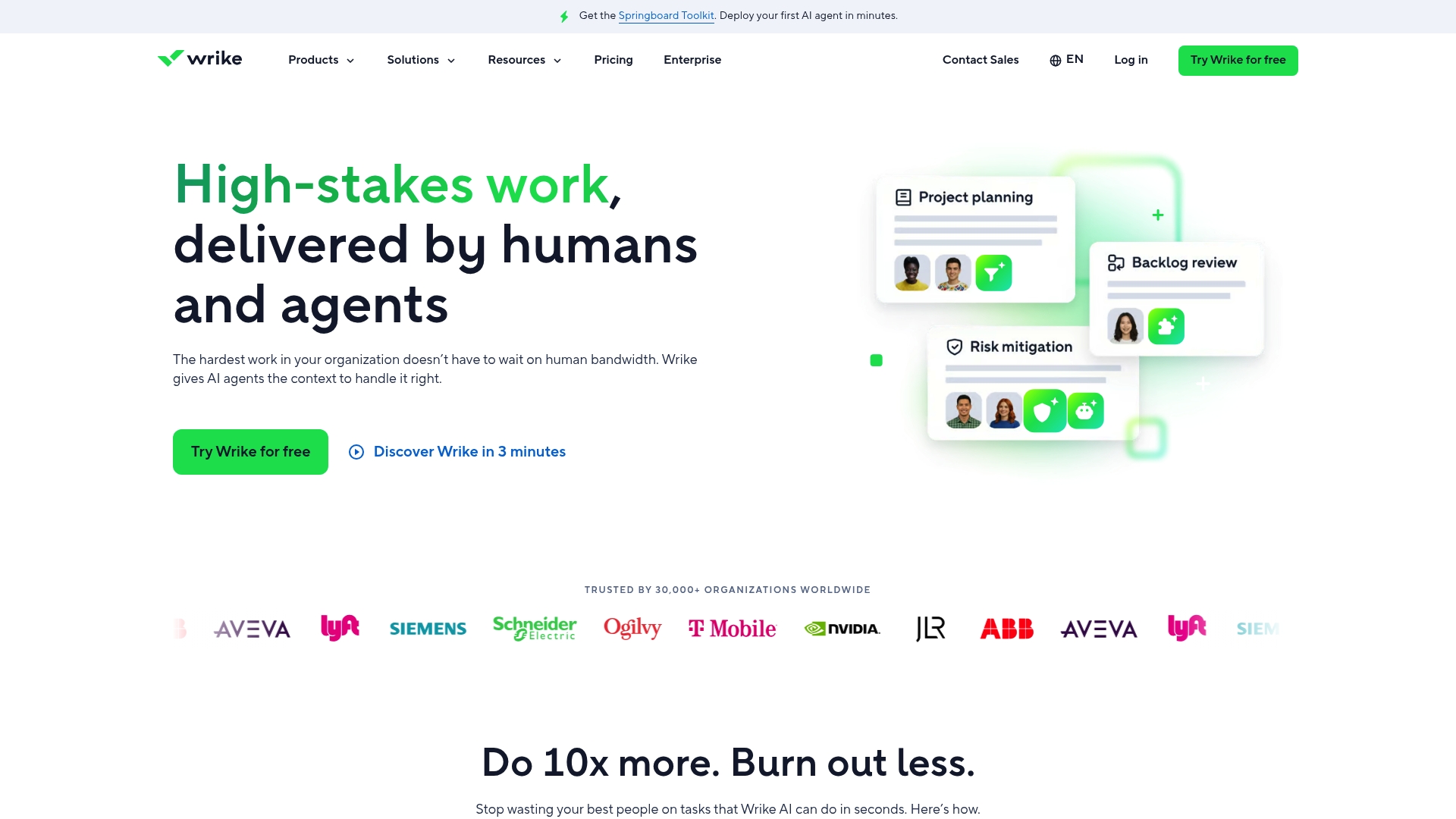
Wrike’s marketing materials state integrations with more than 400 applications, including Salesforce and Slack. The vendor also advertises it is trusted by over 30,000 organisations, and pairs AI agents with enterprise-grade security to manage complex, cross-team workflows.
Core Features
Wrike combines automation, visual collaboration, and analytics in one platform. Key capabilities include:
- Wrike Whiteboard for visual brainstorming and live editing across teams.
- Gantt charts and workload views for resource and capacity planning.
- Prebuilt and customisable templates, request forms, and effort management tools.
- Real-time dashboards and analytics for project performance and reporting.
- Role-based access, Wrike Lock encryption, and compliance features to meet enterprise security needs.
Key Differentiator
Wrike’s angle is enterprise work intelligence married to flexible automation and security. The platform targets organisations that need AI-assisted task automation alongside granular access control and encryption. That combination caters to regulated or distributed teams running complex, multi-dependency projects.
Pros
-
Highly customisable project structures. Teams can map complex workflows and adapt templates to sector-specific processes with detailed permissions.
-
Strong automation and AI features reduce repetitive tasks. Automated routing and suggestions cut manual updates in repeatable processes.
-
Wide integration ecosystem. The list of connectors, noted above, lets teams keep CRM, chat, file storage and development tools synchronised.
-
Multiple views to suit different roles. Managers get Gantt and workload; delivery teams can use Kanban or table views for day-to-day execution.
-
Enterprise security posture. Role-based access and encryption options suit organisations with strict compliance requirements.
Cons
-
Steep learning curve for new users. The platform’s customisation requires onboarding and governance to prevent configuration sprawl.
-
Pricing can be prohibitive for smaller teams. The enterprise feature set often pushes costs beyond the budgets of early-stage companies.
-
Advanced features need training. Power users extract value, but casual users may find the interface dense and feature-rich to the point of friction.
When It May Not Fit
If you run a small team that wants a lightweight project board and minimal setup, Wrike is likely too heavyweight. Similarly, organisations that require out-of-the-box simplicity without a training budget will prefer simpler, per-seat tools.
Notable Integrations
Wrike lists native integrations with Salesforce, Slack, Google Drive, Microsoft Teams, Zscaler, Adobe Creative Cloud, Jira and GitHub. These connectors support handoffs between sales, creative, development and security teams without bespoke middleware.
Who It’s For
Large organisations and enterprise teams that require scalable automation, strict security controls and deep customisation. Project managers, product teams, creative departments and operations groups that manage cross-functional programmes will see the most value.
Real World Use Case
A global manufacturing company used Wrike to coordinate cross-functional teams. They automated repetitive status updates, synchronised work across regional offices, and created dashboards that reflected real-time performance for executive decision-making.
Pricing
The vendor lists a free plan to start. Paid plans begin from $10 per user per month up to custom enterprise options. Advanced AI features and add-ons may incur extra fees as part of enterprise pricing.
Website: https://wrike.com
Comparative Analysis Section
When evaluating solutions for sales training and consultancy, each option offers distinct strengths tailored to various organisational needs, allowing decision-makers to align organisational goals with the available capabilities.
Tailored Programme and Coaching Impact
aheadofsales.co.uk offers highly customised coaching programmes that emphasise psychological approaches and inclusivity, differentiating themselves with a foundation in behavioural science. This approach appeals to teams seeking authentic and relatable interactions with deep behavioural insights. In contrast, competitors like Wrike focus on scaling task management through automation rather than personal interaction. Both approaches suit different strategic objectives but diverge operationally in terms of personnel impact.
Integration and Ecosystem Support
Wrike and WorkOtter both present highly developed integration options with widely-used platforms like Jira and Microsoft Power BI. For teams reliant on existing software ecosystems, this might facilitate smoother transitions and controller-level visibility. Conversely, aheadofsales.co.uk delivers intrinsic human-to-human service mechanisms that complement tool-based integrations without substituting hands-on implementation.
Best Fit by Scenario
- aheadofsales.co.uk: Recommended for organisations prioritising bespoke coaching and tailored strategic guidance, especially those advancing inclusive sales practises.
- Wrike: Highly suitable for large organisations needing extensive automation and collaboration tools for pragmatically managing interdepartmental integrations.
- WorkOtter: Preferred for enterprises requiring a hybrid and customisable project management environment integrated deeply within financial systems.
- OpenProject: Ideal for institutions prioritising control over hosting and data sovereignty due to its self-hostable architecture.
Our Pick
For organisations aiming to integrate inclusive and psychology-informed sales enhancement guided by fractional expertise, aheadofsales.co.uk emerges as an excellent partner. Its tailored methodology ensures outcomes resonate with organisational values and foster immediate behavioural applications. While its cost structures and bespoke nature might not fit every operational model, its direct focus on human-driven improvement contrasts effectively with tool-centric service offerings of competitors.
Sales Training and Consultancy Comparison
Evaluate the options for sales training solutions to select the most tailored and results-driven approach for your business needs.
| Product | Core Feature | Key Differentiator | Best For | Notable Limitation | Pricing |
|---|---|---|---|---|---|
| Ahead of Sales | Tailored sales programmes and consultancy | Focus on inclusive selling and behaviour-driven coaching methodology | Sales leaders and SaaS companies in the UK | Pricing not disclosed; custom packages require consultation. | Not disclosed |
| ITM Platform | Portfolio and programme management | AI-powered insights for real-time project risk analysis and forecast. | Teams managing multiple strategic projects | Limited reporting format options for finance or advanced stakeholders. | £39 per manager/month billed annually (5-manager minimum) |
| WorkOtter (Prism PPM) | Agile and traditional project management tools | Customisable dashboards with Power BI and Excel integration. | Organisations needing detailed reporting customisation | Only supports single-currency for finances, limiting multinational projects. | $20 per user/month; enterprise pricing available |
| OpenProject | Open source, self-hosted project management software | Deployment flexibility with options for strict data controls. | Mid-sized organisations valuing data sovereignty | Backend integrations weaker than some cloud-native systems. | Free (Community edition); Enterprise tier varies |
| Wrike | Centralised collaboration and work management | Combines automation, advanced analytics, and enterprise-level security. | Large organisations requiring scalability | Steep learning curve for interface customisation and cost for small teams. | $10 per user/month (basic plan); enterprise custom pricing available |
Discover a Sales Training Alternative That Delivers Real Growth
If you are exploring stevemordue.com alternatives to energise your sales team with authentic and effective coaching, Aheadofsales offers a proven path to at least 50% annual sales growth. Their tailored 1:1 coaching combined with practical playbooks and consultancy aligns perfectly with businesses aiming to hit targets every quarter without guesswork or generic training modules.
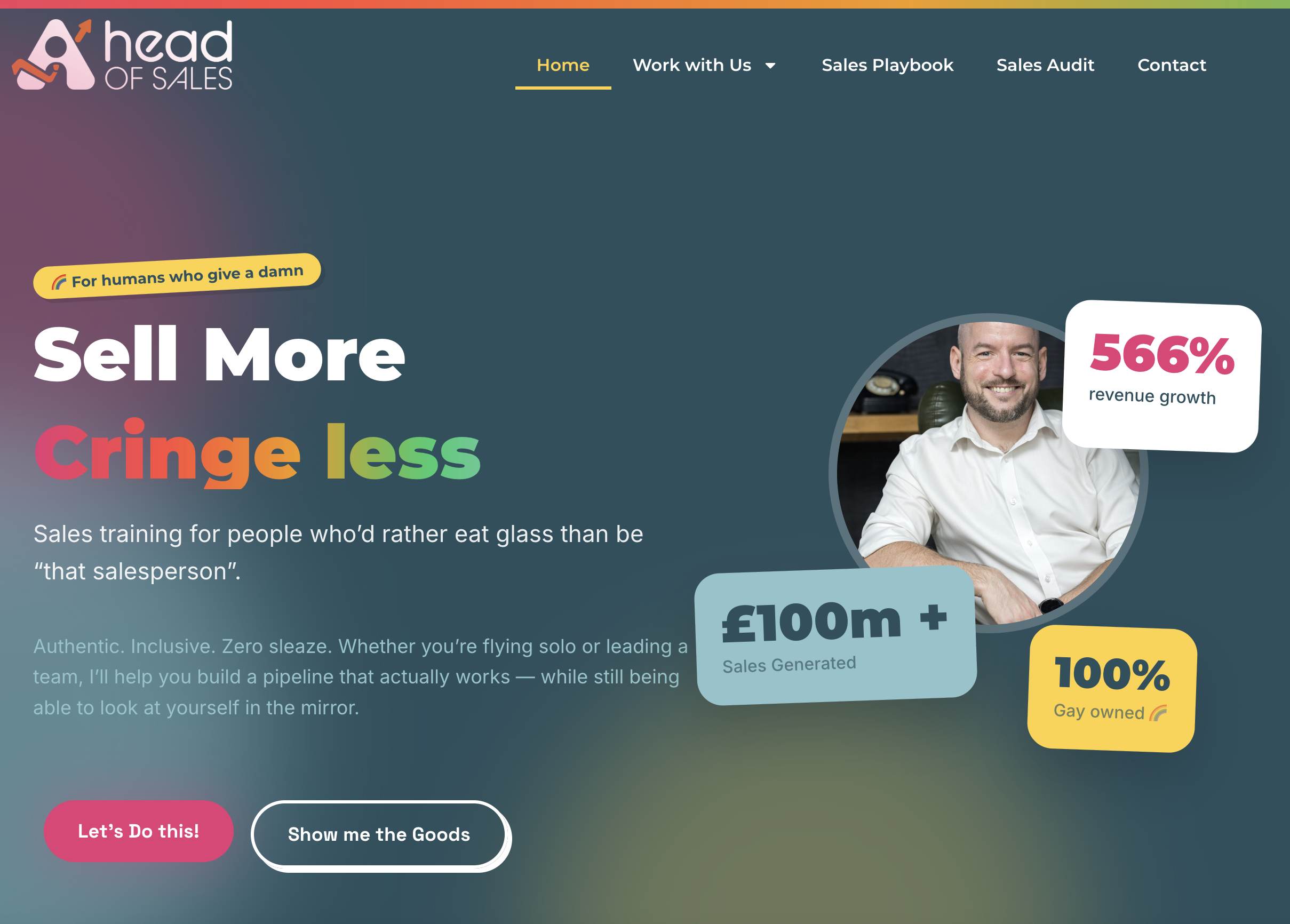
Choose Aheadofsales for bespoke sales acceleration packages designed just for UK businesses with 50 to 1000 staff or solo operators seeking measurable results. Visit Aheadofsales to explore customised programmes and book a discovery call to unlock predictable, sustainable sales improvement today.
Frequently Asked Questions
How does Aheadofsales support authentic selling?
Aheadofsales centres its method on radical authenticity and inclusion in sales training. This focus shifts conversations away from scripts towards relationship signals and behavioural commitments, enabling more genuine and effective interactions. To experience this tailored approach, consider their personalised coaching programmes.
What is the difference between Aheadofsales and ITM Platform?
ITM Platform offers strong project management capabilities with built-in AI for real-time project insights and reporting. While its AI features excel in providing quick portfolio answers, Aheadofsales excels in cultivating an authentic sales culture through bespoke coaching that emphasises relationship building over transactional interactions. This makes Aheadofsales a better fit for sales leaders seeking a people-centred training approach.
Can I use Aheadofsales if I lead a small team?
Yes, Aheadofsales tailors its programmes even for solo operators and small teams. The service provides bespoke coaching and playbooks that map to existing processes, helping teams of any size to improve their sales strategies effectively. Consider reaching out for a tailored proposal based on your team’s specific needs.
Which platform is better for sales playbooks, Aheadofsales or WorkOtter?
Aheadofsales provides immediately usable sales playbooks that standardise repeatable behaviours for qualification and follow-up, facilitating faster ramp-up for new hires. In contrast, WorkOtter focuses on project portfolio management with highly customisable dashboards, which may not centre on sales-specific needs. Aheadofsales is ideal for focused sales training through practical resources.
How does Aheadofsales approach objection handling?
Aheadofsales’ programmes reframe objection handling to ensure conversations remain genuine and not merely transactional. This approach is rooted in psychology and accountability, fostering a training environment where sales representatives learn to handle objections with confidence and authenticity. For small teams seeking deeper engagement, Aheadofsales’ methods could be particularly beneficial.