
TL;DR:
- Most sales teams experience operational inefficiency, which often explains stagnant revenue despite steady win rates and team effort.
- Building smarter systems that automate administrative tasks allows reps to focus on selling, driving faster deal creation and pipeline growth.
Most sales leaders I speak to aren’t losing deals at an unusual rate. Their win rate is steady, their team is working hard, and yet revenue growth feels stuck. The real culprit, more often than not, is operational inefficiency. Understanding the genuine benefits of sales acceleration helps you see past the idea that speed alone is the answer. It’s about building smarter systems that let your reps spend more time selling and less time on administrative tasks that quietly drain your pipeline every single day.
Table of Contents
- Key takeaways
- 1. The real benefits of sales acceleration start with speed to first deal
- 2. AI-driven acceleration and its impact on revenue per rep
- 3. CRM adoption as the backbone of operational efficiency
- 4. How automated follow-up sequences increase close rates
- 5. Sales velocity as a diagnostic tool for revenue growth
- 6. Freeing reps from admin to do what they were hired to do
- My perspective on what sales acceleration actually means
- Ready to put sales acceleration to work for your team?
- FAQ
Key takeaways
| Point | Details |
|---|---|
| Speed to first deal matters enormously | Top teams create first deals up to 15x faster, generating far more pipeline throughput. |
| AI adoption transforms revenue per rep | Sales teams using AI consistently generate 77% more revenue per rep than those who don’t. |
| CRM usage quality determines outcomes | A correlation of 0.87 exists between active CRM adoption and revenue per rep. |
| Automated follow-up recovers lost deals | Systematic follow-up sequences increase close rates by 30 to 40%, recovering deals lost to silence. |
| Sales velocity guides smarter decisions | Using velocity as a diagnostic metric helps you fix the right bottleneck rather than just push harder. |
1. The real benefits of sales acceleration start with speed to first deal
When I talk about the advantages of sales speed, the data around lead response is always where I start. Responding within 30 seconds maximises conversion potential, with delays of 10 minutes or more often halving your chances entirely. The average lead-to-opportunity conversion sits at just 13%. Most teams are leaving a significant portion of that on the table simply by being slow off the mark.
The gap between top performers and the rest is stark. Top-performing teams create first deals 15.4x faster than average, with a median time from CRM login to deal creation of 11 seconds compared to 169 seconds for average teams. That difference compounds across thousands of leads over a year.
What does this mean in practice? More deals in the pipeline, better forecast accuracy because pipeline is consistently populated, and a higher closing velocity because deals start with momentum rather than a cold restart. Early engagement signals intent and sets the tone for the entire relationship.
- Automate lead routing so the right rep receives new leads instantly, without manual assignment
- Set trigger-based tasks that prompt first contact the moment a lead enters your system
- Track response time by rep as a core performance metric, not an afterthought
- Use CRM stage automation to create deals automatically when a lead meets defined criteria
Pro Tip: Set a hard internal standard of five minutes or under for first outreach on inbound leads. Automate the first-mover follow-up task so no lead sits waiting for a rep to notice it manually.
2. AI-driven acceleration and its impact on revenue per rep
The impact of sales acceleration becomes very clear when you look at what AI actually does to revenue output. Sales teams using AI generate 77% more revenue per rep and are 65% more likely to increase win rates. AI-core organisations reported 31% higher revenue growth in 2025 compared to those running limited pilots.
What separates AI-core teams from the rest is not which tool they use. It is how deeply AI is embedded into the daily workflow. Generic AI use (drafting an email here, searching for information there) produces modest gains. Strategic AI deployment that handles forecasting, surfaces deal risks, automates administrative work, and prioritises pipeline produces 2 to 4 times the commercial impact.
“Increasing the productivity of existing sales teams is now the number-one growth strategy in 2026, as reps work fewer opportunities despite consistent win rates. Operational inefficiency, not lack of effort, is the primary constraint.” — Gong, 2026
Sales reps currently spend 71 to 77% of their time on non-selling administrative tasks. AI and automation directly reclaim that time. The productivity gains from AI adoption translate into real selling hours, not just efficiency metrics on a dashboard. When you free a rep from two hours of daily admin, you give them two more hours of selling time. Over a quarter, that is transformative.
3. CRM adoption as the backbone of operational efficiency

Here is something most CRM conversations miss entirely. The tool matters far less than how your team actually uses it. CRM adoption correlates at 0.87 with revenue per rep. That is an extraordinarily strong relationship. Inconsistent or superficial use of any CRM yields negligible benefit regardless of the platform’s features.
Top-performing teams treat their CRM as an active workflow tool, integrated into every step of their daily selling. Average teams use it primarily for reporting, entering data after the fact rather than using it to drive action. That distinction alone explains a significant portion of the performance gap you see in most sales organisations.
Automation within CRM removes 60 to 70% of manual data entry, which does two important things simultaneously. It improves data quality (because humans make fewer input errors than automated systems do) and it frees reps to spend more time on genuine selling conversations. Good CRM pipeline management delivers 15% faster revenue growth, but only where adoption is active and data is consistently maintained.
Practical steps to get more from your CRM:
- Automate lead routing, deal creation, and task triggers so reps do not manage these manually
- Build stage-gate workflows that prompt specific actions at each pipeline stage
- Adopt weighted forecasting that factors in deal stage probability rather than raw pipeline value
- Review pipeline health weekly using live CRM data, not static spreadsheet exports
Pro Tip: Structure your pipeline stages around buyer decisions, not seller activities. Reps should progress deals based on what the buyer has agreed to or demonstrated, which gives you far more accurate forecast data.
4. How automated follow-up sequences increase close rates
One of the most underrated advantages of sales speed and persistence is what happens after the initial conversation. 80% of sales require five or more follow-ups before they close. Yet 44% of sales reps give up after just one attempt. That gap is where revenue disappears, not to a better competitor, but to silence.
Automated stage-triggered follow-up sequences change this dynamic completely. When a follow-up task fires automatically based on deal stage or time elapsed, reps no longer rely on memory or goodwill to stay persistent. Automated follow-up sequences increase close rates by 30 to 40%, recovering deals that would otherwise stall and fade.
The key is sequencing intelligently. A follow-up that fires two days after a demo should differ in content and tone from one firing two weeks later with no response. Mixing email, phone, and social outreach across a structured sequence maintains visibility without feeling aggressive. Pause automation the moment a prospect re-engages, so reps can take over with a personal conversation.
This is one of the sales team workflow improvements that delivers visible results quickly. Most teams that implement proper follow-up automation see pipeline velocity improve within the first month.
5. Sales velocity as a diagnostic tool for revenue growth
Boosting sales performance without a diagnostic framework is guesswork. Sales velocity converts your pipeline into a single, meaningful number: revenue generated per day. The formula is straightforward. Multiply your number of opportunities by average deal value and win rate, then divide by average sales cycle length. That metric condenses pipeline health into a figure you can track, compare, and act on.
The real power is in what happens when you break it down. If velocity is low, is it because you have too few opportunities? Because average deal value is low? Because win rate has dropped? Or because your cycle length has crept up? Each diagnosis leads to a different fix.
| Problem identified | Recommended focus |
|---|---|
| Too few opportunities | Increase lead generation and prospecting activity |
| Low average deal value | Introduce upsell and cross-sell at key pipeline stages |
| Declining win rate | Review qualification criteria and discovery process |
| Long sales cycle | Identify and remove friction points at stall stages |
Velocity should guide targeted operational fixes rather than simply pushing reps to work harder. More activity across the wrong variable wastes effort and demoralises your team. Understanding where velocity breaks down tells you precisely where to focus improvement efforts for the greatest revenue return.
6. Freeing reps from admin to do what they were hired to do
This benefit is straightforward but frequently underestimated. When the definition of sales acceleration is applied operationally, the most immediate result is that reps spend more time in actual selling conversations. Automation of lead routing, deal triggers, follow-up sequences, and CRM record creation recovers 30 to 100+ hours monthly per rep, which translates to thousands of pounds in recoverable revenue value.
Consider a team of ten reps, each recovering just two hours of selling time per day through automation. Over a quarter, that is roughly 1,300 additional selling hours across the team. At even a modest revenue-per-hour rate, the return on investment in acceleration infrastructure becomes very clear, very quickly.
This is also where the consultative selling approach becomes significantly more achievable. When reps are not buried in admin, they can invest proper time in understanding buyer needs, building relationships, and creating genuinely persuasive proposals.
My perspective on what sales acceleration actually means
I’ve worked with enough sales teams to know that the phrase “sales acceleration” gets misused constantly. Leaders hear “acceleration” and immediately think about pushing their team harder, adding more calls to the daily target, or hiring more heads. That instinct is understandable, but it misses the point almost entirely.
What I’ve found consistently is that the biggest gains come from removing friction, not adding pressure. When I look at a sales team that isn’t hitting numbers, the problem is almost never effort. It’s wasted effort. Reps chasing the wrong leads. Deals stalling because nobody followed up at the right moment. CRM data so inconsistent it’s useless for forecasting.
The real benefit of sales acceleration, in my experience, is what happens when you build proper systems and let your reps do what they’re genuinely good at. AI handles the admin. Automation handles the follow-up cadence. CRM workflows handle the pipeline hygiene. And your reps handle the conversations that actually close deals.
My advice to leaders thinking about this: start with your sales acceleration strategy before you invest in any tool. Understand your velocity, identify your biggest bottleneck, and fix that one thing first. The compounding effect of targeted improvements beats a scattergun approach every single time.
— Jerry
Ready to put sales acceleration to work for your team?
If what you’ve read here resonates, the next step is getting clear on where your specific team is losing time and revenue. Aheadofsales works with businesses of 50 to 1,000 staff to build bespoke acceleration strategies that combine CRM optimisation, AI adoption, and structured workflow improvements. The result? At least 50% sales growth per year and a team that consistently hits target every quarter.
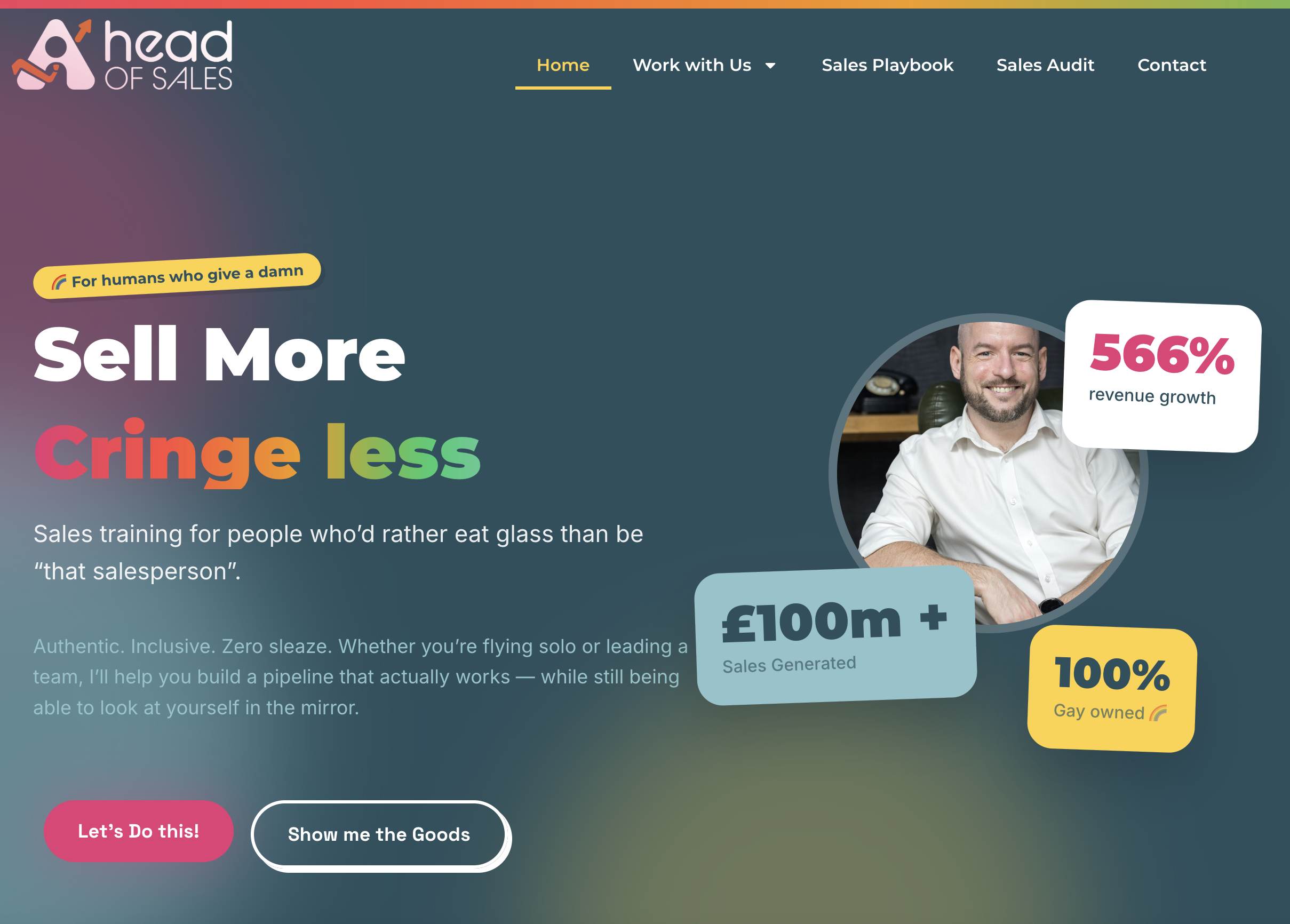
Whether you need a full consultancy engagement or a focused sales acceleration programme, Aheadofsales has packages designed for your scale and growth ambitions. Packages start from £4,500, and solo service businesses are also catered for from £2,995. If you’re serious about revenue growth and want a clear plan to get there, visit Aheadofsales to find out how we can help.
FAQ
What is the definition of sales acceleration?
Sales acceleration refers to the process of improving how a sales team operates, using technology, automation, and structured workflows to move more deals through the pipeline faster and with less wasted effort. It goes beyond speed to address operational efficiency across the entire revenue process.
How much revenue difference does sales acceleration make?
Sales teams using AI-driven acceleration generate 77% more revenue per rep than those that don’t, and top-performing teams create first deals 15x faster than average, resulting in substantially more pipeline throughput.
Why do automated follow-ups improve close rates?
Automated follow-up sequences increase close rates by 30 to 40% because they maintain consistent buyer engagement across the five or more touchpoints most sales require, without relying on reps to remember or manually initiate every step.
How does sales velocity help sales leaders?
Sales velocity converts pipeline data into a daily revenue figure, allowing leaders to pinpoint exactly which variable (opportunities, deal value, win rate, or cycle length) is limiting growth, so fixes are targeted rather than generalised.
Is CRM adoption really that important for sales acceleration?
Yes. CRM adoption correlates at 0.87 with revenue per rep, and good pipeline management delivers 15% faster revenue growth. However, the value depends entirely on active, consistent use as a workflow tool rather than a passive data repository.