
Companies that invest in sales training are 57% more effective than those that don’t. Yet many UK business leaders still view training as a discretionary expense rather than a growth engine. Sales training combines structured skill development, bespoke 1:1 coaching, and strategic consultancy to transform sales performance. For mid-sized businesses with 50 to 1000 employees, tailored training programmes deliver sustainable growth, predictable revenue, and resilient sales teams capable of hitting quarterly targets consistently.
Table of Contents
- Introduction To Sales Training
- How Sales Training Drives Business Growth
- Why Bespoke Coaching Matters
- Modern Sales Training Techniques
- Common Misconceptions About Sales Training
- Comparing Sales Training Approaches
- Practical Guide To Implementing Effective Sales Training
- Frequently Asked Questions
Key takeaways
| Point | Details |
|---|---|
| Bespoke coaching outperforms generic training | Tailored 1:1 coaching addresses individual challenges, leading to faster skill mastery and higher conversion rates. |
| Strong ROI justifies investment | Businesses earn approximately £4.50 for every £1 invested in sales training, demonstrating clear financial returns. |
| Modern techniques include consultative selling and AI | Relationship-focused selling combined with technology creates competitive advantages in complex B2B environments. |
| Continuous training beats one-off sessions | Ongoing coaching and feedback loops sustain performance improvements and adapt to market changes. |
| Clear metrics prove effectiveness | Track revenue growth, target attainment, deal size, and sales cycle efficiency to measure training impact. |
Introduction to sales training
Sales training encompasses far more than teaching pitch techniques. It combines three core components: structured group training sessions, bespoke 1:1 coaching, and strategic consultancy. This integrated approach addresses both individual skill gaps and systemic sales challenges.
For companies with 50 to 1000 employees, tailored programmes align sales processes with growth objectives. Generic training often fails because it ignores your specific industry dynamics, customer profiles, and existing team capabilities. Bespoke programmes start by assessing current performance, identifying bottlenecks, and designing interventions that address your unique challenges.
Effective sales training includes:
- Consultative selling techniques that prioritise customer needs over product features
- Objection handling frameworks tailored to your industry’s common pushbacks
- Negotiation strategies that preserve margins whilst closing deals
- Pipeline management systems that forecast revenue accurately
- Accountability structures ensuring consistent execution
Pro Tip: Before investing in training, establish clear baseline metrics. Measure current win rates, average deal sizes, and sales cycle lengths so you can quantify improvements later.
Understanding why sales training matters starts with recognising that even experienced salespeople develop blind spots. Markets evolve, buyer behaviours shift, and competitors innovate. Training keeps your team sharp and adaptable. Conducting effective sales training requires committed leadership, clear goals, and willingness to invest in sustained development rather than quick fixes.
How sales training drives business growth
The evidence is compelling. Businesses earn approximately £4.50 for every £1 invested in sales training. This ROI stems from multiple performance improvements: higher conversion rates, larger deal sizes, shorter sales cycles, and better customer retention.
Training boosts team confidence, which translates directly to stronger customer interactions. Salespeople who master consultative techniques ask better discovery questions, uncover deeper pain points, and position solutions more effectively. They handle objections without defensiveness and negotiate from value rather than price.
Consider the compounding effects. A salesperson who improves their close rate from 15% to 20% doesn’t just win 5% more deals. They gain momentum, confidence, and referrals. Their pipeline grows healthier because they qualify prospects more rigorously. They spend time on winnable opportunities rather than chasing dead ends.
Effective training methods combine knowledge transfer with behavioural change. Role-playing exercises, recorded call reviews, and shadowing sessions embed new skills through repetition. Coaching sessions provide personalised feedback that generic training cannot offer.
Key growth mechanisms include:
- Reducing sales cycle length by 20 to 30% through better qualification and objection handling
- Increasing average deal size by positioning value propositions more effectively
- Improving win rates against competitors through differentiation strategies
- Building resilience in economic uncertainty by teaching adaptable selling frameworks
Well-trained teams hit quarterly targets more consistently because they execute proven processes rather than relying on improvisation. They forecast accurately, manage pipelines systematically, and maintain discipline even when facing rejection.
Why bespoke coaching matters
Generic training programmes teach universal principles but ignore individual circumstances. Bespoke coaching addresses the specific challenges each salesperson faces: fear of rejection, difficulty closing, poor time management, or weak discovery skills.
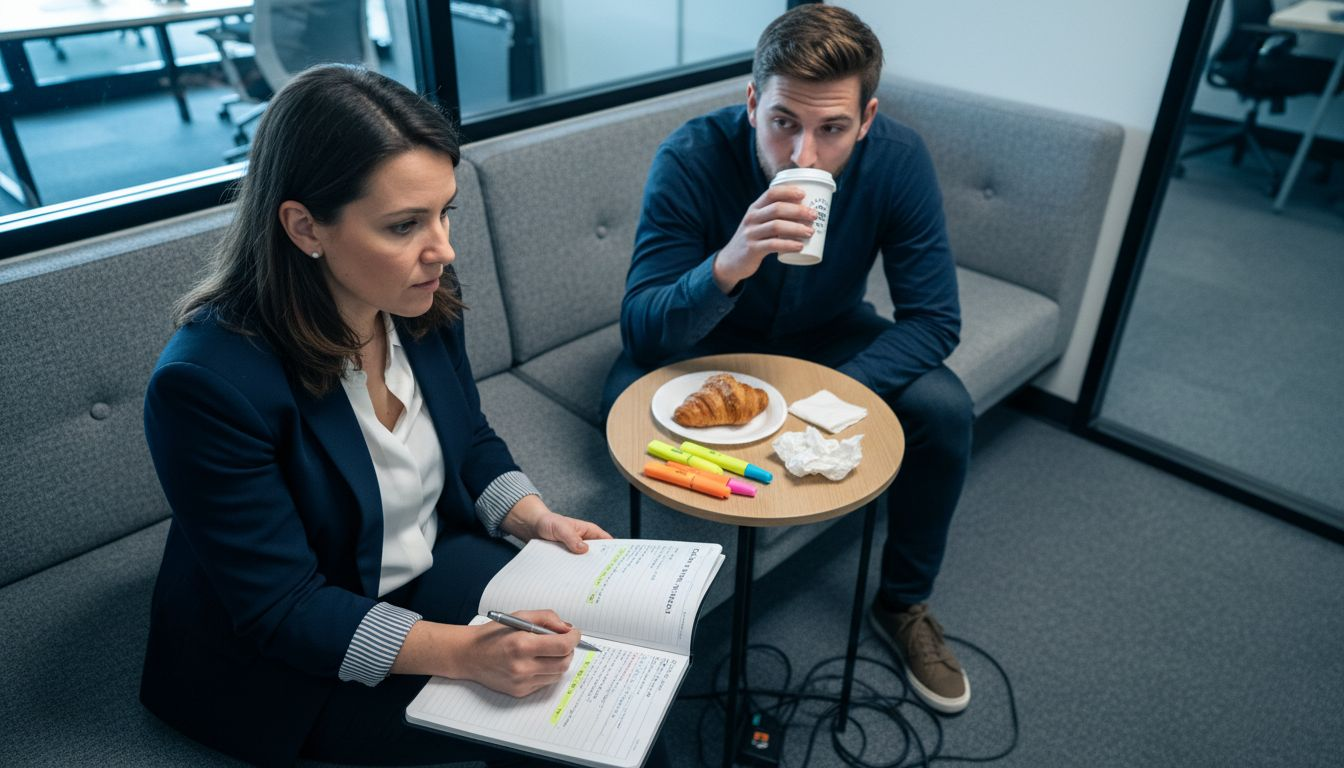
Tailored programmes achieve >50% annual sales growth because they diagnose root causes rather than treating symptoms. A struggling salesperson might need confidence-building, not product knowledge. Another might excel at building rapport but fail to create urgency. One-to-one coaching identifies these nuances and designs targeted interventions.
Personalised coaching creates accountability. Regular check-ins ensure new behaviours stick. Coaches review call recordings, analyse lost deals, and provide immediate feedback. This iterative process accelerates skill development far beyond what group training achieves.
Consider a real scenario. A technology company invested in bespoke coaching for their 12-person sales team. Within six months, average deal size increased by 35% and win rates improved from 18% to 27%. The transformation came from addressing individual weaknesses: some needed negotiation training, others required better discovery techniques, and a few struggled with proposal writing.
Pro Tip: Schedule fortnightly coaching sessions rather than monthly. Frequent touchpoints maintain momentum and allow rapid course correction when salespeople revert to old habits.
Bespoke coaching also builds resilience. Salespeople face constant rejection and pressure. Coaches provide emotional support, help reframe setbacks, and celebrate wins. This psychological component proves as valuable as tactical skill development.
Modern sales training techniques
Consultative selling dominates successful B2B environments in 2026. This approach prioritises understanding customer challenges before presenting solutions. Salespeople act as trusted advisers rather than product pushers. The result: larger deals, stronger loyalty, and higher margins.
AI tools now support sales training by automating research, generating personalised outreach, and analysing conversation patterns. However, technology complements rather than replaces human skills. Buyers still value authentic relationships, emotional intelligence, and creative problem-solving.
Modern techniques include:
- Value-based selling that quantifies ROI for prospects
- Challenger selling that teaches customers new perspectives on their problems
- Account-based selling that coordinates multiple stakeholders in complex deals
- Social selling that leverages LinkedIn and industry communities for warm introductions
- Storytelling frameworks that make abstract benefits tangible through customer success narratives
Economic uncertainty demands adaptability. Digital sales training equips teams to pivot messaging when market conditions shift. Salespeople learn to address budget concerns, demonstrate quick wins, and position offerings as investments rather than costs.
Consultative selling techniques teach salespeople to diagnose before prescribing. Deep discovery questions uncover hidden needs. Active listening builds trust. Customised presentations demonstrate understanding rather than reciting generic benefits.
Essential training topics now include change management, as many B2B sales require customers to alter established processes. Salespeople must address organisational resistance, build internal champions, and demonstrate implementation feasibility.
Common misconceptions about sales training
Many leaders assume sales training means teaching cold calling and aggressive closing tactics. This outdated view ignores the sophisticated skills modern B2B selling requires: strategic account planning, executive-level communication, and multi-threaded deal orchestration.
Effective training develops:
- Negotiation skills that preserve value whilst finding mutually beneficial terms
- Objection handling that addresses concerns without defensiveness
- Pipeline management that forecasts revenue accurately
- Qualification frameworks that focus effort on winnable opportunities
- Presentation skills that engage senior decision-makers
Another myth: one-size-fits-all programmes work for every industry. In reality, selling enterprise software differs vastly from selling professional services. Buyer behaviours, sales cycles, and competitive dynamics vary dramatically. Tailored training addresses industry-specific challenges that generic courses ignore.
Some leaders expect instant results. Genuine behaviour change takes three to six months. Salespeople need time to practise new techniques, receive feedback, and refine their approach. Quick wins occur, but sustainable transformation requires patience and consistent reinforcement.
The misconception that experienced salespeople don’t need training proves particularly costly. Even top performers benefit from fresh perspectives, new techniques, and blind spot identification. Markets evolve constantly. Training keeps veterans sharp and prevents complacency.
Companies with continuous training cultures achieve 218% higher income per employee than organisations without formalised development programmes.
Finally, some believe training alone drives results. Without proper leadership support, clear expectations, and accountability systems, even excellent training fails. Implementation requires committed management, regular coaching, and performance metrics that reward desired behaviours.
Comparing sales training approaches
Tailored programmes outperform generic training by aligning content with your specific business context. Generic courses teach universal principles but ignore your unique customer profiles, competitive landscape, and internal processes.
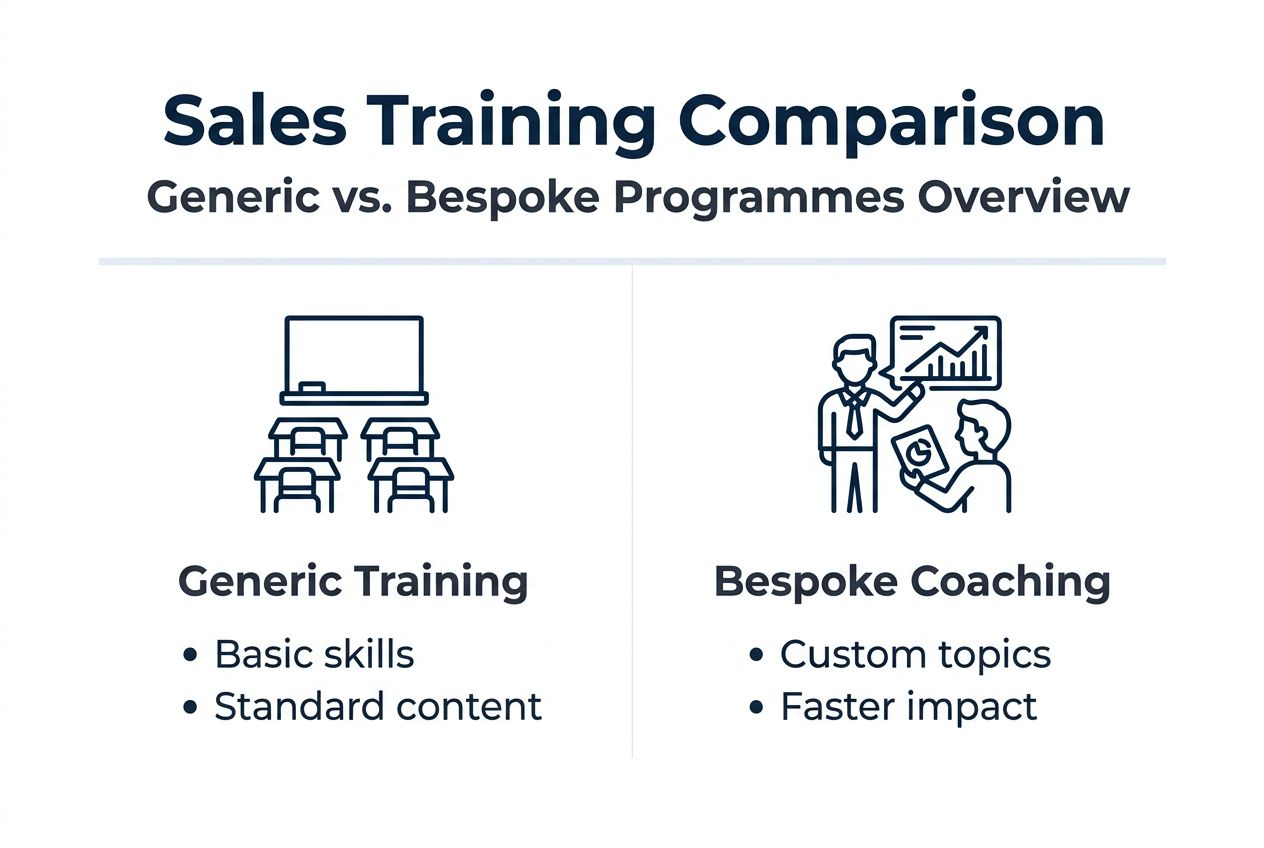
| Aspect | Generic training | Bespoke programmes |
|---|---|---|
| Content customisation | Standard curriculum for all industries | Tailored to your products, customers, and market |
| Delivery method | Large groups, fixed schedule | Mix of group sessions and 1:1 coaching |
| Duration | One or two day workshops | Ongoing development over 3 to 12 months |
| Skills practised | Generic role plays | Real scenarios from your pipeline |
| Follow-up support | Minimal post-training contact | Regular coaching and performance reviews |
| ROI timeline | Unclear or delayed impact | Measurable improvements within 90 days |
| Cost structure | Lower upfront but limited results | Higher investment with proven growth outcomes |
| Alignment with strategy | Disconnected from business goals | Integrated with revenue targets and KPIs |
Generic training works for basic skill introduction. New salespeople benefit from learning fundamental prospecting, discovery, and closing techniques. However, mid-sized businesses pursuing aggressive growth need programmes addressing their specific challenges: entering new markets, launching complex products, or competing against entrenched rivals.
Bespoke approaches include pre-training diagnostics. Trainers shadow sales calls, review lost deals, and interview customers. This research identifies actual skill gaps rather than assumed weaknesses. Training content then addresses observed challenges with practical, immediately applicable techniques.
Pro Tip: Hybrid models offer excellent value. Start with tailored group training to establish common frameworks, then layer in individual coaching to address personal development needs.
The speed of results differs dramatically. Generic training might show marginal improvements over six to twelve months. Bespoke programmes generate measurable revenue increases within the first quarter because they focus on high-impact activities specific to your sales environment.
Practical guide to implementing effective sales training
Successful implementation requires careful planning and sustained commitment. Follow this structured approach to maximise results and avoid common pitfalls.
-
Assess current capabilities: Audit existing skills through call recordings, pipeline analysis, and win-loss reviews. Identify specific gaps between current and required performance.
-
Define clear objectives: Set measurable goals like increasing close rates by 25%, reducing sales cycles by 30 days, or improving average deal size by £15,000.
-
Choose the right provider: Evaluate trainers based on industry expertise, coaching methodology, and track record with similar-sized businesses. Request case studies and client references.
-
Secure leadership commitment: Ensure executives participate in training sessions, reinforce new behaviours, and hold salespeople accountable for applying learned techniques.
-
Integrate training with daily activities: Embed new processes into CRM systems, sales meetings, and pipeline reviews. Make training concepts part of everyday language.
-
Measure progress systematically: Track leading indicators like activity levels and pipeline quality alongside lagging indicators like revenue and win rates.
-
Iterate based on feedback: Conduct monthly reviews with trainers and sales teams. Adjust content and coaching focus as you identify what works and what needs refinement.
Avoid these common mistakes:
- Selecting the cheapest provider rather than the most suitable one
- Treating training as a one-time event instead of ongoing development
- Failing to align training content with actual customer conversations
- Neglecting to measure results against baseline metrics
- Expecting transformation without supporting systems and leadership reinforcement
Pro Tip: Create internal champions who model desired behaviours. When peers see colleagues succeeding with new techniques, adoption accelerates across the entire team.
Economic conditions affect buying behaviours. Ensure your training programme addresses current market realities: longer decision cycles, increased scrutiny of ROI, and risk-averse procurement processes. Salespeople need specific strategies for these challenges, not generic objection-handling scripts.
Schedule training during lower-activity periods when possible. Avoid launching major programmes during quarter-end pushes or peak selling seasons. Give your team space to learn without sacrificing immediate revenue.
Enhance your sales growth with Ahead of Sales
Transforming sales performance requires expertise, commitment, and proven methodologies. Our bespoke programmes combine strategic training, personalised 1:1 coaching, and consultative frameworks designed specifically for mid-sized UK businesses targeting exceptional growth.
We specialise in helping companies with 50 to 1000 employees achieve at least 50% annual sales growth whilst ensuring teams hit quarterly targets consistently. Our approach integrates modern techniques like consultative selling and digital tools with intensive coaching that addresses individual development needs.
Explore our comprehensive resources: discover why sales training matters for sustainable growth, learn essential training topics your team needs now, and review effective methods that deliver measurable results. Our programmes start from £4,500, reflecting our commitment to businesses with genuine growth ambitions and the resources to invest in transformational development.
Frequently asked questions
What are the core components of effective sales training?
Effective sales training combines three elements: structured group training covering universal skills, bespoke 1:1 coaching addressing individual challenges, and strategic consultancy aligning sales processes with business objectives. This integrated approach develops both tactical skills like objection handling and strategic capabilities like account planning.
How does tailored sales coaching improve sales results?
Tailored coaching identifies each salesperson’s specific weaknesses and designs targeted interventions. Personalised feedback on actual customer interactions accelerates skill development far beyond generic training. Regular coaching sessions build confidence, create accountability, and ensure new behaviours become permanent habits rather than temporary changes.
What role does technology play in modern sales training?
AI tools automate research, generate personalised outreach, and analyse conversation patterns to identify improvement opportunities. Digital platforms enable ongoing learning through video lessons, interactive exercises, and virtual coaching sessions. However, human relationship skills remain central because buyers still value authentic connections, emotional intelligence, and creative problem-solving that technology cannot replicate.
How can businesses measure the effectiveness of sales training?
Track multiple metrics: revenue growth rates, percentage of team hitting quota, average deal size increases, and sales cycle duration reductions. Monitor leading indicators like pipeline quality, activity levels, and conversion rates at each funnel stage. Gather qualitative feedback from salespeople about confidence levels and from customers about experience quality to capture the full impact beyond pure numbers.
2 Responses