
Many business leaders mistake sales consultancy for advanced training, but it’s actually a strategic discipline that transforms your entire sales ecosystem. You’ll discover the precise definition, mechanisms, and measurable benefits that set effective consultancy apart from generic skill programmes. This article equips you to select consultants who deliver sustained growth and avoid poor investments.
Table of Contents
- What Is Sales Consultancy? A Clear, Strategic Definition
- How Sales Consultants Drive Growth: Mechanisms And Processes
- Distinguishing Sales Consultancy From Traditional Sales Training
- Common Misconceptions About Sales Consultancy
- Choosing And Working With Sales Consultants: Practical Frameworks
- Bridging Understanding To Practical Growth Application
- Accelerate Your Sales Growth With Expert Consultancy And Training
- Frequently Asked Questions
Key takeaways
| Point | Details |
|---|---|
| Strategic optimisation | Sales consultancy diagnoses and transforms your entire sales ecosystem, not just individual skills |
| Bespoke mechanisms | Combines diagnostics, tailored strategy, 1:1 coaching, and continuous performance measurement |
| Clear distinctions | Understanding consultancy versus training prevents wasted investment and short-sighted engagements |
| Selection frameworks | Proven UK business experience and analytical capability are essential consultant criteria |
| Measurable application | Apply consultancy insights through clear targets, continuous review, and leadership integration |
What is sales consultancy? a clear, strategic definition
Sales consultancy diagnoses and optimises your entire sales ecosystem, extending far beyond teaching individual selling skills. It encompasses strategic sales planning, bespoke coaching programmes, and a relentless focus on sustainable growth for medium-sized UK companies with teams of 50 to 1000 people. You’re getting a comprehensive transformation of how your business approaches sales, not just a skills upgrade.
The discipline integrates consultative selling frameworks like SPIN and MEDDPICC to align solutions with client needs and improve conversion rates. Sales consultants use consultative selling frameworks like SPIN and MEDDPICC to enhance client engagement and solution alignment. These methodologies shift your team from product-focused pitching to strategic problem-solving, which dramatically improves win rates and client satisfaction.
Effective sales consultancy requires two critical prerequisites from your business:
- Established sales data and performance history that consultants can analyse for diagnostic insights
- Genuine commitment to growth and willingness to implement strategic recommendations consistently
- Leadership engagement throughout the consultancy process to embed changes into your culture
Without these foundations, even the most skilled consultant struggles to deliver measurable results. Your business must be ready to invest time in collaboration, transparent data sharing, and operational adjustments. The consultancy process works best when you treat it as a strategic partnership rather than a transactional service.
Pro tip: Before engaging consultants, audit your current sales data quality and leadership bandwidth to ensure you can fully leverage their expertise.
How sales consultants drive growth: mechanisms and processes
Consultants begin with diagnostic analysis, examining your sales pipeline, conversion rates, and team performance to identify specific inefficiencies. They use your existing data to pinpoint bottlenecks, skill gaps, and process weaknesses that limit revenue growth. This evidence-based approach ensures recommendations address your actual challenges rather than generic industry assumptions.
The growth process follows these structured steps:
- Conduct comprehensive diagnostics using your sales data and performance metrics
- Develop custom strategies aligned precisely to your business goals and market context
- Deliver bespoke 1:1 coaching combined with team training to embed new skills sustainably
- Measure performance continuously and optimise iteratively based on real outcomes
- Refine consultative selling techniques to improve client engagement and win rates
Sales consultancy delivers targeted strategies through strategic diagnostics, bespoke coaching, and ongoing performance measurement rather than generic training. This integrated approach differentiates effective sales consultant processes from superficial interventions. Your team receives both the strategic frameworks and practical coaching needed to execute consistently.
The continuous measurement component ensures your investment delivers tangible returns. Consultants track metrics like pipeline velocity, conversion rates by stage, and average deal size to quantify improvement. They adjust strategies based on evidence, not assumptions, creating a feedback loop that accelerates sales performance improvement methods over time.
Pro tip: Request weekly metric reviews with your consultant to maintain momentum and catch issues early before they compound.
Distinguishing sales consultancy from traditional sales training
Sales consultancy includes comprehensive diagnostics of your entire sales ecosystem and development of tailored strategies based on your specific context. Training programmes, by contrast, focus primarily on delivering skills through standardised content with limited systemic analysis. Sales consultancy delivers strategic diagnostics, tailored solutions, and ongoing analytics rather than one-off generic skill training.
The table below clarifies these distinctions:
| Aspect | Sales Consultancy | Traditional Training |
|---|---|---|
| Scope | Entire sales ecosystem optimisation | Skills and techniques delivery |
| Analysis | Deep diagnostics using client data | Limited pre-course assessment |
| Customisation | Bespoke strategies for context | Standardised curriculum |
| Duration | Continuous, adaptive engagement | One-off or short-term events |
| Measurement | Ongoing ROI tracking and iteration | Post-training feedback surveys |
| Integration | Embedded with leadership and coaching | Standalone skill sessions |
Consultancy prioritises measurable ROI and sustainable growth through continuous adaptation. Training often delivers immediate skill boosts but lacks mechanisms for long-term embedment or strategic alignment. You might see enthusiasm spike after training, but without ongoing support and system changes, behaviours typically revert within weeks.
Understanding this distinction prevents ineffective spending on programmes that don’t address root causes. If your sales challenges stem from poor pipeline management, territory design, or compensation structures, training alone won’t solve them. You need the strategic analysis and systemic changes that sales coaching integration and consultancy provide.
- Consultancy diagnoses why performance lags and designs solutions addressing those specific causes
- Training assumes skill gaps are the primary issue and delivers content accordingly
- Consultancy includes leadership coaching to sustain changes beyond the engagement period
Common misconceptions about sales consultancy
Many leaders believe sales consultancy equals advanced training with a fancier label. This misconception leads to unrealistic expectations and disappointment when consultants focus on diagnostics and strategy rather than just delivering workshops. Effective consultancy requires analytical work, data examination, and systemic recommendations that training programmes skip entirely.
Another prevalent myth suggests consultants primarily sell products or services rather than diagnose and evolve your sales capabilities. Quality consultants act as strategic partners who analyse your business, identify improvement opportunities, and guide implementation. They’re not vendors pushing pre-packaged solutions but experts tailoring recommendations to your specific context and constraints.
The quick fix fallacy causes significant problems in consultancy engagements. Leaders sometimes expect immediate, dramatic improvements without recognising that sustainable growth requires ongoing adaptation and reinforcement. Consultancy works through iterative cycles of measurement, adjustment, and skill development that compound over months, not days.
- Believing consultancy is just premium-priced training undervalues the diagnostic and strategic components
- Assuming consultants will directly manage your sales team creates role confusion and resistance
- Expecting instant results ignores the time required to embed new processes and behaviours sustainably
- Thinking one engagement solves all future challenges misses the continuous improvement nature of effective consultancy
Pro tip: Clarify expectations and deliverables explicitly before engaging consultants to ensure alignment on scope, timeline, and success criteria.
Highlighting these misconceptions helps align your expectations with reality and improves engagement success rates. When you understand what consultancy actually involves, you can prepare your organisation appropriately and maximise the return on your investment. You’ll avoid frustration and build the foundation for genuine, measurable growth.
Choosing and working with sales consultants: practical frameworks
Evaluate consultants based on their strategic and analytical expertise, not just their sales experience. You need professionals who can examine complex data, identify patterns, and develop evidence-based recommendations. Ask candidates to describe their diagnostic process and explain how they’ve used data to drive decisions in previous engagements.

Look for proven growth outcomes with businesses similar in size and sector to yours. Sales consultants’ UK annual salaries range from £25,000 to £55,000+, reflecting strategic skills and market impact. Consultants commanding higher fees typically demonstrate stronger track records and more sophisticated methodologies. Request specific case studies showing measurable results they’ve achieved with UK companies of 50 to 1000 staff.
Assess integration capabilities, including how consultants work with your leadership team and whether they provide coaching alongside strategy. The best consultants embed themselves temporarily in your organisation, building internal capability rather than creating dependency. They should strengthen your team’s skills and confidence so improvements continue after the engagement ends.
Key selection criteria include:
- Strategic planning and analytical capabilities demonstrated through previous client outcomes
- Proven growth results with medium-sized UK businesses in comparable contexts
- Coaching and leadership development expertise integrated with strategic recommendations
- Client references confirming both technical skills and effective collaboration styles
- Alignment with growth mindset philosophy and commitment to sustainable rather than quick-fix approaches
Consider the consultant evaluation framework that assesses both technical competence and cultural fit with your organisation. Consultants must understand your market dynamics, competitive pressures, and internal constraints to deliver relevant recommendations. Generic advice copied from other industries rarely translates effectively to your specific situation.
Bridging understanding to practical growth application
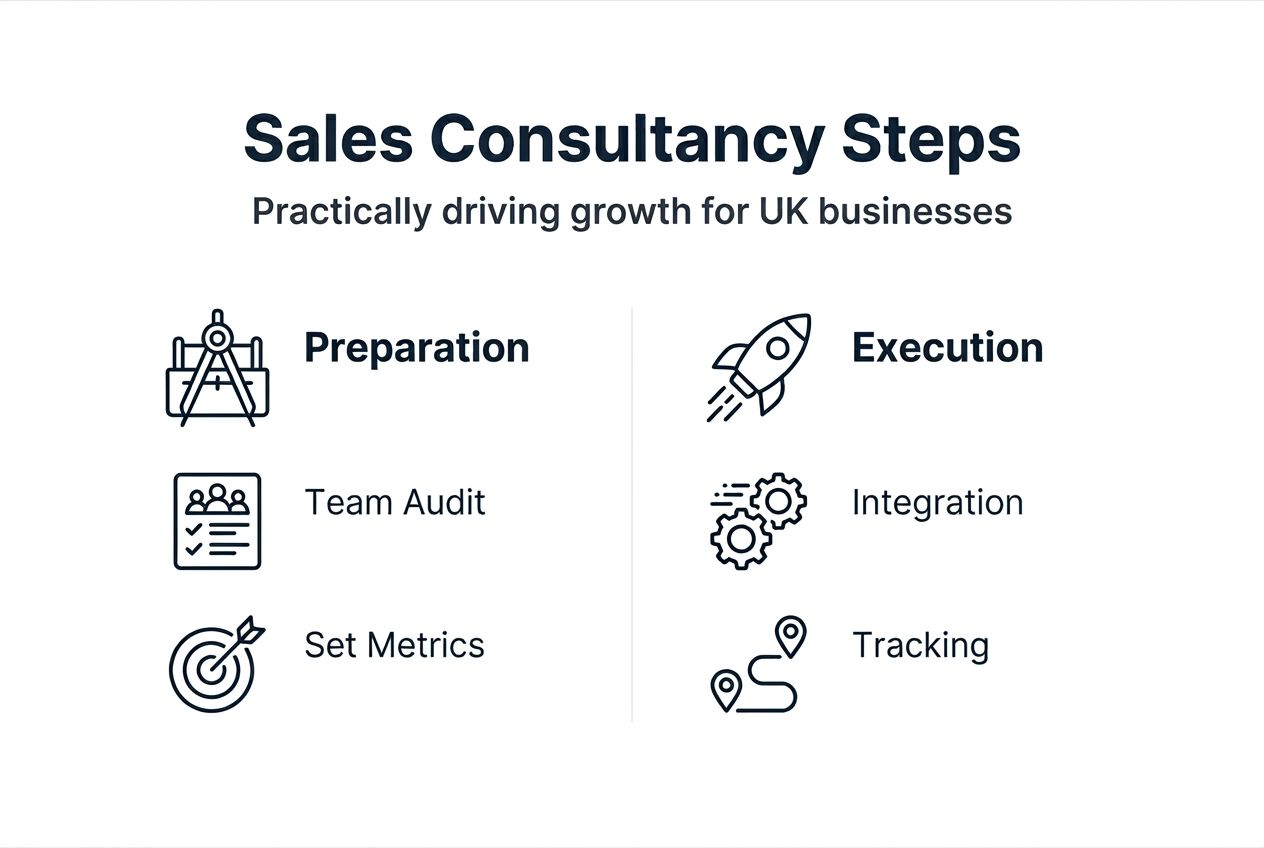
Translate your knowledge about sales consultancy into immediate action by planning for bespoke engagements that combine diagnostics, coaching, and continuous adaptation. Start with a comprehensive audit of your current sales performance, identifying specific metrics that need improvement. This baseline enables you to measure consultancy impact accurately and justify the investment to stakeholders.
Follow these steps to apply consultancy insights effectively:
- Set clear, measurable sales growth targets such as 50% annual revenue increase or quarterly target achievement
- Commit to ongoing review cycles where you assess progress, identify obstacles, and adjust strategies iteratively
- Embed consultancy insights into daily sales management through updated processes, coaching routines, and performance dashboards
- Coordinate consultancy efforts with internal leadership to ensure recommendations align with broader business strategy
- Build internal capability so your team can sustain improvements and evolve practices independently over time
Your commitment to continuous improvement determines consultancy success more than the consultant’s skills alone. Allocate leadership time for collaboration, create accountability mechanisms for implementing recommendations, and celebrate early wins to build momentum. Without this internal support structure, even brilliant strategies fail during execution.
Integrate sales growth application steps into your annual planning cycle rather than treating consultancy as a one-time project. Schedule quarterly reviews to assess what’s working, what needs adjustment, and where additional support might accelerate progress. This rhythm keeps improvement initiatives visible and prevents them from being deprioritised during busy periods.
Practical application also means preparing your team for change. Communicate the rationale behind new strategies clearly, involve salespeople in implementation planning, and provide the training and coaching they need to execute confidently. Resistance usually stems from uncertainty or fear of failure, which transparent communication and strong support can overcome.
Accelerate your sales growth with expert consultancy and training
You’ve explored how strategic sales consultancy transforms medium-sized UK businesses through bespoke diagnostics, coaching, and continuous optimisation. Now consider how Ahead of Sales applies these principles to deliver measurable growth for companies like yours. We combine comprehensive consultancy with practical 1:1 coaching and proven training methodologies tailored to your specific challenges.
Our sales acceleration packages integrate strategic planning with hands-on implementation support, helping your team achieve at least 50% annual sales growth and hit quarterly targets consistently. We work exclusively with growth-focused businesses that have the data, commitment, and leadership engagement needed for success. Explore our 1:1 sales coaching benefits to understand how personalised support accelerates skill development and our comprehensive sales training guide to see how we blend consultancy with practical training delivery.
Frequently asked questions
What qualifications should a sales consultant have?
Consultants need strategic and analytical skills, proven experience with medium-sized businesses, and a track record of measurable growth results. Formal sales certifications and expertise in consultative selling frameworks like SPIN or MEDDPICC strengthen their credibility and effectiveness.
How is sales consultancy different from sales training?
Consultancy diagnoses and optimises your sales processes with tailored strategies, ongoing coaching, and continuous measurement. Training primarily delivers skills through standardised content without in-depth diagnostics or iterative performance tracking.
Can sales consultancy guarantee sales growth?
Consultants provide data-driven strategies and coaching that significantly improve your growth prospects. Success depends on execution quality, business context, market conditions, and your commitment to ongoing adaptation based on consultant recommendations.
How long does a sales consultancy engagement usually last?
Engagements typically span several months to enable thorough diagnostics, coaching delivery, and iterative improvements. Continuous consultancy relationships are common for sustained growth rather than treating consultancy as a one-off fix.
What should I look for when hiring a sales consultant?
Seek proven strategic expertise, strong analytical capability, and documented success with UK businesses similar in size to yours. Evaluate their ability to integrate with your team, coaching credentials, and alignment with your growth mindset and business values.