
Effective sales leadership can drive at least 50% annual sales growth in ambitious firms. Many sales leaders struggle to consistently deliver growth due to lack of strategic leadership insights. This article reveals leadership skills like emotional intelligence, adaptability, and strategic thinking that reliably boost sales performance.
Table of Contents
- Defining Leadership In Sales Growth
- Emotional Intelligence’s Role In Sales Leadership
- Link Between Sales Expertise And Leadership Skills
- Transformational Leadership In Sales
- Common Misconceptions About Sales Leadership
- Decision-Making In Sales Leadership
- Ethics And Leadership In Sales
- Continuous Development For Sales Leaders
- Bridging Leadership Insights To Sales Growth Practice
- Boost Your Sales Leadership With Ahead Of Sales Training
Key Takeaways
| Point | Details |
|---|---|
| Sales leadership blends strategic vision with emotional intelligence | Combines clear direction with team understanding to enable sustainable growth and performance |
| Emotional intelligence increases team trust by 30% | High EQ leaders foster engagement critical for sustained sales success |
| Adaptive leadership styles boost growth by up to 25% | Tailoring approaches to market and team dynamics maximizes results |
| Ethical leadership reduces churn by 18% and increases repeat sales by 22% | Trust-based practices build long-term customer loyalty |
| Continuous learning improves quota attainment by 28% | Regular development keeps leaders effective in dynamic markets |
Defining Leadership in Sales Growth
Sales leadership means inspiring and setting clear expectations for teams. It combines vision, strategy, and execution to enable reliable sales growth. Leadership impact can be quantified by annual growth percentages and team quota attainment.
Effective sales leadership correlates with measurable sales growth, such as 50%+ annual increases in top firms. Understanding the role of leadership in sales growth helps you position your team for consistent wins. Great leaders know how to drive sales team performance through both strategic thinking and daily execution.
Core responsibilities of sales leaders include:
- Motivating and developing sales teams
- Aligning sales goals with business strategy
- Balancing short-term targets with long-term growth
- Fostering a high-performance culture
These elements work together to create an environment where teams thrive. Leaders who master these areas consistently outperform competitors. They build systems that generate results quarter after quarter.
Applying sales leadership tips for growth transforms your approach from reactive to proactive. You shift from managing problems to preventing them. Your team gains confidence knowing you have a clear path forward.
Emotional Intelligence’s Role in Sales Leadership
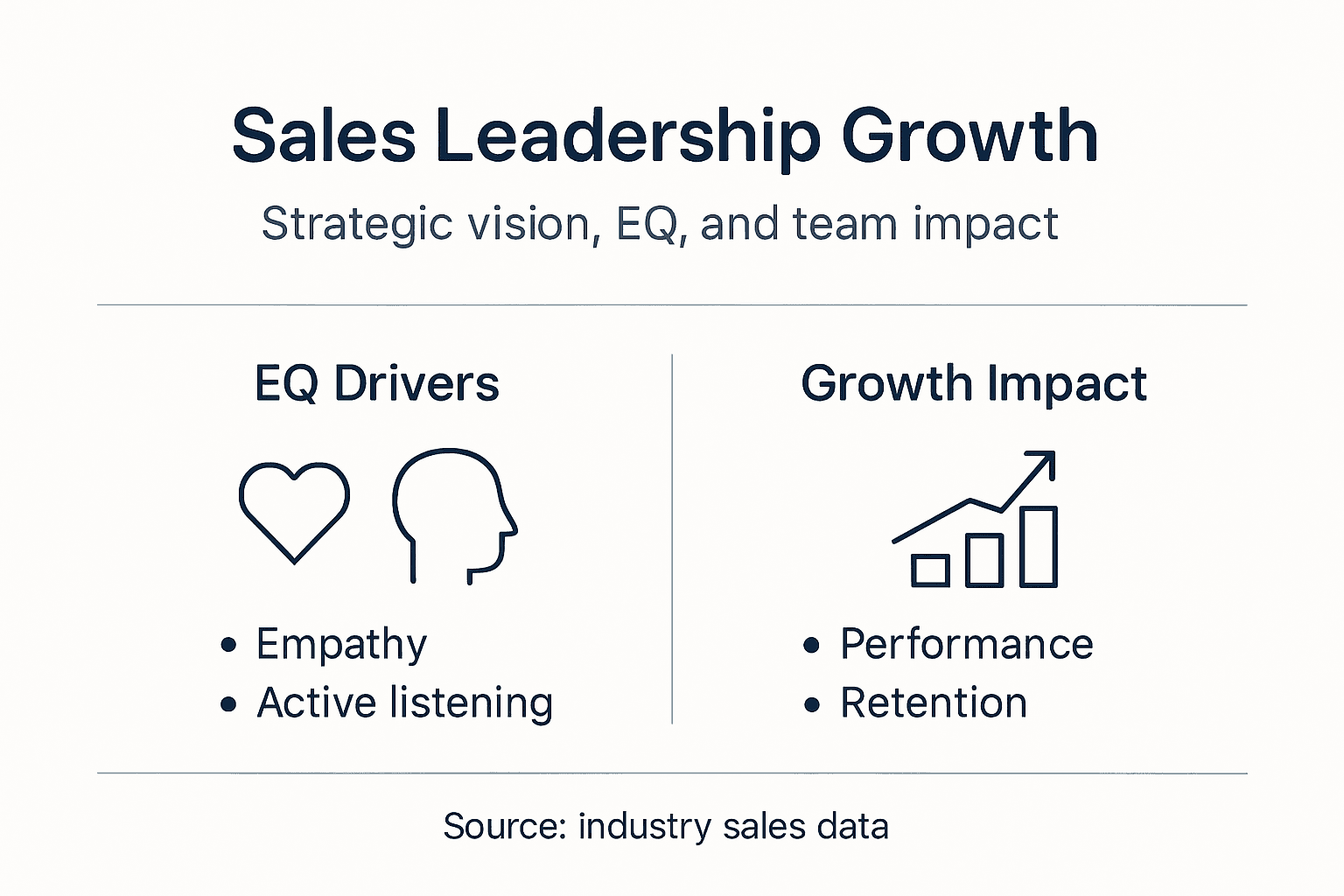
EQ enables leaders to understand and respond to diverse team needs effectively. Empathy builds trust, increasing engagement and lowering turnover. Leaders with high EQ lead teams that meet or exceed sales targets more consistently.
Emotional intelligence boosts team trust and engagement by up to 30%, leading to sustained target success. When you prioritize emotional intelligence in sales leadership, you create psychological safety. Team members feel comfortable sharing challenges and asking for help.

This openness accelerates problem-solving and innovation. You spot issues before they become crises. Your team recovers faster from setbacks because they trust your support.
Strong sales team motivation flows from emotional connection, not just financial incentives. People work harder for leaders who genuinely care about their success. A growth mindset in sales becomes easier to cultivate when EQ guides your interactions.
Pro Tip: Schedule weekly active listening sessions with individual team members to build stronger relationships and identify concerns early.
Link Between Sales Expertise and Leadership Skills
Sales experience enhances fast, informed decision-making under pressure. It builds resilience to setbacks and market changes. Sales expertise aligns leaders with customer-centric mindsets critical for team success.
Sales professionals transitioning to leadership roles adapt 25% faster to leadership challenges due to their sales experience. Direct exposure to customer objections and negotiations sharpens your judgment. You develop intuition about what works in real selling situations.
This practical knowledge gives you credibility with your team. They trust your guidance because you’ve walked the same path. Your advice comes from experience, not theory.
How sales experience shapes effective leadership skills:
- Accelerates adaptation to leadership roles
- Develops critical problem-solving speed
- Enhances understanding of customer needs
- Builds emotional resilience and confidence
These capabilities transfer directly to leadership effectiveness. You recognize patterns faster and adjust strategies accordingly. Your sales leadership guide becomes richer when informed by frontline experience.
Many successful leaders credit their sales background for their strategic thinking abilities. They understand both the big picture and the details that matter. This dual perspective is invaluable in guiding teams through complex markets.
Transformational Leadership in Sales
Transformational leaders inspire teams by connecting roles to the business purpose. This style enhances motivation, engagement, and collective success. It creates a shared vision that pulls everyone forward together.
Purpose-driven transformational leadership can increase sales team performance by up to 20%. When people understand how their work contributes to meaningful outcomes, commitment soars. They take ownership of results rather than just completing tasks.
Comparing leadership styles relevant to sales:
| Style | Focus | Benefits | Ideal Usage |
|---|---|---|---|
| Transformational | Purpose & motivation | Boosts engagement and innovation | Dynamic teams seeking growth |
| Transactional | Targets & rewards | Ensures efficiency and consistency | Structured target-driven environments |
| Servant | Team wellbeing & development | Builds deep trust and loyalty | High burnout risk situations |
Benefits of transformational leadership:
- Increases sales team cohesion
- Aligns sales activities with company goals
- Drives a culture of continuous improvement
This approach works especially well when implementing transformational leadership effectiveness strategies. Your team becomes self-motivated rather than needing constant oversight. They push themselves because they believe in the mission.
Investing in sales team motivation through transformational methods pays long-term dividends. People stay longer, perform better, and attract top talent. Your reputation as a leader who develops people becomes a competitive advantage.
Common Misconceptions About Sales Leadership
Confidence alone does not guarantee sales leadership success. Humility improves team collaboration and customer trust. Sales leadership is far more than managing targets and processes.
Effective leadership requires balancing authority with empathy. Balancing humility with confidence produces 17% higher customer trust and 12% better sales conversion than confidence alone. Many leaders mistakenly believe they must project certainty at all times.
This rigid approach backfires when teams need authentic connection. Admitting mistakes and seeking input actually strengthens your position. People respect leaders who show human vulnerability while maintaining clear direction.
Common misconceptions and corrections:
- Misconception: Authoritative confidence always wins — Correction: Balance with humility
- Misconception: Leadership is only hitting targets — Correction: It involves inspiring and guiding
- Misconception: One leadership style fits all — Correction: Adaptivity is key
Understanding leadership lessons from sales helps you avoid these traps. You learn to match your approach to situational needs rather than defaulting to one mode. This flexibility makes you far more effective across diverse challenges.
Applying sales leadership tips means constantly refining your style based on results. You experiment, measure, and adjust. What worked last year may need tweaking today.
Pro Tip: Conduct quarterly self-assessments using team feedback to identify blind spots and adjust your leadership approach accordingly.
Decision-Making in Sales Leadership
Speed and accuracy in decision-making directly impact sales outcomes. Data and team input must inform all key decisions. Hesitation costs opportunities while hasty choices create problems.
Effective sales leaders make decisions 30% faster, improving deal closure rates by 22%. This speed comes from systematic processes, not recklessness. You gather relevant information quickly and weigh options efficiently.
Decision-making best practices for sales leaders:
- Use up-to-date market and team performance data
- Include frontline sales insights in strategic choices
- Prioritize decisions that unlock quick wins and revenue
- Maintain flexibility to pivot when conditions change
These practices ensure your choices are both timely and informed. You avoid analysis paralysis while still being thoughtful. Your team appreciates decisive leadership that moves them forward.
Implementing fast data-driven decisions in sales becomes easier with proper systems. You establish clear criteria for evaluating options. This framework speeds up recurring decisions while maintaining quality.
Focusing on sales performance improvement requires making tough calls about resource allocation. You must decide where to invest time and budget for maximum impact. Strong decision-making separates good leaders from great ones.
Ethics and Leadership in Sales
Ethics build customer trust critical for repeat business and referrals. Unethical practices increase churn and damage reputation. Short-term gains from cutting corners destroy long-term value.
Ethical leadership reduces customer churn by 18% and increases repeat sales by 22%. Customers recognize when you prioritize their interests over quick commissions. They reward this integrity with loyalty and advocacy.
Your team also performs better under ethical leadership. They feel proud of their work rather than conflicted. This alignment between values and actions boosts morale and retention.
Ethical leadership principles in sales:
- Transparency in communication with clients and team
- Fairness in target setting and reward distribution
- Accountability for actions and outcomes
- Commitment to long-term relationships over short-term gains
These principles create sustainable success. Understanding the ethical sales leadership impact helps you build a reputation that attracts ideal customers. Your brand becomes synonymous with trustworthiness.
Applying sales acceleration strategies within ethical boundaries ensures you scale responsibly. You grow fast without compromising the foundation that supports that growth. This approach proves more resilient during market downturns.
Continuous Development for Sales Leaders
Ongoing learning keeps sales leaders up to date with market trends and leadership best practices. Self-reflection cultivates a growth mindset and improves leadership effectiveness. Stagnation is the enemy of sustained success.
Quarterly training leads to 28% higher team quota attainment among sales leaders who engage in continuous learning. Markets evolve rapidly and yesterday’s strategies become obsolete. Leaders who commit to development stay ahead of competitors.
This learning mindset also models behavior for your team. When they see you investing in growth, they follow suit. Your entire organization becomes more adaptable and innovative.
Continuous development actions:
- Participate in quarterly sales and leadership training
- Conduct regular 360° feedback sessions
- Set personal growth goals tied to team outcomes
- Stay informed on evolving customer and market needs
These activities compound over time to create substantial expertise. Embracing continuous sales leadership development distinguishes top performers from the rest. You build capabilities that multiply your impact.
Following a comprehensive sales training checklist ensures you cover all essential areas. You identify gaps systematically and address them proactively. This structured approach accelerates your development.
Pro Tip: Block two hours every Friday morning for leadership reading, reflection, and planning to maintain continuous growth momentum.
Bridging Leadership Insights to Sales Growth Practice
Match leadership style to team composition and market needs for optimal results. Use emotional intelligence daily to manage team wellbeing and foster performance. Embed continuous learning in team culture to adapt proactively to change.
Theory becomes valuable only when applied consistently. You must translate these insights into daily habits and processes. Start with small changes that build momentum over time.
Implementation steps:
- Assess your current leadership style and team dynamics
- Develop tailored coaching and motivation plans
- Leverage data for informed decision-making
- Promote ethical standards and transparency
- Commit to regular leadership development
Understanding how leadership drives sales growth helps you prioritize efforts. You focus energy where it creates maximum impact. This strategic approach prevents wasted resources.
Following a proven sales performance improvement guide provides structure to your efforts. You avoid common pitfalls and accelerate results. Your sales team management workflow becomes more efficient and effective.
Consistency matters more than perfection. Small improvements compounded over quarters yield remarkable results. Your team notices the changes and responds with higher engagement.
Boost Your Sales Leadership with Ahead of Sales Training
Ahead of Sales offers expert-led training designed to build leadership skills with an emphasis on emotional intelligence and adaptive strategies. Our solutions help sales leaders accelerate team growth, improve decision-making, and embed ethical sales practices.

We combine bespoke 1:1 coaching with traditional training and consultancy to help businesses generate at least 50% sales growth every year. Our programmes ensure your sales team hits target every quarter through proven methodologies tailored to UK mid-sized companies.
Explore our comprehensive resources including why sales training matters, our detailed sales training checklist, and our complete sales performance improvement guide to transform your leadership approach and drive sustainable growth.
Frequently Asked Questions
What are the most effective leadership styles for mid-sized UK sales teams?
Transformational leadership works best for innovation and motivation, transactional for target focus, and servant for wellbeing balance. Adapt your style to fit your team dynamics and business goals. Most effective leaders blend elements from multiple approaches.
How can sales leaders quickly develop emotional intelligence skills?
Practice active listening, reflect on team emotions, and request 360° feedback regularly. Engage in empathy exercises to better understand diverse team perspectives. Consistent small actions build EQ faster than occasional intensive efforts.
What common mistakes do new sales leaders make and how to avoid them?
Mistakes include authoritarian style, ignoring team diversity, and resisting change. Avoid these by practicing humility, investing in EQ development, and embracing flexible leadership. Seek mentorship from experienced leaders who can provide guidance.
How often should sales leaders engage in leadership training and development?
Quarterly sessions combined with ongoing self-reflection optimize leadership effectiveness. Regular training ensures adaptability in dynamic sales environments. Supplement formal training with weekly reading and peer learning conversations.
What metrics best measure the impact of sales leadership on growth?
Measure impact via sales growth rate, team quota attainment, customer retention, and engagement scores. These reflect both financial and cultural aspects of leadership effectiveness. Track trends over time rather than single snapshots for accurate assessment.
Recommended
- Sales Strategy Fundamentals: 5 Key Steps to 50% Faster Growth
- Role of Leadership in Sales Growth – Driving Performance
- Role of Sales Leadership: Complete Guide for Growth – Ahead of Sales
- Sales Growth Strategies 2025: Accelerate Quarterly Wins
- More Than Just a Folder: Level Up Your Presentation Game | Honor U
- Resume & Job Search Tips — MatchJD Blog | MatchJD