
UK mid-sized businesses often struggle with inconsistent sales performance despite having capable teams and solid products. Research shows that customer-centric sales strategies achieve 19% faster revenue growth and 15% more profitability than traditional approaches. This guide reveals the proven fundamentals that help companies with 50 to 1000 staff generate sustainable 50%+ annual growth and ensure their sales teams hit targets every quarter.
Table of Contents
- Understanding The Core Elements Of Sales Strategy Fundamentals
- The Role And Impact Of Coaching And Consultancy In Sales Growth
- Data-Driven Metrics And Their Importance In Sales Strategy
- Frameworks For Structuring And Optimizing Sales Pipelines
- Common Sales Misconceptions And Corrective Strategies
- Practical Steps For Sales Acceleration In Service-Based And Mid-Sized Companies
- Unlock Rapid Sales Growth With Tailored Training And Coaching
Key Takeaways
| Point | Details |
|---|---|
| Customer-Centric Strategy | Companies focusing on customer needs grow revenue 19% faster and achieve 15% higher profitability. |
| Coaching Impact | Bespoke 1:1 coaching combined with training increases quota attainment by 16.7% and sustains 25% greater growth. |
| Data-Driven Decisions | Teams using sales metrics exceed quotas 23% more often and reduce sales cycles by 20%. |
| Pipeline Frameworks | Structured lead segmentation and scoring boost conversion rates by 30% and accelerate deals. |
| Myth Correction | Prioritising quality over call volume improves effectiveness by 18% and optimises resource allocation. |
Understanding the Core Elements of Sales Strategy Fundamentals
Effective sales strategy starts with understanding what your customers truly need. Customer-centric alignment drives 19% faster revenue growth, but many UK mid-sized firms still lead with product features rather than solving client problems. This fundamental shift transforms how your team approaches every conversation.
Aligning your sales approach with broader business goals amplifies results significantly. When sales objectives mirror company growth targets, effectiveness increases by 22%. This means your sales team becomes a strategic growth engine rather than just a revenue generator.
Adaptive strategies that respond to market changes improve revenue predictability by 30%. For UK companies navigating economic uncertainty, this flexibility proves essential. Your strategy must evolve as customer behaviours shift and competitive landscapes change.
These core elements work together to create sustainable momentum. When you scale your sales team effectively using customer-centric principles, strategic alignment, and adaptive frameworks, growth compounds quarterly rather than stalling after initial wins.
Pro Tip: Schedule quarterly strategy reviews to assess whether your sales goals still align with evolving business objectives. Market conditions change rapidly, and yesterday’s perfect alignment may need adjustment to maintain momentum.
Successful implementation requires commitment across your leadership team. Sales cannot operate in isolation from marketing, operations, or customer success. Integration creates the foundation for consistent performance and helps you manage sales performance consistently across all quarters.
Examining strategic alignment examples from other industries reveals common patterns. Companies that embed alignment into their culture outperform competitors who treat it as a one-time exercise.
The Role and Impact of Coaching and Consultancy in Sales Growth
Traditional training delivers information, but bespoke coaching increases quota attainment by 16.7% by focusing on individual skill development and accountability. This personalised approach identifies exactly where each salesperson needs support and provides targeted guidance to close those gaps.
Combining coaching with training creates powerful synergy. Hybrid models that blend 1:1 coaching sessions with group training yield 25% more sustained growth than training alone. The coaching element ensures skills transfer from classroom to real conversations, while training establishes foundational knowledge across the team.
Behavioural science principles embedded in modern coaching methods boost training effectiveness by 35%. Understanding how people actually change habits and adopt new approaches makes your investment in development far more productive. Generic training often fails because it ignores the psychology of behaviour change.
Tailored coaching addresses the specific challenges facing UK mid-sized companies. Your team faces different obstacles than enterprise sellers or solo entrepreneurs. Expert coaches who understand your context can transform team performance with coaching that directly applies to your market reality.
Pro Tip: Integrate continual coaching touchpoints with regular training refreshers rather than treating them as separate initiatives. Monthly coaching sessions between quarterly training workshops maintain momentum and reinforce skill adoption.
The consultancy aspect brings external perspective that internal teams often lack. Fresh eyes spot blind spots in your process, messaging, or market approach that become invisible when you’re immersed daily. This combination of coaching and consultancy creates comprehensive support for sustainable growth.
Exploring effective training methods reveals that methodology matters as much as content. How you deliver development impacts retention and application more than what you cover. Companies that leverage feedback in sales coaching see faster improvement because team members understand exactly what to adjust.
Research on the impact of expert coaching confirms that experienced coaches accelerate skill development far more than peer mentoring alone. Expertise matters when transforming sales performance.
Data-Driven Metrics and Their Importance in Sales Strategy
Sales leaders using data-driven approaches have a 23% higher chance of exceeding quotas compared to those relying on intuition alone. Numbers reveal patterns that gut feel misses, allowing you to make precise adjustments before small issues become major problems.
Ignoring sales data increases your likelihood of missing targets by 33%. This isn’t about drowning in spreadsheets but rather tracking the right indicators consistently. Many teams collect data without analysing it, which provides no benefit.
Lead scoring systems that prioritise prospects based on likelihood to convert reduce sales cycle length by 20%. Your team stops wasting time on leads that will never close and focuses energy where it generates results. This efficiency gain compounds over quarters.
Key metrics every UK mid-sized company should monitor include conversion rates at each pipeline stage, average sales cycle duration, quota attainment percentages, and pipeline health ratios. These indicators together paint a complete picture of sales performance and highlight exactly where improvement opportunities exist.
| Metric | Target Range | Impact |
|---|---|---|
| Lead Conversion Rate | 15 to 25% | Indicates qualification quality and sales skill effectiveness |
| Sales Cycle Length | 30 to 90 days | Reveals process efficiency and deal complexity management |
| Quota Attainment | 85 to 100%+ | Measures goal setting accuracy and team capability |
| Pipeline Health Ratio | 3:1 to 5:1 | Shows future revenue predictability and lead generation sufficiency |
Pro Tip: Review dashboard metrics weekly with your team to guide coaching priorities and pipeline adjustments. Data becomes actionable when discussed regularly, not when reviewed quarterly in isolation.
Companies that set effective sales quotas using historical data and market analysis create realistic yet challenging targets. Quotas set arbitrarily demotivate teams, while data-informed goals inspire achievement.
The ability to manage sales with data separates high-performing organisations from struggling competitors. Numbers provide objectivity that removes emotion from performance conversations and focuses discussions on specific improvements.
Effective teams manage sales workflow efficiently by using data to identify bottlenecks and streamline processes. When you know exactly where deals stall, you can implement targeted solutions rather than generic fixes.
Frameworks for Structuring and Optimizing Sales Pipelines
Segmenting leads boosts conversion rates by 30% by ensuring each prospect receives appropriate attention based on their potential value and readiness to buy. Not all leads deserve equal effort, and frameworks help you allocate resources intelligently.

Lead scoring accelerates sales cycles by 20% through systematic prioritisation. Assign points based on demographic fit, engagement level, budget authority, and timeline urgency. Your team immediately knows which conversations deserve immediate attention versus which can wait.
Prioritisation frameworks focus limited resources on high-potential opportunities. Every salesperson has finite time and energy. Directing that effort toward leads most likely to close and deliver significant value maximises return on your sales investment.
| Approach | Conversion Rate | Sales Cycle | Resource Efficiency |
|---|---|---|---|
| Structured Pipeline with Segmentation | 30% higher | 20% faster | Optimal allocation |
| No Framework or Structure | Baseline | Baseline | Scattered effort |
Implementing effective segmentation and scoring requires several clear steps:
- Define your ideal customer profile using firmographic and behavioural criteria that predict buying likelihood.
- Establish scoring criteria that weight factors by their correlation with actual closed deals.
- Create stage-specific qualification requirements that leads must meet before advancing.
- Build automated alerts that notify salespeople when high-priority leads take key actions.
- Review and refine your framework quarterly based on conversion data and market changes.
Companies that scale sales pipelines effectively use frameworks consistently rather than allowing each salesperson to develop their own system. Consistency enables accurate forecasting and makes coaching far more effective.
The ability to manage sales pipeline effectively determines whether growth remains predictable or becomes chaotic. Structured approaches create repeatable processes that new team members can adopt quickly as you scale.
Frameworks also reveal where your pipeline needs attention. If conversion drops at a specific stage, you know exactly where to focus improvement efforts rather than guessing at solutions.
Common Sales Misconceptions and Corrective Strategies
Many UK sales teams believe aggressive closing techniques drive results, but relationship value consistently outperforms pressure tactics. Customers today research thoroughly before engaging and can smell desperation immediately. Building genuine trust creates sustainable pipelines.
The myth that call volume equals success persists despite evidence to the contrary. Quality calls outperform quantity by 18% because thoughtful preparation and targeted outreach engage prospects more effectively than spray-and-pray approaches.
Assuming training alone develops salespeople ignores how adults actually learn. Training combined with coaching outperforms training alone by 25% because ongoing support embeds new skills into daily practice. One-off workshops create temporary enthusiasm but rarely lasting change.
These misconceptions misdirect resources and reduce growth potential significantly. When you invest in the wrong activities, you not only waste money but also miss opportunities to implement strategies that actually work.
Common corrective strategies include:
- Shift metrics from call volume to conversation quality and meeting conversion rates.
- Replace aggressive closing scripts with consultative questioning frameworks that uncover real needs.
- Supplement training events with monthly coaching sessions that reinforce skill application.
- Focus pipeline development on building relationships rather than rushing prospects to decisions.
- Measure success by customer satisfaction and repeat business alongside new revenue.
Pro Tip: Audit your sales practices quarterly to identify myths that may be limiting performance. Ask team members what they believe drives success, then test those assumptions against actual conversion data.
Examining examples correcting sales misconceptions from companies that transformed their approach reveals consistent patterns. Organisations that challenge conventional wisdom and test new methods based on data consistently outperform competitors stuck in outdated thinking.
The cost of clinging to myths extends beyond missed revenue. Team morale suffers when salespeople work harder without better results. Correcting misconceptions often dramatically improves both performance and job satisfaction simultaneously.
Practical Steps for Sales Acceleration in Service-Based and Mid-Sized Companies
Applying the Growth-Aligned Sales Strategy Framework follows a clear sequence that builds momentum systematically:
- Analyse current performance data to establish baseline metrics across all pipeline stages and identify specific bottlenecks limiting growth.
- Align sales objectives with broader business strategy by ensuring targets support company goals and reflect realistic market opportunities.
- Segment your pipeline using ideal customer profiles and implement lead scoring to prioritise highest-value prospects.
- Coach individuals on specific skills needed to progress deals through stages where conversion currently drops.
- Adopt data dashboards that track key metrics and make them visible to the entire team for accountability.
- Adapt your approach quarterly based on results, market feedback, and emerging customer needs.
Sales acceleration leads to 50% faster sales cycle closures when implemented systematically. This isn’t about rushing prospects but rather removing friction from your process and focusing effort where it generates results.
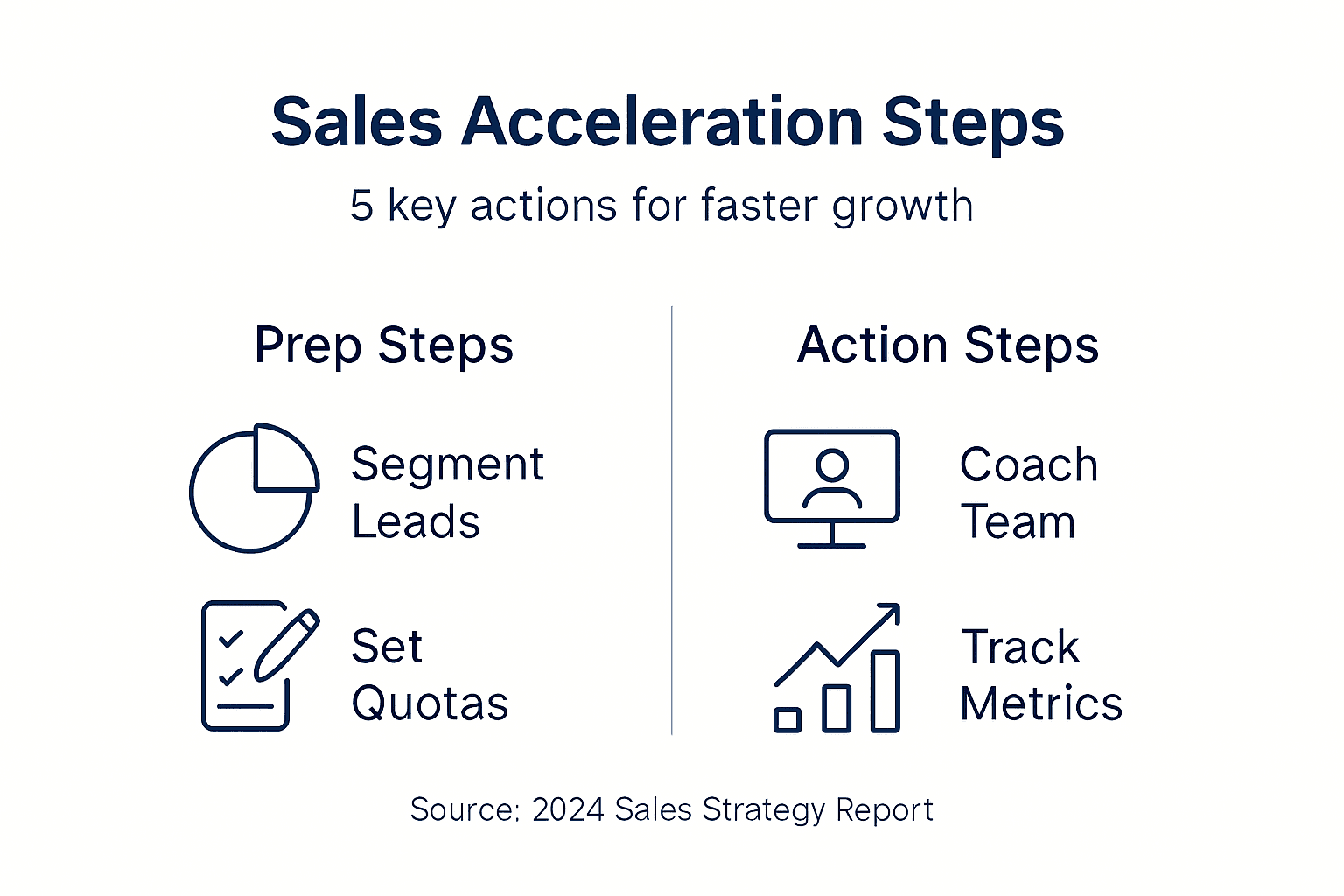
Aligning sales and business strategy improves resource allocation by 40% because everyone works toward common objectives. Marketing generates leads that sales can actually convert. Operations delivers what salespeople promise. Customer success reinforces the value that sales communicated.
Tailored coaching enhances scaling capabilities by ensuring new team members adopt proven approaches quickly. As you grow from 5 to 50 salespeople, consistent methodology becomes essential for maintaining quality and predictability.
Key acceleration tactics include:
- Streamline your qualification process to disqualify poor fits faster and focus on genuine opportunities.
- Develop content assets that answer common objections, allowing prospects to self-educate between conversations.
- Implement proposal automation that reduces administrative time and accelerates quote delivery.
- Create clear handoff processes between marketing, sales, and customer success to eliminate gaps.
- Schedule regular pipeline reviews where team members share winning strategies and learn from losses.
Avoid common pitfalls like implementing too many changes simultaneously, which creates confusion rather than improvement. Focus on one or two strategic initiatives per quarter and execute them thoroughly before adding more.
Understanding sales acceleration strategies specific to UK mid-sized companies ensures your approach fits your context. Enterprise tactics often fail at smaller scale, while startup methods lack the structure you need.
Recognising why sales training importance extends beyond initial onboarding helps you build continuous development into your culture. Top performers never stop learning and refining their craft.
Knowing how to scale your sales team without sacrificing quality separates companies achieving sustainable growth from those hitting ceilings. Structure and process make scaling possible.
Unlock Rapid Sales Growth with Tailored Training and Coaching
Mastering sales strategy fundamentals requires expert guidance tailored to your specific challenges. Ahead of Sales combines bespoke 1:1 coaching with proven training methodologies to help UK mid-sized businesses achieve at least 50% annual growth and ensure sales teams hit targets every quarter.
Our solutions address the exact fundamentals covered in this guide through practical application in your business context. Whether you need comprehensive team development or focused acceleration for specific initiatives, our programmes deliver measurable results.
Explore our comprehensive sales training guide to understand how the right development transforms performance. Discover effective sales training methods that combine behavioural science with practical application. Learn about our proven sales acceleration strategies designed specifically for businesses ready to scale.
Frequently Asked Questions
How does coaching improve sales quota attainment?
Coaching increases quota attainment by 16.7% by fostering individual skill development and creating accountability for consistent improvement. Combining 1:1 coaching with team training sustains growth better than training alone because personalised guidance addresses each salesperson’s specific challenges.
What are the most important metrics to track in a sales strategy?
Track quota attainment rates, lead conversion percentages at each pipeline stage, average sales cycle length, and pipeline health ratios consistently. Data-driven teams monitoring these metrics exceed targets 23% more often because numbers reveal exactly where to focus improvement efforts.
How can sales pipeline frameworks increase conversion rates?
Segmenting leads and implementing scoring systems focuses sales efforts on prospects most likely to convert, raising conversion rates by up to 30%. Prioritisation frameworks help teams close deals faster by directing energy toward high-potential opportunities rather than spreading attention equally across all leads.
What common sales misconceptions hinder growth?
Relying on call volume over conversation quality and using aggressive closing techniques reduces effectiveness significantly. Believing training alone develops salespeople ignores the 25% improvement gain from combining training with ongoing coaching. Correcting these misconceptions improves resource allocation and sales effectiveness by 18%.
Why does aligning sales with business strategy matter?
Alignment increases sales effectiveness by 22% because teams work toward objectives that genuinely support company growth rather than pursuing disconnected targets. When sales, marketing, operations, and customer success share common goals, resource allocation improves by 40% and sustainable growth becomes achievable.
Recommended
- Sales Strategy Explained: Comprehensive Growth Blueprint – Ahead of Sales
- Sales Planning Explained: Achieving 50% Growth
- 7 Proven Examples of Sales Strategies for Steady Growth
- Sales Growth Strategies 2025: Accelerate Quarterly Wins
- Site à Forte Conversion : Clé Pour Les Experts Premium – Vamyr Studio
- Wir suchen: Inside Sales Manager
One Response