
Running a high-performing sales team often feels like juggling priorities with no clear roadmap. Sales results swing from month to month, forecasting is uncertain, and valuable opportunities slip through the cracks. Without the right structure and habits, your team’s potential goes untapped.
You can change that with actionable strategies proven to strengthen collaboration, refine sales processes, and build real momentum. This guide brings together research-backed methods that take the guesswork out of managing sales, giving you clarity and confidence in every decision.
If you want practical steps to improve consistency, unlock hidden performance, and create lasting results for your business, you’re in the right place. Get ready for hands-on tactics you can use right away to reshape how your sales team operates and wins.
Table of Contents
- Define A High-Performance Sales Process
- Leverage Data-Driven Sales Forecasting
- Implement Targeted 1:1 Coaching And Feedback
- Optimise Pipeline Management And Qualification
- Adopt Automation To Streamline Sales Activities
- Tailor Value Propositions To Buyer Needs
- Monitor Progress With Continuous Performance Review
Quick Summary
| Key Message | Explanation |
|---|---|
| 1. Define Your Sales Process | Establish a structured sales process to improve predictability and scalability, enhancing team performance and consistency. |
| 2. Use Data for Forecasting | Rely on historical data for sales forecasts, enabling better resource planning and more accurate revenue predictions. |
| 3. Implement Individual Coaching | Regularly provide personalised coaching to reps to address specific gaps, build skills, and enhance overall team performance. |
| 4. Optimise Pipeline Qualification | Maintain a clean pipeline by rigorously qualifying leads, ensuring accurate forecasts and preventing wasted effort on poor opportunities. |
| 5. Adopt Automation for Efficiency | Automate repetitive administrative tasks to free up sales reps’ time, allowing them to focus on high-value customer interactions. |
1. Define a High-Performance Sales Process
A high-performance sales process isn’t something that happens by chance. It’s a structured, strategic framework that guides your team through every stage of a sale, from initial contact to contract signature.
When you define this process properly, you create predictability and scalability. Your team knows exactly what to do at each stage, decision-making becomes faster, and results become more consistent.
Why This Matters
Most sales teams operate without a clear, documented process. Reps follow their gut instinct, use different approaches, and hit targets sporadically. This unpredictability makes it impossible to forecast accurately or replicate success.
Research on medium-sized European firms reveals that sales enablement programs supporting structured workflows drive significantly higher productivity and alignment across the entire organisation. When your process is defined, everyone understands the rhythm.
Top-performing sales managers understand this deeply. They establish rhythmic coaching cadences and manage conversations strategically, which reinforces effective selling behaviours across the entire team.
What a High-Performance Process Includes
Your sales process should map out these essential elements:
- Clear stage definitions that everyone agrees on (prospect, qualified lead, proposal, negotiation, close)
- Defined entry and exit criteria for each stage, so deals don’t get stuck
- Key activities and actions required to move deals forward at each phase
- Success metrics that tell you whether someone is performing well at that stage
- Coaching touchpoints where managers can intervene with guidance and support
Making It Real in Your Business
Defining your process means documenting what actually works. This isn’t theoretical—it’s based on your best deals, your fastest closures, and your most successful reps.
Involve your top performers in building this. They know the real steps, not just the ones you think happen. Then train everyone else to follow that model.
Pro tip: Document your process in a simple one-page visual that every rep can reference daily, showing each stage, how long it typically takes, and the one critical activity required at that phase.
2. Leverage Data-Driven Sales Forecasting
Guessing at sales numbers belongs in the past. Data-driven forecasting replaces hunches with hard facts, giving you visibility into what’s actually going to happen with your revenue.
When you build forecasts on real historical data and patterns, you stop over-promising to stakeholders and start hitting targets consistently. Your team knows what to expect, and you can plan resources accordingly.
Why Data Changes Everything
Most sales leaders forecast based on what their gut tells them or what happened last month. This approach misses trends, ignores seasonal patterns, and leaves you scrambling when reality doesn’t match predictions.
Machine learning models trained on historical sales data can identify patterns humans miss, even when that data includes unusual periods like market disruptions. The key is combining clean data with solid feature engineering.
Accurate forecasting transforms how you operate. It enables better hiring decisions, smarter pipeline management, and realistic quarterly planning.
What Data-Driven Forecasting Includes
You need to look at multiple data sources to build reliable predictions:
- Historical deal data covering deal size, sales cycle length, and win rates by rep or product
- Pipeline composition showing where opportunities sit in your funnel right now
- Seasonal patterns that reveal when deals typically close in your industry
- Rep performance metrics identifying which activities correlate with successful closes
- Market indicators reflecting external factors affecting your specific sales environment
Implementing This in Your Business
Start by auditing what data you’re already collecting. Most teams track deal value and stage, which gives you a foundation. From there, you can layer in win rates, sales cycle duration, and activity metrics.
Tools exist to help with this analysis, but the real work is ensuring your data is accurate. Bad data produces bad forecasts. Train your team to log information consistently and update deal statuses truthfully.
Accurate forecasting isn’t about complex algorithms—it’s about clean data and understanding what actually influences your sales outcomes.
Once you’re forecasting accurately, you’ll notice something remarkable. Your conversations with leadership shift from defensive to strategic, because you’re not surprised by results anymore.
Pro tip: Start with a simple rolling 12-month forecast using only your historical close rates by deal size; this baseline often outperforms complex models and gives you immediate credibility with your finance team.
3. Implement Targeted 1:1 Coaching and Feedback
One-to-one coaching is where real transformation happens. It’s not a generic training session—it’s personalised support that addresses each rep’s specific gaps and builds on their strengths.
When you invest in individual coaching, you’re not just improving sales performance. You’re building confidence, strengthening relationships with your team, and creating a culture where people actually want to stay.
Why Individual Coaching Matters
Group training teaches everyone the same material, but your reps don’t all have the same problems. One person struggles with objection handling, another needs help closing deals, and a third is great at closing but terrible at prospecting.
Strong coach-client rapport facilitates productive feedback and personalized support, which improves sales performance far more than a one-size-fits-all approach ever could.
Research confirms that managerial coaching positively impacts sales performance by focusing on customer orientation and individual development. The key is making coaching a regular rhythm, not something that happens once a year.
Building a Coaching Habit
Effective coaching requires consistency and structure. Here’s what matters most:
- Regular cadence (weekly or fortnightly) so coaching becomes expected and valued
- Specific focus on one or two skills, not trying to fix everything at once
- Real examples from actual calls or deals rather than hypothetical scenarios
- Clear accountability so reps know what they’re improving and why
- Genuine interest in each person’s development, not just hitting numbers
Making It Practical
Start by identifying the biggest performance gaps. Are your reps losing deals in negotiations? Are they not generating enough meetings? Pick the area where targeted coaching will have the highest impact.
Then schedule time. Block it on your calendar and protect it like you would a client meeting. Your team needs to know this coaching time is non-negotiable.
Use call recordings or deal reviews as your coaching material. Listen together, ask questions rather than lecturing, and let reps identify what they’d do differently next time.
Effective coaching happens when trust exists between coach and rep—when feedback feels like support, not criticism.
Keep notes on what you’re working on with each person. Track progress over weeks, not just looking at this week’s numbers. Coaching works when reps see themselves improving over time.
Pro tip: Record three recent calls from each rep and spend 20 minutes reviewing one call together each week; this focused, example-based approach drives behaviour change far faster than abstract advice.
4. Optimise Pipeline Management and Qualification
A bloated pipeline full of unqualified deals is worse than having no pipeline at all. It masks problems, wastes your team’s time, and destroys forecasting accuracy when deals inevitably collapse.
Optimisation starts with ruthless qualification. You need clear criteria for what belongs in your pipeline and the discipline to remove what doesn’t.
The Real Cost of Poor Qualification
When reps throw every conversation into the pipeline, you lose visibility completely. You can’t forecast accurately, you can’t predict when deals will close, and you’re constantly surprised by results.
Optimising lead qualification and pipeline visibility improves sales efficiency and predictability. Research validates that traditional sales flow models work best when qualification is rigorous and consistent.
Your pipeline should reflect real opportunities, not hopeful ones. A deal with a 10% chance of closing shouldn’t sit alongside a deal with a 70% chance—they belong in different stages with different actions.
Building Your Qualification Framework
Start by defining what makes an opportunity “real”. Use criteria like these:
- Budget exists and the prospect has confirmed it
- Decision-maker identified and willing to engage
- Timeline is realistic and aligned with your sales cycle
- Problem or need is clear and matches what you sell
- Buying process understood so you know what comes next
Putting This Into Practice
Audit your current pipeline. Be honest about which deals meet your criteria and which are just wishful thinking. Remove the wishful thinking immediately—it’s cluttering your forecast.
Then train your team on qualification standards. Make it clear that stuffing the pipeline with weak deals hurts everyone. When your forecast is accurate, you hit targets more consistently.
Proactive customer selection and understanding stakeholder roles strengthen pipeline quality and often lead to larger deal sizes. Knowing who the real decision-makers are matters enormously.
Review pipeline health weekly. Look for deals stalled in one stage for too long. Have a conversation about what’s really happening. Is it still qualified, or should it move to lost opportunities?
A clean pipeline with fewer qualified deals beats a bloated pipeline with hundreds of questionable ones every single time.
Pro tip: Create a simple qualification scorecard (budget, decision-maker, timeline, problem) and require reps to score every opportunity; this forces honest assessment and prevents pipeline inflation.
5. Adopt Automation to Streamline Sales Activities
Your team is spending hours doing work that machines could handle in minutes. Data entry, lead routing, follow-up reminders, meeting scheduling—these tasks drain productivity without adding any real value.
Automation frees your reps to do what they actually do best: selling. When you eliminate tedious administrative work, your best performers become even more effective.
What Actually Gets Automated
Over 30% of sales activities can be automated using current technology. This isn’t limited to complex processes—it includes the everyday tasks that pile up and waste time.
Activities that automation handles brilliantly include:
- Lead routing to the right rep based on territory, product, or skill
- CRM data entry automatically captured from emails and calendar invites
- Follow-up reminders triggered when prospects don’t respond
- Meeting scheduling without the back-and-forth emails
- Report generation pulling data directly from your sales system
The Real Impact on Your Business
Automation reduces manual tasks such as data entry and follow-ups, enabling your team to focus on customer interactions that actually drive deals forward.
When reps spend less time on admin, they spend more time on selling. The maths is straightforward: more selling time equals more revenue.
Implementing Automation Smartly
Don’t try to automate everything at once. Start with the most time-consuming, repetitive tasks. If your team spends an hour daily entering data, that’s your first target.
Choose tools that integrate with what you already use. A beautiful automation platform that doesn’t talk to your CRM creates more problems than it solves.
Train your team properly. Automation only works if people actually use it and trust it. If a rep thinks the system will mess up their data, they’ll keep doing things manually.
Automation isn’t about replacing people—it’s about letting your people focus on the work only they can do.
Measure the impact. Track how much time gets freed up and what your team does with that time. Ideally, they’re having more meaningful conversations with prospects and closing more deals.
Pro tip: Start with automating lead routing and CRM updates; these two changes alone typically free up 8-10 hours per rep per week, which translates directly to more prospect conversations.
6. Tailor Value Propositions to Buyer Needs
A generic pitch works for nobody. When you tell a prospect the same story you tell everyone else, they hear background noise, not a reason to buy from you.
Your value proposition must speak directly to what each buyer actually cares about. That requires research, listening, and the willingness to adjust your message based on who you’re talking to.
Why One-Size-Fits-All Fails
Most sales teams have a single value proposition they repeat endlessly. It highlights features and benefits that matter to your best customers, but those might be completely irrelevant to the prospect sitting across from you.
A prospect in finance cares about cost reduction and ROI. A prospect in operations cares about efficiency and implementation speed. A prospect in procurement cares about risk mitigation and compliance. If you’re giving them all the same message, you’re missing the mark.
Effectively communicating and customising value promises based on customer needs drives customer satisfaction and loyalty through genuine alignment with what buyers actually need.
Building Tailored Value Propositions
Start by understanding your different buyer personas and what motivates each one. Then develop messaging that speaks to their specific priorities:
- For budget holders emphasise ROI, payback period, and bottom-line impact
- For end users focus on ease of use, training support, and daily productivity gains
- For compliance roles highlight security, regulatory alignment, and audit trails
- For executives stress strategic advantage, risk reduction, and competitive positioning
Making It Real in Your Sales Process
Before your first conversation, research the prospect’s role, company, and industry. What challenges do companies in their sector typically face? What might keep someone in their position awake at night?
During discovery, listen more than you talk. Ask about their priorities, their challenges, what success looks like to them. Then build your value proposition around what you actually learn, not what you assumed.
Value proposition frameworks that integrate customer needs with strategic considerations create stronger alignment and responsiveness to evolving buyer requirements.
Your proposal, your presentation, your follow-up emails—all of it should reflect this tailored understanding. When a prospect realises you get their specific situation, they see you as a partner, not just another vendor.
When your value proposition matches what a buyer actually needs, resistance drops and deal momentum accelerates dramatically.
Pro tip: Create a simple two-column document for each major buyer role: their typical challenge on one side, your tailored value message on the other; reference this before every call to keep your pitch focused.
7. Monitor Progress with Continuous Performance Review
You can’t improve what you don’t measure. Waiting until the end of the quarter to review performance means you’ve lost three months of opportunity to coach, adjust, and help your team succeed.
Continuous performance monitoring keeps problems visible early and enables you to intervene with support before deals slip away or targets get missed.
Why Weekly Beats Quarterly
Most leaders review sales performance monthly or quarterly. By then, deals have either closed or died, reps have already developed bad habits, and momentum has shifted.
Weekly or fortnightly reviews catch issues while there’s still time to act. A rep struggling with objection handling can get coached before losing the next five prospects. A pipeline gap can be identified and filled before it becomes a crisis.
Continuous monitoring coupled with data-driven instructional adjustments enhances outcomes far more effectively than traditional periodic reviews. Regular check-ins also create opportunities for timely feedback and support.
What to Monitor Consistently
You don’t need to track everything. Focus on the metrics that predict success or failure:
- Activity levels (calls, meetings, proposals) compared to targets
- Pipeline progression showing deals moving through stages
- Win rates and deal size indicating quality and effectiveness
- Sales cycle length revealing whether deals are stalling
- Rep-by-rep performance identifying who needs support
Implementing Continuous Review
Schedule a brief team huddle every week, perhaps Monday morning. Spend 15 minutes reviewing last week’s numbers and identifying what needs attention this week.
Then have individual conversations with reps who are off track. Don’t wait for formal coaching sessions. A quick 10-minute conversation addressing a specific issue is far more valuable than waiting three weeks for a scheduled session.
Use your CRM or sales dashboard to make this easy. If data is buried in spreadsheets you have to manually update, you won’t do it consistently.
Early identification of struggling performers through continuous tracking enables timely feedback and prevents small problems from becoming big ones.
The key is responding quickly to what you see. When a rep’s activity drops, find out why and address it immediately. When pipeline is thin, deploy resources to fill it before it becomes desperate.
Continuous monitoring transforms data from a historical report into a real-time tool for helping your team succeed.
Pro tip: Build a simple one-page dashboard showing each rep’s weekly activity, pipeline by stage, and week-over-week change; review it every Monday and have brief 5-minute check-ins with anyone off track.
Below is a summarised table outlining the key high-performance sales strategies discussed in the article.
| Aspect | Key Details | Benefits |
|---|---|---|
| Structured Sales Process | Implementing well-defined stages, decision criteria, key actions, success metrics, and coaching opportunities. | Predictable outcomes, transparent workflows, and consistent team alignment. |
| Data-Driven Forecasting | Utilising historical data, advanced machine learning models, and accurate data input to predict future sales outcomes. | Reliable revenue projections, resource planning, and conflict-free stakeholder communications. |
| Personalised Coaching | Consistent, one-to-one coaching addressing individual strengths and areas of improvement with regular touchpoints. | Enhanced performance, personalised development goals, and improved employee satisfaction. |
| Streamlined Qualification | Establishing clear criteria (budget, decision maker, timeline, problem clarity) to judge the viability of opportunities before committing resources. | A focused and realistic sales pipeline, improving actual success rates and time management. |
| Effective Automation | Automating repetitive tasks such as lead distribution, data entry, scheduling, and reporting using integrated sales tools. | Enhanced productivity, reduced manual errors, and increased time available for selling. |
| Tailored Value Propositions | Aligning sales pitches with the specific needs and challenges of diverse customer personas through research and active listening. | Greater relevancy in customer interaction, reduced resistance, and improved deal closure rates. |
| Continuous Monitoring | Weekly performance reviews covering activity metrics, pipeline flow, and problem identification to enable timely support and adjustments. | Early issue identification, proactive intervention, and overall operational excellence. |
Accelerate Your Sales Success with Proven Expertise
The article highlights the challenges that sales leaders face when aiming for consistent growth through well-defined processes, data-driven forecasting, targeted coaching, and pipeline optimisation. If you are finding it difficult to maintain a predictable sales rhythm, qualify your opportunities effectively, or deliver personalised value propositions that truly resonate your team is not alone. Leaders who want to transform inconsistent results into steady sales growth and empower their reps with the right tools and insights need expert guidance.
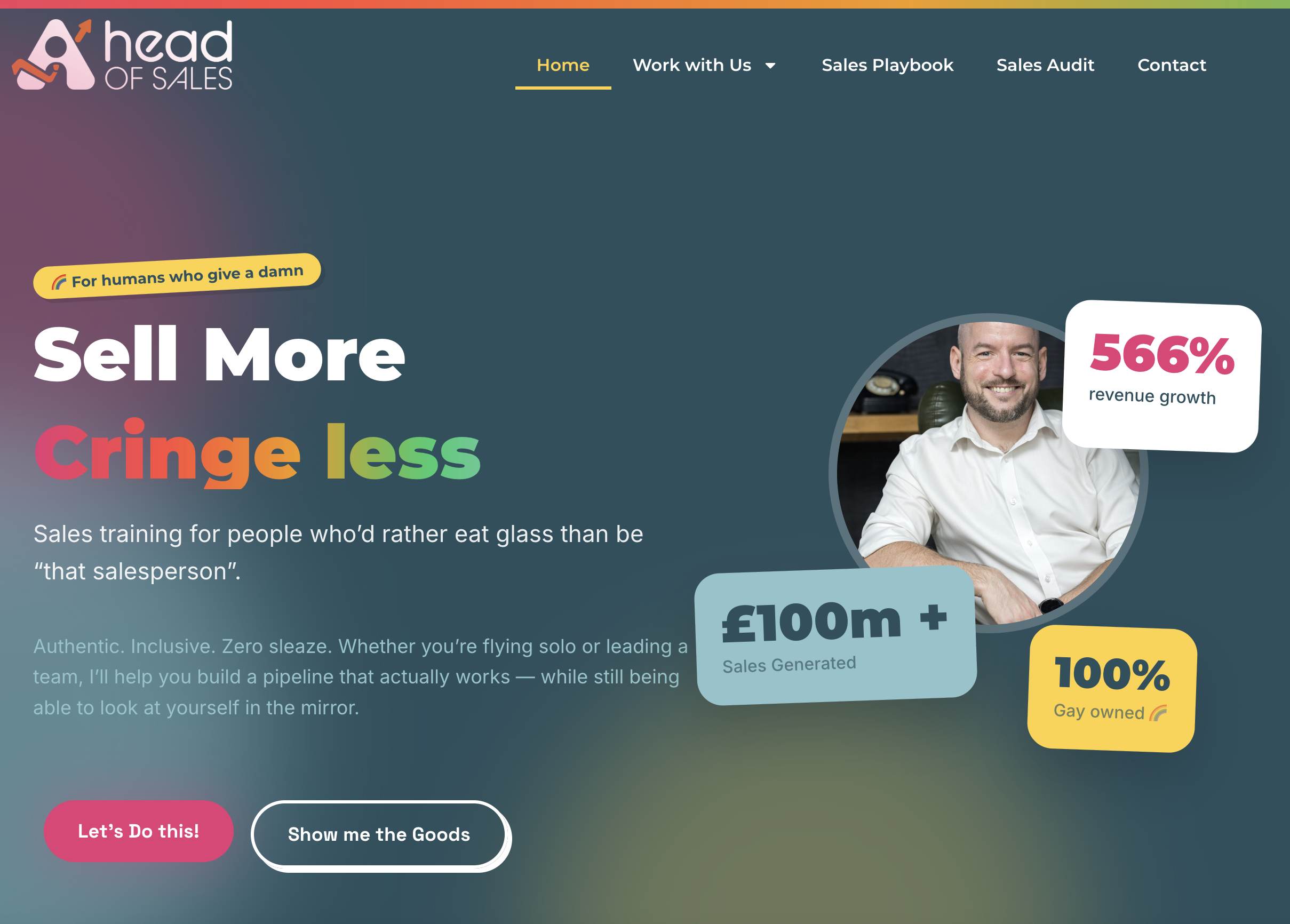
At Ahead of Sales, we specialise in combining bespoke 1:1 coaching with tried-and-tested sales training and consultancy designed to deliver at least 50% sales growth every year. Whether you lead a medium-sized organisation aiming to fully define your sales process or a solo service business ready to optimise pipeline management and accelerate deal closure we have custom packages that meet your unique needs. Discover how our data-driven, personalised approach can help your team not just hit but exceed their quarterly targets with confidence. Take the next step to transform your sales leadership strategy by visiting our sales acceleration packages today and unlock the full potential of your sales force.
Frequently Asked Questions
How can I define a high-performance sales process for my team?
To define a high-performance sales process, document clear stage definitions, entry and exit criteria, and key activities for each phase. Conduct a collaborative workshop with your top performers to ensure the process aligns with real-world practices, and aim to implement this framework within 30 days.
What steps should I take to implement data-driven sales forecasting?
Start by collecting historical deal data, pipeline composition, and market indicators. Regularly analyse this data to identify patterns and trends that inform your forecasts, aiming for a consistent review and adjustment of your forecasting process every month.
How do I establish effective one-to-one coaching for my sales team?
Establish a regular coaching cadence, such as weekly or fortnightly sessions, that focuses on specific skills relevant to each rep. Use real examples from their calls or deals during these sessions to enhance learning and accountability, and track progress over time to ensure improvement.
What criteria should I use for optimising my sales pipeline?
Create a qualification framework that includes criteria such as budget confirmation, decision-maker identification, and a clear understanding of the buying process. Review and audit your pipeline weekly to remove unqualified deals, enhancing accuracy in forecasting and productivity.
How can I automate sales activities to save time?
Identify repetitive tasks that consume significant time, such as lead routing and CRM data entry, and implement automation tools that integrate with your existing systems. Start by automating the most time-consuming activities, aiming to free up 8-10 hours of selling time per rep per week.
What is the best way to tailor value propositions to different buyer needs?
Begin by researching your different buyer personas and their specific motivations. Develop tailored messaging for each persona based on their unique challenges, focusing on how your solution directly addresses their needs, and update your sales materials accordingly to reflect this understanding.
Recommended
- 7 Proven Sales Acceleration Strategies for Rapid Growth – Ahead of Sales
- 7 Essential Sales Leadership Tips for Fast Growth – Ahead of Sales
- 7 Essential Sales Team Training Topics for Growth – Ahead of Sales
- 7 Essential Sales Closing Techniques List for Leaders
- 7 Key Mistakes SMEs Should Avoid to Improve Business Performance – Price & Accountants
- 7 Essential Phone Number Marketing Tips for Local UK Businesses|BM