
Many sales leaders in British service companies find that traditional approaches simply do not cut it when tackling high ticket opportunities. With buyers expecting personalised experiences and long-term value, the real challenge is moving beyond standard tactics to build genuine trust and deliver measurable outcomes. This article uncovers the unique dynamics of high ticket selling, clears up common misconceptions, and explores the strategies that drive successful premium sales in the United Kingdom.
Table of Contents
- Defining High Ticket Selling And Misconceptions
- Types Of High Ticket Sales In The UK Market
- Key Characteristics And Buyer Expectations
- Sales Process: Steps And Required Skills
- Risks, Costs, And Common Mistakes To Avoid
- Comparing High Ticket And Standard Sales
Key Takeaways
| Point | Details |
|---|---|
| Importance of Value Creation | High ticket selling is centred on creating transformative value for clients, rather than merely focusing on high prices. |
| Consultative Sales Approach | Successful high ticket sales require a consultative approach that prioritises understanding client needs over aggressive tactics. |
| Risk Management | Effective high ticket selling involves recognising and mitigating substantial financial risks associated with long sales cycles and complex decision-making. |
| Differentiation from Standard Sales | High ticket sales differ significantly from standard sales through lengthy cycles, multiple decision-makers, and a focus on building strategic partnerships. |
Defining high ticket selling and misconceptions
High ticket selling represents a sophisticated sales approach centred on delivering exceptional value through premium-priced products or services. Unlike traditional sales models that prioritise transaction volume, high ticket selling focuses on building deep, consultative relationships with clients who are prepared to invest significantly in solutions that transform their business or personal challenges.
At its core, high ticket selling is not merely about commanding higher prices, but about creating genuine value that justifies the investment. Comprehensive sales research reveals that successful high ticket sales strategies typically involve:
- Extensive understanding of client needs
- Personalised solution design
- Demonstrable return on investment
- Trust-based relationship building
- Comprehensive post-sale support
Many professionals mistakenly believe high ticket selling is simply about being persuasive or having an aggressive sales approach. However, modern buyers are sophisticated and conduct thorough research before making substantial investments. Authentic engagement trumps traditional sales tactics, requiring sales professionals to position themselves as trusted advisors rather than transactional vendors.
High ticket selling demands a consultative approach where value, trust, and tailored solutions are paramount.
Key misconceptions about high ticket selling include believing that:
- Any expensive product automatically qualifies as high ticket
- Charismatic personality can compensate for lack of substantive value
- High-pressure sales tactics are effective with discerning buyers
- Price alone determines sales success
Pro tip: Focus on understanding your client’s specific challenges and demonstrating how your solution provides measurable, transformative outcomes.
Types of high ticket sales in the UK market
The United Kingdom hosts a diverse landscape of high ticket sales across multiple sophisticated sectors, each characterised by unique buyer expectations and complex value propositions. Comprehensive market research reveals that these high-value transactions typically span several critical domains, demanding nuanced sales approaches tailored to specific industry contexts.
Key high ticket sales categories in the UK market include:
- Enterprise software solutions
- Luxury consumer goods
- Premium professional services
- Bespoke consulting packages
- Advanced technological implementations
- Executive coaching programmes
- Complex B2B infrastructure contracts
Each category requires a distinct strategic approach, with buyers expecting deeply personalised experiences that demonstrate exceptional long-term value. In enterprise contexts, sales cycles are typically longer and more intricate, involving multiple stakeholders and rigorous evaluation processes.
High ticket sales in the UK are not about price, but about creating transformative value for discerning clients.
Specific high ticket sales segments demand unique considerations:
- Software and Technology: Multimillion-pound enterprise solutions requiring comprehensive needs analysis
- Professional Services: Specialised consulting with measurable organisational impact
- Luxury Markets: Premium products where brand reputation and experiential elements drive purchasing decisions
- Training and Development: High-end programmes promising significant professional transformation
Pro tip: Develop a consultative approach that prioritises understanding client challenges over standard pitch techniques.
Our Legends Sales Accelerator is designed for ambitious businesses and solo professionals alike who want to sell high-ticket service offerings.

Key characteristics and buyer expectations
High ticket sales buyers represent a sophisticated and discerning market segment with intricate decision-making processes that extend far beyond simple transactional interactions. Advanced buyer psychology research reveals that these customers prioritise investment quality, long-term value, and transformative outcomes over immediate cost considerations.
Key psychological characteristics of high ticket buyers include:
- Profound focus on long-term value creation
- Strong preference for personalised experiences
- Emphasis on trust and credibility
- Desire for exclusive, tailored solutions
- Sophisticated risk assessment capabilities
- Expectation of comprehensive support
- Prioritisation of strategic alignment
These buyers are not merely purchasing a product or service, but investing in a strategic partnership that promises measurable organisational or personal transformation. Their decision-making process involves multiple layers of evaluation, including thorough due diligence, extensive stakeholder consultation, and rigorous return on investment (ROI) analysis.
High ticket buyers seek partners, not vendors – they want transformative solutions, not transactional exchanges.
Critical buyer expectations in high ticket sales encompass:
- Transparent and detailed value proposition
- Demonstrable expertise and track record
- Customised approach addressing specific challenges
- Comprehensive pre and post-sale support
- Clear and measurable expected outcomes
Pro tip: Develop a deep understanding of your prospect’s unique challenges before presenting any solution, demonstrating genuine commitment to their success.
Sales process: steps and required skills
The high ticket sales process represents a sophisticated journey that demands exceptional strategic skills and a nuanced understanding of complex buyer dynamics. Strategic sales methodology requires a systematic approach that transcends traditional transactional selling techniques, focusing instead on creating genuine value and trust.
Key steps in the high ticket sales process include:
- Rigorous prospect qualification
- Deep needs assessment
- Customised solution development
- Trust and credibility building
- Sophisticated objection handling
- Strategic value demonstration
- Consultative relationship management
Successful high ticket sales professionals must cultivate a sophisticated skill set that goes far beyond conventional sales techniques. The extended sales cycles, which can range from 3 to 18 months, demand extraordinary patience, strategic thinking, and the ability to navigate complex organisational landscapes.
High ticket sales success is not about selling a product, but about becoming a trusted strategic partner.
Critical skills required for high ticket sales professionals include:
- Advanced communication capabilities
- Exceptional emotional intelligence
- Strategic negotiation expertise
- Detailed product and industry knowledge
- Complex stakeholder management
- Advanced problem-solving abilities
- Resilience and persistent relationship building
Pro tip: Develop a consultative mindset that prioritises understanding client challenges over achieving immediate sales targets.
Risks, costs, and common mistakes to avoid
High ticket sales represent a sophisticated yet complex business strategy that requires comprehensive understanding of potential financial and strategic risks. Strategic risk management demands meticulous planning and a nuanced approach to mitigating potential challenges throughout the sales process.
Significant risks and associated costs in high ticket sales include:
- Extended sales cycle resource investments
- High customer acquisition expenses
- Potential opportunity cost of extended negotiations
- Substantial time commitment from senior sales professionals
- Complex stakeholder management overhead
- Potential reputational risks from unsuccessful engagements
- Financial exposure from prolonged sales processes
Understanding and anticipating these risks is crucial for developing robust sales strategies that protect both organisational resources and potential client relationships. The financial implications extend beyond direct monetary investments, encompassing opportunity costs, personnel time, and potential reputational damage from unsuccessful engagement attempts.
This table summarises the strategic risks and mitigation measures in high ticket sales:
| Risk Area | Business Impact | Mitigation Strategy |
|---|---|---|
| Extended Negotiation Period | Increased opportunity costs, resource drain | Prioritise qualified leads |
| High Customer Acquisition Cost | Potential budget overruns, pressure on ROI | Target ideal customer profile |
| Reputational Risk | Loss of future business, negative perception | Set realistic expectations upfront |
| Senior Staff Time Commitment | Reduced capacity for other initiatives | Streamline internal approval process |
High ticket sales success requires strategic risk management, not just aggressive sales tactics.
Common mistakes that significantly increase risk exposure include:
- Insufficient prospect qualification
- Inadequate needs assessment
- Poor communication and expectation management
- Lack of transparent pricing strategies
- Overlooking complex organisational decision-making processes
- Neglecting comprehensive risk mitigation planning
- Failing to build genuine trust-based relationships
Pro tip: Develop a systematic risk assessment framework that evaluates potential client opportunities against your organisation’s strategic capabilities and resource constraints.
Comparing high ticket and standard sales
The fundamental distinctions between high ticket and standard sales extend far beyond mere price points, representing fundamentally different strategic approaches to customer engagement and value creation. Advanced sales methodology reveals profound differences in sales cycles, decision-making processes, and overall strategic intent.
Key comparative characteristics include:
- Sales cycle duration
- Stakeholder complexity
- Marketing approach
- Customer relationship depth
- Decision-making processes
- Value proposition emphasis
- Resource investment requirements
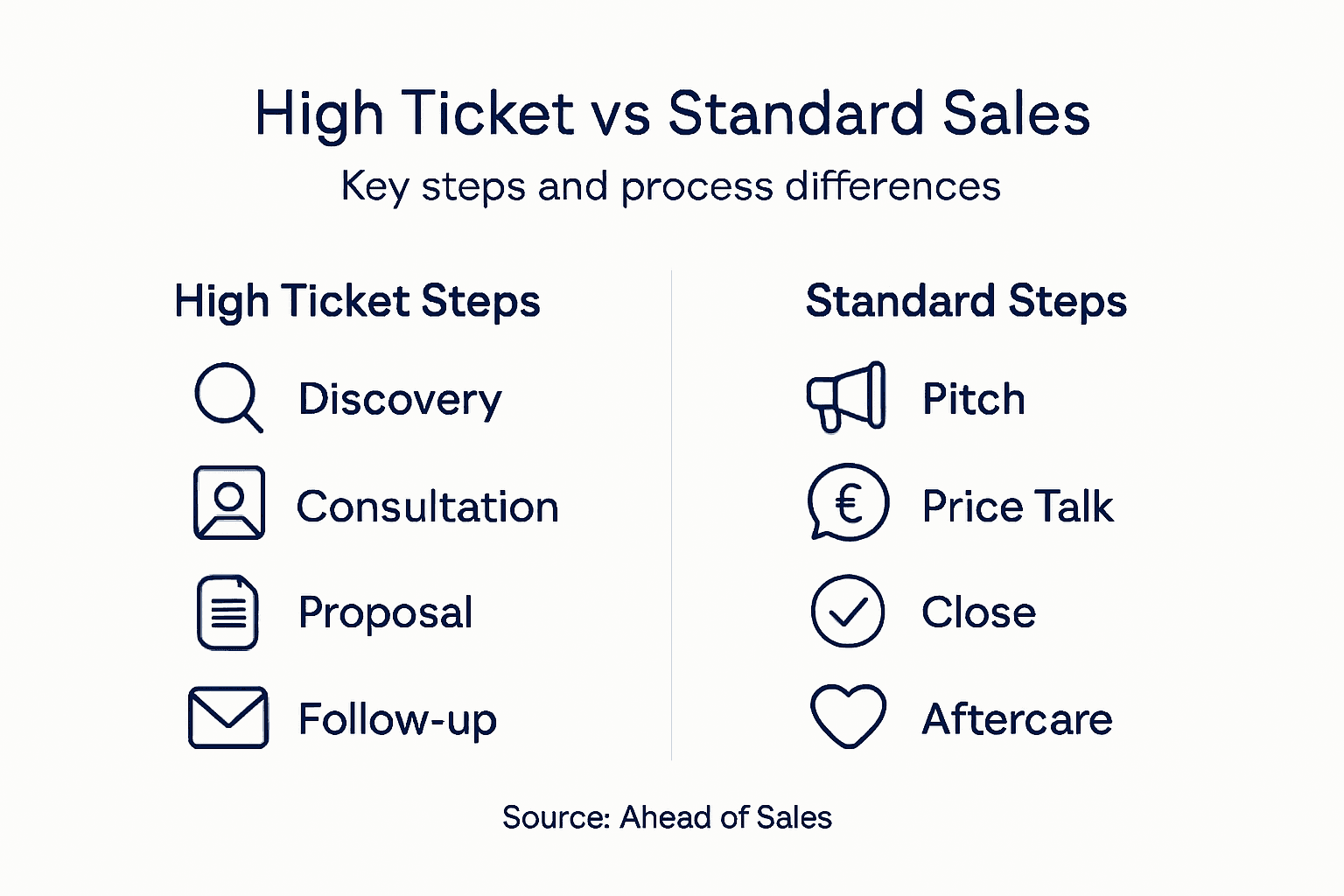
Standard sales typically operate on high-volume, transactional models with short decision cycles and price-sensitive strategies. In contrast, high ticket sales demand extensive relationship building, comprehensive needs analysis, and long-term value demonstrations that transform traditional sales paradigms.
High ticket sales are not transactions, but strategic partnerships built on trust and demonstrable value.
Critical differences between high ticket and standard sales models encompass:
Below is a comparison of sales process complexity between high ticket and standard sales models:
| Factor | High Ticket Sales | Standard Sales |
|---|---|---|
| Sales Cycle Length | 3–18 months, highly detailed | 1–4 weeks, rapid decisions |
| Decision Influencers | Multiple senior stakeholders | Usually one decision-maker |
| Solution Tailoring | Extensive and individualised | Minimal, standard offerings |
| Relationship Depth | Deep, ongoing partnership | Limited, transactional contact |
- Sales cycle length (weeks vs months)
- Number of decision-makers involved
- Depth of solution customisation
- Marketing communication strategies
- Risk assessment complexity
- Client engagement intensity
- Financial and resource commitment
Pro tip: Develop a nuanced understanding of your prospect’s strategic objectives rather than focusing solely on product features or immediate price considerations.
Unlock the Power of High Ticket Selling with Ahead of Sales
If you recognise the challenges of building trust, demonstrating long-term value and navigating complex buyer expectations discussed in this article then it is time to elevate your sales approach. Many businesses struggle with creating transformative solutions that justify premium pricing and secure strategic partnerships. At Ahead of Sales we combine bespoke 1:1 coaching with traditional training and consultancy to help you move beyond transactional selling into authentic high ticket success.
Key benefits you can gain include:
- Tailored strategies that resonate with sophisticated buyers
- Developing deep consultative skills and trust-based relationships
- Managing longer sales cycles with confidence and resilience
Discover practical insights and proven techniques in our Sales Strategy Archives – Ahead of Sales that align perfectly with high ticket selling concepts.
Don’t let complex sales processes and prolonged negotiations hold your business back. Act now to accelerate your sales growth and consistently hit targets with custom coaching and acceleration packages designed for ambitious businesses and solo professionals alike. Visit Ahead of Sales today and take your high ticket sales performance to the next level.
Frequently Asked Questions
What is high ticket selling?
High ticket selling is a sales approach that focuses on selling premium-priced products or services by building consultative relationships with clients, aiming to deliver significant value and transformation.
What are key characteristics of high ticket buyers?
High ticket buyers prioritize long-term value creation, seek personalised experiences, and expect transparent communication and comprehensive support throughout the sales process.
What skills are essential for success in high ticket sales?
Successful high ticket sales professionals need advanced communication skills, emotional intelligence, strategic negotiation expertise, and the ability to manage complex stakeholder relationships.
What common mistakes should be avoided in high ticket sales?
Common mistakes include insufficient prospect qualification, inadequate needs assessment, poor communication, and a lack of transparent pricing strategies, which can lead to lost opportunities and trust issues.