
Misunderstandings about upselling still hold many teams back from fully realising its true potential. For UK sales leaders aiming to drive reliable quarterly growth, the difference often lies in how upselling is defined and executed. Instead of pushing customers toward pricier options simply for profit, effective upselling is rooted in strategic customer value enhancement, ensuring upgraded solutions actually meet real needs and foster long-term loyalty.
Table of Contents
- Upselling Defined And Common Misconceptions
- Types Of Upselling In Sales Environments
- Key Benefits For Sales Teams And Companies
- Essential Techniques And Practical Examples
- Risks, Pitfalls, And What To Avoid
Key Takeaways
| Point | Details |
|---|---|
| Understanding Upselling | Upselling is a customer-centric strategy aimed at enhancing value by providing relevant upgrades rather than employing aggressive sales tactics. |
| Effective Techniques | Utilising active listening and personalised recommendations can lead to successful upselling that meets customers’ specific needs. |
| Balancing Goals | Sales teams should prioritise customer satisfaction over immediate revenue by adopting a consultative approach to upselling. |
| Avoiding Pitfalls | To maintain customer trust, avoid pushy tactics and irrelevant offers by aligning recommendations with genuine customer preferences. |
Upselling Defined and Common Misconceptions
Upselling represents a strategic sales approach designed to encourage customers to purchase more premium or enhanced product versions compared to their original selection. While often misunderstood, this technique is fundamentally about providing genuine value rather than manipulative selling tactics.
At its core, upselling involves strategic customer value enhancement. The primary objective is not simply increasing transaction value, but delivering superior solutions that better meet customer needs. Critically, successful upselling requires understanding customer preferences and presenting upgrades that demonstrably improve their experience.
Common misconceptions about upselling include:
- Viewing it as an aggressive sales technique
- Believing upselling always guarantees increased profits
- Assuming customers will feel pressured or manipulated
- Thinking upselling works identically across all industries
In reality, effective upselling is nuanced and customer-centric. Research indicates that profitability depends more on customer satisfaction and loyalty than pure sales volume. Ethical upselling focuses on:
- Presenting genuinely beneficial product enhancements
- Matching upgrades to specific customer requirements
- Maintaining transparency about product differences
- Prioritising long-term customer relationships
Strategic upselling requires salespeople to act more like consultants, carefully evaluating whether recommended upgrades truly serve the customer’s interests. This approach transforms upselling from a transactional interaction into a value-added service.
Pro tip: Always frame upselling as a solution to the customer’s specific challenge, not just a mechanism to increase your sales revenue.
Types of Upselling in Sales Environments
Upselling encompasses several strategic approaches designed to increase customer value and transaction worth. Strategic sales environments deploy multiple upselling techniques that go beyond simple price increases, focusing instead on enhancing customer experience and product utility.
The primary types of upselling include:
- Product Upgrades: Encouraging customers to purchase higher-end models with superior features
- Add-On Sales: Recommending complementary products that enhance core purchase
- Extended Warranty Offers: Providing additional protection packages
- Premium Service Packages: Presenting enhanced service levels
- Bundle Deals: Combining related products at attractive price points
Each upselling approach requires nuanced understanding of customer needs. Sales techniques vary across industry contexts, demanding salespeople adapt their strategies to specific customer backgrounds and preferences.
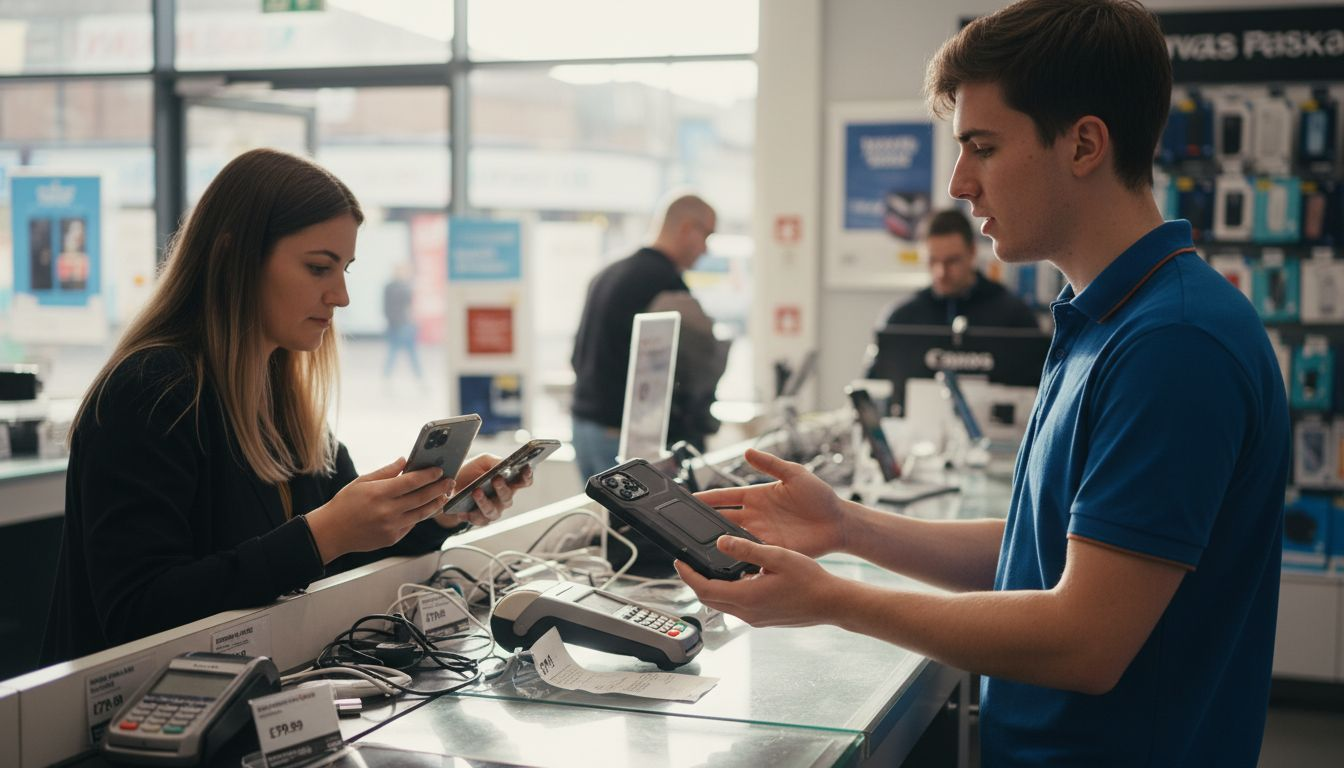
Here’s a summary of upselling types, with business impact and best application contexts:
| Upselling Type | Business Impact | Best Use Case |
|---|---|---|
| Product Upgrades | Increases average transaction size | Technology and retail sectors |
| Add-On Sales | Enhances customer experience | Consumer goods and hospitality |
| Extended Warranties | Boosts post-sale engagement | Electronics and appliances |
| Premium Service Packages | Builds loyalty and retention | Hospitality, software services |
| Bundle Deals | Drives value perception | Retail and subscription models |
Successful upselling strategies typically involve:
- Detailed customer profiling
- Precise timing of upgrade recommendations
- Transparent communication about product differences
- Focusing on genuine value addition
Effective upselling transforms from a sales tactic into a customer service approach, prioritising long-term relationship building over immediate transaction value.
Strategic upselling demands emotional intelligence, with salespeople acting more like consultants who understand and anticipate customer requirements rather than merely pushing products.
Pro tip: Develop a deep understanding of your product’s value proposition to make upselling recommendations feel like personalised solutions, not generic sales pitches.
Key Benefits for Sales Teams and Companies
Upselling represents a powerful strategy that delivers substantial benefits beyond simple revenue generation. Strategic sales approaches can dramatically improve organisational performance, transforming customer interactions into long-term value opportunities.
Key benefits for sales teams include:
- Faster achievement of quota targets
- Enhanced customer relationship building
- More efficient sales cycles
- Increased transaction value
- Improved customer retention rates
Economic downturns highlight upselling’s strategic importance, particularly in leveraging existing customer relationships. By focusing on solving more complex customer needs, sales teams can create deeper, more meaningful connections that transcend transactional interactions.
Companies experience multiple strategic advantages from effective upselling:
- Revenue amplification without additional acquisition costs
- Improved customer lifetime value
- More personalised service offerings
- Enhanced customer satisfaction metrics
- Stronger competitive positioning
Upselling transforms from a sales technique into a customer-centric value creation strategy, prioritising mutual benefit over short-term gains.
Strategic upselling requires sophisticated understanding of customer needs, demanding emotional intelligence and consultative selling approaches that go far beyond traditional sales methodologies.
Pro tip: Train your sales team to view upselling as problem-solving, not selling, by deeply understanding each customer’s unique challenges and aspirations.
Essential Techniques and Practical Examples
Upselling techniques require a sophisticated approach that goes beyond traditional sales tactics. Strategic customer engagement methods transform sales interactions from transactional exchanges to value-driven consultations.
Core upselling techniques include:
- Active listening to understand customer needs
- Asking open-ended diagnostic questions
- Researching customer background thoroughly
- Creating personalised solution recommendations
- Timing offers strategically
Effective upselling approaches prioritise customer satisfaction, focusing on delivering genuine value rather than pushing unnecessary upgrades. The most successful techniques involve deep understanding of customer goals and presenting solutions that directly address their specific challenges.
Practical examples of upselling across different contexts:
- Technology sector: Offering extended warranty packages
- Retail: Recommending complementary accessories
- Software services: Suggesting premium feature upgrades
- Hospitality: Proposing room or service level enhancements
- Consulting: Presenting comprehensive service packages
Successful upselling is an art of solving problems, not selling products – it’s about creating mutual value through intelligent recommendations.
Strategic upselling demands emotional intelligence, requiring sales professionals to develop a consultative mindset that prioritises customer outcomes over immediate transaction values.
Pro tip: Train your team to view upselling as collaborative problem-solving, focusing on understanding customer needs before presenting any solutions.
Risks, Pitfalls, and What to Avoid
Upselling risks can dramatically undermine customer relationships if not approached with strategic precision. Customer loyalty tradeoffs demand careful navigation, where aggressive tactics can potentially destroy long-term business value.
Key risks and potential pitfalls include:
- Being perceived as overly pushy
- Offering irrelevant product upgrades
- Mistiming upsell attempts
- Neglecting genuine customer needs
- Prioritising commission over customer satisfaction
Common upselling mistakes can significantly damage customer trust, transforming what should be a value-added interaction into a negative experience. The most critical errors emerge from misalignment between customer expectations and sales approaches.
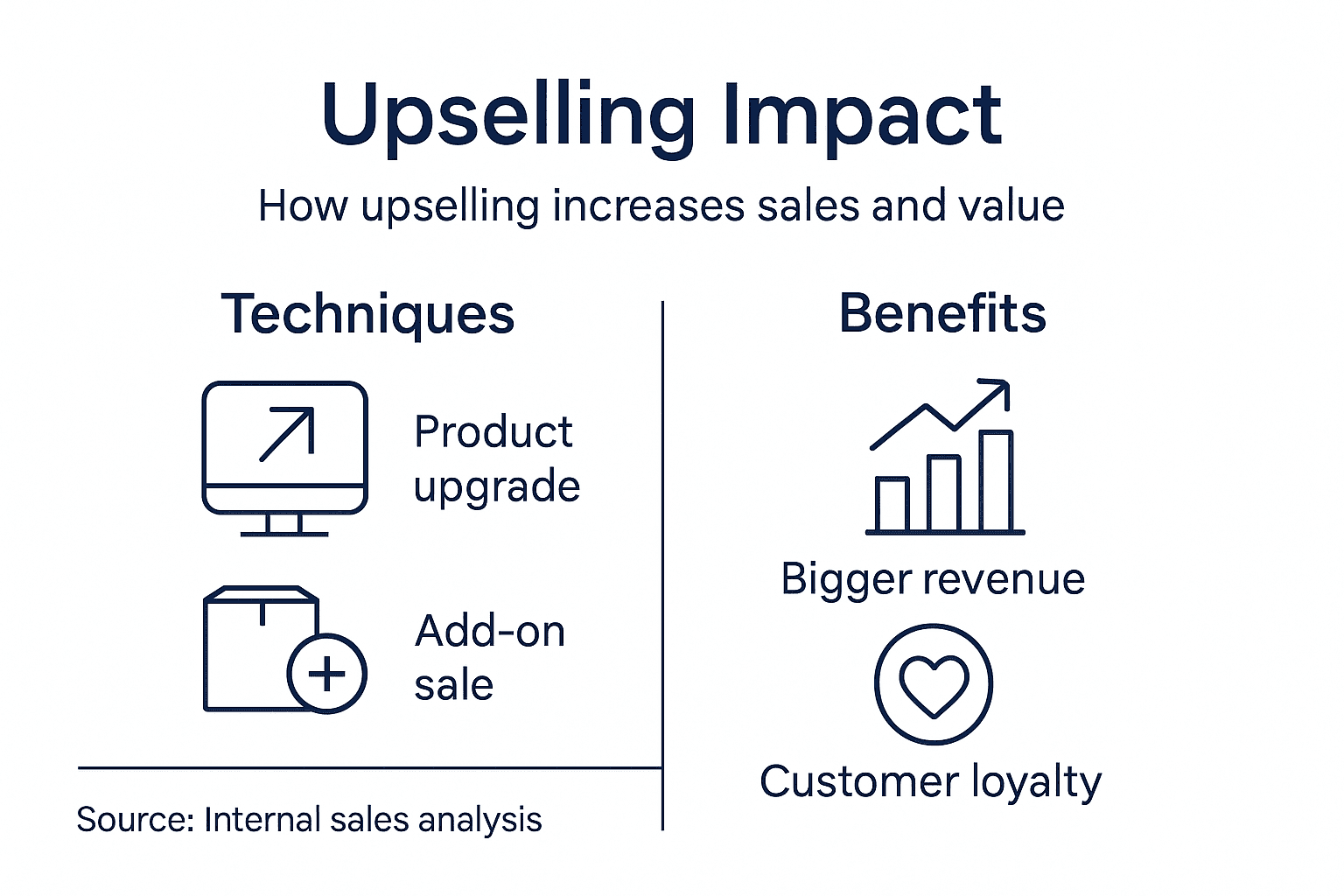
Avoidance strategies for upselling risks:
This comparison highlights approaches for avoiding common upselling pitfalls:
| Challenge | Recommended Approach | Outcomes |
|---|---|---|
| Irrelevant offers | Personalised recommendations | Higher customer satisfaction |
| Mistimed suggestions | Use detailed profiling | Improved conversion rates |
| Pushy behaviour | Adopt consultative methods | Enhanced trust and loyalty |
| Neglected needs | Active listening and feedback | Stronger relationships |
- Conduct thorough customer needs assessment
- Personalise recommendations based on individual preferences
- Create clear value propositions for each upgrade
- Train sales teams in consultative selling techniques
- Develop robust feedback mechanisms
Effective upselling balances organisational revenue goals with genuine customer benefit – never sacrifice relationship quality for short-term gains.
Strategic risk management in upselling requires emotional intelligence, deep product knowledge, and an unwavering commitment to customer-centric solutions.
Pro tip: Implement a strict “customer value first” protocol that mandates sales teams validate the genuine benefit of any proposed upsell before making a recommendation.
Unlock Your Sales Growth Potential with Strategic Upselling
Understanding upselling as more than just a sales tactic is critical to transforming your customer relationships and boosting revenue. This article highlights key challenges such as avoiding pushy behaviour and ensuring personalised recommendations that truly benefit your customers. If your sales team struggles with timing and tailoring upsell offers to meet specific client needs right now is the time to act.
Discover how our bespoke 1:1 coaching combined with expert training can empower your team to master consultative upselling and consistently hit target every quarter. Explore transformative sales strategies with our Sales Strategy Archives – Ahead of Sales and elevate your approach by accessing proven playbooks from the Sales Playbook Archives – Ahead of Sales. Ready to achieve at least 50 percent sales growth this year visit us at Ahead of Sales and take the first step towards turning upselling into a powerful growth engine.
Frequently Asked Questions
What is upselling in sales?
Upselling is a strategic sales technique aimed at encouraging customers to purchase higher-end or enhanced versions of the products they initially considered. It focuses on providing additional value to the customer rather than just increasing sales revenue.
How does upselling benefit sales teams?
Upselling can help sales teams achieve quota targets faster, enhance customer relationships, and increase transaction values, leading to improved customer retention rates and overall sales performance.
What are the common types of upselling techniques?
Common upselling techniques include product upgrades, add-on sales, extended warranty offers, premium service packages, and bundle deals, each tailored to enhance customer experience and meet their specific needs.
What are the risks associated with upselling?
Risks of upselling include being perceived as pushy, offering irrelevant upgrades, mistiming suggestions, and neglecting genuine customer needs. It’s crucial to approach upselling with care to maintain customer trust and satisfaction.