
Every quarter, pressure mounts as ambitious targets loom for sales leaders across the United Kingdom. Success rarely comes from one-off training sessions or relying on so-called ‘natural talent’. Instead, lasting results are driven by a dynamic, ongoing process of sales readiness that transforms product knowledge and resources into practical sales skills. This guide highlights myths holding teams back and outlines actionable strategies for building competence, agility, and confidence across every buyer interaction.
Table of Contents
- Sales Readiness Defined And Common Myths
- Types Of Sales Readiness For Teams
- Key Elements And Practical Processes
- Sales Readiness Versus Sales Enablement
- Critical Pitfalls And How To Avoid Them
Key Takeaways
| Point | Details |
|---|---|
| Sales Readiness is Ongoing | It requires continuous investment in training and development rather than being a one-time event during onboarding. |
| Understand Types of Readiness | Familiarise your sales team with foundational, situational, product, and competitive readiness to enhance their effectiveness. |
| Distinguish Sales Readiness from Sales Enablement | Recognise that sales readiness focuses on practical skills application, while enablement provides the necessary resources and tools. |
| Mitigate Common Pitfalls | Avoid inconsistent training and lack of coaching by implementing personalised learning paths and regular performance tracking. |
Sales readiness defined and common myths
Sales readiness represents the comprehensive preparation of sales teams to engage effectively with potential buyers. It goes far beyond basic training, encompassing a strategic approach to equipping sales representatives with the knowledge, skills, and resources necessary to drive meaningful customer conversations and achieve consistent revenue targets.
At its core, sales readiness involves several critical components:
- Continuous learning and skill development
- Access to up-to-date product and market information
- Ongoing coaching and performance support
- Consistent certification and competency validation
- Ability to adapt communication strategies to diverse buyer personas
Many organisations mistakenly believe that sales readiness is a one-time event, typically confined to initial onboarding. However, preparing sales teams requires continuous investment in developing their capabilities and keeping them agile in a rapidly changing business landscape.
Common Myths About Sales Readiness
Several persistent misconceptions can undermine an organisation’s sales performance:
- Myth: Sales talent is purely innate
- Myth: Initial training is sufficient for long-term success
- Myth: Top performers don’t need ongoing development
- Myth: Sales readiness is solely the responsibility of the sales training department
These myths can create significant barriers to building a high-performing sales team. In reality, sales readiness is a dynamic, multifaceted process that requires commitment from leadership, continuous learning infrastructure, and a culture of professional growth.
Pro tip: Implement quarterly skills assessments and personalised development plans to maintain and enhance your team’s sales readiness continually.
Types of sales readiness for teams
Sales readiness is not a monolithic concept but a multifaceted approach to developing sales team capabilities. Four critical types of sales readiness enable organisations to build comprehensive, adaptable sales teams capable of navigating complex buyer landscapes.
Primary Sales Readiness Types:
- Foundational Readiness: Initial onboarding and skills ramp-up for new sales representatives
- Situational Readiness: Preparing teams for specific sales scenarios and buyer interactions
- Product Readiness: Deep understanding of product features, benefits, and value propositions
- Competitive Readiness: Comprehensive knowledge of market dynamics and competitor positioning
Foundational readiness represents the initial training phase where new sales representatives develop core skills and understanding of the organisation’s sales methodology. This type of readiness focuses on building baseline competencies, introducing core sales processes, and providing new team members with essential tools and resources.

Situational readiness takes training to a more nuanced level, equipping sales representatives with adaptive skills to handle diverse buyer personas, complex sales scenarios, and industry-specific challenges. This approach recognises that successful selling requires flexibility and contextual intelligence beyond standard scripted interactions.
Competitive and Product Readiness Dimensions
Product readiness ensures that sales teams possess in-depth knowledge about the organisation’s offerings. This goes beyond basic feature descriptions, encompassing:
- Comprehensive product understanding
- Value proposition articulation
- Technical capability explanations
- Alignment with customer pain points
Competitive readiness involves developing a sophisticated understanding of the market landscape, enabling sales representatives to position their solutions effectively against alternative options. This type of readiness requires continuous learning and market intelligence gathering.
Pro tip: Create a dynamic learning ecosystem that supports ongoing skill development across all four readiness dimensions, ensuring your sales team remains adaptable and high-performing.
Key elements and practical processes
Sales readiness demands a comprehensive approach that integrates multiple strategic elements to drive consistent performance. Practical processes for sales readiness require a systematic framework that supports continuous learning and skill development.
Core Elements of Sales Readiness:
- Structured onboarding programmes
- Continuous skills training
- Performance tracking and assessment
- Regular coaching interventions
- Adaptive learning technologies
- Real-time market intelligence updates
The foundational elements of sales readiness begin with a robust onboarding process that goes beyond traditional orientation. This involves creating a comprehensive introduction to the organisation’s sales methodology, product knowledge, and customer engagement strategies. New representatives must quickly transition from theoretical understanding to practical application.
Continuous learning, often referred to as ‘everboarding’, represents a critical dimension of sales readiness. This approach recognises that sales skills require constant refinement and adaptation. Practical processes include:
- Regular skills assessment
- Interactive role-play scenarios
- Personalised coaching sessions
- Performance metrics tracking
- Knowledge retention evaluations
Measurement and Accountability
Tracking sales readiness effectiveness requires sophisticated metrics that go beyond traditional performance indicators. Key measurements include time to first deal, skill proficiency levels, knowledge retention rates, and the ability to articulate value propositions effectively.
Effective sales readiness is not about creating perfect representatives, but developing adaptable professionals who can navigate complex buyer landscapes.
Managerial involvement plays a crucial role in embedding sales readiness processes. Leaders must actively participate in coaching, provide constructive feedback, and create an environment that supports continuous learning and professional development.
Pro tip: Implement a quarterly skills audit and personalised development plan to ensure your sales team remains agile and consistently high-performing.
Sales readiness versus sales enablement
Sales enablement and sales readiness are often misunderstood as interchangeable concepts, yet they represent distinctly different approaches to supporting sales team performance. Key distinctions between these strategies reveal their unique roles in driving organisational sales effectiveness.
Core Differences:
- Sales Enablement: Provides infrastructure and resources
- Sales Readiness: Focuses on skill application and practical competence
- Enablement: Delivers tools and content
- Readiness: Ensures effective utilisation of those tools
Sales enablement primarily functions as an organisational support system, equipping sales teams with essential resources such as:
- Comprehensive product documentation
- Customer relationship management tools
- Sales collateral and marketing materials
- Performance tracking software
- Market research insights
In contrast, sales readiness is a dynamic, ongoing process of preparing sales representatives to leverage these resources effectively. It goes beyond simply providing information, concentrating instead on developing the skills, confidence, and adaptability needed to navigate complex sales environments.
Sales readiness transforms static resources into powerful, actionable strategies through continuous learning and practical skill development.
The critical distinction lies in practical application. While sales enablement creates the foundational infrastructure, sales readiness ensures that representatives can seamlessly integrate these tools into their customer interactions, adapting their approach to diverse buyer scenarios and market challenges.
The following table highlights the differences between sales readiness and sales enablement, summarising their unique contributions to sales performance:
| Aspect | Sales Enablement | Sales Readiness | Impact on Sales Teams |
|---|---|---|---|
| Main Focus | Infrastructure and resources | Skill development and application | Maximises use of provided tools |
| Process Nature | Static and resource-oriented | Ongoing and adaptive | Fosters continuous improvement |
| Measurement | Resource adoption rates | Skill proficiency and adaptability | Drives consistent results |
| Leadership Role | Resource provider | Active coach and mentor | Supports professional growth |
Practical Implications
Enablement provides the ‘what’, whereas readiness focuses on the ‘how’. This means sales readiness involves:
- Continuous skills assessment
- Situational training scenarios
- Performance coaching
- Adaptive learning programmes
- Ongoing certification processes
Pro tip: Develop an integrated approach that combines robust enablement resources with targeted readiness training to maximise your sales team’s potential.
Critical pitfalls and how to avoid them
Sales readiness demands a strategic approach that anticipates and mitigates potential challenges before they derail team performance. Sales team development strategies require careful navigation of complex organisational dynamics.
Common Sales Readiness Pitfalls:
- Inconsistent training methodologies
- Lack of personalised skill development
- Insufficient performance tracking
- Neglecting continuous learning
- Minimal managerial coaching support
- Overlooking individual learning styles
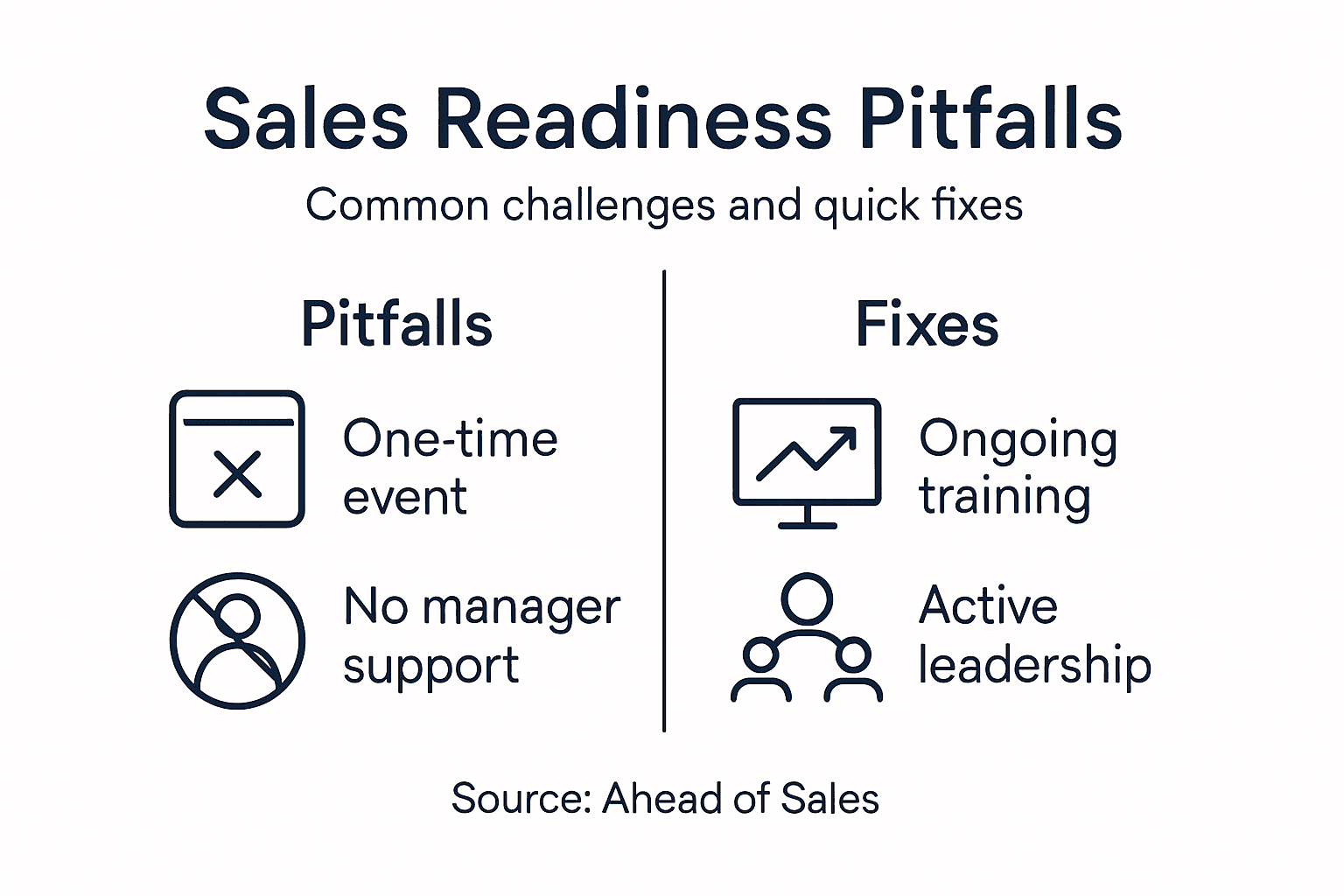
One of the most significant challenges organisations encounter is treating sales readiness as a one-time event rather than an ongoing process. Many businesses invest heavily in initial training programmes but fail to maintain momentum through consistent skill reinforcement and adaptive learning strategies.
Root Causes of Ineffective Sales Readiness
Understanding the underlying factors that compromise sales team development is crucial:
- Rigid, standardised training approaches
- Absence of personalised learning paths
- Limited performance feedback mechanisms
- Insufficient technology integration
- Weak accountability frameworks
Successful sales readiness requires a dynamic, flexible approach that adapts to individual learning needs and organisational evolution.
Managerial commitment plays a pivotal role in overcoming these challenges. Leaders must transition from traditional oversight to active coaching, creating an environment that supports continuous professional development and skill enhancement.
Below is a summary of frequent sales readiness pitfalls and their potential impacts on team effectiveness:
| Pitfall | Underlying Issue | Possible Consequence |
|---|---|---|
| Inconsistent training | No standardised approach | Irregular skill development |
| Neglecting ongoing learning | One-off training focus | Reduced adaptability |
| Minimal coaching support | Weak managerial involvement | Lack of improvement feedback |
| Overlooking learning styles | Rigid training design | Lower engagement and retention |
Strategic Mitigation Approaches
Effective sales readiness programmes should implement:
- Personalised skill assessment tools
- Adaptive learning technologies
- Regular performance coaching
- Comprehensive skills tracking systems
- Flexible learning methodologies
Pro tip: Design a robust feedback loop that continuously evaluates and adjusts your sales readiness strategy, ensuring alignment with evolving business objectives and individual team member capabilities.
Unlock Consistent Sales Success with Targeted Readiness Solutions
Struggling to drive consistent target achievement because sales readiness efforts feel one-off or ineffective The article highlights the need for continuous skill development, personalised coaching and adaptive learning to combat common readiness myths and pitfalls. If your sales team lacks the confidence to truly apply enablement resources or struggles with situational and competitive readiness it is time to transform those gaps into strengths.
Discover how our bespoke 1:1 coaching combined with proven sales strategy frameworks can fast-track your team’s ability to engage buyers effectively and hit targets every quarter. We specialise in creating tailored development plans that evolve with your business needs ensuring ongoing growth and a strong competitive edge.

Explore how our Sales Strategy Archives – Ahead of Sales complements deep skill-building and expert consultancy. Take control of your sales readiness journey today by visiting Ahead of Sales. Your pathway to sustained sales growth and consistent quota success begins here. Don’t wait until the next quarter to get serious about sales readiness.
Frequently Asked Questions
What is sales readiness?
Sales readiness refers to the comprehensive preparation of sales teams to effectively engage with potential buyers, ensuring they have the necessary knowledge, skills, and resources to drive successful customer conversations and meet revenue targets.
How does sales readiness differ from sales enablement?
Sales enablement focuses on providing the infrastructure and resources necessary for sales teams, while sales readiness emphasises the practical application of skills and the ongoing development required to leverage those resources effectively in diverse buyer scenarios.
What are the critical components of a successful sales readiness programme?
A successful sales readiness programme includes structured onboarding, continuous skills training, performance tracking, regular coaching, adaptive learning technologies, and real-time market intelligence updates to maintain and enhance sales team capabilities.
Why is ongoing development important for sales teams?
Ongoing development is crucial because it allows sales teams to continuously refine their skills, adapt to changing market dynamics, and enhance their ability to navigate complex buyer landscapes, ultimately leading to improved sales performance.
Recommended
- 7 Essential Sales Leadership Tips for Fast Growth – Ahead of Sales
- Sales Effectiveness: Boosting Revenue and Team Success
- Why Consistent Sales Training Drives Sustained Growth
- Sales Team Effectiveness Explained: Key Drivers and Strategies – Ahead of Sales
- Selling AI Projects Internally Persuasion Strategies for Engineers
- The Ultimate No BS Marketing Guide for 2026 Success – Aim Set Win
- How to Start Private Label: Build Your Own Brand Today – Spaceman