
Over 60 percent of all sales conversations in british markets end without any follow up, leaving valuable relationships untapped. In a competitive environment where most buyers face endless choices, building trust after the first contact is more important than ever. Understanding what truly makes follow up effective helps sales professionals turn a simple transaction into a loyal partnership, increasing satisfaction and opening the door to future success.
Table of Contents
- Defining Follow Up In Sales Processes
- Common Types And Strategies Of Follow Up
- Key Benefits For Sales Success
- Best Practices For Effective Follow Up
- Risks, Mistakes, And How To Avoid Them
Key Takeaways
| Point | Details |
|---|---|
| Importance of Follow-Up | Following up is crucial for maintaining customer relationships and ensuring satisfaction beyond the initial sale. |
| Effective Strategies | Utilising the 24-48-7 rule and personalising communication channels enhances customer engagement. |
| Benefits of Commitment | Consistent follow-up leads to increased customer retention, sales opportunities, and building trust. |
| Risks to Avoid | Over-communication and generic messaging can damage customer relationships; personalisation is essential. |
Defining Follow Up in Sales Processes
Follow up is the strategic, systematic process of maintaining communication and engagement with potential and existing customers after an initial sales interaction. According to Pressbooks, follow-up encompasses all activities that occur after closing a sale, including finalizing paperwork, scheduling delivery, and maintaining ongoing customer relationships.
At its core, follow up represents a deliberate approach to nurturing relationships beyond the initial transaction. This means proactively reaching out to customers, understanding their evolving needs, and demonstrating ongoing commitment to their success. As Biz Libretexts explains, effective follow-up is essential for customer satisfaction and can lead to repeat business and referrals.
The follow-up process typically involves several critical elements:
- Timely communication after initial sale
- Confirming customer satisfaction
- Addressing potential concerns or questions
- Exploring additional value-added services
- Creating opportunities for future engagement
Ultimately, follow up transforms a single sales transaction into a comprehensive relationship-building strategy that can significantly impact long-term business growth and customer loyalty.
Common Types and Strategies of Follow Up
Sales professionals employ diverse follow-up strategies to maintain customer engagement and drive long-term business relationships. According to BCom Institute, an effective approach is the 24-48-7 rule, which strategically structures customer communication across different timeframes: 24 hours for a thank-you message, 48 hours to address immediate questions, and 7 days to ensure overall satisfaction.
Multiple communication channels play a crucial role in modern follow-up strategies. These include phone calls, personalised emails, text messages, social media interactions, and even direct mail. The key is to match the communication method to individual customer preferences, ensuring that your outreach feels personal and considerate rather than intrusive.
Key follow-up strategies can be categorised into several strategic approaches:
- Proactive Communication: Reaching out before the customer initiates contact
- Satisfaction Check-ins: Systematic reviews of customer experience
- Value-Added Touchpoints: Sharing relevant insights, industry updates, or helpful resources
- Performance Tracking: Monitoring customer engagement and response rates
- Personalised Relationship Management: Tailoring interactions based on individual customer history
Successful follow-up isn’t about frequency, but about providing genuine value and demonstrating a commitment to solving customer challenges.
 By implementing a thoughtful, multi-channel approach, sales professionals can transform routine communication into meaningful relationship-building opportunities.
Key Benefits for Sales Success
Follow-up strategies are pivotal in transforming sales interactions from transactional exchanges to meaningful, long-term relationships. According to Pressbooks, effective follow-up solidifies customer relationships, leading to increased satisfaction, repeat business, and valuable referrals by demonstrating commitment beyond the initial sale.
The strategic implementation of follow-up processes yields multiple critical advantages for sales professionals. As BCom Institute explains, consistent follow-up not only enhances customer satisfaction but also creates significant opportunities for business growth through cross-selling and upselling initiatives.
Key benefits of robust follow-up strategies include:
- Enhanced Customer Retention: Building lasting relationships that reduce customer churn
- Increased Sales Opportunities: Identifying and leveraging additional revenue streams
- Competitive Differentiation: Establishing a reputation for exceptional customer care
- Improved Customer Insights: Gathering valuable feedback and understanding evolving customer needs
- Trust and Credibility Building: Demonstrating genuine commitment to customer success
For sales acceleration strategies that drive rapid growth, implementing a systematic and personalised follow-up approach is not just recommended—it’s essential. By prioritising meaningful post-sale engagement, sales professionals can transform occasional transactions into enduring, profitable partnerships.
Best Practices for Effective Follow Up
Successful follow-up requires a strategic and nuanced approach that goes beyond simple communication. According to BCom Institute, the most effective follow-up practices include adhering to the 24-48-7 rule, which provides a structured timeline for engaging with customers across different interaction points.
The cornerstone of exceptional follow-up lies in personalisation and multi-channel communication. This means tailoring your approach to individual customer preferences, using a mix of communication methods such as email, phone calls, text messages, and social media interactions. By diversifying your communication channels, you demonstrate flexibility and a genuine commitment to meeting customers where they are most comfortable.
Key best practices for effective follow-up include:
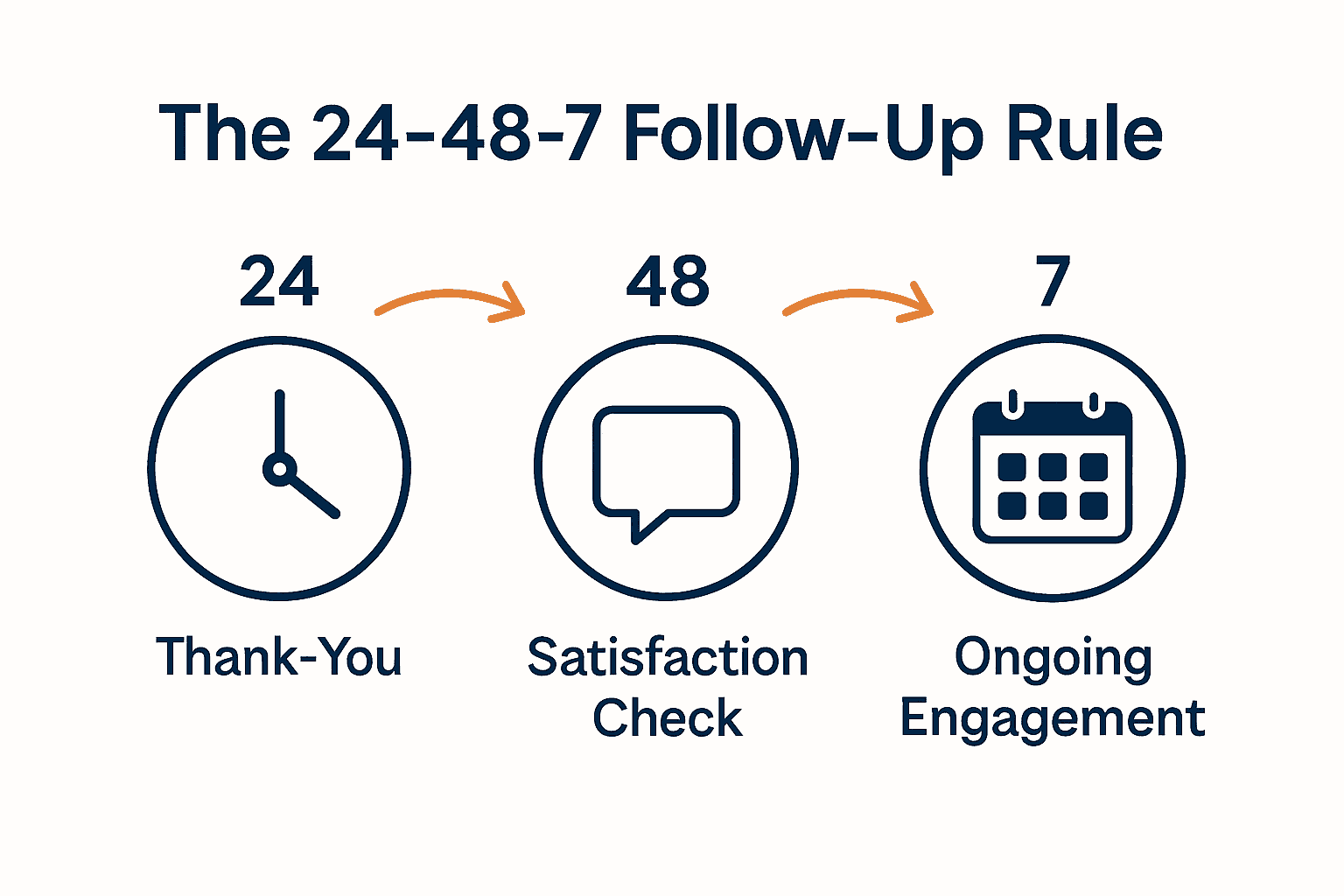
- Timely Responsiveness: Implementing the 24-48-7 communication framework
- Personalisation: Customising interactions based on individual customer history
- Multichannel Approach: Utilising diverse communication platforms
- Value-Driven Interactions: Sharing relevant insights and solutions
- Consistent Documentation: Tracking and analysing follow-up interactions
To further enhance your sales approach, consider exploring our sales team training topics essential for growth. Mastering these follow-up best practices transforms routine communication into strategic relationship-building opportunities that drive long-term business success.
Risks, Mistakes, and How to Avoid Them
Navigating the complex landscape of sales follow-up requires a strategic approach to avoid potential pitfalls that can damage customer relationships. According to BCom Institute, common follow-up mistakes often stem from being overly aggressive or failing to personalize communications, which can quickly alienate potential customers.
The most critical risks in follow-up strategies involve communication imbalance. This means striking a delicate balance between persistent engagement and respecting customer boundaries. Neglecting to address customer concerns promptly or bombarding clients with generic, impersonal messages can irreparably harm trust and potentially lose valuable sales opportunities.
Key risks and mitigation strategies include:
- Over-Communication: Avoid excessive contact that feels intrusive
- Generic Messaging: Personalise every interaction to demonstrate genuine understanding
- Delayed Responses: Implement rapid response protocols for customer inquiries
- Inconsistent Follow-Up: Create systematic tracking for communication cadence
- Neglecting Customer Feedback: Actively listen and adapt to customer insights
To develop a more sophisticated approach to sales interactions, explore our sales team training topics essential for growth. By understanding and mitigating these common risks, sales professionals can transform potential communication pitfalls into opportunities for building stronger, more meaningful customer relationships.
Transform Your Follow-Up into a Growth Engine for Your Sales Team
The challenge of mastering effective follow-up calls for strategic actions that go beyond simple communication. This article highlights common pain points such as inconsistent follow-up, generic outreach, and missed opportunities to deepen customer relationships. If you want to embed proactive communication and personalised interaction into your sales process you need more than just theory. You need a tailored approach that drives real customer engagement and boosts sales performance every quarter.
At Ahead of Sales, we specialise in turning these follow-up challenges into measurable business growth using bespoke 1-on-1 coaching combined with proven sales training and consultancy. By adopting best practices like the 24-48-7 communication framework and diversified multi-channel outreach, your team can increase customer retention and identify fresh revenue streams. Explore our Sales Strategy Archives – Ahead of Sales to discover how a focused follow-up strategy fits into a broader sales playbook.
Make the move from occasional touches to consistent, value-driven relationships. Visit Ahead of Sales now to see how our tailored training, including expert guidance on follow-up techniques from the Sales Playbook Archives – Ahead of Sales, can ensure your sales team hits every target. Act now and transform follow-up from a routine task into your most powerful tool for sales growth.
Frequently Asked Questions
What is follow up in sales?
Follow up in sales refers to the systematic process of maintaining communication with potential and existing customers after their initial interaction, aimed at nurturing relationships and ensuring customer satisfaction.
Why is follow up important for customer relationships?
Effective follow up is crucial as it fosters customer satisfaction, encourages repeat business, and can lead to valuable referrals by demonstrating ongoing commitment to the customer’s needs.
What are some effective follow up strategies?
Successful follow up strategies include timely communication, personalised interactions, satisfaction check-ins, and value-added touchpoints, leveraging diverse channels like emails, phone calls, and social media.
How can mistakes in follow up be avoided?
To avoid follow up mistakes, maintain a balance in communication frequency, personalise messages, respond promptly to inquiries, and actively listen to customer feedback to adjust your approach accordingly.