
More than 90 percent of top-performing sales teams invest heavily in continuous training to stay ahead of the competition. As customer expectations evolve and markets grow more complex, generic pitches fall flat fast. Smart companies realise that expert sales training turns average sellers into trusted advisors who win business by solving real problems. This article breaks down what sales training truly means, what it achieves, and how it powers lasting business growth.
Table of Contents
- Defining Sales Training And Its Core Purpose
- Types Of Sales Training And Delivery Models
- How Effective Sales Training Drives Growth
- Measuring Success: Kpis And Business Impact
- Common Sales Training Mistakes To Avoid
- Comparing Sales Training With Other Growth Levers
Key Takeaways
| Point | Details |
|---|---|
| Core Purpose of Sales Training | Sales training enhances professionals’ abilities to communicate effectively, understand client needs, and implement solutions that drive revenue growth. |
| Variety of Delivery Models | Adopting a blend of training methods—like instructor-led, e-learning, and simulations—ensures that diverse learning styles are accommodated. |
| Impact on Business Growth | Treating sales training as an ongoing investment rather than a one-time event fosters adaptability and equips teams to achieve sustainable growth. |
| Common Mistakes to Avoid | Personalising training and incorporating real-world applications are crucial to overcoming pitfalls that hinder effective skill development. |
Defining Sales Training and Its Core Purpose
Sales training transforms ordinary sales representatives into exceptional revenue generators. It’s a strategic process designed to equip professionals with the skills, knowledge, and techniques necessary to effectively communicate value, understand customer needs, and close more deals.
According to Wikipedia, solution selling represents a critical methodology where sales training focuses on teaching professionals to act as consultants who identify and address specific customer problems. This approach shifts the traditional sales paradigm from simply pushing products to providing tailored solutions that genuinely solve client challenges.
The core purpose of sales training extends far beyond basic product knowledge. It encompasses several key objectives:
- Developing communication skills that enable meaningful customer interactions
- Teaching psychological techniques for understanding buyer motivations
- Building strategic problem-solving capabilities
- Enhancing emotional intelligence in sales conversations
- Creating consistent sales methodologies across team members
Professional sales training bridges the gap between raw potential and peak performance. How Sales Training Works: Complete Step-by-Step Guide can provide additional insights into implementing these transformative learning strategies within your organisation.
Ultimately, effective sales training is not about memorising scripts or pushing products. It’s about developing adaptable professionals who can navigate complex customer landscapes, build genuine relationships, and drive sustainable business growth through strategic, empathetic selling approaches.
Types of Sales Training and Delivery Models
Sales training has evolved far beyond traditional classroom settings, offering multiple dynamic approaches to skill development. Delivery models now range from immersive in-person experiences to cutting-edge digital platforms, ensuring flexibility and accessibility for modern sales professionals.
According to Training Industry, sales training can be delivered through seven primary modalities: instructor-led training, virtual instructor-led training, e-learning, mobile and email learning, simulations, gamification, and the innovative flipped classroom model. Each approach offers unique advantages tailored to different learning styles and organisational needs.
Key delivery models include:
- Instructor-Led Training (ILT): Traditional classroom-based learning with direct interaction
- Virtual Instructor-Led Training: Remote sessions using video conferencing technologies
- E-Learning Platforms: Self-paced online modules accessible anytime
- Simulation-Based Training: Realistic scenario practice environments
- Gamified Learning: Interactive experiences that make training engaging
- Microlearning: Short, focused learning segments delivered via mobile platforms
For comprehensive insights into implementing effective training strategies, Effective Sales Training Methods for Rapid Growth provides an in-depth exploration of modern training approaches.
The most successful organisations blend multiple delivery models, recognising that no single approach suits every learner or sales context. By creating a holistic, adaptable training ecosystem, businesses can ensure their sales teams remain agile, motivated, and continuously improving.

How Effective Sales Training Drives Growth
Sales training is not just an expense—it’s a strategic investment that directly impacts an organisation’s bottom line and competitive positioning. By systematically developing sales team capabilities, businesses can transform their revenue generation potential and create sustainable growth mechanisms.
Cutting-edge research from arXiv highlights how innovative training approaches like virtual reality (VR) simulations can dramatically enhance sales professionals’ interpersonal and negotiation skills. These immersive training environments provide realistic scenarios that prepare sales teams to handle complex customer interactions with unprecedented precision and confidence.
Key growth drivers through effective sales training include:
- Skill Refinement: Continuous learning that sharpens negotiation and communication techniques
- Performance Consistency: Creating standardised approaches across sales teams
- Adaptability: Equipping teams to navigate changing market dynamics
- Customer Understanding: Developing deeper insights into client needs and motivations
- Confidence Building: Reducing sales team anxiety and improving psychological resilience
To explore deeper strategies for accelerating sales performance, 7 Proven Sales Acceleration Strategies for Rapid Growth provides comprehensive insights into transforming sales team potential.
Ultimately, organisations that view sales training as a continuous improvement process rather than a one-time event are more likely to see substantial, sustainable growth. By investing in their people’s development, companies create a powerful competitive advantage that translates directly into increased revenue, customer satisfaction, and long-term business success.
Measuring Success: KPIs and Business Impact
Sales training effectiveness cannot be measured through intuition alone. Modern organisations require robust, data-driven approaches to quantify the tangible impact of their investment in sales skill development and team performance.
Research from arXiv underscores the critical importance of advanced forecasting methods, demonstrating how sophisticated performance metrics can transform sales prediction accuracy and drive strategic decision-making. By implementing comprehensive key performance indicators (KPIs), businesses can create a nuanced understanding of their sales training’s true value.
Critical KPIs for measuring sales training success include:
- Revenue Growth: Direct financial impact of training investments
- Conversion Rates: Percentage increase in successful sales interactions
- Sales Cycle Length: Reduction in time required to close deals
- Customer Acquisition Cost: Efficiency improvements in sales processes
- Win Rates: Percentage of opportunities successfully converted
- Average Deal Size: Incremental increases in transaction values
For deeper insights into tracking sales team performance, Sales Team Performance Explained: Maximizing Growth Results offers comprehensive strategies for translating training investments into measurable outcomes.
Ultimately, successful sales training measurement goes beyond simple numerical tracking. It requires a holistic approach that connects individual skill development with broader organisational performance, creating a continuous feedback loop that drives sustained growth and competitive advantage.
Common Sales Training Mistakes to Avoid
Sales training can quickly become ineffective when organisations fall into predictable traps that undermine learning potential. Understanding these common pitfalls is crucial for creating meaningful, transformative training experiences that genuinely enhance sales team performance.
According to Ringover, one of the most significant mistakes organisations make is failing to personalise training approaches and neglecting practical application exercises. Generic, one-size-fits-all training programs rarely produce meaningful behavioural change or skill development.
Critical mistakes to avoid in sales training include:
- Lack of Personalisation: Treating all sales professionals identically
- Theoretical Overload: Focusing on classroom learning without real-world context
- Inconsistent Follow-up: Failing to reinforce training concepts post-workshop
- Neglecting Individual Learning Styles: Using uniform training methodologies
- Insufficient Performance Tracking: Not measuring training effectiveness
- Overlooking Soft Skills: Concentrating solely on technical sales techniques
To develop a comprehensive approach to avoiding these pitfalls, 7 Essential Steps for a Winning Sales Training Checklist provides strategic insights into creating robust, effective training programs.
Successful sales training requires a dynamic, adaptive approach that recognises each sales professional’s unique strengths, challenges, and learning preferences. By avoiding these common mistakes, organisations can create transformative learning experiences that genuinely elevate team performance and drive sustainable business growth.
Comparing Sales Training With Other Growth Levers
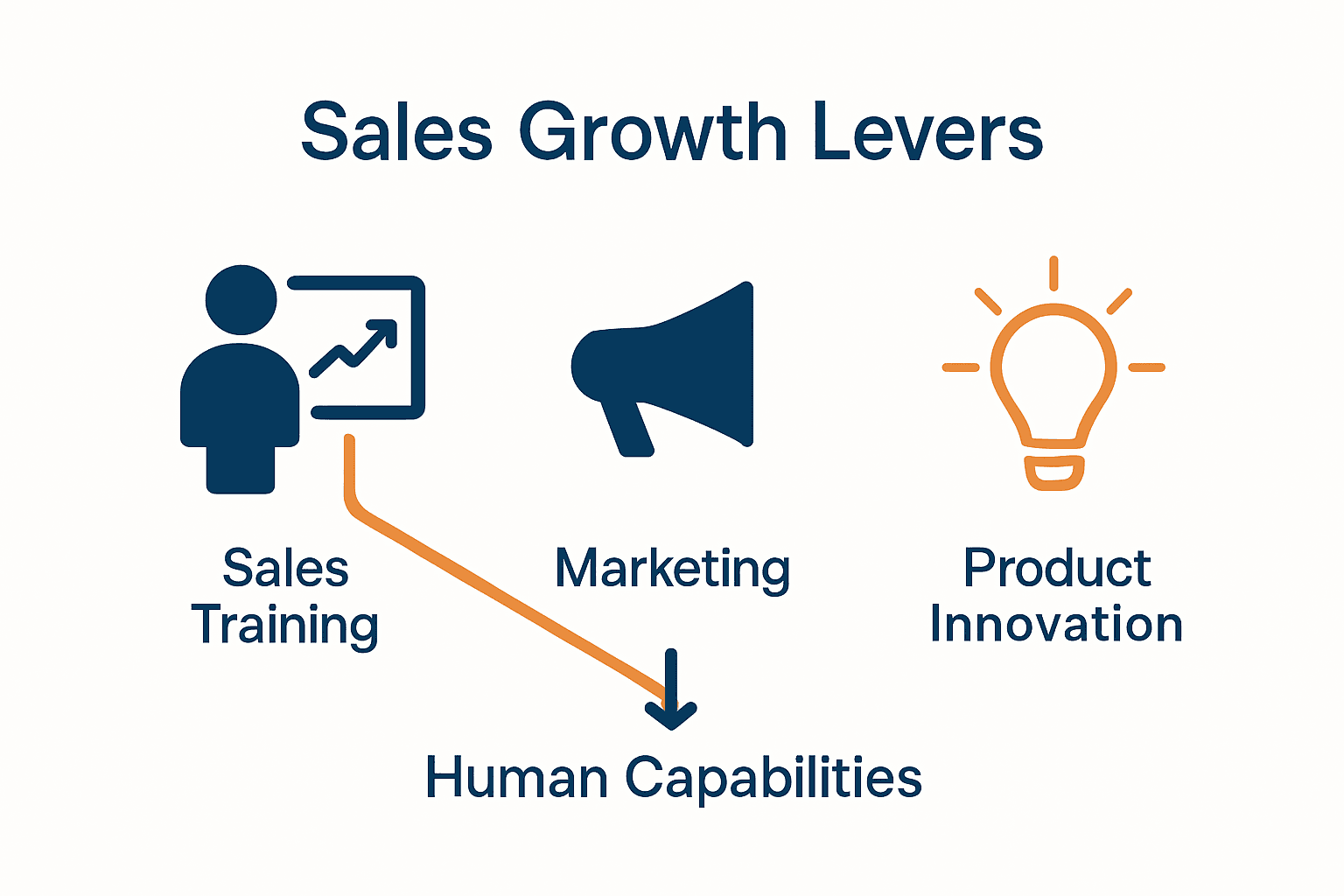
Growth strategies are complex ecosystems where multiple levers interact and influence business performance. While marketing, product innovation, and technology investments are crucial, sales training emerges as a uniquely powerful mechanism for driving sustainable organisational growth.
The Bass diffusion model provides a compelling framework for understanding how different growth strategies interact and propagate through business ecosystems. Unlike static marketing approaches or technological interventions, sales training directly enhances human capital, creating a multiplier effect that transforms individual and collective performance capabilities.
Key comparative insights for growth levers include:
- Sales Training: Directly impacts human performance and adaptability
- Marketing: Generates initial customer awareness and interest
- Product Innovation: Creates competitive differentiation
- Technology Investment: Enables efficiency and scalability
- Customer Experience: Drives retention and brand loyalty
- Strategic Partnerships: Expands market reach and credibility
For comprehensive insights into developing a holistic growth strategy, Complete Guide to the Role of Ongoing Sales Training offers strategic perspectives on integrating sales training with broader organisational development objectives.
Ultimately, sales training stands out as a dynamic growth lever because it doesn’t just modify external conditions—it transforms the internal capabilities of the most critical asset in any business: its people. By investing in continuous skill development, organisations create a sustainable competitive advantage that transcends traditional growth strategies.
Unlock Sustainable Sales Growth with Bespoke Training Solutions
If you have recognised the challenges of maintaining consistent sales performance despite changing markets and buyer behaviours then our tailored sales training approach is designed precisely for you. We understand the frustration of generic programmes that overlook individual learning styles and the need for practical application to build confidence and real-world skills. Our proven methods integrate personalised 1:1 coaching with strategic consultancy and traditional training to help your sales team hit targets every quarter while driving at least 50 percent annual sales growth.
Ready to stop wasting time on ineffective sales training? Visit Ahead of Sales now to explore how bespoke coaching packages can transform your team into adaptable, confident professionals who consistently close deals. Whether you are a business with 50 to 1000 staff or a solo service provider aiming to accelerate sales, our solutions provide the essential skills and methodologies to overcome common pitfalls and fuel your growth journey. Take the next step today with Effective Sales Training Methods for Rapid Growth to understand the best training models and see immediate results.
Frequently Asked Questions
What is the purpose of sales training?
Sales training aims to equip sales representatives with the skills, knowledge, and techniques needed to effectively communicate value, understand customer needs, and close more deals, transforming them into exceptional revenue generators.
What are the different types of sales training delivery models?
Sales training delivery models include instructor-led training, virtual instructor-led training, e-learning, simulation-based training, gamified learning, and microlearning, each catering to different learning styles and organizational needs.
How does effective sales training drive business growth?
Effective sales training drives business growth by refining skills, ensuring performance consistency, improving adaptability, enhancing customer understanding, and building confidence within sales teams, leading to increased revenue and customer satisfaction.
What key performance indicators (KPIs) should be used to measure sales training success?
Key performance indicators for measuring sales training success include revenue growth, conversion rates, sales cycle length, customer acquisition cost, win rates, and average deal size, which collectively assess the impact of training on sales performance.
Recommended
- How Sales Training Works: Complete Step-by-Step Guide – Ahead of Sales
- 7 Essential Steps for a Winning Sales Training Checklist – Ahead of Sales
- Complete Guide to the Role of Ongoing Sales Training – Ahead of Sales
- 7 Essential Sales Team Training Topics for Growth – Ahead of Sales
- Master Staff Training Best Practices for Success | Colossus Systems
- What Is Organizational Growth? Complete Overview | Colossus Systems