
Trying to meet sales targets can feel like a constant struggle when every customer expects to be treated as an individual. It is easy to fall behind if your approach relies on outdated tactics or generic outreach. What sets high-performing sales teams apart is the ability to use data, technology, and insight to understand and anticipate what customers truly want.
This list will give you practical methods to personalise your sales process, improve customer relationships, and make smarter use of your resources. You will discover clear steps that help you engage your customers, make better decisions using real insights, and unlock hidden opportunities at every stage of the sales journey. Get ready to find out how you can take your sales strategy to a new level with actionable ideas that actually work.
Table of Contents
- 1. Build Personalised Customer Engagement Plans
- 2. Implement Consultative Selling to Solve Needs
- 3. Use Data-Driven Decision Making for Sales Teams
- 4. Develop Targeted Upselling and Cross-Selling Tactics
- 5. Optimise Sales Processes with Automation Tools
- 6. Establish Clear Performance Metrics and Feedback
- 7. Foster Ongoing Training and Coaching for Success
Quick Summary
| Key Message | Explanation |
|---|---|
| 1. Create Personalised Customer Engagement Plans | Develop strategies that cater to individual needs, enhancing customer relationships and engagement. |
| 2. Implement Consultative Selling Techniques | Shift focus from selling products to understanding customer challenges, fostering trust and collaboration. |
| 3. Leverage Data-Driven Decision Making | Use sales performance data to inform strategies and enhance forecasting, targeting, and lead qualification. |
| 4. Establish Clear Performance Metrics | Set measurable objectives that guide sales teams towards achieving organisational goals and improving accountability. |
| 5. Invest in Ongoing Training and Coaching | Continuous professional development is essential for maintaining competitive advantage and improving sales effectiveness. |
1. Build Personalised Customer Engagement Plans
Customer engagement is no longer a one-size-fits-all approach. Modern businesses must craft personalised strategies that speak directly to individual customer needs and preferences.
Successful personalisation goes beyond basic demographic targeting. It involves creating dynamic interaction models that adapt in real-time to customer behaviours and signals. This approach transforms generic communication into meaningful conversations.
Key elements of personalised customer engagement include:
- Collecting comprehensive customer data
- Analysing individual interaction patterns
- Developing tailored communication strategies
- Implementing responsive engagement mechanisms
Personalisation is about making each customer feel uniquely understood and valued.
Businesses can implement personalisation through several strategic methods:
- Segment customers based on detailed behavioural profiles
- Use AI-driven insights to predict customer preferences
- Create customised communication workflows
- Develop targeted content and recommendations
By leveraging advanced data analytics and automation technologies, companies can create one-to-one customer experiences that significantly enhance loyalty and retention.
Expert Recommendation: Invest in robust customer data platforms that enable real-time personalisation and seamless multi-channel engagement strategies.
2. Implement Consultative Selling to Solve Needs
Consultative selling represents a transformative approach that shifts sales conversations from transactional interactions to strategic problem-solving partnerships. Unlike traditional sales methods, this approach prioritises understanding the customer’s unique challenges before recommending solutions.
At its core, consultative selling is about becoming a trusted advisor rather than simply a product pusher. By exploring comprehensive selling advantages, businesses can develop deeper client relationships that drive long-term success.
Key characteristics of consultative selling include:
- Active listening to customer needs
- In-depth problem diagnosis
- Tailored solution recommendations
- Focus on client outcomes
- Building genuine trust
Consultative selling transforms sales interactions from pitch-driven exchanges to collaborative problem-solving sessions.
Implementation steps for consultative selling:
- Develop profound industry and customer knowledge
- Master sophisticated questioning techniques
- Create value-driven presentation strategies
- Prioritise client education over direct selling
- Measure success through client satisfaction
By embracing this approach, sales professionals can differentiate themselves in competitive markets and build meaningful client relationships.
Expert Recommendation: Invest substantial time in understanding your client’s business ecosystem before presenting any sales proposals.
3. Use Data-Driven Decision Making for Sales Teams
In today’s competitive sales landscape data has become the most powerful tool for driving strategic decisions. Modern sales teams can transform their performance by systematically analysing sales performance data.
Data-driven decision making represents a fundamental shift from intuition-based strategies to evidence-based approaches. By leveraging advanced analytics, sales organisations can uncover insights that were previously invisible and make more precise predictions about customer behaviour and potential revenue streams.
Key advantages of data-driven strategies include:
- Improved lead qualification accuracy
- Enhanced sales forecasting capabilities
- More targeted customer engagement
- Reduced guesswork in sales processes
- Faster identification of potential opportunities
Data transforms sales from a purely interpersonal activity into a strategic science.
Implementation steps for data-driven sales management:
- Invest in robust analytics platforms
- Train teams in data interpretation skills
- Establish clear performance metrics
- Regularly review and adapt data strategies
- Create a culture of continuous learning
By embracing intelligent data utilisation, sales teams can develop predictive performance models that drive consistent growth and competitive advantage.
Expert Recommendation: Allocate at least 10% of your sales training budget towards developing data literacy and analytics skills for your entire team.
4. Develop Targeted Upselling and Cross-Selling Tactics
Upselling and cross-selling represent sophisticated strategies for expanding customer value beyond initial transactions. These techniques are not about aggressive selling but creating meaningful opportunities that genuinely enhance customer experience and satisfaction.
Successful businesses strategically leverage customer data to identify precise moments and methods for recommending additional products or services that truly benefit the customer.
Key principles of effective upselling and cross-selling include:
- Understanding customer needs deeply
- Recommending relevant complementary products
- Timing suggestions strategically
- Focusing on customer value
- Maintaining transparent communication
The art of upselling is about solving problems customers did not even know they had.
Implementation strategies for targeted selling:
- Analyse customer purchase history
- Create personalised recommendation frameworks
- Train sales teams in consultative approaches
- Develop clear value propositions
- Use data-driven timing for suggestions
By adopting intelligent recommendation systems, businesses can transform sales interactions into collaborative value creation opportunities.
Expert Recommendation: Invest in customer relationship management systems that provide granular insights into individual customer preferences and purchasing patterns.
5. Optimise Sales Processes with Automation Tools
Sales automation represents a transformative approach to streamlining complex business processes and dramatically improving team productivity. By implementing strategic automation technologies, organisations can unlock unprecedented efficiency and performance potential.
Automation tools eliminate repetitive administrative tasks and enable sales professionals to focus on high-value relationship-building and strategic selling activities. These intelligent systems integrate seamlessly with existing customer relationship management platforms to create a more responsive and dynamic sales ecosystem.
Key benefits of sales automation include:
- Reduced manual data entry workload
- Enhanced lead tracking accuracy
- Faster response times
- Improved customer engagement
- Consistent sales process execution
Automation transforms sales from a transactional process into a strategic intelligence platform.
Implementation strategies for sales automation:
- Audit existing sales workflows
- Identify repetitive manual tasks
- Select appropriate automation tools
- Integrate with current CRM systems
- Train team members on new technologies
By embracing intelligent automation frameworks, businesses can create predictive sales performance models that adapt and evolve continuously.
Expert Recommendation: Prioritise automation tools that offer seamless integration and provide actionable insights rather than simply replacing human interactions.
6. Establish Clear Performance Metrics and Feedback
Performance metrics are the compass that guides sales teams towards strategic organisational goals. They transform abstract ambitions into measurable, actionable objectives that drive continuous improvement and accountability.
By implementing structured performance evaluation, businesses create transparent frameworks that motivate teams and provide clear expectations for success.
Critical components of effective performance measurement include:
- Quantifiable and specific targets
- Regular progress tracking
- Objective assessment criteria
- Comprehensive feedback mechanisms
- Alignment with strategic objectives
Performance metrics are not just numbers they are the narrative of your team’s potential and progress.
Steps to develop robust performance measurement systems:
- Define clear key performance indicators
- Create balanced scorecards
- Establish consistent evaluation intervals
- Design constructive feedback protocols
- Implement continuous learning pathways
By embracing data-driven performance management, organisations can cultivate a culture of accountability and continuous professional development.
Expert Recommendation: Conduct monthly performance reviews that focus more on developmental insights than punitive assessments.
7. Foster Ongoing Training and Coaching for Success
Ongoing training and coaching represent the cornerstone of sustainable sales excellence. Successful organisations recognise that continuous professional development is not a luxury but a critical strategy for maintaining competitive advantage.
By implementing comprehensive sales training programmes, businesses can transform their sales teams from average performers to extraordinary professionals.
Key elements of effective sales training include:
- Personalised learning pathways
- Regular skill assessment
- Practical hands-on workshops
- Mentorship opportunities
- Performance-linked development
Continuous learning transforms potential into exceptional professional capability.
Strategic implementation steps for robust training:
- Conduct comprehensive skills audits
- Design tailored learning modules
- Integrate real-world scenario training
- Create mentorship frameworks
- Establish measurable learning outcomes
By embracing lifelong learning approaches, organisations can build adaptable and resilient sales teams that consistently outperform market expectations.
Expert Recommendation: Allocate at least 3-5% of your annual sales budget specifically towards ongoing professional development initiatives.
Below is a comprehensive table summarising the strategies and principles discussed for enhancing modern customer engagement and sales methodologies presented in the article.
| Topic | Key Elements | Benefits |
|---|---|---|
| Build Personalised Customer Engagement Plans | Collect comprehensive customer data, utilise AI-driven insights, and develop dynamic interaction models. | Enhanced customer loyalty and improved satisfaction. |
| Implement Consultative Selling to Solve Needs | Prioritise understanding customer challenges and recommending tailored solutions. | Establishment of trust, long-term relationships, and value-driven partnerships. |
| Use Data-Driven Decision Making for Sales Teams | Leverage analytic tools and data insights, and establish clear metrics. | Improved decision-making accuracy and strategic growth. |
| Develop Targeted Upselling and Cross-Selling Tactics | Employ personalised recommendations and analyse purchase history. | Increase in customer lifetime value and enhanced user experience. |
| Optimise Sales Processes with Automation Tools | Apply automation to eliminate manual tasks and track leads accurately. | Boost in productivity and consistent sales processes. |
| Establish Clear Performance Metrics and Feedback | Define measurable objectives, track progress, and customise feedback mechanisms. | Enhanced performance tracking and professional development. |
| Foster Ongoing Training and Coaching for Success | Provide personalised skill development and mentorship opportunities. | Strengthened team capabilities and sustained competitive advantage. |
Accelerate Your Sales Growth with Proven Strategies
The challenge of crafting personalised customer engagement, consultative selling, and data-driven decision making as highlighted in our Sales Strategy Archives – Ahead of Sales is real and urgent for businesses eager to achieve steady growth. If you are striving to transform your sales process and ensure your team not only hits targets but exceeds them consistently, you need expert guidance tailored to your unique situation. Our revolutionary sales training programmes combine bespoke 1:1 coaching with traditional training and consultancy, designed specifically for businesses with growth mindsets and teams of 50-1000 staff.
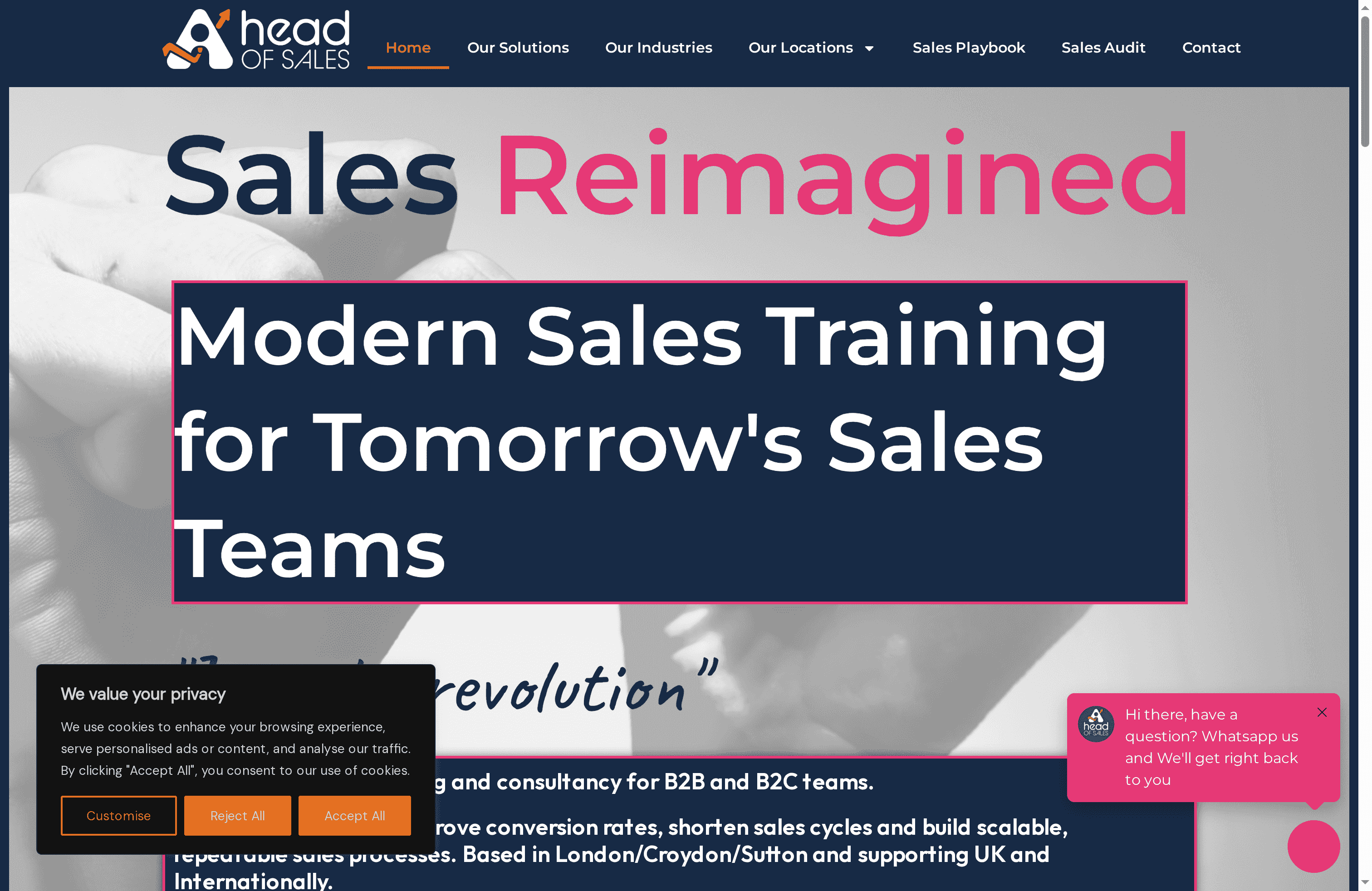
Unlock a minimum of 50 percent sales growth every year by partnering with us at Ahead of Sales. Explore how targeted upselling, data analytics, and sales automation tools can redefine your sales approach. Visit our Sales Playbook Archives – Ahead of Sales to preview proven techniques and then take the next step by contacting us today. Your sales acceleration journey starts here with personalised support that guarantees results.
Frequently Asked Questions
What is personalised customer engagement and how can it boost sales?
Personalised customer engagement refers to crafting unique strategies that address individual customer needs and preferences. To boost sales, collect detailed customer data and analyse their behaviour to create customised communication workflows that foster meaningful interactions.
How can I implement consultative selling in my sales team?
Consultative selling focuses on understanding customer challenges before proposing solutions. Start by training your team to actively listen and ask insightful questions, leading to tailored solutions that build trust and long-term client relationships.
What are the steps to use data-driven decision making in sales?
Using data-driven decision making involves analysing sales performance data to inform strategies. Establish clear performance metrics, invest in analytics tools, and regularly review your data to adapt your sales processes effectively and identify growth opportunities.
How can targeted upselling and cross-selling improve customer satisfaction?
Targeted upselling and cross-selling enhance customer satisfaction by recommending relevant products or services that meet their needs. Analyse customer purchase history and develop personalised recommendation frameworks to create additional value for your customers.
What are the key benefits of automating sales processes?
Automating sales processes helps to streamline operations and improve productivity. Focus on automating repetitive tasks to free up your sales team for high-value activities, which can lead to better customer engagement and increased sales efficiency.
How important is ongoing training and coaching for a sales team?
Ongoing training and coaching are crucial for maintaining a competitive edge in sales. Invest in continuous professional development to ensure your team is skilled and adaptable, which will lead to consistently better performance and higher sales growth.