
It is all too common for even the most capable sales teams to miss out on consistent growth without a clear framework guiding their daily actions. For UK sales executives, the strength of your sales performance management processes sets the pace for long-term success. These processes go far beyond simple numbers tracking, encompassing structured planning, communication, and evaluation that connect individual roles to bigger business objectives. By building robust systems, your sales organisation gains clarity, improves collaboration, and turns ambition into measurable results.
Table of Contents
- Defining Sales Performance Management Processes
- Types and Tools for UK Businesses
- Key Components and How They Work
- Requirements, Training, and Performance Data
- Risks, Common Pitfalls and Costs
- Comparisons and Choosing the Right Strategy
Key Takeaways
| Point | Details |
|---|---|
| Sales Performance Management | Establish clear processes that integrate planning, monitoring, developing, rating, and rewarding to drive consistent growth and align individual efforts with organisational goals. |
| Effective Metrics | Focus on relevant performance metrics that truly reflect business success, avoiding vanity metrics that do not contribute to growth. |
| Manager Training | Invest in training for sales managers to develop coaching and feedback skills, ensuring they are equipped to support and evaluate their teams effectively. |
| Strategic Alignment | Tailor your sales performance management strategy to your specific organisational context, ensuring alignment between customer acquisition, team dynamics, and growth ambitions. |
Defining Sales Performance Management Processes
Sales performance management processes form the backbone of consistent growth for mid-sized UK businesses. At their core, these processes represent far more than simply tracking numbers. They encompass a structured system for planning, coordinating, implementing, and evaluating how your sales organisation operates. Think of it as the framework that transforms individual effort into collective results. Without clear processes, even talented sales teams drift, chase the wrong opportunities, and miss the targets that matter. With them, every team member knows precisely what success looks like and how their work contributes to broader business goals.
Effective sales performance management starts with understanding what you’re actually measuring. Sales performance metrics explained helps you distinguish between vanity metrics and indicators that genuinely drive growth. Your processes must define which metrics matter most, how often you’ll review them, and who owns accountability for each one. You’ll establish forecasting procedures, set realistic budgets, and create recruitment and training frameworks that align with your growth targets. The research shows that communication quality within sales organisations directly impacts individual salesperson performance and job satisfaction. This means your processes must actively facilitate information sharing across teams, ensuring that insights from one area reach those who need them. Without structured communication protocols, even well-intentioned teams become silos, duplicating effort and missing collaborative opportunities.
Your specific processes should address the full sales cycle. Start with how you’ll forecast pipeline and revenue. Move next to budgeting decisions linked to those forecasts. Detail your recruitment criteria and onboarding procedures so new hires understand expectations from day one. Build in regular training protocols that reinforce skills and adapt as market conditions change. Create evaluation procedures that happen frequently enough to course-correct before quarter-end. For UK mid-sized firms, the challenge often lies in moving from informal, manager-dependent practices to repeatable systems that work whether your sales director is present or absent. This scalability matters enormously as you pursue consistent quarter-on-quarter growth.
Pro tip: Start by documenting your current informal processes exactly as they exist today, then identify the three friction points causing the most missed opportunities—these become your first priority for formalisation.
Types and Tools for UK Businesses
Choosing the right performance management approach starts with recognising that one size rarely fits all. Mid-sized UK businesses operate across vastly different sectors, customer profiles, and sales structures. What works brilliantly for a SaaS company moving deals through a predictable pipeline will feel completely wrong for a biotech firm navigating lengthy relationship-based sales cycles. The key lies in selecting tools and methodologies that match your specific business context. Sales methodologies provide consistent approaches that enable best practice sharing across your team whilst allowing flexibility as market conditions shift. Rather than adopting flavour-of-the-month solutions, you need systems that genuinely integrate with how your business operates.
Your toolkit typically combines several essential components. CRM software serves as the central nervous system, capturing every customer interaction and providing visibility across the entire pipeline. This isn’t simply about recording contact details. A well-configured CRM tracks deal progression, flags upcoming renewal dates, records conversation notes, and surfaces insights that help your team make smarter decisions. Beyond CRM, effective performance management requires regular feedback mechanisms that exist separately from formal appraisals. Monthly one-to-one conversations, pipeline reviews, and skill-development discussions create continuous dialogue rather than annual surprise conversations. Many successful UK businesses layer in sales methodology frameworks that provide consistency. Whether you adopt SPIN Selling, Consultative Selling, or another proven approach, the methodology standardises how your team approaches prospects and customers. This standardisation matters enormously when you’re attempting scaling across different team members and regions. Competency frameworks then define what excellent looks like in your specific context—not generic traits, but the actual behaviours and skills that correlate with success in your organisation.
Implementing these tools requires thoughtful sequencing. Start by documenting your current reality. What are you actually measuring today? How are conversations happening between managers and salespeople? What frustrates your team most about existing systems? This honest assessment prevents the common trap of buying expensive software for processes you haven’t yet defined. Once you understand your baseline, introduce tools progressively rather than attempting wholesale transformation overnight. A newly implemented CRM combined with revised feedback conversations and a new sales methodology launched simultaneously will overwhelm your team. Phase implementation so people have time to adapt. Performance management approaches should foster employee engagement whilst promoting continuous improvement, which only happens when change feels manageable rather than chaotic.
Pro tip: Before selecting any tool or methodology, run a two-week trial where you document exactly how your current top performers sell—this becomes your baseline for evaluating whether a new system will genuinely improve what you’re already doing well.
Key Components and How They Work
Effective sales performance management isn’t a single activity you do once a year during appraisal season. Instead, it’s a coordinated system of five interconnected components that work together continuously. Think of it like a car engine—each component serves a specific function, but they only produce results when integrated properly. Remove one piece and the whole system falters. These components are planning, monitoring, developing, rating, and rewarding. Understanding how they connect reveals why many businesses struggle when they try to bolt performance management onto existing chaotic processes.
Planning sets the foundation. This means defining what success looks like for each salesperson and team, translating your business growth targets into individual and team goals that are genuinely achievable yet stretch your people. The goals must connect upwards to your overall growth objectives—not just random targets disconnected from business reality. When a salesperson understands precisely how their activity links to quarterly revenue targets and annual growth, motivation shifts. Monitoring happens continuously throughout the period, not just at year-end. Weekly pipeline reviews, monthly one-to-one conversations, and real-time feedback on specific interactions create visibility before problems compound. This ongoing feedback prevents the nightmare scenario where you discover in October that someone’s been heading in the wrong direction since January. Developing actively supports skill improvement. This might mean coaching on specific techniques, training on new products, or mentoring towards handling complex deals. Setting objectives aligned with organisational goals works best when combined with genuine investment in helping people succeed rather than simply holding them accountable for results.

Rating provides formal performance evaluation at planned intervals. For most UK mid-sized businesses, this happens quarterly or half-yearly rather than annually, allowing more frequent course corrections. The rating should reflect both what was achieved and how it was achieved, since hitting targets through relationships you’ve destroyed won’t drive sustainable growth. Rewarding recognises achievements and reinforces what you value. This extends beyond salary adjustments to include recognition, development opportunities, and advancement. When your top performer earns a development budget or gets first choice of exciting accounts, you’re signalling what matters. These five components create a virtuous cycle. Planning clarifies direction, monitoring keeps everyone on track, developing builds capability, rating acknowledges reality, and rewarding motivates continued excellence. Miss any piece and you get partial results.
Pro tip: Implement monitoring and developing first before formal rating—many businesses skip this and try to rate people on criteria they’ve never discussed, which breeds resentment rather than improvement.
Below is a reference table outlining how performance management components work together to drive results:
| Component | Main Purpose | Interaction Point | Impact on Team Performance |
|---|---|---|---|
| Planning | Set goals | Start of cycle | Clarifies individual direction |
| Monitoring | Track progress | Weekly/monthly reviews | Enables early course correction |
| Developing | Skill improvement | Ongoing training/coaching | Builds capability and confidence |
| Rating | Formal evaluation | Quarterly or half-yearly | Validates achievement and approach |
| Rewarding | Motivate excellence | After rating review | Reinforces desired behaviours |
Requirements, Training, and Performance Data
Building effective sales performance management requires three critical foundational elements that many UK businesses overlook. First, your sales leaders and managers must possess the skills to actually manage performance rather than simply manage activity. Second, your organisation needs structured training that aligns everyone around consistent approaches. Third, you need robust performance data systems that tell you what’s actually happening versus what you assume is happening. Get these three elements right and your performance management processes work. Neglect them and you’re just creating paperwork.
Manager capability forms the bedrock. Your sales managers need training in coaching, feedback delivery, and performance conversation techniques. They need to understand how to have difficult conversations without destroying relationships. They need coaching skills to help struggling performers improve rather than simply documenting failure. They need ability to recognise patterns in performance data and act before problems compound. Strategic sales management training develops these essential leadership capabilities including motivation techniques, communication skills, and building championship cultures. Without this investment, even the best-designed processes fail because managers lack confidence implementing them. A manager who avoids difficult conversations will never use your performance management system effectively, regardless of how well you’ve structured it. Similarly, your sales team needs training on what success looks like within your defined processes. This includes training on your chosen sales methodology, your CRM system, your forecasting requirements, and your company standards around client engagement. When everyone understands the expectations and the ‘why’ behind them, compliance improves naturally rather than feeling like bureaucracy imposed from above.
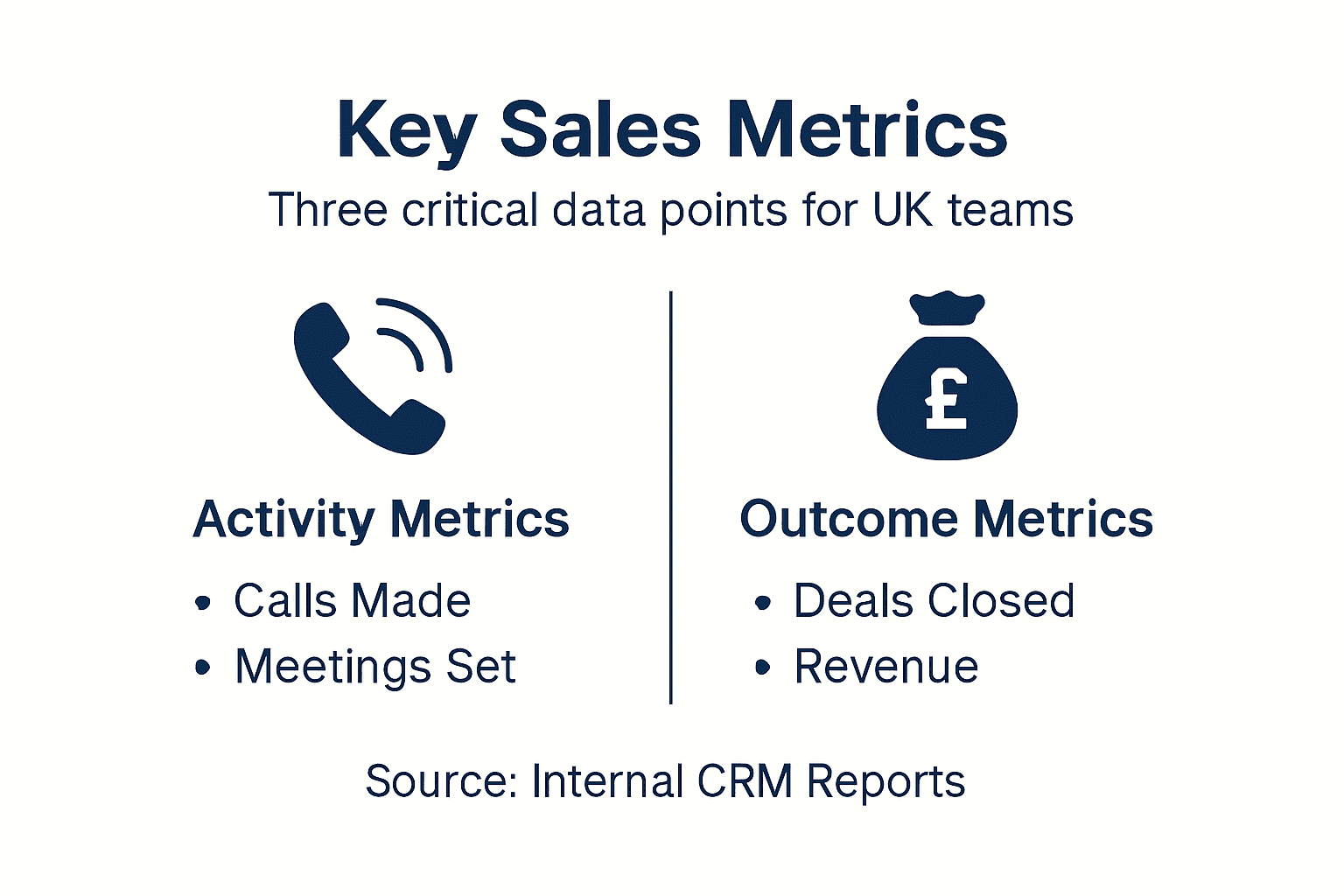
Performance data systems separate guesswork from insight. You need visibility into activity metrics (calls made, meetings booked, proposals sent), conversion metrics (conversion rates at each pipeline stage), and outcome metrics (revenue closed, customer lifetime value, retention rates). The specific metrics matter less than consistency and accuracy. Many businesses measure ten things poorly rather than three things brilliantly. Establish your core metrics, ensure your CRM captures them accurately, and review them regularly. Performance data management techniques optimise sales operations by providing real-time insight into what’s working and where intervention is needed. A salesperson trending towards missing quota needs intervention in week six, not discovered in week twelve. Good data systems enable this early intervention. Additionally, data removes emotion from difficult conversations. Rather than ‘I think you’re not trying hard enough,’ you can say ‘Your pipeline velocity has dropped from an average of 42 days to 68 days—what’s changed and how can I help?’
Pro tip: Start with three core metrics maximum, ensure your CRM captures them with zero manual entry required, and review them weekly for eight weeks before adding any additional metrics.
Risks, Common Pitfalls and Costs
Implementing sales performance management without understanding the risks is like renovating a house without checking the foundations. Everything looks good on the surface until cracks appear six months later. The most dangerous pitfall is measuring the wrong things. Many businesses obsess over activity metrics—calls made, emails sent, meetings booked—whilst ignoring what actually matters: revenue generated, deal velocity, customer retention. Focusing on activity rather than outcome creates teams optimising for busy-ness rather than results. A salesperson can make 50 calls daily, book 10 meetings, and still miss quota if those meetings are with poor-fit prospects. You’ve incentivised activity, not success. Equally dangerous is implementing a system without aligning your sales team around it. If your managers don’t understand the metrics, your salespeople won’t take them seriously. Poor internal communication compounds this risk dramatically. Research shows that communication quality issues within sales organisations reduce job satisfaction and performance. When your team lacks clarity on goals, processes feel arbitrary rather than purposeful, breeding frustration that undermines adoption.
Another common pitfall involves information overload. Too many metrics, too many reports, too much noise. Businesses measure ten things poorly rather than three things brilliantly. Your CRM becomes a data cemetery where information exists but nobody actually uses it. The cost here isn’t just the software subscription—it’s the lost intelligence and wasted management time navigating irrelevant dashboards. Data manipulation represents a subtler but equally serious risk. When compensation depends on hitting targets, some salespeople game the metrics. They pull forward next quarter’s deals, inflate pipeline forecasts, or manipulate dates to appear compliant. Your performance data becomes fiction. Additionally, many mid-sized businesses underestimate the implementation costs. Software licensing is visible and easy to budget. What’s harder to quantify is the time investment required from managers and the productivity dip during the transition period. Your sales team spends weeks learning new systems instead of selling. Expect a 10-15% productivity decline during months one and two of major system implementation.
The financial risks extend beyond implementation. Misaligned compensation plans create unintended consequences. Reward individual performance and your team stops collaborating. Reward team performance and your top performers resent carrying underperformers. Implementing performance management poorly costs more than not implementing it at all—you’ve destroyed team morale and credibility without gaining the benefits. Many UK businesses also face the risk of over-automation. Using AI or automated systems to manage performance without human judgment leads to demotivation. Nobody wants their career managed by an algorithm that doesn’t understand context.
Pro tip: Before building any performance management system, identify the three metrics that would genuinely change your business if they improved by 20%, then measure only those metrics for three months before adding anything else.
Comparisons and Choosing the Right Strategy
Selecting the right sales performance management strategy feels overwhelming when you realise how many approaches exist. Should you adopt a quota-driven model or a coaching-focused model? Should you emphasise individual accountability or team collaboration? Should you implement technology-heavy systems or keep things deliberately simple? The answer, frustratingly, is that it depends entirely on your context. A strategy that drives exceptional results for a financial services firm selling complex B2B solutions may completely fail for a consumer goods company with transactional sales cycles. What matters is matching your chosen approach to your specific organisational reality, not chasing what worked elsewhere.
Start by clarifying what you’re actually trying to achieve. Are you hunting aggressive growth where hitting targets matters more than anything? Are you building customer relationships where retention and account expansion drive long-term value? Are you managing a team of experienced professionals who need autonomy, or newer salespeople requiring structured guidance? Your answers shape everything downstream. Choosing the right sales strategy requires understanding high-performing sales manager characteristics and aligning approaches with your specific organisational goals. A quota-driven, competitive environment works brilliantly for hunting new business but destroys customer-focused retention teams. A collaborative, coaching-focused environment nurtures account development but may not generate enough aggressive growth in hunt scenarios. Neither is universally superior. The key lies in intentional alignment between your strategy and what you actually need to win.
Evaluate your strategy against three dimensions. First, assess your team composition and capability. Do you have experienced, self-motivated salespeople who need autonomy, or developing talent requiring structure and support? Second, understand your customer acquisition model. Is it fast-moving transactional sales requiring high volume, or longer-cycle relationship sales requiring deep engagement? Third, examine your competitive environment and growth targets. Are you in survival mode needing immediate revenue, or in sustainable growth mode building for three years ahead? Evaluating strategy effectiveness requires revisiting objectives against market conditions and measuring progress against key performance indicators. This ongoing evaluation prevents the common trap of implementing a strategy and then ignoring data suggesting it’s not working. Many UK businesses choose a performance management approach based on what they read in a case study, implement it, and then wonder why it produces mediocre results. They skipped the crucial step of testing whether that approach actually fitted their context.
Implementing your chosen strategy requires phased introduction rather than big bang transformation. Start with your planning component, ensuring everyone understands goals and the ‘why’ behind them. Add monitoring practices next, building the feedback muscles before introducing formal rating. Only once these feel natural should you layer in rewards and recognition aligned to your values. Additionally, build review points into your calendar. Every quarter, examine whether your strategy is producing the results you expected. If your customer satisfaction dropped whilst hitting revenue targets, your strategy is working tactically but failing strategically. If attrition increased amongst your best performers, something about your approach is creating unintended consequences. A comprehensive sales strategy balances multiple objectives rather than optimising purely for one metric.
Here’s a comparative summary of sales performance management approaches suitable for mid-sized UK businesses:
| Approach Type | Best For | Main Strength | Potential Drawback |
|---|---|---|---|
| Quota-driven | Aggressive growth teams | Clear achievement focus | Can reduce collaboration |
| Coaching-oriented | Account development | Nurtures relationships | May lack competitive drive |
| Mixed methodology | Diverse sales structures | Flexible adaptation | Risks mixed messaging |
| Technology-heavy | Data-driven environments | Real-time analytics | High training requirements |
Pro tip: Write down the three outcomes that would indicate your chosen performance management strategy is succeeding, then measure only those outcomes for six months before declaring victory or pivoting.
Transform Your Sales Performance Management with Proven Growth Strategies
Businesses across the United Kingdom face real challenges turning informal sales processes into scalable systems that consistently hit targets and accelerate growth. If your sales team struggles with unclear metrics, fragmented communication, or lack of effective coaching, you are not alone. The key to overcoming these pain points is a tailored approach that integrates clear planning, continual monitoring, skill development and impactful rewards – all aligned with your unique sales strategy. Our expertise ensures you leave behind guessing games and partial results to create a high-performance culture that drives at least 50% growth annually.

Discover how our blend of bespoke 1:1 coaching, traditional training and consultancy directly addresses the core components of effective sales performance management highlighted in this article. Whether you are looking to build a repeatable sales system, improve manager capability or optimise your performance data, our packages starting from £4,500 are designed for UK businesses with 50 to 1000 staff ready to embrace a growth mindset. Start your journey now by exploring our Sales Strategy Archives – Ahead of Sales or visit us at aheadofsales.co.uk to find out more.
Take control of your sales outcomes today and ensure your team hits their target every quarter with a proven framework tailored for mid-sized UK companies.
Frequently Asked Questions
What are the key components of sales performance management?
Sales performance management consists of five interconnected components: planning, monitoring, developing, rating, and rewarding. Each component plays a vital role in ensuring ongoing performance improvement and alignment with business objectives.
How can we select the right sales performance management tools for our business?
Choosing the right tools involves recognising that one size does not fit all. Evaluate your specific business context, customer profiles, and sales structures to select tools and methodologies that genuinely integrate with your operations.
What role does communication play in sales performance management?
Effective communication is crucial, as it impacts individual performance and job satisfaction. Strong communication protocols help facilitate information sharing and collaboration across teams, avoiding silos and ensuring that insights are shared effectively.
How do we ensure managers possess the necessary skills for effective sales performance management?
Investing in training for your sales leaders and managers is essential. They should develop skills in coaching, feedback delivery, and performance conversations to manage their teams effectively instead of merely overseeing activities.