
Sales development is often wrongly labelled as just cold calling, but today’s reality is far more sophisticated for sales leaders in United Kingdom service companies. The way B2B organisations manage lead generation and pipeline building now demands a deeper understanding of both digital tools and human connection. This overview sheds light on the true nature of modern sales development, clears up common misconceptions, and introduces the skills that set high-performing teams apart.
Table of Contents
- Sales Development Defined And Common Myths
- Modern Sales Development Models And Methods
- Key Elements Of A High-Growth Sales Process
- Sales Team Roles, Training, And Human–AI Collaboration
- Compliance, Risks, And Common Mistakes To Avoid
Key Takeaways
| Point | Details |
|---|---|
| Sales Development Redefined | Modern sales development transcends traditional telemarketing, focusing on strategic lead engagement and relationship building. |
| Embrace Technology | Leveraging AI, CRM systems, and analytics is essential for effective lead generation and prospecting. |
| Continuous Training is Key | Regular upskilling in both technological and interpersonal skills is vital for enhancing sales effectiveness. |
| Prioritise Compliance and Ethics | Establish strong ethical guidelines and compliance training to navigate regulatory complexities in sales. |
Sales Development Defined and Common Myths
Sales development represents a strategic approach to lead generation and pipeline management that goes far beyond traditional cold calling misconceptions. Contextualised sales processes are now critical for modern B2B organisations seeking systematic customer engagement strategies.
Traditionally, sales development has been misunderstood as merely a telemarketing function. However, contemporary research reveals it as a sophisticated discipline involving lead research, strategic engagement, and sophisticated handover processes. The role requires professionals who can navigate complex digital sales environments, understand customer psychology, and leverage technology to create meaningful connections.
Key distinctions between sales development and conventional sales approaches include its focus on pipeline preparation rather than direct transaction completion. Sales development representatives specialise in identifying, qualifying, and nurturing potential leads before passing them to account executives. Competency frameworks highlight the need for advanced skills like emotional intelligence, technological adaptability, and strategic communication.
Pro tip: Invest in continuous training that develops both technological proficiency and interpersonal skills to create truly effective sales development professionals.
Here is a comparison of traditional sales methods versus modern sales development approaches:
| Aspect | Traditional Sales Methods | Modern Sales Development |
|---|---|---|
| Lead Generation | Cold calling, mass outreach | Data-driven, targeted |
| Technology Usage | Minimal or manual systems | AI, CRM, automation |
| Focus | Immediate transactions | Pipeline building |
| Skill Requirements | Basic persuasion skills | Emotional intelligence, analytics |
| Customer Interaction | Scripted, generic dialogue | Personalised, strategic communication |
Modern Sales Development Models and Methods
The landscape of sales development has undergone a radical transformation, driven by technological advancements and changing market dynamics. Digitalization has fundamentally reshaped sales methodologies, introducing sophisticated approaches that leverage artificial intelligence, advanced customer relationship management (CRM) systems, and machine learning technologies.
Modern sales development models now emphasise a more strategic, data-driven approach to lead generation and customer engagement. Inside sales strategies have evolved from traditional cold calling to sophisticated digital prospecting techniques that prioritise personalisation and targeted communication. Key methodologies include account-based selling, where sales teams focus on high-value potential customers, and technology-enabled prospecting that uses sophisticated data analytics to identify and prioritise the most promising leads.
The integration of digital tools has become paramount in contemporary sales development. Companies are now adopting comprehensive sales methodologies that combine human expertise with technological capabilities. This approach allows sales teams to create more nuanced engagement strategies, utilising predictive analytics, automated lead scoring, and intelligent communication platforms to streamline the sales process and improve conversion rates.
Pro tip: Continuously invest in upskilling your sales team on emerging digital technologies and data analysis tools to maintain a competitive edge in modern sales development strategies.
Key Elements of a High-Growth Sales Process
Sales processes require continuous refinement and strategic alignment to drive sustainable growth. Continuous market adaptation represents the foundational principle for organisations seeking to develop robust sales strategies that respond dynamically to changing business environments.
Successful high-growth sales processes typically incorporate several critical components. These include clearly defined sales stages, systematic performance measurement, and a strong emphasis on customer-centric approaches. Comprehensive performance metrics play a crucial role in evaluating sales effectiveness, encompassing key indicators such as sales revenue, customer retention rates, and conversion percentages. Sales teams must develop a holistic view that goes beyond traditional revenue tracking, integrating qualitative assessments of customer satisfaction and long-term relationship potential.

Organisational support emerges as another pivotal element in creating a high-growth sales environment. This involves implementing robust training programmes, providing advanced technological tools, and fostering a culture of continuous learning and improvement. Sales leaders must create structured yet flexible frameworks that empower their teams to innovate, adapt, and respond swiftly to market changes while maintaining consistent performance standards.
Pro tip: Develop a quarterly review process that critically analyses your sales methodology, using data-driven insights to refine and optimise your sales approach continuously.
The following table summarises critical components that drive a high-growth sales process:
| Component | Description | Business Impact |
|---|---|---|
| Defined Sales Stages | Clear step-by-step process | Consistent performance |
| Performance Measurement | Track key metrics | Improved accountability |
| Customer-Centric Focus | Prioritise client needs | Stronger relationships |
| Organisational Support | Training and new technologies | Enhanced adaptability |
Sales Team Roles, Training, and Human–AI Collaboration
The modern sales landscape demands a radical reimagining of team structures and skill development. Evolving digital sales roles now require professionals who can seamlessly integrate technological capabilities with human intuition, creating a sophisticated approach to customer engagement.
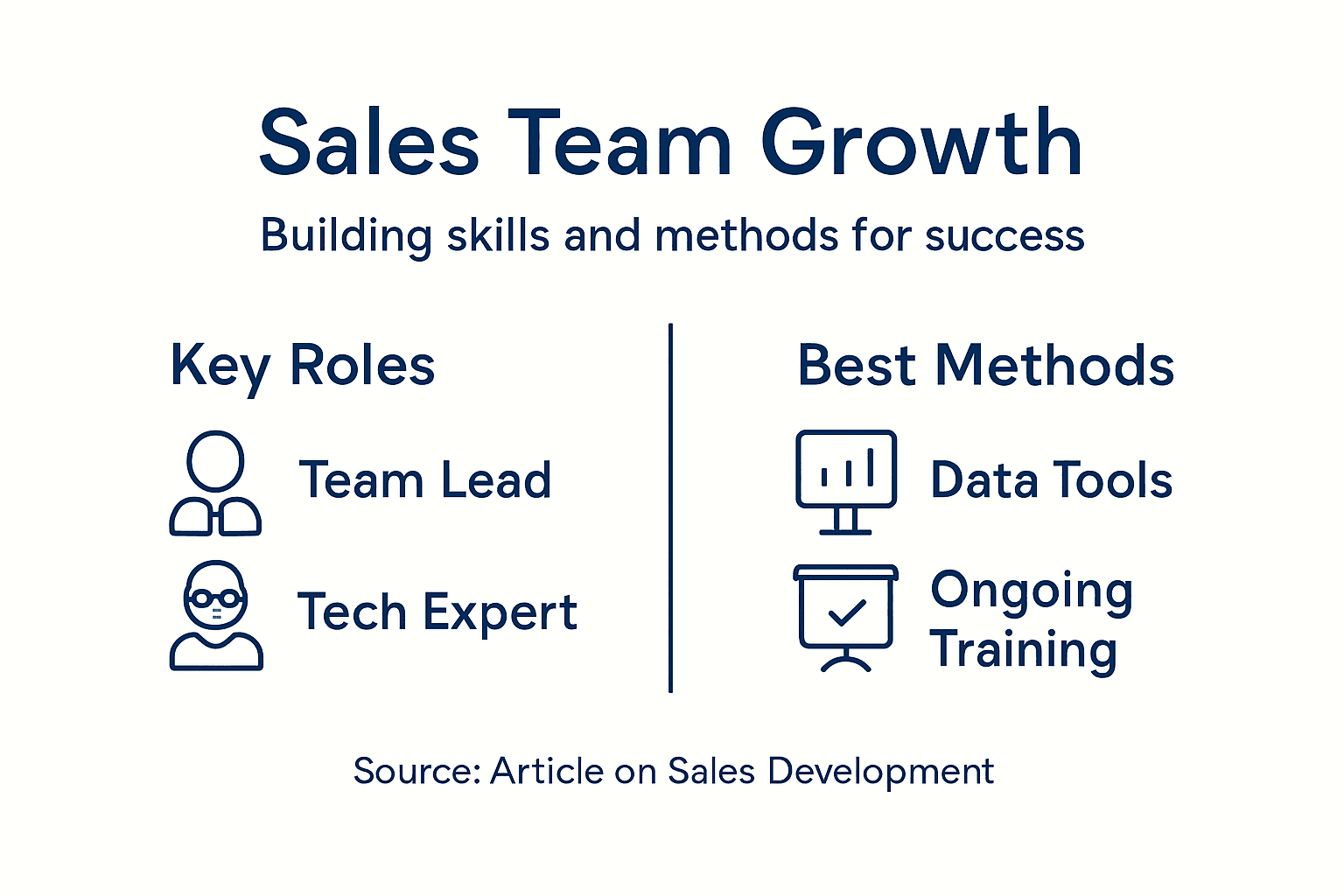
Traditional sales roles are transforming, with emerging positions that blend technological proficiency and interpersonal skills. Sales teams now require members who can leverage artificial intelligence tools for lead qualification, customer insights, and predictive analytics. This shift necessitates comprehensive training frameworks that develop emotional intelligence, technological fluency, and adaptive learning capabilities. Key competencies include data interpretation, AI tool manipulation, and the ability to translate algorithmic insights into personalised customer interactions.
Human-AI collaboration represents the future of sales effectiveness. Rather than viewing AI as a replacement, progressive organisations are treating these technologies as powerful augmentation tools. Sales professionals must learn to work alongside AI systems, using machine-generated insights to enhance decision-making, personalise customer approaches, and streamline complex sales processes. This approach requires continuous learning, with training programmes that emphasise technological adaptability and strategic thinking.
Pro tip: Implement a quarterly AI skills assessment for your sales team, identifying individual technological competencies and creating targeted upskilling programmes.
Compliance, Risks, and Common Mistakes to Avoid
Sales compliance requires a comprehensive understanding of ethical boundaries and potential organisational risks. Ethical decision-making frameworks are essential for navigating the complex landscape of modern sales practices, ensuring that teams maintain integrity while pursuing business objectives.
Common mistakes in sales often stem from insufficient understanding of regulatory requirements and ethical constraints. These pitfalls include misrepresentation of products, non-transparent pricing strategies, and neglecting customer consent. Sales enablement challenges highlight the critical need for structured training programmes that emphasise both legal compliance and ethical conduct. Sales teams must develop a nuanced approach that balances aggressive target achievement with responsible customer engagement.
Organisations can mitigate risks by implementing robust compliance protocols, including regular training sessions, clear ethical guidelines, and transparent reporting mechanisms. This approach involves creating a culture of accountability where sales professionals understand the long-term consequences of short-sighted or unethical practices. Developing comprehensive compliance strategies requires ongoing education, regular audits, and a commitment to maintaining high ethical standards across all sales interactions.
Pro tip: Conduct monthly ethical scenario training sessions that challenge sales teams to navigate complex compliance situations, reinforcing the importance of principled decision-making.
Unlock Your Sales Team’s Full Potential with Expert Guidance
The article highlights the challenge of developing a high-growth sales process that blends emotional intelligence, technological adaptability and strategic communication. Many organisations struggle to implement structured sales development models that truly empower teams to elevate performance while navigating tech-driven environments and ethical complexities. If your goal is to build a sales team that consistently hits targets each quarter and drives over 50 per cent growth yearly, it is critical to invest in bespoke training that sharpens both human skills and AI collaboration.
Discover how our tailored 1:1 coaching programmes and consultancy services can transform your sales strategy into a dynamic engine for growth. Whether you lead a mid-sized to large business or a solo service operation, our sales acceleration packages are designed to deliver measured results. Explore proven methodologies and frameworks in our Sales Strategy Archives – Ahead of Sales and learn how to create an empowering sales playbook with resources from our Sales Playbook Archives – Ahead of Sales. Take the next step now by visiting Ahead of Sales to arrange your tailored consultation and start driving sustainable sales development today.
Frequently Asked Questions
What is sales development?
Sales development is a strategic approach to lead generation and pipeline management that focuses on identifying, qualifying, and nurturing potential leads, rather than directly closing sales transactions.
How does modern sales development differ from traditional sales methods?
Modern sales development employs targeted, data-driven strategies for lead generation and relies on technology, such as AI and CRM systems, for effective engagement and communication, unlike traditional methods that often involve cold calling and generic outreach.
What skills are essential for sales development professionals?
Key skills for sales development professionals include emotional intelligence, technological adaptability, analytical thinking, and strategic communication capabilities, which are necessary for navigating complex digital sales environments and creating meaningful connections with customers.
How can organisations enhance their sales development processes?
Organisations can enhance their sales development processes by implementing continuous training programmes, adopting advanced technologies, ensuring a customer-centric focus, and developing clear performance metrics to measure success.
Recommended
- 7 Essential Sales Leadership Tips for Fast Growth – Ahead of Sales
- Sales Team Management Workflow for Sustainable Growth – Ahead of Sales
- 7 Proven Sales Acceleration Strategies for Rapid Growth – Ahead of Sales
- Defining Sales Growth Strategies: Accelerating Revenue
- Formation Salesforce | Yelido
- How to Start Private Label: Build Your Own Brand Today – Spaceman