
Most british tech firms still underestimate the impact that smart sales technology can deliver, yet research shows that nearly 60 percent of high-performing sales teams tap advanced digital tools to outperform competitors. For ambitious sales leaders, technology is no longer a luxury but a vital foundation for driving growth and building team resilience. This guide addresses misconceptions and highlights practical approaches that help british sales teams turn digital investments into sustained performance gains.
Table of Contents
- Defining Sales Technology And Misconceptions
- Types Of Sales Technology Tools
- How Sales Technology Drives Growth
- Implementing Technology In Sales Teams
- Managing Risks And Compliance With Tech
Key Takeaways
| Point | Details |
|---|---|
| Understanding Sales Technology | It enhances sales performance by providing intelligent insights and does not simply replace human interaction. |
| Implementing Technology | Successful adoption hinges on aligning tools with sales team needs through comprehensive training and user involvement. |
| Risk Management | Sales organisations must develop frameworks for data privacy, cybersecurity, and regulatory compliance to navigate technological risks effectively. |
| Continuous Evaluation | Regularly review and adapt your technological infrastructure to keep pace with market trends and organisational growth objectives. |
Defining sales technology and misconceptions
Sales technology represents the sophisticated digital ecosystem of tools, platforms, and systems designed to enhance sales performance, streamline processes, and drive revenue growth. Unlike simplistic assumptions, sales technology is not merely about replacing human interaction, but empowering sales professionals with intelligent insights and strategic capabilities.
Contrary to popular belief, technology adoption in sales is a nuanced process influenced by multiple factors. Research from ScienceDirect reveals that successful implementation depends critically on salespeople’s perceptions of performance enhancement, individual innovativeness, and organisational support through comprehensive training. This challenges the traditional misconception that technology adoption is a top-down, purely managerial directive.
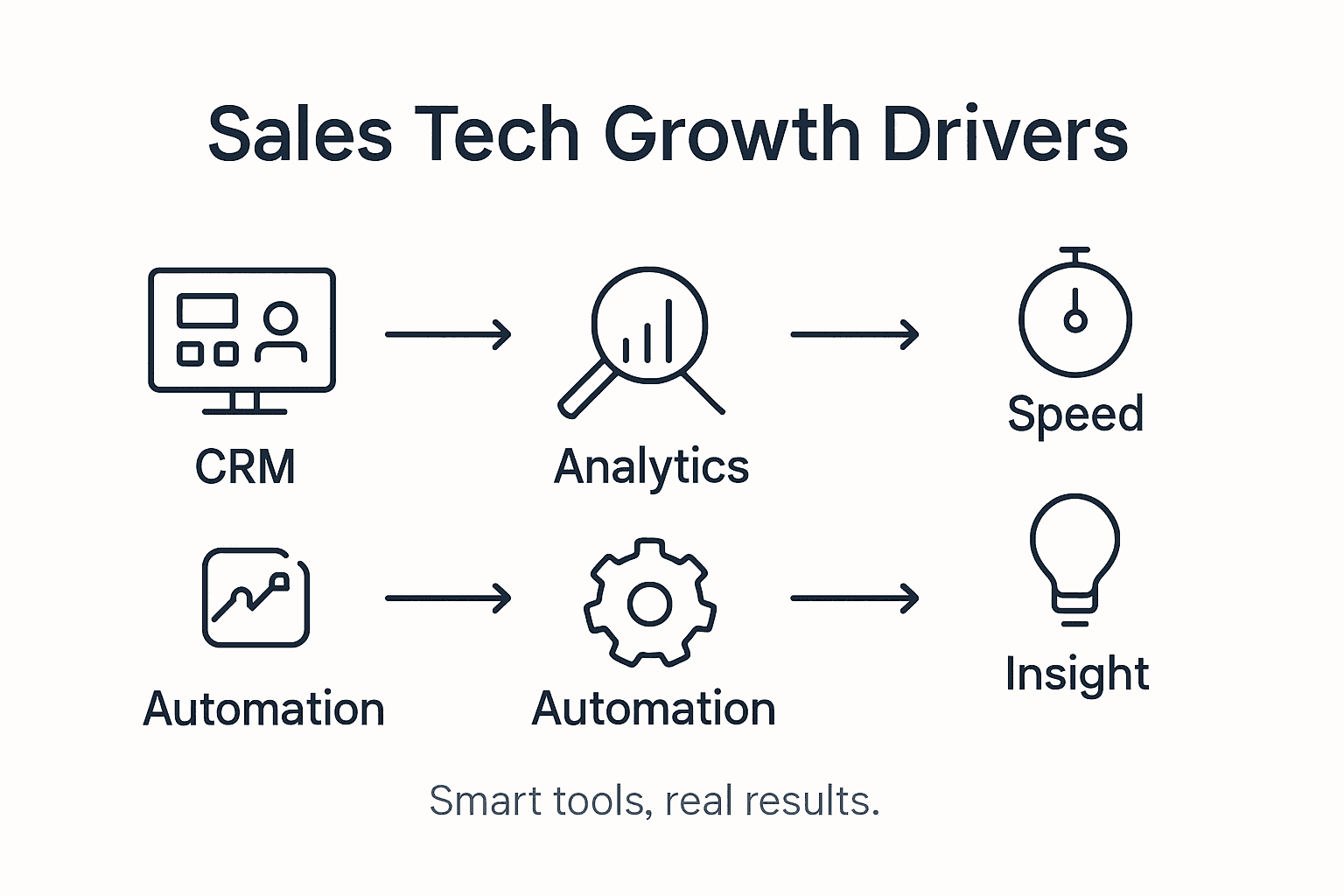
The core components of modern sales technology typically include customer relationship management (CRM) systems, sales intelligence platforms, communication tools, analytics dashboards, and automation software. These technologies aim to solve key challenges like inefficient lead tracking, inconsistent communication, limited performance visibility, and time-consuming administrative tasks. By integrating intelligent technologies, sales teams can focus more on strategic relationship building and less on manual data entry.

Pro Sales Technology Strategy: Research and select technologies that align with your specific sales team’s workflow, providing comprehensive training and demonstrating clear value to encourage enthusiastic adoption and seamless integration.
To clarify the strategic roles of sales technology, here is a summary of common misconceptions versus reality:
| Misconception | Reality |
|---|---|
| Technology replaces human interaction | Empowers sales professionals with insights |
| Adoption is top-down | Influenced by individual and organisational factors |
| Tools are mainly for automation | Provide predictive, actionable intelligence |
| One-size-fits-all solutions exist | Tailored tools needed for specific sales challenges |
Types of sales technology tools
Sales technology encompasses a diverse range of digital tools designed to optimise sales processes, enhance team performance, and drive strategic revenue growth. These technological solutions are not one-size-fits-all but rather specialised instruments addressing specific challenges within the sales ecosystem.
One critical category is customer relationship management (CRM) systems, which serve as the central nervous system of sales operations. These platforms track customer interactions, manage leads, and provide comprehensive insights into sales pipelines. Another pivotal tool is proposal management software, which automates the development of proposals, presentations, and responses to requests for proposals, integrating seamlessly with CRM systems and electronic signature providers to streamline complex sales workflows.
Additional essential sales technology tools include:
- Sales intelligence platforms
- Communication and collaboration tools
- Analytics and reporting dashboards
- Lead generation and prospecting software
- Marketing automation systems that support lead nurturing and segmentation
These technologies work synergistically to transform traditional sales approaches, enabling teams to focus on strategic relationship building rather than administrative tasks. Modern sales technology goes beyond mere automation, providing actionable insights, predictive analytics, and intelligent recommendations that empower sales professionals to make data-driven decisions.
Pro Sales Tech Selection: Conduct a comprehensive audit of your current sales processes before investing in technology, identifying specific pain points and selecting tools that directly address your team’s unique challenges and workflow requirements.
The following table contrasts key categories of sales technology tools and their most significant business impact:
| Tool Category | Core Function | Strategic Business Impact |
|---|---|---|
| CRM Systems | Centralise customer interactions | Enhance lead management and retention |
| Proposal Management | Automate sales documents | Accelerate deal closure |
| Analytics Dashboards | Provide sales performance insights | Enable data-driven decisions |
| Marketing Automation | Automate lead nurturing | Improve conversion rates |
How sales technology drives growth
Sales technology is a transformative force that fundamentally reshapes how businesses approach revenue generation, moving beyond traditional sales methodologies to create more intelligent, data-driven growth strategies. By leveraging advanced digital tools, organisations can unlock unprecedented opportunities for scaling and optimising their sales performance.
Digital transformation in B2B sales processes has revolutionised how companies approach customer engagement, with technologies like artificial intelligence, machine learning, and advanced analytics providing unprecedented insights into customer behaviour and sales opportunities. These technologies enable sales teams to move from reactive to predictive strategies, anticipating customer needs and creating more personalised engagement models.
The core mechanisms through which sales technology drives growth include:
- Automated lead qualification and scoring
- Predictive customer behaviour analysis
- Real-time performance tracking and insights
- Enhanced communication and collaboration tools
- Streamlined customer relationship management
Predictive sales analytics represents a particularly powerful growth driver, allowing organisations to make data-informed decisions that dramatically improve sales effectiveness. By integrating machine learning algorithms and comprehensive data analysis, sales teams can identify potential opportunities, understand complex sales dynamics, and develop more targeted approach strategies.
Pro Sales Technology Growth Strategy: Continuously evaluate and update your technological infrastructure, ensuring your sales tools evolve alongside emerging market trends and your organisation’s specific growth objectives.
Implementing technology in sales teams
Successful implementation of sales technology requires a strategic, holistic approach that goes far beyond simply purchasing new software. It demands a comprehensive change management strategy that addresses technological, cultural, and human factors within the sales organisation.
Technology acceptance in field sales settings reveals that successful adoption depends critically on aligning technological solutions with salespeople’s specific needs and providing robust, targeted training. This means understanding the unique workflow challenges of your sales team and selecting tools that genuinely enhance rather than complicate their daily processes.
Key strategies for effective technology implementation include:
- Conducting a thorough needs assessment
- Involving sales team members in technology selection
- Developing comprehensive training programmes
- Creating a phased rollout approach
- Establishing clear performance metrics
- Providing ongoing technical support and coaching
Sales force automation tools demonstrate significant potential for improving sales effectiveness, particularly when carefully matched to the organisation’s specific requirements. Small businesses can see substantial improvements by strategically investing in software solutions like email faxing systems and electronic catalogues that streamline communication and information sharing.
Pro Technology Adoption Strategy: Treat technology implementation as a collaborative journey, not a top-down mandate. Prioritise user experience, gather continuous feedback, and be prepared to iterate and adjust your technological approach based on real-world team performance and insights.
Managing risks and compliance with tech
Navigating the complex landscape of technological risks requires a multifaceted approach that balances innovation with robust protective strategies. Sales organisations must develop comprehensive frameworks that address potential vulnerabilities while maintaining the agility to leverage technological advantages.
Consumer acceptance of AI technologies highlights the critical importance of building trust and managing privacy concerns as fundamental risk mitigation strategies. This involves creating transparent processes that demonstrate how customer data is collected, used, and protected, ensuring that technological implementations align with ethical standards and regulatory requirements.
Key risk management considerations for sales technology include:
- Data privacy and protection protocols
- Cybersecurity infrastructure
- Regular compliance audits
- Employee training on technological risks
- Robust consent and data handling mechanisms
- Continuous monitoring of technological vulnerabilities
Virtual store research methodologies offer innovative approaches to risk management, allowing organisations to simulate and test technological interventions in controlled environments. By creating digital test scenarios, businesses can identify potential compliance issues and operational risks before full-scale implementation, significantly reducing potential financial and reputational challenges.
Pro Risk Management Strategy: Develop a proactive, holistic approach to technological risk that views compliance as a dynamic process of continuous learning and adaptation, not a static checklist of requirements.
Empower Your Sales Growth with Cutting-Edge Technology and Expert Coaching
The journey to sales excellence demands more than just adopting new technology. This article highlights the vital role of sales technology in driving growth for mid-size firms but also reveals common challenges such as ensuring seamless adoption, leveraging predictive analytics, and aligning tools with your team’s workflow. If your sales team struggles with these pain points or you want to accelerate revenue growth by transforming your sales processes, you need a solution that combines smart technology strategies with bespoke coaching.
Boost your results by integrating expert sales training that empowers your team to embrace technology confidently while hitting their targets every quarter. Discover how our tailored coaching and consultancy can help your business overcome inefficiencies, improve lead management, and unlock data-driven insights for sustained growth. Explore our Sales Strategy Archives – Ahead of Sales to deepen your understanding, then see how practical application makes all the difference.

Start your transformation today with Ahead of Sales where customised 1:1 coaching meets proven sales acceleration methods designed specifically for mid-size businesses and solo service providers. Take the definitive step towards at least 50% annual sales growth and ensure every quarter is a target-hitting success. Get in touch to learn more or explore insights in our Sales Playbook Archives – Ahead of Sales. The future of your sales growth begins now.
Frequently Asked Questions
What is the role of technology in sales for mid-size firms?
Technology plays a vital role in enhancing sales performance for mid-size firms by providing tools that streamline processes, enhance customer relationships, and deliver data-driven insights, ultimately driving revenue growth.
How can sales technology improve lead management?
Sales technology, particularly customer relationship management (CRM) systems, helps improve lead management by centralising customer interactions, tracking leads efficiently, and providing analytics that highlight potential sales opportunities.
What are the key components of a successful sales technology strategy?
A successful sales technology strategy consists of comprehensive training, clear alignment of tools with team workflows, continuous evaluation of technological needs, and fostering a culture of user engagement and adaptation among sales staff.
What risks should mid-size firms consider when adopting sales technology?
Mid-size firms should consider risks such as data privacy and protection, cybersecurity vulnerabilities, and the need for regulatory compliance. Implementing robust protocols and regular audits is essential to mitigate these risks.