
Over 65 percent of british businesses report that building a strong sales pipeline is the greatest challenge to securing steady growth. Understanding how leads move from first contact to closing a deal can make all the difference for both startups and established firms. This guide highlights what a sales pipeline is, why stages matter, and how the right approach helps companies turn prospects into loyal customers with greater consistency.
Table of Contents
- Defining The Sales Pipeline Model
- Key Stages Of The Sales Pipeline
- Types Of Sales Pipelines And Tools
- Optimising Pipeline For Consistent Growth
- Common Pipeline Mistakes And How To Avoid
Key Takeaways
| Point | Details |
|---|---|
| Importance of Sales Pipeline | A sales pipeline is essential for tracking customer interactions and optimising sales strategies to enhance conversion rates. |
| Stages of the Sales Pipeline | The pipeline consists of seven key stages, from prospecting to post-sale follow-up, each facilitating customer progression towards purchase decisions. |
| Types of Sales Pipelines | Different sales models, such as B2B and B2C, require tailored pipes and tools to effectively manage interactions and drive performance. |
| Optimisation Strategies | Continuous pipeline optimisation involves performance analysis, bottleneck identification, and leveraging technology for improvement. |
Defining The Sales Pipeline Model
A sales pipeline is a strategic visual framework that tracks potential customer interactions from initial contact through final purchase. According to Forbes, it serves as a structured representation of the sales process, enabling sales teams to monitor progress, forecast revenue, and pinpoint areas requiring strategic improvement.
The sales pipeline provides a systematic approach to understanding customer progression through distinct stages. Coursera highlights that this methodology allows businesses to track potential customer journeys, from lead generation to successful deal closure. By mapping out these interactions, organisations can optimise their sales strategies and significantly enhance conversion rates.
Key characteristics of an effective sales pipeline include:
- Clear, defined stages of customer interaction
- Ability to track lead movement through the sales process
- Real-time visibility into potential revenue opportunities
- Precise forecasting of sales performance
- Identification of potential bottlenecks or conversion challenges

For businesses serious about growth, understanding and implementing a robust sales pipeline is not just a strategy – it’s a fundamental requirement for sustainable sales success. By implementing a comprehensive sales strategy guide, organisations can transform their approach from reactive selling to proactive revenue generation.
Key Stages Of The Sales Pipeline
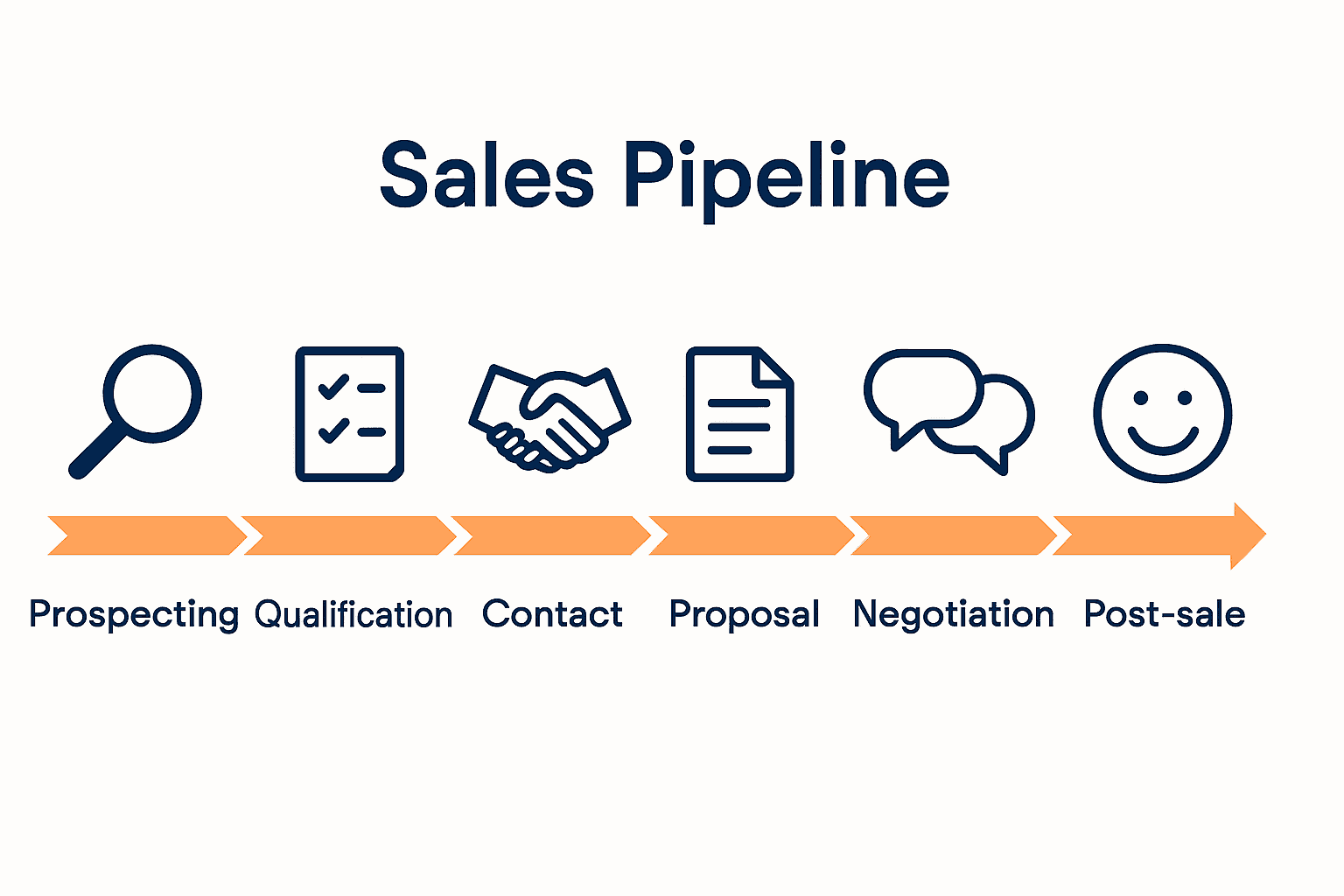
The sales pipeline represents a strategic journey of transforming potential leads into loyal customers through carefully defined stages. According to Salesforce, the sales pipeline typically encompasses seven critical stages that guide prospects from initial contact to successful conversion: prospecting, lead qualification, initial contact, proposal, negotiation, closing, and post-sale follow-up.
Each stage of the sales pipeline serves a distinct purpose in moving potential customers closer to making a purchasing decision.
TechTarget emphasises that understanding these stages is essential for achieving consistent sales success and creating a predictable revenue generation process.
Let’s break down the key stages in more detail:
- Prospecting: Identifying potential customers who might be interested in your product or service
- Lead Qualification: Evaluating whether prospects have the potential, budget, and need for your offering
- Initial Contact: Establishing first communication and building initial rapport
- Proposal: Presenting a tailored solution that addresses the prospect’s specific needs
- Negotiation: Discussing terms, addressing concerns, and finding mutual agreement
- Closing: Finalising the deal and securing the sale
- Post-Sale Follow-Up: Ensuring customer satisfaction and creating opportunities for future business
For businesses looking to refine their sales approach, understanding and optimising these stages is crucial. By implementing proven sales acceleration strategies, organisations can streamline their sales process and drive more consistent revenue growth.
Types Of Sales Pipelines And Tools
Sales pipelines are dynamic frameworks that adapt to different business models and sales strategies. According to Gartner, these pipelines can vary significantly based on business structures, with organisations typically managing them through sophisticated Customer Relationship Management (CRM) systems that track and optimise each stage of the sales process.
Coursera highlights that businesses can leverage multiple types of sales pipelines tailored to their specific needs, including direct sales, channel sales, and e-commerce models. Each pipeline type requires unique tools and approaches to effectively manage potential customer interactions and drive sales performance.
Key Types of Sales Pipelines:
- B2B Sales Pipeline: Focused on complex, relationship-driven sales with longer decision cycles
- B2C Sales Pipeline: Designed for direct consumer transactions with shorter conversion timelines
- Channel Sales Pipeline: Utilising intermediary partners or resellers to reach customers
- E-commerce Sales Pipeline: Optimised for online transactions and digital customer journeys
Critical sales tools for pipeline management include:
- CRM Software
- Sales Analytics Platforms
- Lead Tracking Systems
- Communication and Engagement Platforms
By exploring comprehensive sales automation tools, businesses can select technologies that align precisely with their unique sales pipeline requirements and organisational objectives.
Optimising Pipeline For Consistent Growth
Optimising a sales pipeline is a strategic process of continuous improvement and performance analysis. According to Forbes, this involves regular examination of each sales stage to identify potential bottlenecks, implementing targeted strategies to improve conversion rates, and ensuring a consistent flow of prospects to drive sustainable business growth.
Coursera emphasises the critical importance of aligning sales activities with broader business objectives through systematic performance assessment and strategic refinement. This approach transforms the sales pipeline from a simple tracking mechanism into a dynamic growth engine that adapts to changing market conditions and organisational needs.
Key Strategies for Pipeline Optimization:
- Performance Metrics Analysis: Regularly track and evaluate conversion rates at each pipeline stage
- Bottleneck Identification: Pinpoint stages with low conversion or extended processing times
- Lead Qualification Enhancement: Refine criteria for lead selection and progression
- Sales Team Training: Continuously upskill team members to improve interaction quality
- Technology Integration: Leverage advanced CRM and analytics tools for deeper insights
By understanding how to shorten sales cycles, businesses can create a more efficient, responsive sales pipeline that consistently drives revenue and supports sustainable growth strategies.
Common Pipeline Mistakes And How To Avoid
Sales pipeline management is fraught with potential pitfalls that can dramatically impact business performance. Salesforce identifies several critical mistakes that consistently undermine sales effectiveness, including neglecting crucial follow-up processes, failing to rigorously qualify leads, and allowing pipeline data to become outdated and irrelevant.
TechTarget emphasises that preventing these common errors requires implementing structured, disciplined approaches to sales pipeline management. The most successful organisations develop systematic processes that ensure consistent communication, accurate record-keeping, and proactive prospect engagement.
Common Pipeline Mistakes to Avoid:
- Inadequate Lead Qualification: Wasting resources on unqualified prospects
- Inconsistent Follow-Up: Losing potential opportunities through poor communication
- Outdated Pipeline Data: Relying on inaccurate or stale information
- Lack of Performance Tracking: Failing to measure and analyse conversion metrics
- Overlooking Customer Relationship Management: Treating prospects as transactions
Strategies for Mitigation:
- Implement rigorous lead scoring systems
- Establish consistent follow-up protocols
- Regularly update and cleanse pipeline data
- Use advanced CRM tools for real-time tracking
- Train sales teams in relationship-building techniques
By understanding how to shorten sales cycles, businesses can develop more resilient and effective sales pipeline strategies that minimise common mistakes and maximise revenue potential.
Transform Your Sales Pipeline Into a Growth Engine
The challenges of managing an effective sales pipeline are clear from the article. Many businesses struggle with lead qualification, bottlenecks in the sales stages, and inconsistent follow-up that slow down revenue growth. If your sales team finds it difficult to turn prospects into loyal customers or if you want to shorten your sales cycles while keeping forecasts accurate, you are not alone. The key concepts from the pipeline model such as prospecting, lead qualification, negotiation, and post-sale follow-up are crucial yet often underutilised without expert guidance.
We are a revolutionary sales training company specialising in bespoke 1:1 coaching combined with traditional training and consultancy designed to generate at least 50 percent sales growth every year. Our approach helps businesses with 50 to 1000 staff adopt proactive sales acceleration strategies that ensure your team hits their targets each quarter. Whether you want to optimise your CRM usage, refine your lead scoring systems or enhance your sales team’s skills, our tailored packages deliver practical results that align with your growth ambitions. Learn how we can help you overcome common pipeline mistakes and create consistent revenue flow by visiting Ahead of Sales.
Ready to stop losing potential revenue through pipeline leaks and to accelerate your sales conversions now
Discover more about our proven sales acceleration strategies and bespoke coaching solutions at Ahead of Sales. Take the decisive step to empower your sales team and transform your sales pipeline into a powerful growth engine today.
Frequently Asked Questions
What is a sales pipeline?
A sales pipeline is a strategic framework that visually tracks potential customer interactions from initial contact to final purchase, helping sales teams optimise their sales strategies and forecast revenue.
What are the key stages of a sales pipeline?
The typical stages include: prospecting, lead qualification, initial contact, proposal, negotiation, closing, and post-sale follow-up, each serving a distinct purpose in the sales process.
How can I optimise my sales pipeline for better growth?
Optimising a sales pipeline involves regularly tracking performance metrics, identifying bottlenecks, refining lead qualification criteria, enhancing team training, and integrating advanced CRM tools for deeper insights.
What common mistakes should I avoid in sales pipeline management?
Common mistakes include inadequate lead qualification, inconsistent follow-up, relying on outdated data, lack of performance tracking, and neglecting customer relationship management. Implementing structured processes can help mitigate these issues.