
Choosing the right tool to grow your sales and manage your customers can feel like searching for a hidden shortcut. Some offer expert advice and hands-on training while others promise smart automation or a single place to connect your team. The ways in which they help you close more deals or keep customers happy can be very different. Curious to see which approach might actually work for you and your team
Table of Contents
Ahead of Sales
At a Glance
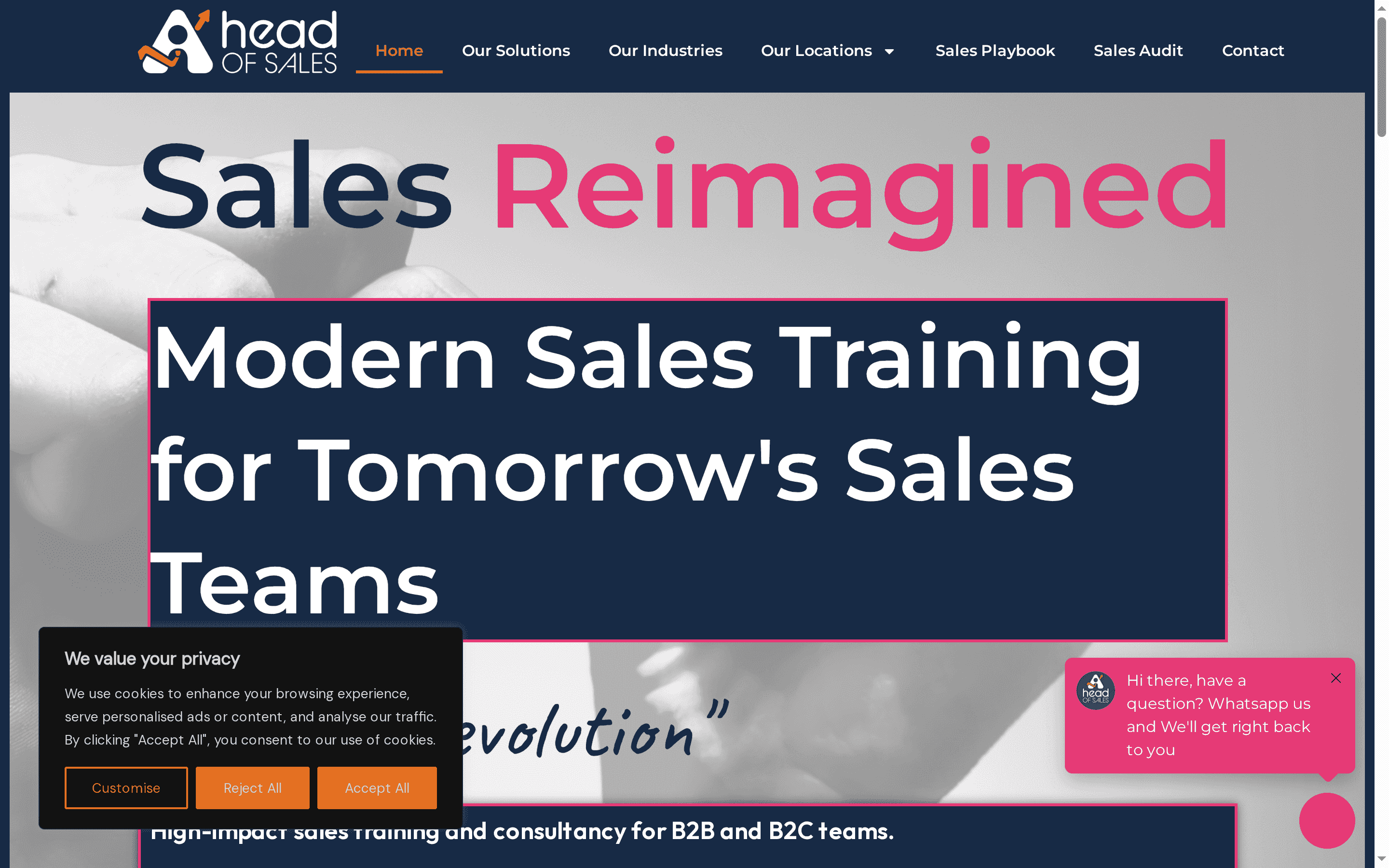
Ahead of Sales delivers focused, practical sales training and consultancy designed to move the needle quickly for B2B and B2C teams. Its strength lies in industry-tailored programmes, measurable outcomes and simple sales automation that removes tedious follow-ups. If you want repeatable pipeline discipline and shorter sales cycles, this is a specialist partner rather than an off-the-shelf tool.
Core Features
Ahead of Sales combines industry-tailored programmes for SaaS, professional services, charities and contract services with flexible delivery—on-site workshops, online sessions, manager enablement and ongoing coaching. The consultancy side diagnoses and fixes bottlenecks such as pipeline structure, messaging, ICP clarity and sales playbooks, while simple sales automation handles follow-ups, handovers and account management. All interventions are framed around improving conversion rates, shortening sales cycles and building scalable, repeatable sales processes.
Pros
- Tailored programmes for different sectors: Each programme is customised to the realities of SaaS, professional services, charities or contract services so training translates into real sales behaviours.
- Flexible delivery to suit hybrid teams: You can choose on-site or online workshops and ongoing coaching to fit remote, in-office or mixed teams.
- Proven, measurable outcomes: The approach emphasises measurable business results—higher conversion rates, shorter cycles and stronger pipeline discipline—rather than abstract KPIs.
- Practical, skills-based focus: The work is grounded in practical skills and sales playbooks that teams can use immediately.
- Blends training with automation and consultancy: Rather than a single method, Ahead of Sales combines coaching, structured consultancy and targeted automation to create a cohesive sales engine.
Who It’s For
Sales leaders and teams in B2B and B2C sectors who need practical, tailored training and consultancy will get the most value. Typical clients are growth-minded organisations—mid-market firms, scale-ups and professional services teams—that want repeatable processes and demonstrable revenue uplift. It also suits charities and tender-driven organisations seeking relationship-led selling techniques. Solo service businesses can use the acceleration packages to scale quickly with focused support.
Unique Value Proposition
We’re a revolutionary sales training company that combines bespoke 1:1 coaching with traditional training and consultancy to help businesses generate at least 50% sales growth every year and also ensure that their sales team hits target every quarter. Our packages start from £4,500-£8,500 so we’re looking for businesses with approx 50-1000 staff who have growth mindsets. We also provide sales acceleration packages to solo service businesses with packages ranging from £2995-£5995.
Beyond that core claim, Ahead of Sales stands out because it integrates three things others separate: industry-specific curriculum, hands-on consultancy to remove structural bottlenecks, and friction-free automation to preserve human selling time. The trade-off is intentional: you engage with trainers and consultants rather than a purely digital product, which means deeper, faster behavioural change—not a templated course. In short: you pay for lasting capability, not a one-off webinar.
Real World Use Case
A SaaS company engaged Ahead of Sales for bespoke training and process improvement and increased their sales by over 300% while expanding internationally. The intervention combined ICP clarity, revamped demos, disciplined pipeline stages and automation for lead follow-up—resulting in faster closures and scalable growth.
Pricing
Starting at £4,500–£8,500 for typical business packages; sales acceleration packages for solo service businesses from £2,995–£5,995. Detailed, tailored quotes are available on request—contact for exact pricing.
Website: https://aheadofsales.co.uk
Salesforce
At a Glance
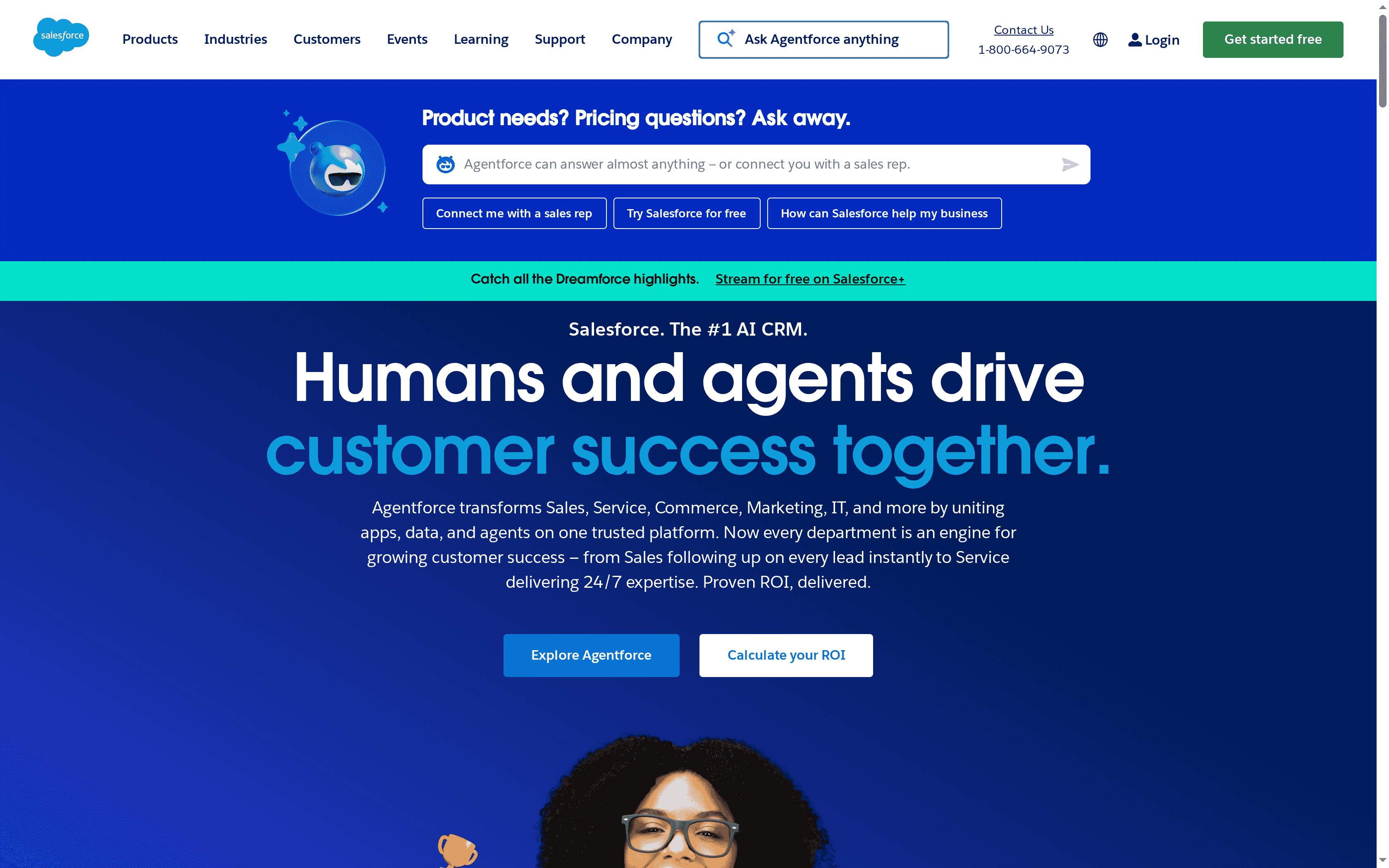
Salesforce is an AI-powered, enterprise-grade CRM platform that unifies apps, data and agents to drive customer success across sales, service, marketing and commerce. Its strength lies in industry-specific solutions and embedded AI capabilities such as Einstein AI and Agentforce, which automate routine tasks and surface predictive insights. That scale and depth deliver measurable ROI for organisations prepared to invest in configuration and governance. Expect a powerful platform with a learning curve and bespoke pricing.
Core Features
Salesforce combines a comprehensive suite of cloud services — Sales Cloud, Service Cloud, Marketing Cloud, Commerce Cloud and Data 360 — on a single, secure platform. Key capabilities include unified data models that break down channel silos, AI-driven automation for predictive scoring and autonomous case resolution, and industry-tailored templates for financial services, retail, healthcare and manufacturing. Built-in governance and security measures support enterprise compliance while extensibility enables deep customisation and third-party integrations.
Pros
- Industry-specific, out-of-the-box solutions speed deployment: Prebuilt templates and vertical use cases reduce time-to-value for regulated or complex sectors.
- AI-driven automation delivers measurable ROI: Autonomous case resolution and lead conversion powered by Einstein AI and Agentforce can reduce manual workload and improve conversion rates.
- Comprehensive, integrated platform reduces tool sprawl: Unifying CRM, data and AI on one platform simplifies architecture and centralises reporting.
- Proven at scale and trusted by major deployments: The platform’s enterprise pedigree reassures buyers seeking established vendors for digital transformation.
- Flexible engagement model including trials and scalable subscriptions: Free trials and modular subscriptions let organisations pilot capabilities before broader rollout.
Cons
- Pricing details require direct engagement: Specific costs are not published and typically need a tailored quote, which can slow procurement.
- Complexity in integration and customisation: The breadth of features means implementation often requires specialist partners or internal expertise.
- Additional purchases may be needed for full functionality: Some advanced modules and industry features can carry extra licence or subscription costs.
Who It’s For
Salesforce suits organisations of all sizes that need a unified, AI-driven CRM and are prepared to invest in configuration, governance and integration. It is particularly relevant for companies seeking industry-specific digital transformation — from retail teams wanting personalised commerce to financial services and healthcare providers needing secure, compliant workflows.
Unique Value Proposition
What sets Salesforce apart is its combination of enterprise-scale unification and embedded AI across vertical solutions. Rather than a single-point tool, it offers a platform approach that lets you centralise customer data, automate routine work with autonomous agents, and deploy industry-specific capabilities without stitching multiple vendors together.
Real World Use Case
A retail business can deploy Salesforce Commerce Cloud to deliver personalised online and in-store experiences while using Einstein AI to predict buying behaviour and automate targeted marketing campaigns, creating a seamless omnichannel customer journey.
Pricing
Quote-based (pricing is customised by solution and industry; trials and scalable subscriptions are available).
Website: https://salesforce.com
HubSpot
At a Glance
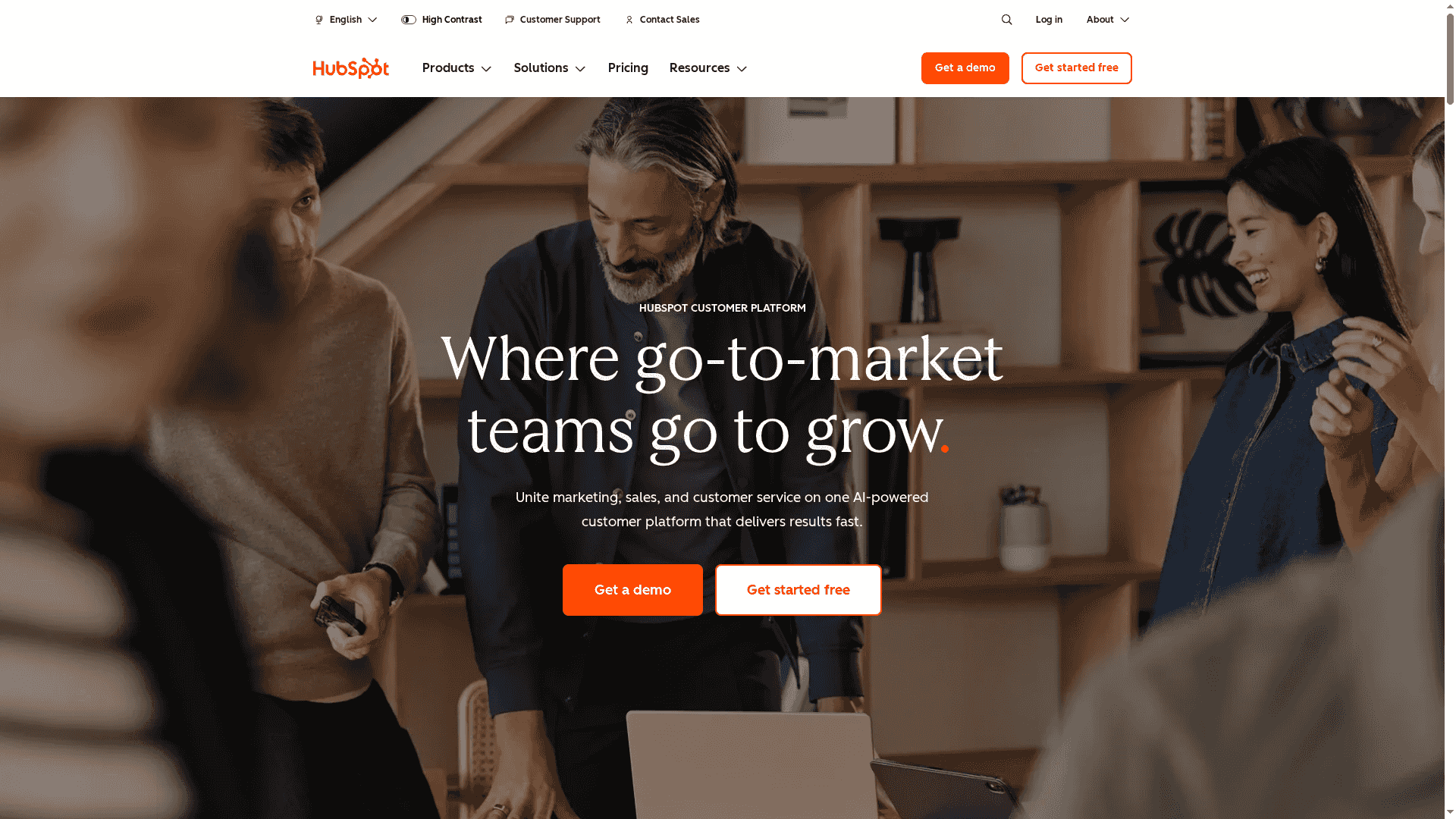
HubSpot is a comprehensive customer platform that unifies marketing, sales and customer service tools into one AI-powered stack. It’s designed to connect data and workflows across teams so you can move from lead attraction to retention without stitching systems together. The platform scales across Starter, Professional and Enterprise needs, but that breadth brings complexity—expect a learning curve and rising costs as you expand. Bottom line: powerful and cohesive, yet not the simplest fit for lean teams.
Core Features
HubSpot centres on a unified customer data platform and an AI-enabled CRM that surfaces real-time insights for sales and marketing decisions. Key capabilities include a Marketing Hub for lead generation and nurturing, a Sales Hub for pipeline and deal management, and a Service Hub for ticketing and retention. Together they support content personalisation, automation across channels, and consolidated reporting so teams see the same customer picture at each touchpoint.
Pros
- All-in-one platform integrating multiple business functions: You can centralise marketing, sales and service data so handoffs are smoother and reporting is consistent.
- AI-powered tools for automation and insights: Automated scoring, predictive insights and AI-assisted content accelerate decision-making and reduce repetitive tasks.
- Scalable plans suitable for different business sizes: HubSpot offers tiers from Starter through Enterprise so organisations can add capabilities as they grow.
- Strong customer support and training resources: Extensive documentation and training help teams adopt advanced modules more quickly.
- Extensive integrations with other apps and services: Native and third-party integrations mean HubSpot can slot into an existing stack without losing key data flows.
Cons
- Complex for new users due to extensive features: The breadth of modules and settings can overwhelm teams that want a simple, out-of-the-box tool.
- Higher plans can be costly for small businesses: Professional and Enterprise tiers present a significant jump in monthly spend as you add advanced features.
- Learning curve associated with mastering all modules: Realising value from automation, personalisation and analytics requires time and skilled administrators.
Who It’s For
HubSpot best suits medium to large-sized businesses that need a single platform to manage marketing, sales and service at scale. If you run multiple teams that must share a single source of customer truth, or if you plan to leverage AI-driven automation across funnels, HubSpot will reward the investment. It’s less ideal for single-person operations seeking minimal setup and low monthly spend.
Unique Value Proposition
HubSpot’s strength is the combination of a unified data layer with AI-driven CRM capabilities across three core hubs—Marketing, Sales and Service—delivered in a single vendor ecosystem. That cohesiveness reduces data friction between teams and speeds up conversion cycles without building a bespoke integration architecture.
Real World Use Case
A mid-sized retail company uses HubSpot to automate multichannel marketing campaigns, manage a structured sales pipeline and resolve customer tickets with personalised follow-ups. The unified data model makes it easier to attribute campaigns to revenue and to tailor service interactions based on prior purchase behaviour.
Pricing
Starts at $800/month for the Professional plan, with additional options for Enterprise and Starter editions depending on business needs.
Website: https://hubspot.com
Pipedrive
At a Glance
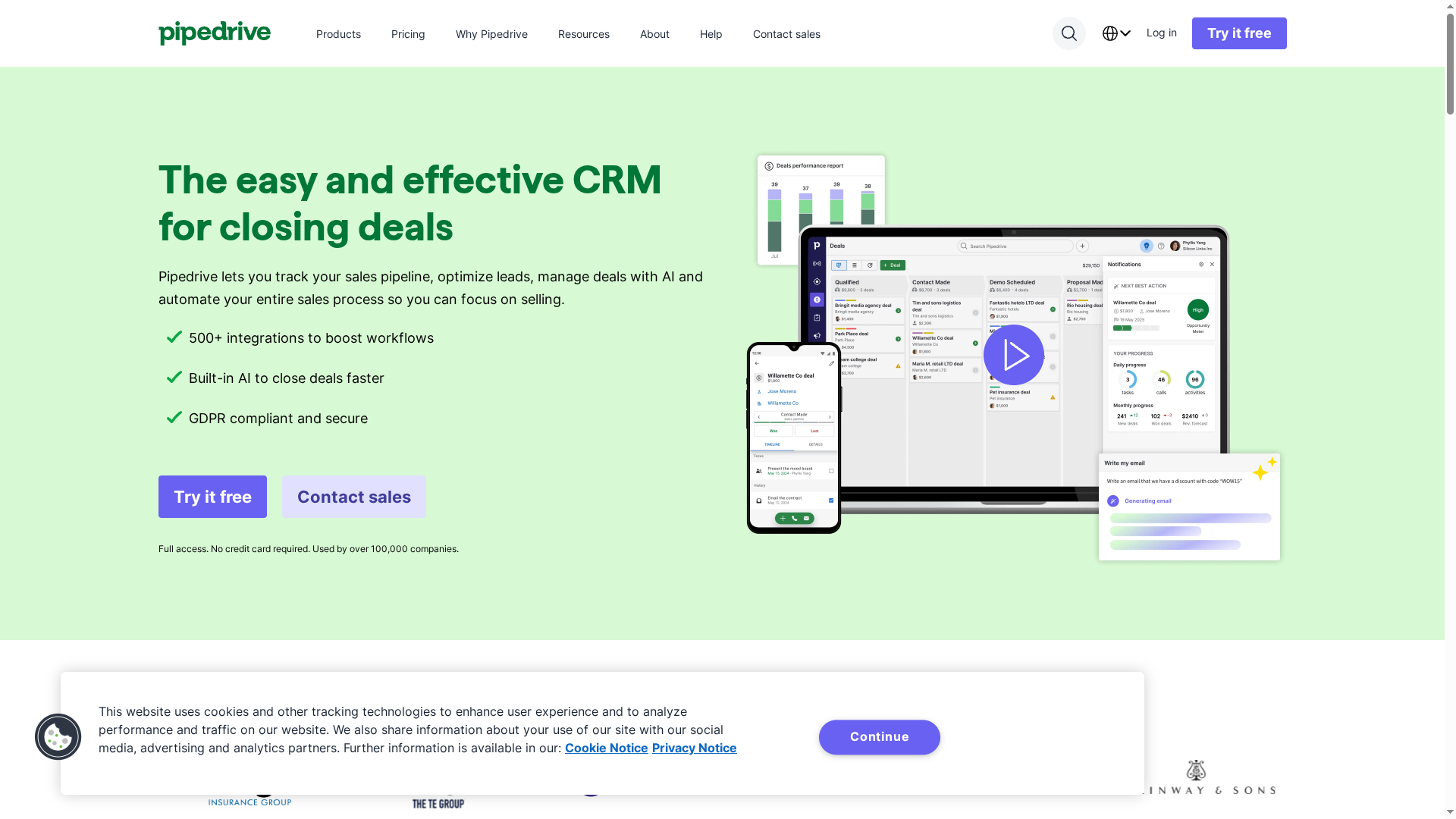
Pipedrive is a sales CRM focused on pipeline management, automation and AI suggestions, built for small to medium-sized sales teams. It pairs a kanban-style dashboard with automated follow-ups and real-time analytics to help teams see where deals stall and act faster. Trusted by over 100,000 companies, it balances usability with depth — simple to start, powerful as you scale. It’s a solid choice if you need a sales-first CRM rather than a full-suite ERP.
Core Features
Pipedrive’s core capabilities centre on visual pipeline management with a kanban-style dashboard, automated follow-ups and sales conversations, real-time sales reports and analytics, and an AI-powered sales assistant that offers data-driven suggestions. The platform also integrates with over 500 apps through its marketplace, enabling connection to email, marketing and video-call tools — so your sales activity sits alongside customer and marketing data.
Pros
- User-friendly interface: The kanban dashboard and clear deal cards make it quick for teams to adopt and maintain pipeline hygiene without heavy training.
- Comprehensive automation features: Built-in automation for follow-ups and routine tasks reduces manual steps and keeps prospects moving through the funnel.
- Strong integrations and customisation options: With a marketplace of 500+ apps, Pipedrive adapts to existing tech stacks and workflows rather than forcing you to change processes.
- Trusted by a large user base: Being used by over 100,000 companies indicates maturity and a proven track record in sales-focused deployments.
- Robust security and compliance standards: Enterprise-minded teams will appreciate the platform’s attention to security and governance as they scale.
Cons
- May be expensive for very small teams or startups: Pricing tiers and some advanced features sit behind higher plans, which can push costs up for lean early-stage teams.
- Learning curve for advanced features: While basics are intuitive, automation rules and advanced analytics require time to configure effectively.
- Some features require higher-tier plans: Key capabilities—such as the most advanced automations and AI suggestions—may be gated behind professional or enterprise plans, limiting access on entry-level subscriptions.
Who It’s For
Pipedrive suits small to medium-sized sales teams and businesses that prioritise a sales-first CRM with clear pipeline visibility. If your team needs a straightforward way to visualise deals, automate routine outreach and pull sales performance insights without building bespoke tools, this platform fits well. It’s particularly useful where sales processes must be standardised across several reps.
Unique Value Proposition
Pipedrive’s strength is its combination of visual pipeline management plus practical automation and AI-suggested next steps. That blend keeps sales activity organised and nudges reps toward higher-value actions, which is especially valuable for teams that measure success by closed deals and forecast accuracy.
Real World Use Case
A sales team uses Pipedrive to track leads, automate routine follow-up emails, and visualise their sales funnel via the kanban view; managers run real-time reports to identify bottlenecks and reallocate resources, enabling faster deal progression and cleaner forecasting.
Pricing
Starting at $14/month per user (billed annually); free trial available.
Website: https://pipedrive.com
Sales and CRM Tools Comparison
This table provides a comprehensive comparison of sales and CRM tools, highlighting their key features, pros, cons, target audience, unique value propositions, real world use cases, and pricing.
| Product | Key Features | Pros | Cons | Pricing |
|---|---|---|---|---|
| Ahead of Sales | Industry-tailored programs, flexible delivery, sales automation | Tailored programs, measurable outcomes, practical skills | Engages trainers/consultants, not purely digital | £4,500–£8,500; £2,995–£5,995 |
| Salesforce | Unified data, AI-driven automation, vertical templates | Industry-specific solutions, AI-driven ROI, integrated platform | Requires direct pricing engagement, complex integration | Quote-based |
| HubSpot | Unified data platform, AI-enabled CRM, comprehensive tools | All-in-one platform, scalable, strong support | Complex for new users, costly higher plans | Starts at $800/month |
| Pipedrive | Kanban dashboard, automation, AI suggestions | User-friendly, strong integrations, robust security | Expensive for small teams, learning curve for advanced features | Starting at $14/month |
Elevate Your Sales Performance with Bespoke Coaching and Automation
If you have felt overwhelmed by the complexity of sales automation tools or frustrated that generic systems have not delivered real growth, you are not alone. The search for repeatable sales processes and shorter sales cycles can be daunting when your team struggles to integrate multiple solutions or lacks targeted training to fully leverage automation. Ahead of Sales specialises in overcoming these exact challenges by combining tailored 1:1 coaching, practical sales consultancy and friction-free automation designed to drive measurable results.
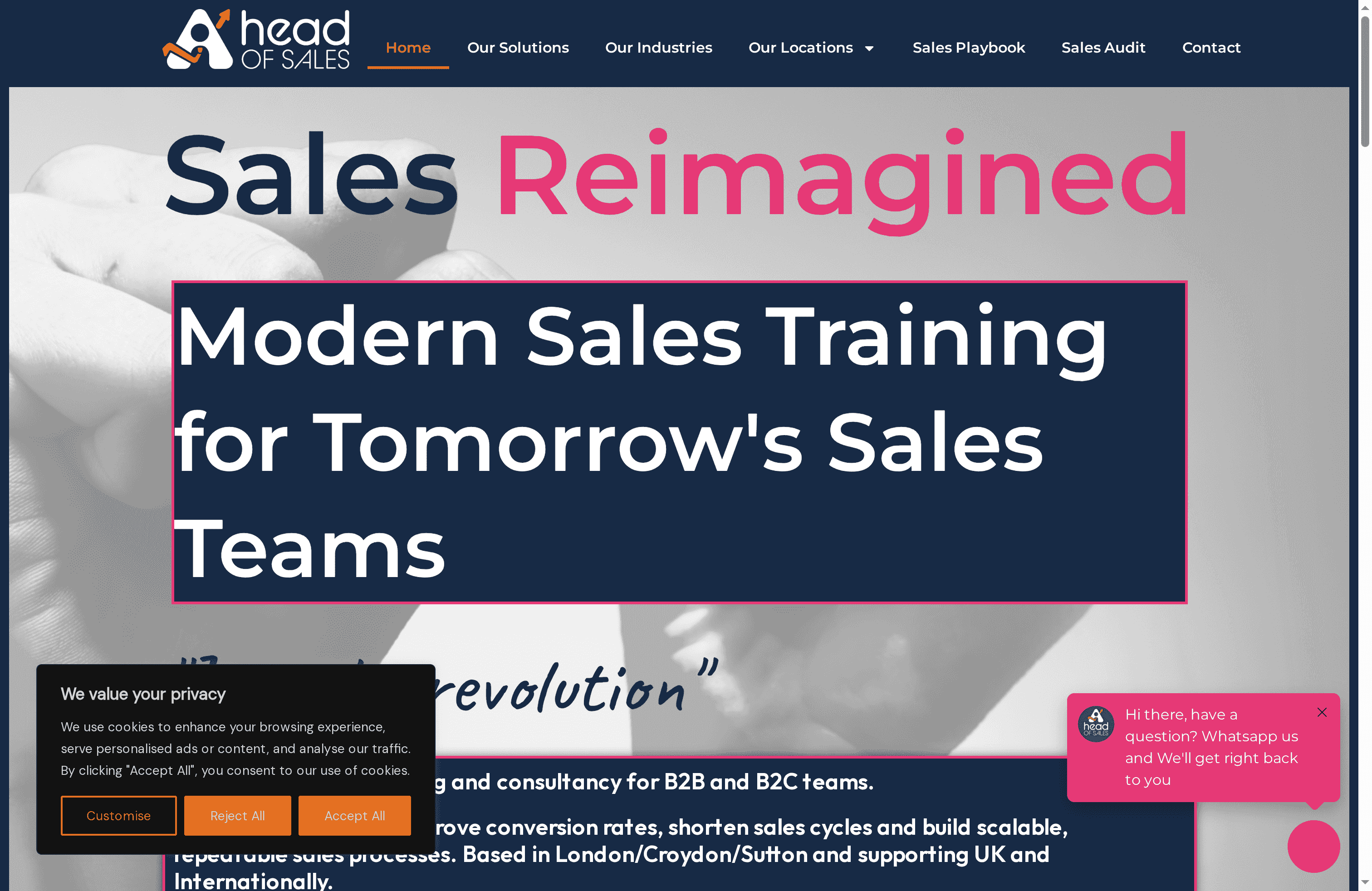
Discover how your business can achieve at least 50% sales growth every year with proven methods that nurture pipeline discipline and empower your team to hit their targets every quarter. From mid-sized organisations to solo service businesses, our sales acceleration packages adapt to your needs and ensure lasting capability beyond off-the-shelf software. Take the next step towards transforming your sales approach by exploring our tailored solutions at Ahead of Sales. To learn more about how bespoke coaching integrates seamlessly with effective automation visit our landing page and unlock a faster path to sales success today.
Frequently Asked Questions
What are the key features to look for in sales automation tools in 2025?
Look for features like AI-driven analytics, automated follow-ups, customizable reporting, and integration capabilities with other platforms. Ensure the tool can streamline your sales processes and improve communication across teams.
How can I determine which sales automation tool fits my team’s needs?
Assess your team’s requirements by identifying pain points in your current workflow, such as lead management or response times. Create a checklist based on your sales process and evaluate each tool against these criteria to find the best fit.
What are the expected average costs for top sales automation tools in 2025?
Most sales automation tools vary in price, with entry-level options starting around $14 per user per month and more advanced packages ranging from $800 per month. Consider your team size and budget to estimate overall expenses, ensuring it aligns with your expected ROI.
How do sales automation tools improve sales team productivity?
Sales automation tools reduce manual tasks like follow-ups and reporting, allowing sales reps to focus more on building relationships and closing deals. Implementing these tools can lead to a productivity increase of at least 20% within the first few months.
What is the role of AI in sales automation tools?
AI enhances sales automation tools by providing predictive insights and automating routine tasks, which helps sales teams prioritize leads more effectively. Leverage AI capabilities to improve lead conversion rates by analyzing historical data patterns for smarter decision-making.
How long does it take to see results after implementing a sales automation tool?
Typically, users can begin to notice improvements in sales metrics like conversion rates and pipeline efficiency within 30 to 60 days of implementation. Start by tracking key performance indicators from day one to measure and adjust your approach accordingly.