
Over 60 percent of sales leaders say that a poorly defined sales process holds their team back from closing deals quickly. Getting the right strategies in place can mean the difference between missed targets and record-breaking quarters. Whether you lead a growing sales team or want to shave weeks off your sales cycle, this guide shows proven steps to help you identify high-value prospects, streamline your workflow, and boost win rates with confidence.
Table of Contents
- Step 1: Define Ideal Customer Profiles And Key Decision Makers
- Step 2: Streamline Sales Processes With Automation Tools
- Step 3: Align Sales Messaging For Faster Decision-Making
- Step 4: Equip Teams With Tailored Training And Coaching
- Step 5: Analyze Pipeline Data To Identify Bottlenecks
- Step 6: Monitor, Measure, And Refine For Continuous Improvement
Quick Summary
| Key Point | Explanation |
|---|---|
| 1. Define detailed customer profiles | Create precise profiles with specific attributes to target high-value prospects effectively. |
| 2. Automate repetitive sales tasks | Use strategic automation to streamline processes, enhance efficiency, and reduce administrative workload. |
| 3. Align sales messaging with audience needs | Tailor communication to match your audience’s pain points, improving engagement and response rates. |
| 4. Provide customized training for teams | Implement targeted training strategies that address individual skill gaps and enhance team performance. |
| 5. Continuously analyze sales pipeline data | Identify bottlenecks and improve conversion rates by systematically reviewing pipeline performance metrics. |
Step 1: Define ideal customer profiles and key decision makers
Defining your ideal customer profile and understanding key decision makers is the foundational strategy for dramatically shortening your sales cycle and targeting high value prospects. According to Gartner, creating a precise ideal customer profile enables sales and marketing teams to align efforts towards accounts most likely to convert rapidly.
To build an effective ideal customer profile, start by gathering comprehensive quantitative data about your most successful existing customers. Look beyond basic demographics into deeper characteristics like company size, revenue range, industry vertical, growth trajectory, and specific business challenges. Gartner recommends analyzing firmographic, environmental, and behavioral attributes that distinguish your most valuable clients. This means examining not just who they are, but how they operate, their strategic priorities, and their potential for long term partnership.
When mapping key decision makers, go beyond job titles and understand their individual motivations, pain points, and influence within their organisation. Create detailed personas that outline each stakeholder role technical decision makers, financial approvers, operational leaders and map how they interconnect during the purchasing process. Identify who initiates research, who provides technical validation, and who ultimately signs off on investments. By understanding these dynamics, you can tailor your sales approach to address specific concerns at each stage, ultimately accelerating your sales cycle and improving conversion rates.
Warning: Avoid the common mistake of creating overly broad or generic customer profiles. The more precise and granular your understanding, the more effectively you can target and engage potential clients.
Step 2: Streamline sales processes with automation tools
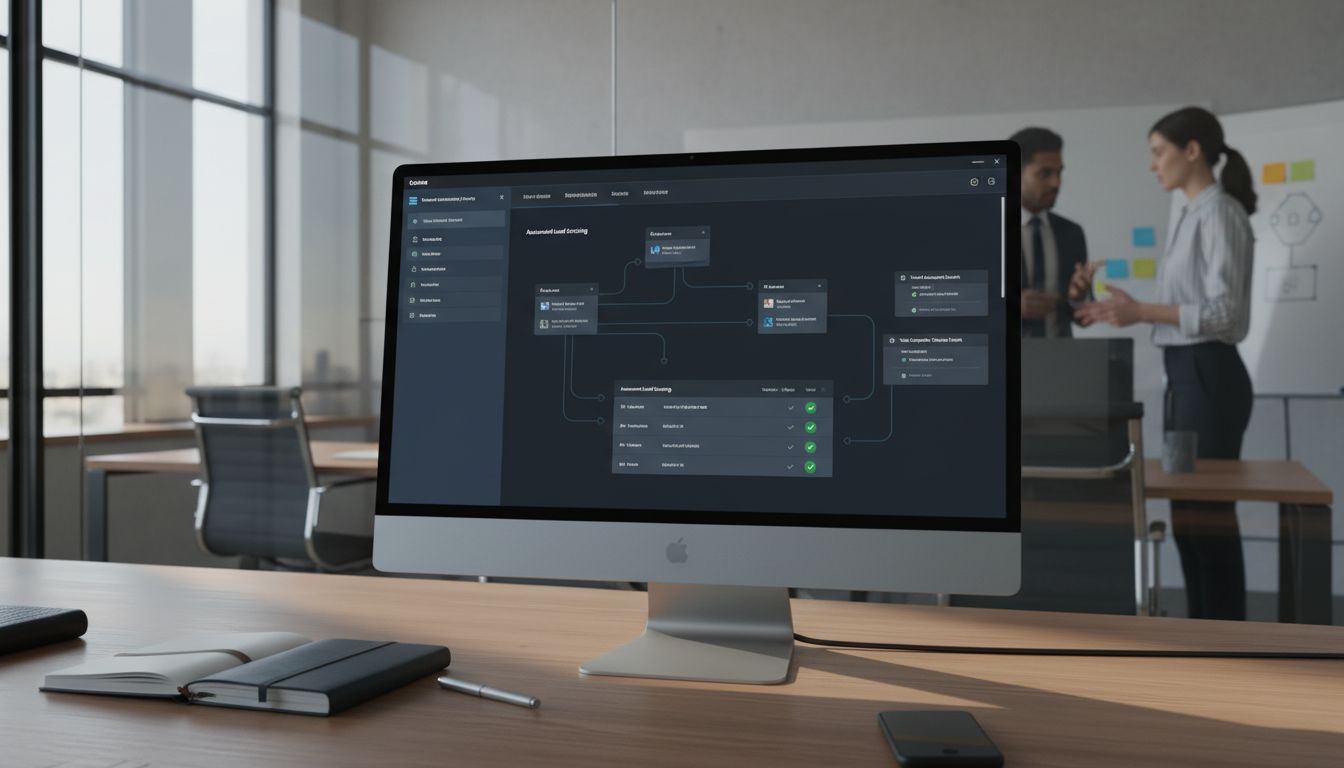
Streamlining your sales processes through strategic automation is key to accelerating growth and reducing operational friction. According to research from arXiv, Robotic Process Automation (RPA) can dramatically enhance efficiency by automating rule-based routine processes and reducing manual administrative workload.
To effectively implement sales process automation, start by mapping your current sales workflow and identifying repetitive tasks that consume significant time. These might include lead tracking, email follow-ups, scheduling meetings, generating proposals, and updating customer relationship management (CRM) systems. arXiv suggests using advanced AI technologies that can translate user inputs into executable workflows, minimising manual intervention and reducing potential human error.
When selecting automation tools, prioritise solutions that integrate seamlessly with your existing sales tech stack and provide real-time analytics. Look for platforms offering features like automatic lead scoring, predictive pipeline management, and intelligent communication tracking. These tools should not replace human interaction but augment your sales teams capabilities by handling administrative tasks and freeing up time for strategic relationship building.
Warning: Automation is not a one-size-fits-all solution. Regularly review and recalibrate your automated processes to ensure they continue meeting your evolving sales strategy and customer engagement needs.
Step 3: Align sales messaging for faster decision-making
Aligning your sales messaging is a critical strategy for accelerating decision-making and reducing friction in the sales process. According to research from arXiv, advanced systems like SmartSales are now helping sales teams extract and analyze successful communication patterns by identifying frequently asked questions and typical customer objections.
To effectively align your sales messaging, begin by developing a deep understanding of your target audience’s specific needs, pain points, and decision-making motivations. Wikipedia emphasizes that tailoring communication to a specific audience can significantly enhance messaging effectiveness. Create detailed buyer personas that go beyond basic demographics and capture the nuanced challenges and aspirations of your ideal customers. This approach allows you to craft messaging that resonates directly with their core business objectives and speaks to their precise concerns.
Implement a systematic approach to messaging alignment by developing a comprehensive sales script repository that includes proven responses to common objections, key value propositions, and tailored communication strategies for different stakeholder types. Regularly review and update these scripts based on real sales interaction data, ensuring your messaging remains current and compelling. Train your sales team to be adaptable in their communication while maintaining a consistent core narrative that reinforces your unique value proposition.
Warning: Avoid generic messaging that sounds like it could apply to any company. Your sales communication must be specific, authentic, and directly addressing the unique challenges of your target market.
Step 4: Equip teams with tailored training and coaching
Designing and implementing effective sales team training is crucial for accelerating your sales cycle and driving consistent performance. According to Wikipedia, modern sales force management systems play a pivotal role in providing customised training resources that can be tailored to individual team members unique strengths and development needs.
To create a robust training programme, start by conducting comprehensive performance assessments that identify skill gaps and individual learning requirements. arXiv research highlights how advanced systems like SmartSales can provide granular performance metrics that enable managers to develop highly personalised coaching strategies. This approach allows you to create targeted training modules that address specific areas where each sales representative needs improvement including communication skills, product knowledge, objection handling, and negotiation techniques.
Implement a multi modal training approach that combines theoretical learning with practical application. This might include online learning modules, role playing scenarios, peer coaching sessions, and regular one on one mentoring. Ensure that training is not a one time event but an ongoing process with continuous feedback loops and opportunities for skill refinement. Track individual and team progress using key performance indicators that measure not just sales outcomes but also skill development and behavioural improvements.
Warning: Avoid generic one size fits all training programmes. Each sales team member is unique and requires a personalised approach that recognises their individual potential and addresses their specific developmental needs.
Step 5: Analyze pipeline data to identify bottlenecks
Identifying and addressing sales pipeline bottlenecks is crucial for accelerating your overall sales cycle and improving conversion rates. According to research from arXiv, a systematic framework of evaluation can help businesses methodically assess which processes are creating friction and determine the most effective strategies for improvement.
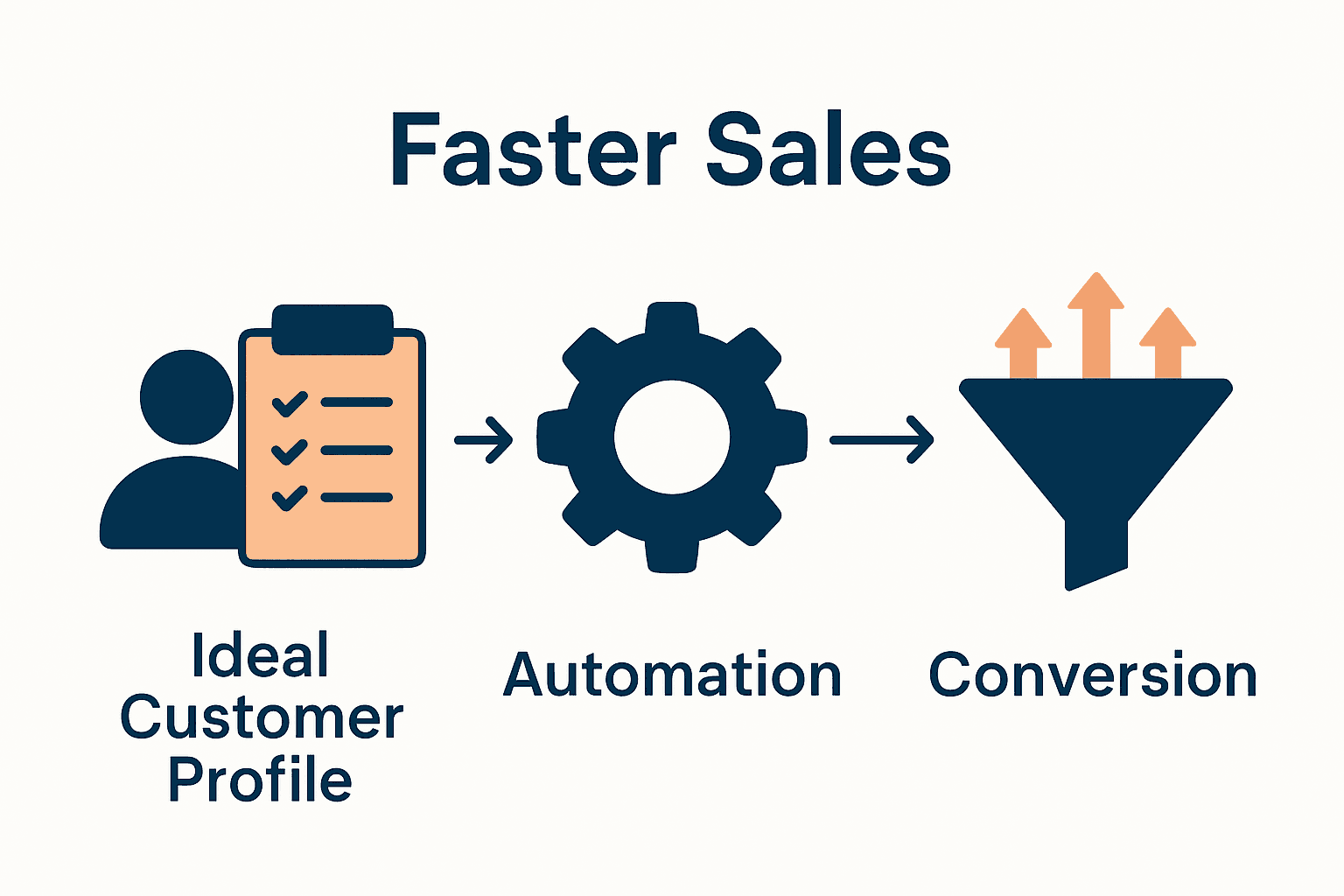
Begin your pipeline analysis by mapping out each stage of your sales process and collecting granular data on conversion rates, time spent in each stage, and potential drop off points. Wikipedia suggests segmenting your data to reveal nuanced insights across different customer groups. Look for patterns such as stages where deals consistently stall, segments with lower conversion rates, or repetitive administrative tasks that consume disproportionate amounts of sales team time. Pay close attention to metrics like average deal lifecycle, win rates for different customer segments, and the length of time prospects spend in each pipeline stage.
Develop a comprehensive dashboard that tracks key performance indicators and provides real time visibility into your sales pipeline dynamics. Use this data to create targeted interventions such as additional training for sales representatives, streamlining of specific process steps, or redesigning communication strategies for segments with lower conversion rates. Regularly review and recalibrate your approach based on emerging data trends and changing market conditions.
Warning: Avoid becoming overly mechanical in your analysis. While data is critical, remember that sales is fundamentally about human relationships and understanding nuanced customer needs.
Step 6: Monitor, measure, and refine for continuous improvement
Continuous improvement is the cornerstone of creating an adaptive and high performing sales organisation. According to Wikipedia, integrating intelligent automation techniques allows businesses to systematically track, analyse, and enhance their sales processes with unprecedented precision and speed.
Establish a robust monitoring framework that captures comprehensive performance metrics across multiple dimensions of your sales ecosystem. Wikipedia emphasises the importance of segmented performance tracking to identify nuanced opportunities for refinement. This means creating dashboards that not only show overall performance but drill down into specific areas such as individual sales representative performance, segment specific conversion rates, customer acquisition costs, and pipeline velocity. Implement regular review cycles perhaps weekly or monthly where your leadership team critically examines these metrics and discusses strategic interventions.
Create a culture of continuous learning and adaptation where feedback loops are built into every stage of your sales process. Encourage your sales team to contribute insights from their frontline experiences, using data as a collaborative tool rather than a punitive measurement. Develop mechanisms for rapid experimentation where small changes can be tested quickly and their impact immediately assessed. This might involve A testing different communication scripts, refining lead qualification criteria, or adjusting training approaches based on recent performance data.
Warning: Measurement should never become an end in itself. The goal is not to generate reports but to drive meaningful improvements that translate into tangible business outcomes.
Accelerate Your Sales Cycle with Bespoke Training and Coaching
If you are struggling with long sales cycles or missing quarterly targets, this article has truly highlighted common challenges such as defining ideal customer profiles, streamlining processes with automation, and tailoring sales messaging. These are exactly the pain points that businesses face when trying to ignite rapid sales growth. At Ahead of Sales, we specialise in helping businesses overcome these hurdles by combining personalised 1:1 coaching with proven training and consultancy to generate impactful results.
Take control of your sales pipeline today by partnering with a team dedicated to delivering at least 50% sales growth each year and ensuring your sales team consistently hits their targets every quarter. Whether you lead a mid-size company ready to scale or you are a solo service business seeking sales acceleration, our customised packages meet your exact needs. Don’t let slow sales cycles hold back your growth—discover how our tailored approach can transform your sales process at Ahead of Sales. Start your journey to faster decisions and higher conversions now.
Frequently Asked Questions
How can I define an ideal customer profile to shorten my sales cycle?
To define an ideal customer profile, gather detailed quantitative data about your most successful customers including their industry, company size, and specific business challenges. Start by analyzing existing data to create precise profiles that your sales and marketing teams can target, ultimately reducing the sales cycle by focusing on high-value prospects.
What automation tools should I use to streamline my sales processes?
Use automation tools that integrate well with your existing sales systems to reduce manual workload on tasks like lead tracking and email follow-ups. Identify repetitive tasks in your current sales workflow and implement suitable automation solutions to save time and improve efficiency, aiming to cut your administrative workload by up to 30%.
How should I align my sales messaging to improve decision-making speed?
To align your sales messaging, create detailed buyer personas that outline your audience’s specific needs and pain points. Develop a sales script repository that addresses common objections and key value propositions, ensuring your messaging resonates and accelerates decision-making processes among potential clients.
What type of training is effective for sales teams looking to shorten sales cycles?
Implement a personalized training program that addresses individual team members’ unique strengths and weaknesses based on performance assessments. Use a mix of online modules and practical role-playing scenarios so that each representative can enhance their skills continuously, driving consistent performance improvements over time.
How can I analyze my sales pipeline to identify bottlenecks?
Map out each stage of your sales pipeline and collect data on conversion rates and time spent in each stage. Look for patterns indicating where deals stall or drop-off occurs, and use this information to implement targeted changes, potentially improving conversion rates by 10-20%.
What continuous improvement strategies can help sustain rapid growth in sales cycles?
Establish a robust monitoring framework to track performance metrics closely and conduct regular reviews to identify areas for improvement. Foster a culture of continuous learning and adaptation among your sales team, allowing for quick tests of new strategies to enhance overall sales effectiveness and responsiveness to market changes.
Recommended
- Role of Sales in SaaS Growth: Complete Guide – Ahead of Sales
- Effective Sales Training Methods for Rapid Growth – Ahead of Sales
- Sales Strategy Explained: Comprehensive Growth Blueprint – Ahead of Sales
- 7 Essential Sales Team Training Topics for Growth – Ahead of Sales
- How to Boost Website Speed in 2025: Proven Tips for SMBs & Marketers
2 Responses